
The pursuit of artificial intelligence is undergoing a profound shift, moving from abstract digital computations to concrete interactions within the physical world. This evolution is embodied in the field of embodied AI, which posits that true intelligence emerges not from algorithms in isolation, but from the dynamic coupling between a physical agent—an embodied AI robot—and its surrounding environment. Unlike traditional AI systems that excel in closed, static domains, an embodied AI robot must perceive, reason, and act in real-time within open-ended, uncertain, and constantly changing contexts. This fundamental difference presents the core challenge: how can an agent move from merely recognizing patterns to understanding situational meaning and making robust, autonomous decisions? The key lies in context awareness.
Context awareness serves as the cognitive engine for embodied intelligence. It is the capability to integrate, model, and reason over multi-dimensional information beyond raw sensor data. This includes spatial layouts (“the cup is on the table, which is near the window”), temporal dynamics (“the person who was sitting has just stood up“), task goals (“deliver the medicine before the patient’s scheduled time”), social norms (“yield to humans in corridors”), and physical constraints (“the shelf cannot support that weight”). By constructing a rich, hierarchical model of the situation, context awareness transforms an embodied AI robot from a reactive system into a proactive, adaptive, and semantically-grounded agent. This article explores the complete pipeline of context-aware embodied intelligence, from foundational environmental understanding to sophisticated autonomous decision-making, analyzing the technologies that close the perception-action loop and outlining the critical challenges that lie ahead.
The Pillars of Context-Aware Embodied Intelligence
At its core, an embodied AI system is defined by its physical presence and its operation within a perception-action loop. The loop can be formally described as a continuous cycle:
$$s_t = P(o_t, h_{t-1}), \quad a_t = \pi(s_t, \mathcal{C}_t), \quad o_{t+1} \sim E(s_t, a_t)$$
where at time \( t \), the agent receives observation \( o_t \) and uses a perception model \( P \) (informed by history \( h \)) to estimate the state \( s_t \). A policy \( \pi \) then selects an action \( a_t \) based on \( s_t \) and the current context model \( \mathcal{C}_t \). The action is executed, causing the environment \( E \) to transition, yielding a new observation \( o_{t+1} \). Context awareness is the process of building and updating \( \mathcal{C}_t \), a structured representation that encodes relationships, affordances, and semantics not fully captured in the raw state \( s_t \). The evolution of technical approaches to context modeling reflects the increasing complexity of tasks, as summarized below.
| Paradigm | Core Methods | Context Modeling Focus | Limitations for Embodied AI |
|---|---|---|---|
| Rule-Driven | IF-THEN logic, Ontological models | Structured, static relationships (e.g., “kitchen contains refrigerator”). | Brittle; fails with environmental novelty or ambiguity. |
| Multimodal Graph | GNNs, Cross-modal alignment | Heterogeneous sensor fusion, object-relation graphs. | High computational cost; requires extensive labeled data for alignment. |
| Neuro-Symbolic Fusion | Differentiable logic, Symbol grounding | Integrating learned features with logical constraints (e.g., safety rules). | Complexity in specifying and integrating symbolic knowledge. |
| Foundation Model-Based | Large Language Models (LLMs), Vision-Language Models (VLMs) | Open-vocabulary semantic understanding, implicit commonsense. | Lack of physical grounding; high latency; potential for hallucination. |
| Online Adaptive | Meta-learning, Episodic memory | Dynamic, lifelong adaptation to changing contexts. | Risk of catastrophic forgetting; requires efficient memory mechanisms. |
The journey of an embodied AI robot begins with making sense of its surroundings. Context-aware environmental understanding is not a single step but a layered cognitive process, progressing from low-level signal processing to high-level, actionable knowledge.
Contextual Understanding: From Sensing to Knowing
The first major phase for an embodied AI robot is to construct a meaningful representation of its world. This process can be architecturally decomposed into three synergistic layers: the Perception Layer, the Semantic Layer, and the Cognitive Layer.
1. The Perception Layer: Multi-Modal Grounding
This layer answers “what is where?” by fusing raw sensor data into a coherent spatial-semantic map. The challenge is moving beyond geometric mapping to include open-set semantics. Traditional Simultaneous Localization and Mapping (SLAM) provides a geometric backbone:
$$ \mathcal{M}_g = \text{SLAM}(\{o_t^{lidar}, o_t^{visual}\}_{t=0}^T) $$
where \( \mathcal{M}_g \) is a geometric map. The breakthrough for context comes from open-vocabulary perception powered by Vision-Language Models (VLMs). Models like VLMaps ground natural language concepts into spatial coordinates, enabling an embodied AI robot to understand commands like “navigate to the wooden desk near the bookshelf.” This is achieved by creating a joint embedding space:
$$ \mathbf{e}_{visual} = f_\theta(I), \quad \mathbf{e}_{text} = g_\phi(“wooden desk”) $$
The goal is to minimize the distance \( d(\mathbf{e}_{visual}, \mathbf{e}_{text}) \) for corresponding concepts, allowing the robot to query its map with unseen textual descriptions. A summary of key technologies at this layer highlights the integration trend.
| Category | Goal | Representative Techniques |
|---|---|---|
| Geometric & Neural Reconstruction | Build accurate 3D world models. | Neural Radiance Fields (NeRFs), Gaussian Splatting, Dense SLAM. |
| Open-Vocabulary Perception | Recognize objects and scenes beyond a fixed training set. | VLMaps, 3D-LLM, CLIP-based feature projection into point clouds. |
| Cross-Modal Alignment | Fuse vision, language, LiDAR, and touch into a unified representation. | Contrastive learning (e.g., EmbodiedCLIP), multi-modal transformers. |
2. The Semantic Layer: Reasoning about Relationships and Dynamics
Knowing what objects exist is insufficient. The semantic layer builds a “web of meaning” by inferring relationships and temporal dynamics. It answers “how are things connected and changing?” This involves two key sub-processes:
Temporal & Causal Reasoning: An embodied AI robot must understand events and their causes. For example, predicting that a door opening might be followed by a person entering. Techniques like temporal graph networks or causal models learn the structure:
$$ \mathcal{G}_t = (\mathcal{V}_t, \mathcal{E}_t), \quad \text{where } \mathcal{E}_t \sim \Psi(\mathcal{V}_{t-\Delta t}, \mathcal{V}_t) $$
Here, \( \mathcal{G}_t \) is a scene graph at time \( t \), with entities \( \mathcal{V}_t \) and relations \( \mathcal{E}_t \) inferred by a model \( \Psi \).
Task-Driven Active Perception: Context dictates where to look. Instead of processing all sensor data uniformly, an intelligent agent actively directs its attention. A policy \( \pi_{active} \) chooses sensing actions \( a_t^{sense} \) (e.g., move camera, focus LiDAR) to minimize uncertainty about task-relevant context variables \( \mathcal{C}_{task} \):
$$ a_t^{sense} = \pi_{active}(s_t, \mathcal{C}_{task}) = \arg\max_{a} I(\mathcal{C}_{task}; o_{t+1} | s_t, a) $$
where \( I \) denotes mutual information. This allows a home robot to efficiently search for “my keys” by prioritizing likely surfaces (tables, hooks) over others (floor, ceiling).
3. The Cognitive Layer: Generating Actionable Knowledge
The highest layer translates semantic understanding into plans that are not just logically sound but also physically feasible and safe. It bridges “knowing” to “doing.”
Physical Commonsense Embedding: A critical context for an embodied AI robot is physical realism. Can an object be lifted? Is a surface stable? Models like PhysVLM integrate physical reachability and material properties into decision-making, ensuring that a generated plan to “pour water into the glass” considers the weight, fragility, and gripper kinematics.
Language-to-Action Mapping: This is the culmination of contextual understanding. Instructions like “make me a cup of coffee” must be decomposed into a feasible action sequence grounded in the specific environment. Foundational models like EmbodiedGPT or VoxPoser perform this by combining LLM-based task planning with visual grounding. The process can be seen as:
$$ [a_1, a_2, … a_n] = \text{Plan}( \text{“Make coffee”}, \mathcal{M}_g, \mathcal{G}_t, \Pi_{physics} ) $$
where the plan is a function of the instruction, the geometric map \( \mathcal{M}_g \), the semantic scene graph \( \mathcal{G}_t \), and a set of physical constraints \( \Pi_{physics} \). This ensures the robot looks for the coffee machine in the kitchen (not the bathroom), identifies a mug, and operates the machine correctly.
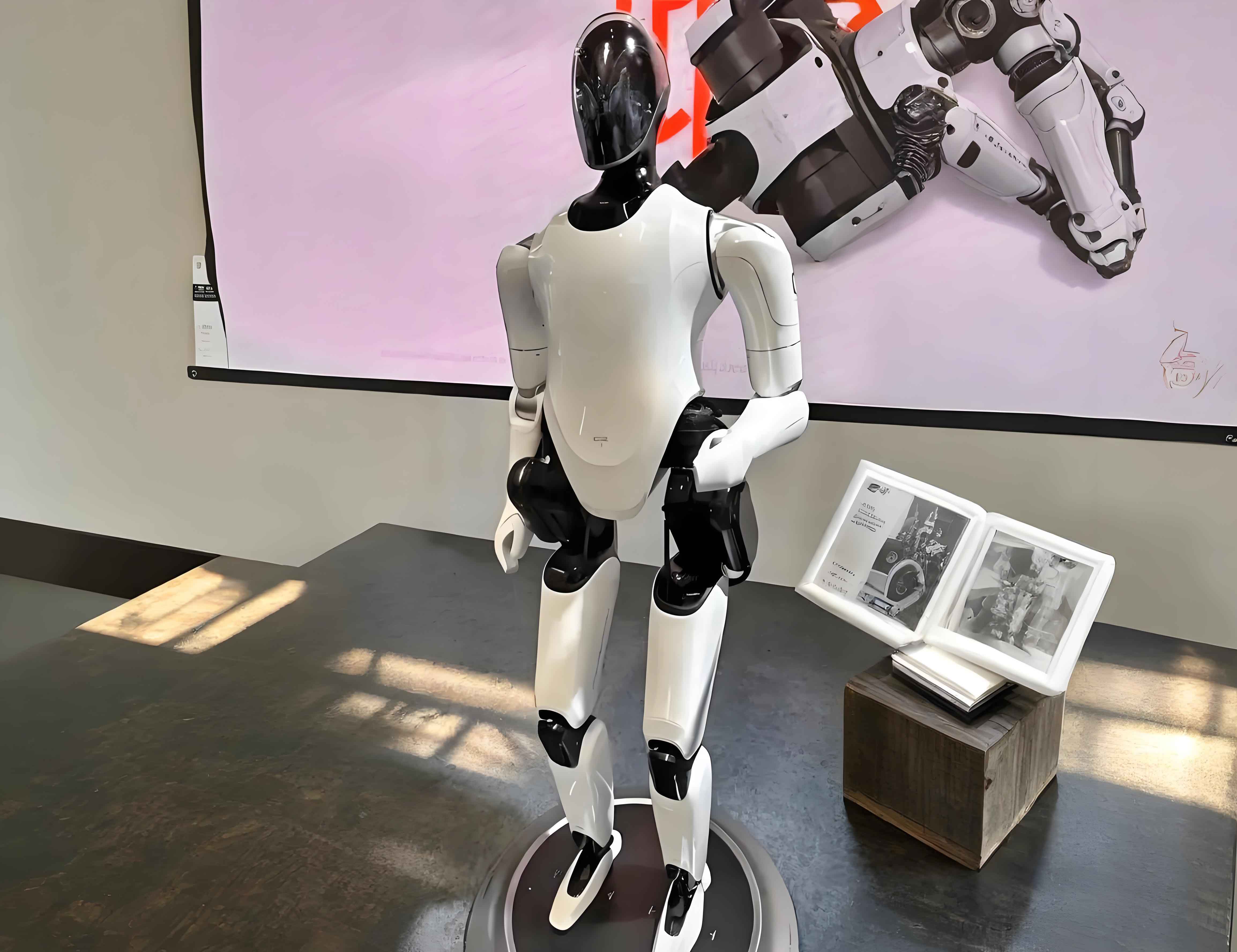
The transition from a rich contextual world model to actual movement and manipulation is governed by the agent’s decision-making engine. The paradigm for autonomous decision-making has evolved significantly, with context playing an increasingly central role.
The Decision Engine: From Rules to Context-Aware Autonomy
Autonomous decision-making in embodied AI refers to the process where an agent selects actions based on its perceived state and internal context model to achieve long-term goals. The evolution of methods reflects a search for greater flexibility and generalization, as summarized below.
| Paradigm | Basis | Role of Context | Example in Embodied AI |
|---|---|---|---|
| Rule-Driven | Pre-programmed logic (IF-THEN). | Explicit, hard-coded. Context is the set of conditions that trigger rules. | An AGV stopping if an obstacle is detected within 1 meter. |
| Model-Driven (Control) | Mathematical models of system & environment dynamics. | Embedded in the predictive model (e.g., MPC). Context is the forecasted state trajectory. | Robot arm using MPC to smoothly grasp a moving object on a conveyor. |
| Model-Driven (World Models) | Learned neural network simulating environment dynamics. | The world model is a compressed, predictive context model. Enables “imagination”. | An agent training a world model in simulation to safely learn navigation before real-world deployment. |
| Data-Driven (Imitation) | Expert demonstration data. | Implicitly learned from expert behavior in various situations. | Robot learning to set a table by watching human videos. |
| Data-Driven (Foundation Models) | Large pre-trained models (LLMs, VLMs, VLAs). | Models provide a prior over plausible actions and plans given a linguistic/visual context. | Using a VLA model to interpret “tidy up the living room” and generate appropriate pick-and-place actions. |
Model-Driven & World Models as Context Simulators
Model Predictive Control (MPC) is a powerful model-driven approach where an embodied AI robot solves a finite-horizon optimization problem at each step:
$$ \min_{a_{t:t+H}} \sum_{k=t}^{t+H} \ell(s_k, a_k) \quad \text{s.t.} \quad s_{k+1} = f(s_k, a_k), \quad a_k \in \mathcal{A}, \quad s_k \in \mathcal{S}_{safe} $$
Here, \( f \) is the dynamics model, \( \ell \) is a cost function, and \( \mathcal{S}_{safe} \) defines safe states—a critical piece of context. The true potential unfolds with World Models. A world model is a learned neural network \( \hat{f}_\theta \) that predicts future states (observations) and rewards given current states and actions: \( (\hat{o}_{t+1}, \hat{r}_t) = \hat{f}_\theta(o_t, a_t, h_t) \). This internal model serves as a simulated context engine. The agent can perform “planning in the head” by rolling out imagined trajectories:
$$ \tau_{imagined} = [(\hat{o}_t, a_t), (\hat{f}_\theta(\hat{o}_t, a_t), a_{t+1}), …] $$
This allows for efficient reasoning about long-term consequences without costly real-world interactions, enabling an embodied AI robot to evaluate strategies for complex tasks like multi-object rearrangement.
The Rise of Embodied Foundation Models
The most significant recent shift is the adoption of Vision-Language-Action (VLA) models as high-level decision-makers. These models, fine-tuned from massive VLM and LLM foundations, can map direct observations and language instructions to low-level actions or skill proposals. The decision function becomes:
$$ a_t \text{ or } z_t = \text{VLA}(o_t, h_t, \text{“Instruction”}, \mathcal{K}) $$
where \( z_t \) might be a mid-level skill (e.g., “open drawer”) and \( \mathcal{K} \) is optional retrieved knowledge. The context awareness here is emergent from the model’s pre-training on internet-scale data, which encapsulates commonsense, object affordances, and procedural knowledge. For instance, an embodied AI robot powered by a VLA model might understand that the command “cool the room” could involve finding and turning on a fan or an air conditioner, based on its parametric knowledge, without explicit programming for that specific task.
Frontier Challenges and Future Directions
Despite remarkable progress, the path toward robust, large-scale deployment of context-aware embodied AI robot systems is fraught with open challenges that demand interdisciplinary solutions.
1. The Edge Computing Dilemma: Foundation models (VLAs, LLMs) that enable advanced context understanding are computationally massive. Deploying them on resource-constrained embodied AI robot platforms for real-time decision-making is impractical. The future lies in efficient “cloud-edge-robot” collaboration. Research must focus on:
- Extreme Model Compression & Distillation: Creating ultra-lightweight yet capable variants of VLMs for on-robot inference.
- Dynamic Compute Offloading: Algorithms that decide which parts of the context reasoning pipeline (e.g., complex scene parsing) run on the edge/cloud and which (e.g., reactive obstacle avoidance) run locally, optimizing for latency, bandwidth, and privacy.
- Federated & Continual Learning at the Edge: Enabling robots to learn from their local experiences and share improved context models without transmitting raw, potentially private sensory data.
2. Multi-Agent Contextual Coordination: The real world involves multiple interacting agents. How do embodied AI robots maintain and share context to collaborate effectively? This requires:
- Distributed Context Graphs: Developing communication protocols for robots to build and update a shared, decentralized situational awareness map, resolving conflicts and handling partial observability.
- Game-Theoretic & Emergent Social Reasoning: Embedding models of other agents’ intentions and social norms into the individual robot’s context model \( \mathcal{C}_t \), allowing for fluent human-robot and robot-robot teamwork.
3. Guaranteeing Safety and Reliability: As context models and decision policies grow more complex, ensuring safe operation is paramount. This is especially critical when foundation models are involved, as they can “hallucinate” incorrect facts or plans. Key directions include:
- Neuro-Symbolic Shields: Integrating symbolic safety monitors (e.g., temporal logic formulas) that continuously check the robot’s planned actions against a set of inviolable constraints, overriding unsafe VLA-generated plans.
- Causal World Models for Counterfactual Safety: Building world models that can answer “what if?” questions, allowing the robot to simulate and reject actions that could lead to hazardous states before execution.
- Robustness to Contextual Distribution Shifts: Developing methods for an embodied AI robot to detect when its operating environment has diverged significantly from its training context and to either adapt safely or invoke a safe shutdown protocol.
4. Unified Physics and Affordance Learning: Current models still struggle with deep physical reasoning—understanding material properties, force dynamics, and complex cause-effect chains. The next generation of context models must move from 3D semantics to functional physics. This involves learning generalizable affordance models \( \mathcal{A}(object, context) \) that predict possible interactions and their outcomes, enabling an embodied AI robot to intelligently manipulate novel objects in unstructured settings.
Conclusion
The realization of truly intelligent autonomous agents hinges on their ability to be contextually embodied. This article has charted the trajectory from raw perception to autonomous action, demonstrating how context awareness serves as the critical linchpin. We have seen how modern embodied AI robots build layered world understandings—from geometric maps to semantic graphs imbued with temporal and causal relations—and how this rich contextual model informs decision-making paradigms that are evolving from rigid rules to the adaptive, knowledge-rich reasoning enabled by foundation models. The closed perception-action loop is no longer a simple feedback mechanism but a sophisticated cycle of contextual inference, prediction, and plan refinement.
The grand challenge ahead is to synthesize these advancements into systems that are not only intelligent but also efficient, safe, and collaborative. Success will require breakthroughs at the intersection of robotics, machine learning, edge computing, and formal methods. By endowing embodied AI robots with deep, actionable context awareness, we move closer to creating partners that can seamlessly understand and act within our complex, dynamic world, transforming industries from advanced manufacturing and logistics to healthcare and domestic assistance. The journey from sensing to understanding, and from understanding to wise action, is the defining quest of embodied intelligence.