
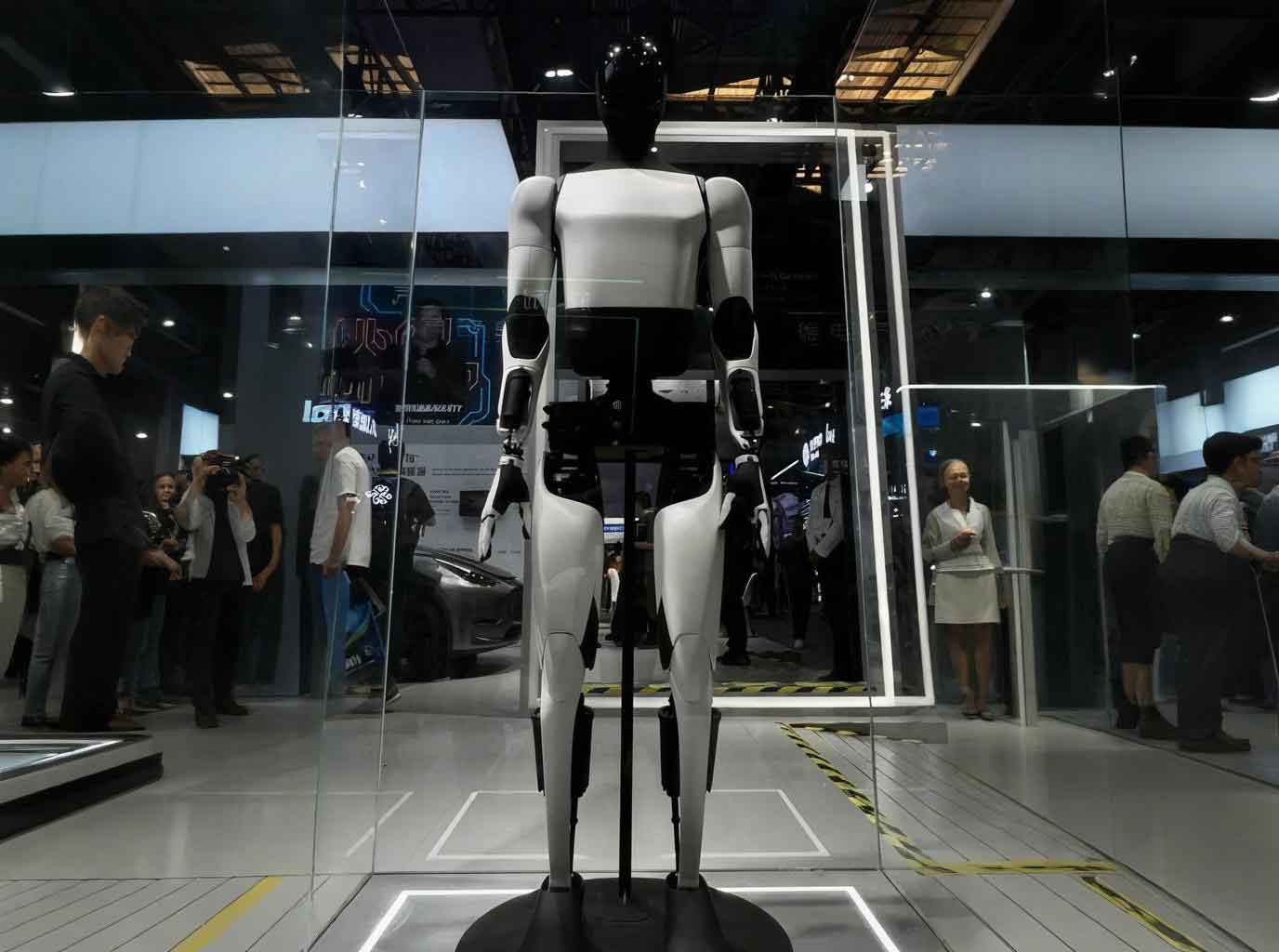
As I reflect on the accelerating integration of intelligent machines into our workplaces and daily lives, a particular type of technology stands out for its profound implications: embodied AI. Distinct from conventional software-based intelligence, an embodied AI robot is a system that leverages a physical form to interact with and learn from the real world, generating adaptive, intelligent behavior. This shift from disembodied algorithms to situated, physical agents marks a pivotal moment not just in technological evolution but in the very fabric of social production and human existence. While promising to liberate us from arduous, repetitive, and dangerous tasks—potentially creating the “free space” for human development envisioned by progressive thought—this transformation also precipitates a deep crisis for the laboring subject. The unique capabilities of embodied AI robot systems are actively reshaping the landscape of work, challenging the agency, dignity, and meaning traditionally associated with human labor. In this essay, I will explore the manifestations of this subjectivity crisis, unravel its underlying socio-technical logic, and propose pathways for reasserting human primacy in the age of intelligent machines.
I. The Multifaceted Crisis of Labor Subjectivity
The promise of the embodied AI robot lies in its core technical attributes: embodied presence, intelligent coordination, holistic perception, and ubiquitous integration. However, these same attributes are the very mechanisms through which the worker’s autonomy is being eroded.
1. Accelerated Job Displacement by Embodied Presence
Unlike previous automation waves that targeted specific, rule-based tasks, the embodied AI robot possesses a generalized ability to navigate and manipulate open-ended environments. Its physical instantiation allows it to perform roles from warehouse logistics and manufacturing to eldercare and customer service. The displacement is both comprehensive, penetrating entire occupational categories rather than isolated tasks, and exponentially rapid, as these systems can learn and adapt faster than humans can reskill. This undermines the very economic foundation of the worker’s agency, creating a pervasive anxiety and a “race against the machine” where one’s skills are perpetually on the verge of obsolescence.
2. Deconstruction of the Labor Process through Intelligent Coordination
Networks of embodied AI robot units can self-organize, communicating and coordinating in real-time to optimize complex workflows. This distributed intelligence deconstructs the holistic labor process into discrete, algorithmically managed task-units. The worker is no longer the orchestrator of a process but becomes a passive node within a smart network, responding to directives from the system. Decision-making authority migrates from human experience and collective wisdom to opaque algorithmic optimization, marginalizing the worker from core operational judgments and reducing their role to that of a mere appendage or monitor.
3. Powerful Control over Labor Activity via Holistic Perception
Equipped with advanced sensor suites, the embodied AI robot and its associated infrastructure create a panoptic system of surveillance. It captures not just output but the worker’s physiological state, micro-movements, and pace. This data enables a granular, real-time modulation of labor intensity and rhythm. Furthermore, this pervasive sensing dissolves the boundary between work and life, as monitoring extends into private spaces, enforcing a state of constant “on-call” availability. Labor ceases to be a demarcated activity and becomes a diffuse, always-on condition, stripping away autonomy over one’s time and energy.
4. Subtle Dilution of Labor Meaning through Ubiquitous Integration
The naturalistic interaction and deepening fusion between human and embodied AI robot corrode the social and existential dimensions of work. As human-machine collaboration becomes seamless, vital workplace socialization and team-based problem-solving are diminished, fostering an “atomized” labor environment. More profoundly, when a task’s successful outcome results from deeply intertwined human-embodied AI robot collaboration, it becomes difficult to attribute credit and meaning to the human contribution. The laborer’s ability to “see themselves” in their creation—a fundamental source of dignity and self-identity—is obscured, leading to a crisis of recognition and a dependence on external, algorithmic validation.
The following table summarizes these four dimensions of the crisis:
| Technical Attribute of Embodied AI | Mechanism of Crisis | Impact on Labor Subjectivity |
|---|---|---|
| Embodied Presence | Accelerated, comprehensive job displacement | Undermines economic security and skill relevance |
| Intelligent Coordination | Deconstruction & algorithmic management of the labor process | Reduces worker to a passive node, removes decision-making authority |
| Holistic Perception | Panoptic surveillance & granular control | Erodes autonomy over work pace and dissolves work-life boundaries |
| Ubiquitous Integration | Dilution of social bonds and blurred contribution lines | Obscures source of meaning and self-identity in work |
II. The Underlying Logic of the Subjectivity Crisis
This crisis is not an inevitable result of technological progress. Rather, it is an outcome of specific socio-economic forces that distort the development and application of the embodied AI robot.
1. The Ontological Challenge: Blurring the Human-Machine Frontier
The embodied AI robot presents a deeper philosophical challenge than previous tools. By acquiring “quasi-in-the-world” experience through sensorimotor interaction, it begins to encroach upon domains once considered uniquely human. Its outputs can appear contextually adaptive and creative, while its use of affective computing can simulate empathy. This blurring of the creative and emotional boundaries can induce an existential anxiety that leads to an unconscious ceding of human authority, accelerating the loss of subjective ground.
2. The Triumph of Instrumental over Value Rationality
The logic embedded within the embodied AI robot is inherently instrumental, focused on efficiency, optimization, and quantifiable outputs. This logic inevitably permeates the labor systems it designs. Workers become dependent on the system, automating the transfer of decision-making power. Furthermore, the rich, qualitative value of labor—its creativity, care, and social meaning—is stripped away, reduced to a set of measurable KPIs. The worker is thus judged not by the holistic value of their contribution but by their fit within a data pattern, a process that can be described by the following formalization of alienation:
$$ \text{Labor Value}_{human} \rightarrow \text{Data Pattern}_{system} \quad \text{where} \quad \text{Value} = f(\text{Efficiency}, \text{Output Metrics}) $$
Here, the function \( f \) represents the algorithmic reduction of complex human activity to a limited set of quantifiable variables.
3. The Colonialization by Digital Capital
The most potent driver of this crisis is the subsumption of embodied AI robot technology under the logic of capital accumulation. Capital seeks to minimize variable costs (labor) and maximize control. The embodied AI robot is the perfect vehicle: it promises cheaper, more pliable, and endlessly available labor-power. This logic manifests in three ways:
- Expansive Replacement (“Machine-for-Human”): Driving job displacement to lower costs, devaluing human labor.
- Absolute Control: Using the embodied AI robot‘s perception capabilities for surveillance and the hyper-exploitation of every moment of a worker’s time and even physiological capacity.
- Structural Exclusion from Value Distribution: The rewards of productivity gains concentrate among owners of capital and a small tech elite, while most workers face downward pressure on wages and social marginalization, captured by the inequality: $$ \Delta \text{Wealth}_{Capital/Tech Elite} \gg \Delta \text{Wealth}_{Labor} $$
III. Pathways to Resolving the Crisis
Reclaiming human subjectivity requires a multi-pronged approach that addresses cognitive, economic, technical, and institutional dimensions.
1. Reconstructing Value Cognition: Affirming the Human Agent
We must foster a critical consciousness that recognizes the embodied AI robot as a tool—a sophisticated extension of human intelligence, not a replacement for human essence. Education should emphasize the cultivation of uniquely human capabilities: complex problem-finding, ethical reasoning, deep empathy, and creative synthesis. The goal is to shift from adapting to technology to actively commanding it for human ends.
2. Transcending Capital Logic: Steering Technology for Liberation
Policy must actively steer the development of the embodied AI robot towards humane ends. This involves:
- Strong Regulation: Enacting laws to prevent exploitative surveillance and mandate human oversight in critical decisions.
- Incentive Structures: Using public policy to encourage R&D in embodied AI robot applications that augment labor, improve safety, and reduce drudgery.
- Reclaiming Data Commons: Treating the data generated by human-embodied AI robot interaction as a public resource to be governed for collective benefit, not private extraction.
3. Building Symbiotic Paradigms: From Competition to Collaboration
The future lies in human-embodied AI robot symbiosis. We must:
- Design for Collaboration: Engineer embodied AI robot systems with intuitive interfaces and “human-in-the-loop” control, ensuring they are tools for empowerment.
- Upskill for Synergy: Equip workers with the skills to partner with embodied AI robot systems, managing and directing them while focusing on higher-order tasks.
- Cultivate New Ecosystems: Develop labor models and organizational structures built around complementary human and machine strengths.
4. Innovating Institutional Design: Proactive Social Buffers
Societies need proactive institutions to manage the transition. Key measures include:
- Technology Impact Assessment: Mandating rigorous forecasts and evaluations of the employment effects of deploying embodied AI robot systems, tied to retraining plans.
- Lifelong Learning Systems: Overhauling education and vocational training to be adaptive and continuous, funded by mechanisms like a robot tax or levies on automation profits.
- Robust Social Safety Nets: Strengthening unemployment insurance, exploring universal basic income, and redefining labor laws to protect workers’ well-being and rights in hybrid workplaces.
The following table outlines this integrated strategy:
| Pathway | Core Objective | Key Actions |
|---|---|---|
| Value Cognition | Affirm human agency & essence | Critical education; Cultivation of irreplaceable human skills (creativity, ethics) |
| Transcending Capital | Steer tech for liberation, not exploitation | Regulate surveillance & control; Incentivize augmentative AI; Govern data as a commons |
| Symbiotic Paradigms | Foster human-embodied AI robot collaboration | Human-centric design; Workforce upskilling for synergy; New organizational models |
| Institutional Innovation | Provide proactive buffers & transitions | Technology impact assessments; Lifelong learning systems; Expanded social safety nets |
In conclusion, the rise of the embodied AI robot presents humanity with a profound choice. Allowed to develop under an untamed logic of capital and instrumental efficiency, it threatens to deepen alienation and erode the foundations of meaningful work and human dignity. However, this path is not preordained. By consciously reshaping our values, governing our economic systems, designing for collaboration, and fortifying our social institutions, we can harness the embodied AI robot as the ultimate tool for labor liberation. The challenge is to ensure that this powerful technology becomes a means for the comprehensive development of human potential, finally creating the conditions where the free exercise of human agency becomes the true purpose of social and economic life. The future of human subjectivity in the age of intelligent machines depends on the choices we make today.