
In this article, I explore the evolutionary journey from foundational cybernetics to modern Cyber-Physical Systems (CPS) and the emergence of embodied AI robots. The integration of computation, communication, and control has revolutionized how we perceive intelligent systems, shifting from abstract automation to physically interactive agents. Embodied AI robots represent a paradigm where intelligence is not merely computed but emerges through dynamic interactions between body, environment, and cognition. This fusion is pivotal for advancing human-robot collaboration in industrial, commercial, and domestic spheres. Through a first-person perspective, I delve into theoretical underpinnings, technological advancements, and practical applications, emphasizing the role of large models, real-time control systems, and interdisciplinary convergence in shaping the future of embodied AI robots.
Theoretical Evolution from Cybernetics to Cyber-Physical Systems
The genesis of modern intelligent systems can be traced back to cybernetics, pioneered by Norbert Wiener in the mid-20th century. Cybernetics focused on control and communication in animals and machines, laying groundwork for feedback mechanisms and systemic analysis. Its core principle revolved around information processing and adaptive control, expressed through mathematical formulations such as feedback loops. For instance, a basic control system can be modeled as:
$$ \dot{x}(t) = Ax(t) + Bu(t), \quad y(t) = Cx(t) + Du(t) $$
where \( x(t) \) represents the state vector, \( u(t) \) the control input, and \( y(t) \) the output. This framework enabled applications in biology, economics, and engineering, but limitations arose in handling complex, integrated environments. The advent of Cyber-Physical Systems (CPS) addressed these gaps by unifying computation, communication, and control—often termed the 3C technologies. CPS transcends traditional boundaries by creating a seamless loop between physical entities and cyber components, facilitating real-time perception, decision-making, and execution. A CPS can be abstracted as a tuple:
$$ \text{CPS} = \langle \mathcal{P}, \mathcal{C}, \mathcal{F} \rangle $$
where \( \mathcal{P} \) denotes physical processes, \( \mathcal{C} \) computational modules, and \( \mathcal{F} \) feedback mechanisms. This integration is crucial for embodied AI robots, as they rely on CPS frameworks to bridge sensory inputs with cognitive actions. The table below summarizes key transitions from cybernetics to CPS:
| Aspect | Cybernetics | CPS | Relevance to Embodied AI Robots |
|---|---|---|---|
| Focus | Control and communication | Integration of physical and cyber worlds | Provides system-level architecture for robot-environment interaction |
| Methodology | Feedback loops, information theory | Real-time sensing, analytics, execution | Enables embodied AI robots to perceive and adapt dynamically |
| Scale | Single systems | Complex, networked systems | Supports multi-robot coordination and swarm intelligence |
| Technologies | Analog control, early computing | IoT, cloud computing, AI | Empowers embodied AI robots with cloud-edge synergy and big data |
CPS emphasizes a holistic approach, where embodied AI robots act as both physical actuators and intelligent agents. The fusion of CPS with robotics leads to RobotCPS, a specialized domain where robot control, data flow, and AI converge. This evolution underscores that embodied AI robots are not isolated tools but integral components of larger smart ecosystems, capable of autonomous operation through continuous learning and adaptation.
Technological Evolution of Industrial Robot Operating Systems
The development of operating systems for robots has been instrumental in advancing embodied AI robots. Historically, industrial robots relied on proprietary controllers with limited flexibility. The introduction of the Robot Operating System (ROS) in 2007 offered an open-source platform for research, but it lacked real-time guarantees essential for industrial automation. In contrast, Industrial Robot Operating Systems (iROS), developed around 2016, cater specifically to joint-type manipulators with stringent real-time requirements. iROS embodies principles of modularity and object-oriented programming, integrating kinematics, dynamics, trajectory planning, and process modules. For example, the forward kinematics of a robotic arm can be computed using the Denavit-Hartenberg convention:
$$ T_i^{i-1} = \begin{bmatrix} \cos\theta_i & -\sin\theta_i\cos\alpha_i & \sin\theta_i\sin\alpha_i & a_i\cos\theta_i \\ \sin\theta_i & \cos\theta_i\cos\alpha_i & -\cos\theta_i\sin\alpha_i & a_i\sin\theta_i \\ 0 & \sin\alpha_i & \cos\alpha_i & d_i \\ 0 & 0 & 0 & 1 \end{bmatrix} $$
where \( \theta_i, d_i, a_i, \alpha_i \) are joint parameters. iROS leverages such algorithms to ensure precise control, while its architecture supports scalability for embodied AI robots in diverse settings. The table below contrasts iROS with ROS:
| Feature | iROS | ROS | Impact on Embodied AI Robots |
|---|---|---|---|
| Real-time Performance | High (millisecond-level) | Low (non-real-time) | Critical for embodied AI robots in safety-critical industrial tasks |
| Target Application | Industrial manipulators, production lines | Mobile robots, research prototypes | Enables embodied AI robots to operate in structured environments like factories |
| Integration | Deep fusion with PLCs, HMIs, and databases | Modular nodes with loose coupling | Facilitates embodied AI robots as part of larger CPS networks |
| Standards Compliance | IEC 61131, OPC UA | Community-driven protocols | Ensures interoperability for embodied AI robots in standardized automation |
This technological progression highlights how embodied AI robots benefit from dedicated control systems that harmonize motion, perception, and cognition. iROS serves as a “cerebellum” for embodied AI robots, handling low-level coordination while higher-level AI modules drive intelligent behavior. As embodied AI robots evolve, such operating systems become pivotal for achieving robustness and adaptability in complex scenarios.
Fusion of Artificial Intelligence and Cybernetics
The convergence of artificial intelligence (AI) and cybernetics has redefined the capabilities of embodied AI robots. Early AI, rooted in symbolic logic, aimed to automate intelligence through rule-based systems. However, limitations in handling uncertainty led to the rise of connectionist approaches, particularly neural networks. Deep learning models, such as convolutional neural networks (CNNs) and transformers, have enabled breakthroughs in perception and natural language processing. For embodied AI robots, this means enhanced multi-modal interaction—integrating vision, language, and force feedback. A CNN for visual perception can be represented as:
$$ \mathbf{y} = \sigma \left( \mathbf{W} * \mathbf{x} + \mathbf{b} \right) $$
where \( \mathbf{x} \) is the input image, \( \mathbf{W} \) the filter weights, \( \mathbf{b} \) biases, \( * \) denotes convolution, and \( \sigma \) an activation function. Meanwhile, cybernetic principles provide feedback mechanisms for adaptive control. Reinforcement learning (RL) exemplifies this fusion, where an embodied AI robot learns policies through trial-and-error interactions. The Q-learning update rule is:
$$ Q(s, a) \leftarrow Q(s, a) + \alpha \left[ r + \gamma \max_{a’} Q(s’, a’) – Q(s, a) \right] $$
with \( \alpha \) as learning rate, \( \gamma \) discount factor, \( r \) reward, and \( s, s’ \) states. This synergy allows embodied AI robots to optimize actions in dynamic environments. Generative AI, including large language models (LLMs), further augments cognition by enabling knowledge automation. The transformer architecture’s self-attention mechanism computes:
$$ \text{Attention}(Q, K, V) = \text{softmax}\left(\frac{QK^T}{\sqrt{d_k}}\right) V $$
where \( Q, K, V \) are query, key, and value matrices. When fine-tuned for specific domains, LLMs become proprietary models (P-LLMs) that guide embodied AI robots in task planning and human-robot dialogue. The table below outlines AI-cybernetics integration milestones:
| Era | AI Approach | Cybernetics Contribution | Advancement for Embodied AI Robots |
|---|---|---|---|
| 1950s-1980s | Symbolic AI, expert systems | Feedback control, system stability | Laid groundwork for automated reasoning in embodied AI robots |
| 1990s-2010s | Neural networks, deep learning | Adaptive control, information theory | Enabled embodied AI robots with perception and pattern recognition |
| 2020s-present | Generative AI, large models | Real-time optimization, holistic systems | Empowers embodied AI robots with cognitive abilities and natural interaction |
Thus, the fusion cultivates embodied AI robots that are not only reactive but also proactive, capable of learning from experiences and evolving their strategies. This aligns with the vision of embodied intelligence, where smart behavior emerges from physical engagement with the world.
Integration of RobotCPS and Embodied AI Robots
RobotCPS emerges as a specialized instance of CPS tailored for robotic systems. It conceptualizes robots as nexus points where control, data, and intelligence intersect. The architecture of RobotCPS comprises four core modules: robot control, computation, communication, and AI. Mathematically, a RobotCPS can be modeled as a dynamical system:
$$ \begin{aligned} \dot{\mathbf{x}}_p &= f_p(\mathbf{x}_p, \mathbf{u}, \mathbf{d}), \\ \dot{\mathbf{x}}_c &= f_c(\mathbf{x}_c, \mathbf{y}, \mathbf{z}), \\ \mathbf{y} &= h_p(\mathbf{x}_p), \\ \mathbf{u} &= h_c(\mathbf{x}_c, \mathbf{y}), \end{aligned} $$
where \( \mathbf{x}_p \) and \( \mathbf{x}_c \) are physical and cyber states, \( \mathbf{u} \) control inputs, \( \mathbf{d} \) disturbances, \( \mathbf{y} \) sensor outputs, and \( \mathbf{z} \) external data. This framework enables embodied AI robots to perform complex tasks by synchronizing motion with information flows. For example, in a manufacturing line, an embodied AI robot equipped with RobotCPS can adapt to product variations via real-time analytics. The integration facilitates hardware-software decoupling, adhering to standards like IEC 61499 and OPC UA, which promote interoperability. A key application is in embodied AI robots that combine manipulators with mobile platforms—such as compound robots or humanoids. These systems rely on multi-modal sensors and actuators, coordinated through RobotCPS to achieve tasks like object manipulation, navigation, and human collaboration. The table below details RobotCPS components:
| Module | Function | Technologies | Role in Embodied AI Robots |
|---|---|---|---|
| Robot Control | Trajectory planning, kinematics, dynamics | iROS, motion controllers | Provides precise actuation for embodied AI robots’ physical actions |
| Computation | Data processing, storage, analytics | Cloud-edge computing, databases | Supports decision-making and learning for embodied AI robots |
| Communication | Real-time data exchange | EtherCAT, MQTT, 5G | Ensures embodied AI robots are networked for collaborative operations |
| AI | Machine learning, pattern recognition | LLMs, computer vision, RL | Endows embodied AI robots with cognitive and adaptive capabilities |
Embodied AI robots within RobotCPS transcend traditional automation by embodying intelligence that is context-aware and responsive. They leverage digital twins for simulation and optimization, creating a virtual replica that mirrors physical operations. This synergy propels embodied AI robots from passive executors to active participants in smart environments.
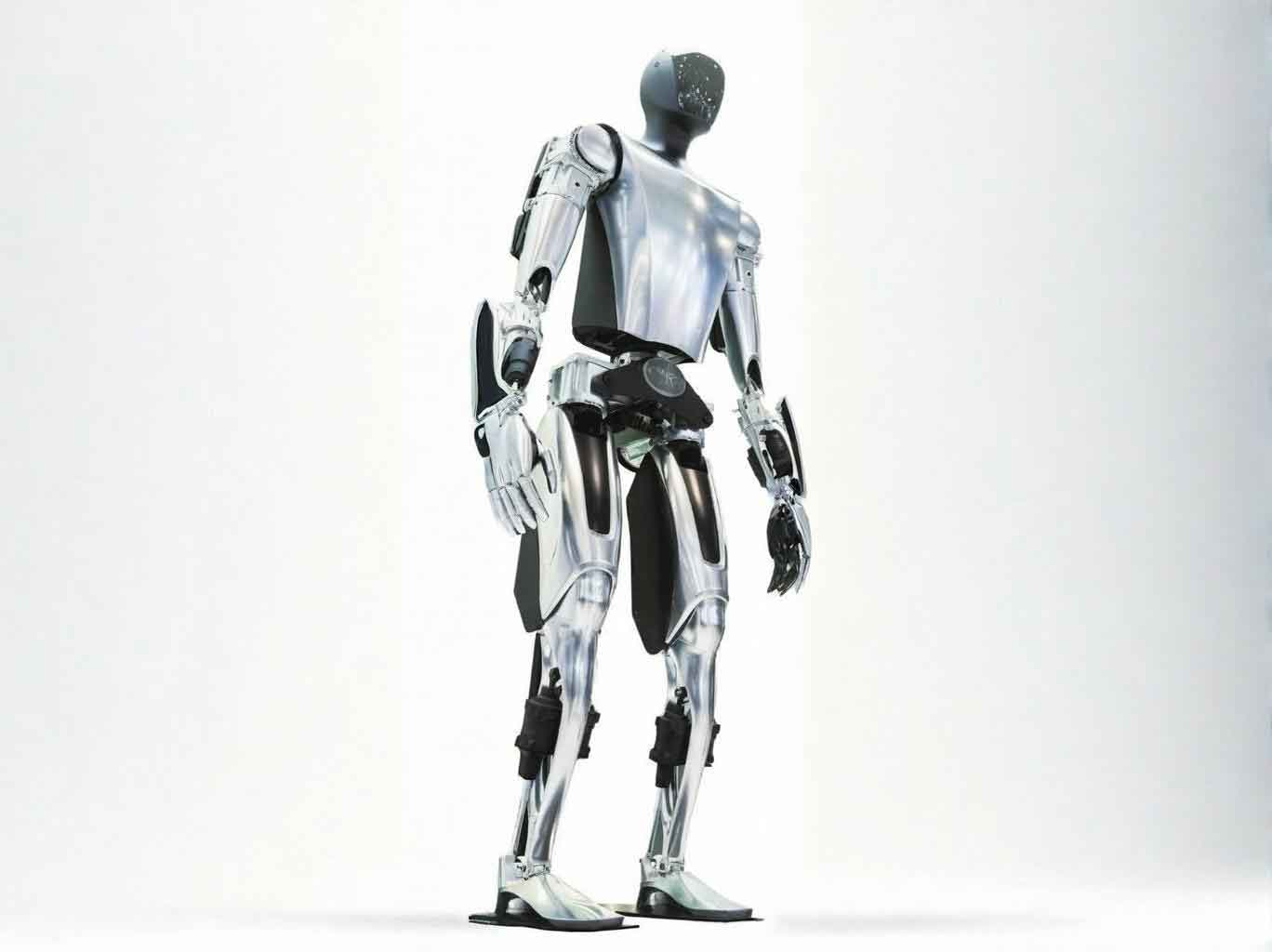
Fusion of Embodied AI Robots and Large Models
The incorporation of large models into embodied AI robots marks a transformative leap toward general-purpose intelligence. Large language models (LLMs) and vision-language models (VLMs) serve as “brains” that process natural language instructions and visual cues, enabling embodied AI robots to understand and execute high-level tasks. For instance, an embodied AI robot can parse a command like “assemble the component on the table” by decomposing it into sub-actions via LLM reasoning. The training of these models involves minimizing a loss function over a dataset \( \mathcal{D} \):
$$ \mathcal{L}(\theta) = -\sum_{(x,y) \in \mathcal{D}} \log P(y | x; \theta) $$
where \( \theta \) represents model parameters. To tailor models for specific physical forms, proprietary LLMs (P-LLMs) are fine-tuned using domain-specific data, ensuring that embodied AI robots align with their mechanical constraints and environmental contexts. The Robot Unified Device Architecture (RUDA) platform exemplifies this fusion by integrating iROS with LLMs, creating a unified development environment for embodied AI robots. RUDA’s hardware support encompasses robotic arms, AGVs, sensors, and grippers, all orchestrated through a modular software stack. The architecture enables embodied AI robots to leverage reinforcement learning for skill acquisition, where a policy \( \pi(a|s) \) is optimized to maximize cumulative reward \( R = \sum_{t} \gamma^t r_t \). Additionally, retrieval-augmented generation (RAG) techniques enhance knowledge grounding, allowing embodied AI robots to access private databases securely. The table below outlines large model types and their roles:
| Model Type | Description | Application in Embodied AI Robots |
|---|---|---|
| LLM (e.g., GPT-based) | Processes text, generates instructions | Enables embodied AI robots to interpret human commands and plan tasks |
| VLM (e.g., CLIP-based) | Aligns visual and linguistic data | Allows embodied AI robots to recognize objects and scenes from descriptions |
| P-LLM (Proprietary) | Domain-specific fine-tuned model | Customizes embodied AI robots for industrial, commercial, or home settings |
| IM-LLM (Industrial) | Focuses on manufacturing knowledge | Guides embodied AI robots in assembly, welding, or quality control |
Through this fusion, embodied AI robots gain the ability to learn from interactions, simulate scenarios via digital twins, and deploy optimized strategies in real-time. The convergence of large models with robotics underscores that embodied AI robots are evolving into cognitive entities capable of autonomous growth and collaboration.
Application Practices in Smart Manufacturing
Practical implementations demonstrate the efficacy of embodied AI robots in real-world settings, particularly in smart manufacturing. Traditional production systems often suffer from fragmentation due to disparate controllers and software. RobotCPS addresses this by offering a unified platform where embodied AI robots serve as central executors within digitized workflows. For example, in a discrete assembly line, an embodied AI robot equipped with iROS and AI modules can perform pick-and-place operations while communicating with PLCs and MES via OPC UA. The system achieves a closed-loop control where sensory data from cameras or force sensors refine actions. The economic impact can be quantified through metrics like Overall Equipment Effectiveness (OEE):
$$ \text{OEE} = \text{Availability} \times \text{Performance} \times \text{Quality} $$
Embodied AI robots enhance OEE by reducing downtime through predictive maintenance and improving precision via adaptive control. In welding applications, an embodied AI robot uses vision systems to track seams and adjust trajectories in real-time, governed by dynamics equations:
$$ \tau = M(q)\ddot{q} + C(q, \dot{q})\dot{q} + G(q) + J(q)^T F_{ext} $$
where \( \tau \) is torque, \( M \) inertia matrix, \( C \) Coriolis terms, \( G \) gravity, \( J \) Jacobian, and \( F_{ext} \) external forces. Moreover, embodied AI robots enable flexible manufacturing by quickly reprogramming via natural language or demonstration learning. Digital twin integration allows simulation of embodied AI robots in virtual environments before physical deployment, minimizing risks and optimizing layouts. The table below showcases application scenarios:
| Scenario | Embodied AI Robot Functions | Technologies Utilized | Outcomes |
|---|---|---|---|
| Assembly Line | Part handling, screwdriving, inspection | iROS, AI vision, force control | Increased throughput by 30%, reduced errors |
| Welding Station | Seam tracking, parameter adjustment | RobotCPS, sensors, digital twin | Improved weld quality, energy savings |
| Logistics Hub | Mobile manipulation, sorting, packing | RUDA, AGV integration, LLMs | Enhanced flexibility, 24/7 operation |
| Quality Control | Defect detection, measurement | VLM, deep learning, real-time analytics | Zero-defect production, compliance assurance |
These practices affirm that embodied AI robots are instrumental in achieving Industry 4.0 goals. They embody intelligence that permeates physical operations, fostering a symbiotic relationship between humans and machines. As embodied AI robots become more pervasive, their role expands beyond factories to sectors like healthcare, agriculture, and domestic services, driven by continuous technological fusion.
Conclusion
The journey from cybernetics to CPS and onward to embodied AI robots illustrates a profound shift in intelligent system design. Embodied AI robots represent the culmination of interdisciplinary fusion, where control theory, artificial intelligence, and robotics converge to create agents that learn, adapt, and collaborate. Through frameworks like RobotCPS and platforms like RUDA, embodied AI robots harness large models and real-time control to navigate complex environments. The emphasis on multi-modal interaction and perception-action cycles ensures that embodied AI robots are not mere tools but active participants in socio-technical ecosystems. As research advances, embodied AI robots will continue to evolve, driven by innovations in neuromorphic computing, swarm intelligence, and ethical AI. This trajectory promises a future where embodied AI robots seamlessly integrate into daily life, enhancing productivity, safety, and human well-being. The fusion explored herein lays a robust foundation for the next wave of embodied intelligence, marking a pivotal step toward a harmonious human-robot coexistence.