
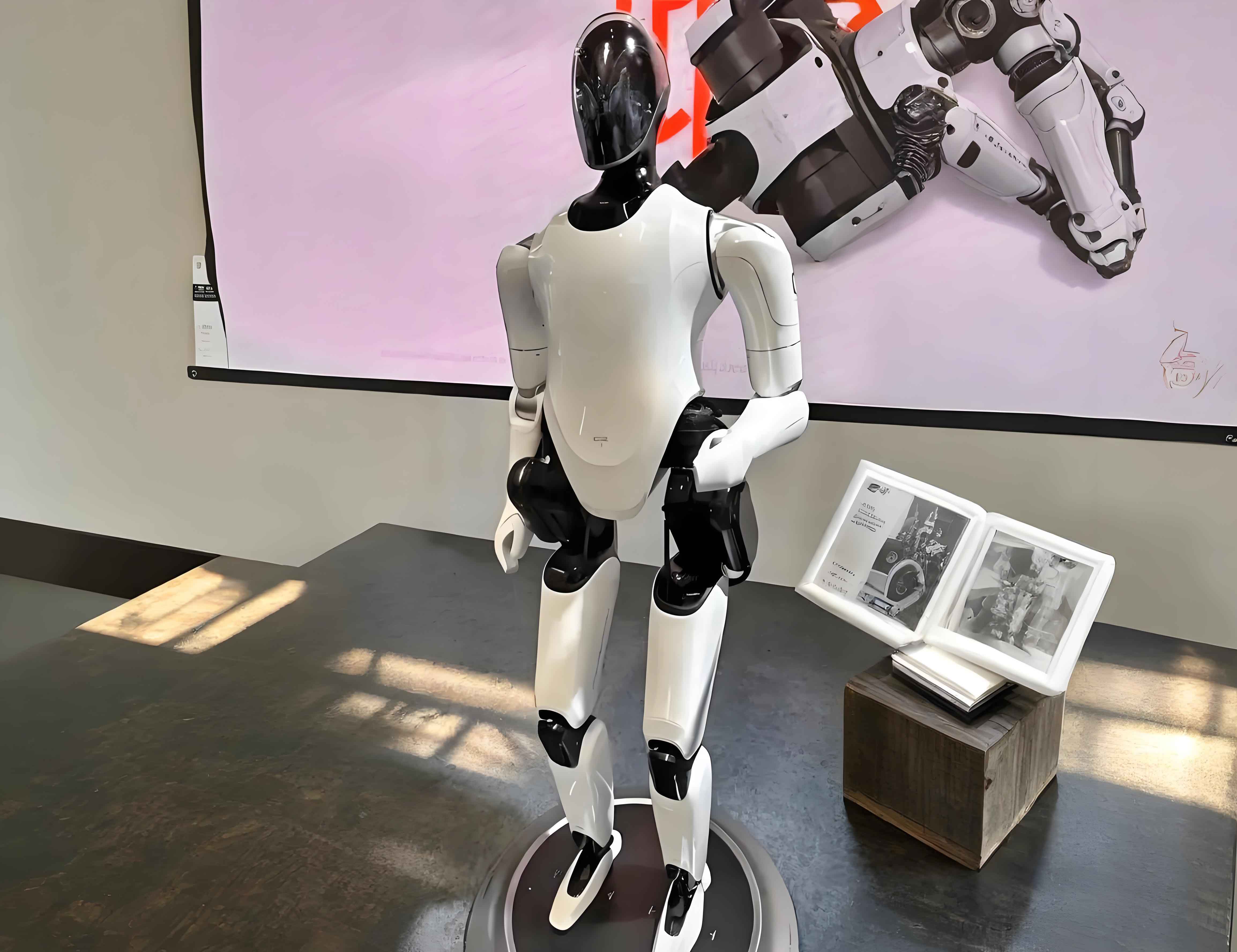
The convergence of artificial intelligence (AI) and robotics is fundamentally reshaping paradigms across all sectors, with healthcare standing as a primary frontier for this transformation. From health monitoring and diagnostic assistance to telemedicine, intelligent solutions are proliferating. A pivotal evolution within this landscape is the rise of embodied AI robot technology. Unlike disembodied AI that processes information in isolation, an embodied AI robot operates through a closed-loop “perception-decision-action” cycle, interacting with and learning from the physical world. This grants it context-aware, adaptive, and interactive capabilities. As a cornerstone of healthcare delivery, clinical nursing—a highly integrated and interpersonal process—presents both a significant challenge and a tremendous opportunity for the application of embodied AI robot systems. While early nursing robots have undertaken basic tasks in homes and institutions, the advent of embodied intelligence promises to elevate them from mere assistive tools to proactive, intelligent partners within the care team. This article analyzes the application prospects of embodied AI robot systems in clinical nursing, outlining their requisite core competencies, proposing a conceptual framework for their integration, and examining the impending transformation of nursing practice alongside its associated challenges.
Current State of Robotics in Clinical Nursing
The integration of robotics into medicine is not novel, with systems like the da Vinci surgical robot achieving widespread adoption in specialized procedures. In contrast, the development and deployment of nursing robots have progressed more incrementally. Defined as systems capable of dynamic interaction and environmental adaptation within professional healthcare settings, nursing robots aim for collaboration rather than mere repetition. Current applications are often fragmented and scenario-specific, as summarized in Table 1.
| Application Domain | Examples of Tasks/Functions | Stage of Development |
|---|---|---|
| Logistical & Environmental Support | Medication delivery, supply transport, disinfection, linen handling. | Early commercial deployment; common in pilot studies. |
| Physical Assistance & Mobility | Patient transfer/repositioning, assisted walking/exoskeletons, fall prevention. | Research & early clinical adoption for specific use cases (e.g., ReWalk). |
| Procedural Assistance | Venipuncture support, IV line management, vital signs monitoring, surgical instrument handling. | Predominantly in R&D and prototype testing; limited clinical scale. |
| Monitoring & Telepresence | Remote patient monitoring, telehealth facilitation, security rounds. | Increasing adoption, especially post-pandemic. |
| Psychosocial & Cognitive Support | Companionship, cognitive stimulation, health education reminders. | Early research in dementia care; heavily reliant on conversational AI. |
While promising, most systems remain functionally narrow, struggling with the unstructured, dynamic, and highly interpersonal nature of general clinical nursing. The vision for a truly intelligent, seamlessly interactive, and collaborative embodied AI robot for nursing necessitates a leap beyond current capabilities, centered on three core competencies.
Core Competencies for the Future Embodied AI Nursing Robot
Clinical nursing is inherently patient-centered, requiring nuanced communication, coordination, and empathy. For an embodied AI robot to transition from a peripheral tool to an integrated team member, it must evolve through stages of assistance, task substitution, and ultimately, autonomous, context-sensitive service. This evolution is underpinned by three foundational competencies.
| Core Competency | Description | Key Technologies/Enablers |
|---|---|---|
| 1. Environmental Interaction & Embodiment | The ability to perceive, navigate, and physically manipulate a dynamic clinical environment safely and effectively. | Multi-modal sensors (LiDAR, vision, force/torque), Simultaneous Localization and Mapping (SLAM), advanced actuation and gripper design, adaptable morphologies (humanoid, canine, modular). |
| 2. Affective & Social Interaction | The capacity to recognize, interpret, and respond appropriately to human emotions, verbal cues, and social contexts. | Natural Language Processing (NLP), affective computing (facial/voice tone analysis), Large Language Models (LLMs) for contextual dialogue, trust-building behavior design. |
| 3. Autonomous Learning & Evolution | The capability to improve performance over time through interaction, both for individual patient adaptation and systemic optimization of care protocols. | Imitation learning, reinforcement learning, federated learning on longitudinal patient data, digital twin simulations for training. |
Environmental Interaction is the bedrock of embodiment. The robot must fuse data from diverse sensors to construct a coherent model of its surroundings—identifying obstacles, locating objects, and understanding spatial relationships. This perceptual model directly informs mobility and manipulation. The optimal physical form factor (humanoid, mobile base with arms, etc.) remains an open question, dictated by task constraints and social acceptance. Research is advancing in bimanual coordination, a critical skill for nursing tasks, using LLMs as a “central nervous system” to orchestrate collaborative action between limbs or between multiple robots.
Affective Interaction is the bridge to human-centric care. By analyzing speech patterns, facial expressions, and physiological signals, an embodied AI robot can assess a patient’s emotional state (e.g., anxiety, pain, loneliness) and tailor its responses. This goes beyond transactional dialogue to provide psychosocial support, de-escalate distress, and alert human nurses when intervention is needed. The integration of empathetic LLMs into a physically present embodied AI robot creates a powerful platform for delivering compassionate, personalized engagement.
Autonomous Learning & Evolution ensures the system is not static. Through techniques like imitation learning, a robot can learn complex manipulation tasks from limited human demonstrations. More profoundly, by continuously interacting with a specific patient, the robot can learn individual patterns and preferences, enabling predictive and personalized care. At a systemic level, aggregated data from numerous robot-patient interactions can be used to refine care algorithms and best practices, creating a continuous improvement cycle. This competency transforms the embodied AI robot from a pre-programmed device into an adaptive care agent.
A Conceptual Framework for Systemic Integration
The aforementioned competencies, while essential, are insufficient for safe and effective clinical integration alone. A systemic framework is required to guide the development and deployment of embodied AI robot systems in nursing. We propose a five-layer concentric model, progressing from foundational principles to broad ecosystem integration.
| Layer | Focus | Key Components & Considerations |
|---|---|---|
| 1. Core Safety & Ethics Layer | The non-negotiable foundation governing all robot actions. | Functional safety (redundancy, fail-safes), data security & privacy (encryption, anonymization), ethical principles (beneficence, non-maleficence, patient autonomy, dignity), accountability & liability frameworks. |
| 2. Foundational Function Layer | The closed-loop “brain and body” of the robot. | Perception: Multi-sensor fusion. Decision: Clinical AI algorithms for assessment and planning. Action: Precise, safe physical actuation. $$ \text{Robot Action}_t = f(\text{Perception}_t, \text{Clinical Model}, \text{Patient State}_{t-1}) $$ |
| 3. Intelligent Collaboration Layer | Seamless integration into care workflows and multi-agent teams. | Interoperability with Hospital Information Systems (HIS), Electronic Health Records (EHR). Multi-robot coordination algorithms for task allocation. Contextual adaptation to varying clinical scenarios (ED vs. ward). |
| 4. Human-Robot Interaction (HRI) Layer | Optimizing trust, usability, and acceptance by humans. | Intuitive interfaces (voice, touch, gesture). Transparent communication of robot intent and reasoning. Personalization of interaction style. Longitudinal trust calibration based on reliability. $$ \text{Trust}_{human}(t) \propto \frac{\sum \text{Successful Interactions}}{\sum \text{Total Interactions}} \times \text{Transparency}_{robot}(t) $$ |
| 5. Ecosystem Expansion Layer | Scalable deployment, governance, and sustainable value creation. | Modular, upgradable hardware/software design. Regulatory standards and certification pathways. Business models for acquisition and maintenance. Lifecycle management and ethical decommissioning. |
This framework emphasizes that the technological prowess of the embodied AI robot (Layers 2-3) must be enveloped by a robust ethical and safety core (Layer 1) and successfully mediated through human-centric design (Layer 4) to achieve scalable impact within the healthcare ecosystem (Layer 5).
The Impending Transformation of Clinical Nursing Models
The maturation and integration of embodied AI robot systems will inevitably catalyze significant shifts in how nursing care is delivered, experienced, and structured.
| Dimension of Change | Current State | Future State with Embodied AI Robots |
|---|---|---|
| Care Delivery Model | Nurse-centric execution of both cognitive and manual tasks. | Human-robot collaborative teams. Nurses offload repetitive, physically demanding tasks to robots, focusing on complex judgment, coordination, and empathic care. |
| Nurse-Patient Relationship | Direct, primarily human-to-human interaction. | Triadic relationship (nurse-robot-patient). Robots act as empathetic intermediaries, providing constant monitoring and basic companionship, freeing nurse time for deeper therapeutic communication. |
| Nursing Roles & Expertise | Roles defined around direct care provision and unit management. | Role evolution and specialization. Emergence of new roles: AI-Nursing Coordinator, Robotics Liaison, Data-Driven Care Manager. Nursing expertise expands to include human-robot team management and AI system oversight. |
| Care Precision & Proactivity | Often reactive, based on intermittent checks and patient reporting. | Continuous, data-informed, and predictive. Robots provide real-time analytics on patient status, enabling early intervention and truly personalized care pathways. |
The mathematical optimization of care can be envisioned through a collaborative efficiency model. Let $T_{total}$ represent the total care needs of a patient cohort. This can be partitioned into tasks suitable for robots ($T_R$) and those requiring human nurses ($T_H$).
$$ T_{total} = T_R + T_H $$
The embodied AI robot system aims to maximize the efficiency and quality of completing $T_R$, while augmenting the human’s ability to perform $T_H$. The overall system efficacy $E$ could be modeled as a function of robot capability $C_R$, human-robot collaboration synergy $S_{HR}$, and the quality of the underlying clinical AI model $M_{AI}$:
$$ E = \alpha \cdot f(C_R) + \beta \cdot g(S_{HR}) + \gamma \cdot h(M_{AI}) $$
where $\alpha, \beta, \gamma$ are weighting coefficients.
Challenges, Risks, and Mitigation Pathways
The path toward this future is fraught with technical, ethical, and practical hurdles that must be proactively addressed.
| Challenge Category | Specific Risks & Hurdles | Potential Mitigation Strategies |
|---|---|---|
| Technical & Algorithmic | LLM “hallucinations” and errors in clinical reasoning. Brittle physical interaction in complex environments. Lack of robust, multi-purpose embodiment. | Development of specialized, clinically-validated small language models (SLMs). Investment in high-fidelity simulated and real-world clinical training environments. Federated learning on diverse, real-world nursing datasets. |
| Ethical, Safety & Legal | Privacy breaches from pervasive data collection. Ambiguous liability in case of error or harm. Algorithmic bias leading to inequitable care. Dehumanization of care. | Implement “privacy by design” (e.g., on-edge processing, differential privacy). Establish clear regulatory frameworks for accountability (e.g., “human-in-the-loop” requirements for critical decisions). Rigorous bias testing and auditing of AI models. Design robots as complements, not replacements, for human empathy. |
| Clinical Adoption & Workflow | Resistance from nursing staff due to fear of replacement or increased complexity. Poor integration with existing workflows leading to inefficiency. High acquisition and maintenance costs. | Co-design robots with nurses from inception. Redesign nursing education to include digital and robotics literacy. Develop compelling value-proposition studies focusing on workload reduction and improved outcomes. Explore novel financing and leasing models. |
The learning process for an embodied AI robot must be both effective and safe. A constrained reinforcement learning approach can be formalized where the robot learns a policy $\pi$ that maps states $s$ (patient & environment data) to actions $a$ (nursing interventions), aiming to maximize a reward $R$ that encodes clinical benefit while respecting safety constraints $C$.
$$ \pi^* = \arg\max_{\pi} \mathbb{E} \left[ \sum_{t} R(s_t, a_t) \right] \quad \text{subject to} \quad C(s_t, a_t) \leq 0 \ \forall t $$
This ensures the autonomous learning of the embodied AI robot is aligned with safe and ethical care parameters.
Conclusion
The fusion of embodied intelligence with robotics heralds a new era for clinical nursing. The future embodied AI robot will transcend its current role as a simplistic aide, evolving into an intelligent partner endowed with environmental mastery, affective intelligence, and self-improvement capabilities. This article has outlined the core competencies required for this evolution, proposed a holistic five-layer framework for systemic integration, and analyzed the profound transformations awaiting nursing practice. While significant challenges in technology, ethics, and implementation remain, the potential to augment human caregivers, enhance patient outcomes, and build more sustainable healthcare systems is immense. The future is not one of replacement, but of collaboration. By engaging proactively with this technological frontier, the nursing profession can steer the development of embodied AI robot systems to ensure they uphold the core values of care, compassion, and human dignity, ultimately pioneering a new paradigm of intelligent, holistic nursing.