
As a researcher in the field of intelligent retail systems, I have observed a paradigm shift in how technology integrates with consumer experiences. The emergence of embodied AI robots represents a frontier that not only enhances operational efficiency but also redefines the very fabric of human-computer interaction. In this article, I will delve into the transformative role of embodied AI robots in apparel retail, exploring the core technologies, innovative interaction models, and future directions. My perspective is grounded in the belief that these intelligent systems, through their physical presence and adaptive capabilities, are poised to revolutionize the industry by creating seamless, personalized, and immersive shopping environments.
The retail landscape, particularly in apparel, is undergoing a seismic transformation driven by digitalization and evolving consumer expectations. Traditional brick-and-mortar stores face challenges such as prolonged wait times, limited personalization, and the disconnect between online and offline channels. In response, embodied AI robots offer a compelling solution by bridging the physical and digital realms. These robots are not mere automated tools; they are intelligent agents equipped with sensors, actuators, and cognitive capabilities that enable them to perceive, reason, and act within dynamic retail settings. From my analysis, the integration of embodied AI robots into apparel retail can address critical pain points like fit uncertainty, style indecision, and inventory inefficiencies, thereby fostering a more engaging and efficient shopping journey.
To understand the impact of embodied AI robots, it is essential to first define their conceptual foundation. Embodied intelligence refers to systems that leverage a physical or virtual body to interact with their environment, learning and adapting through real-time feedback loops. This concept, rooted in early cybernetics and AI theories, has gained traction with advancements in computing power, multimodal data fusion, and machine learning algorithms. In retail contexts, an embodied AI robot can be a humanoid assistant, a mobile platform, or an augmented reality device that engages customers through natural language, gesture recognition, and contextual awareness. The key distinction lies in its ability to perform tasks that require physical presence and situational understanding, such as guiding customers to products, demonstrating clothing features, or managing stock levels autonomously.
The demand for innovation in apparel retail is multifaceted. Consumers today seek personalized experiences that cater to their unique body types, style preferences, and situational needs. However, standardized services often fall short, leading to dissatisfaction and high return rates, especially in e-commerce. Moreover, the in-store experience is hampered by logistical bottlenecks, such as limited staff availability and inefficient inventory management. From my viewpoint, these challenges underscore the necessity for systems that can deliver “tailored” interactions in real-time. Embodied AI robots, with their ability to process multimodal inputs and execute dynamic tasks, are uniquely positioned to meet this demand. They enable a shift from product-centric to human-centric retail, where every interaction is optimized for individual satisfaction and operational synergy.
In the following sections, I will systematically explore the core technological elements of embodied AI robots, their application in novel human-machine interaction modes, and the broader implications for retail innovation. I will incorporate tables and mathematical formulations to summarize key concepts, ensuring a comprehensive and insightful discussion. The goal is to provide a foundational understanding that can guide future developments in this exciting domain.
Core Technological Elements of Embodied AI Robots in Retail
The efficacy of an embodied AI robot hinges on a sophisticated architecture that integrates perception, planning, simulation, learning, and diagnostic capabilities. Drawing from my research, I conceptualize this as a cyclic framework where each component feeds into the next, driven by foundational models and adaptive algorithms. Below, I outline these elements in detail, emphasizing their relevance to apparel retail scenarios.
Multimodal Perception and Cognitive Understanding
Perception is the cornerstone of an embodied AI robot’s interaction with its environment. In a retail setting, this involves fusing data from diverse sensors—such as cameras, microphones, depth sensors, and tactile interfaces—to create a holistic representation of the scene. Multimodal fusion techniques allow the robot to concurrently interpret visual cues (e.g., customer posture, garment textures), auditory signals (e.g., voice queries), and haptic feedback (e.g., fabric touch). For instance, by leveraging vision-language models, an embodied AI robot can achieve zero-shot segmentation and object recognition in cluttered store backgrounds, identifying clothing items, fixtures, and human poses with high accuracy. The cognitive layer then infers intent from this data, enabling personalized recommendations. A mathematical representation of this fusion process can be expressed as:
$$ P(S | V, A, T) = \frac{P(V, A, T | S) P(S)}{P(V, A, T)} $$
where \( P(S | V, A, T) \) is the posterior probability of the scene state \( S \) given visual \( V \), auditory \( A \), and tactile \( T \) inputs. This Bayesian approach facilitates robust inference in uncertain environments. Additionally, transformer-based models like ViT (Vision Transformer) enhance feature extraction, formulated as:
$$ \text{Attention}(Q, K, V) = \text{softmax}\left(\frac{QK^T}{\sqrt{d_k}}\right)V $$
where \( Q \), \( K \), and \( V \) are query, key, and value matrices derived from sensor data, enabling the embodied AI robot to focus on relevant contextual information.
| Sensor Type | Data Collected | Application in Apparel Retail |
|---|---|---|
| RGB-D Cameras | Depth, color images | Body measurement, gesture recognition |
| Microphone Arrays | Speech, ambient sounds | Natural language queries, emotion detection |
| Force/Tactile Sensors | Pressure, texture feedback | Fabric quality assessment, interactive displays |
| LiDAR | 3D spatial mapping | Store layout optimization, navigation |
Dynamic Planning and Decision-Making
Once perceptual data is processed, the embodied AI robot must plan and execute actions aligned with user needs and operational goals. This involves task decomposition, strategy generation, and real-time adaptation. Large language models (LLMs) play a pivotal role here by parsing ambiguous customer requests into structured instructions. For example, a query like “I need something formal for a wedding” can be broken down into sub-tasks: identify formal wear categories, filter by size and color, and suggest accessories. The planning module then uses reinforcement learning to optimize action sequences, maximizing rewards such as customer satisfaction or sales conversion. The decision-making process can be modeled as a Markov Decision Process (MDP):
$$ \pi^* = \arg\max_\pi \mathbb{E}\left[ \sum_{t=0}^\infty \gamma^t R(s_t, a_t) \right] $$
where \( \pi^* \) is the optimal policy, \( R \) is the reward function, \( s_t \) and \( a_t \) are state and action at time \( t \), and \( \gamma \) is a discount factor. In multi-robot scenarios, such as coordination between a guided embodied AI robot and an inventory robot, distributed algorithms ensure efficient task allocation. This capability allows the embodied AI robot to adjust its behavior based on safety constraints or changing store conditions, seamlessly blending experience enhancement with operational efficiency.
Simulation and Generative Technologies
High-fidelity simulation environments are crucial for training embodied AI robots and validating interaction protocols before real-world deployment. Generative AI techniques, including neural radiance fields (NeRF) and physics-based rendering, enable the creation of digital twin stores that replicate diverse human anatomies, clothing materials, and lighting conditions. These virtual spaces support tasks like virtual try-on and layout optimization, reducing the need for physical prototypes. The physics of garment drape and elasticity can be simulated using partial differential equations, such as:
$$ \rho \frac{\partial^2 \mathbf{u}}{\partial t^2} = \nabla \cdot \sigma + \mathbf{f} $$
where \( \rho \) is material density, \( \mathbf{u} \) is displacement, \( \sigma \) is stress tensor, and \( \mathbf{f} \) is external force. Domain randomization further enhances generalization by varying parameters like skin tones or body shapes in simulations, preparing the embodied AI robot for real-world diversity. This approach not only accelerates development but also minimizes risks associated with direct physical interactions.
Continuous Learning and Evolutionary Adaptation
The dynamic nature of retail necessitates that embodied AI robots possess lifelong learning capabilities. Through a hybrid paradigm combining imitation learning, reinforcement learning, and self-supervised learning, these systems can evolve from initial skill sets to advanced competencies. For instance, an embodied AI robot might initially learn garment handling via demonstration (imitation learning), then refine its recommendation strategies through customer feedback (reinforcement learning), while concurrently improving its perceptual representations via contrastive learning (self-supervised). The learning objective can be formulated as:
$$ \mathcal{L}_{\text{total}} = \alpha \mathcal{L}_{\text{imitation}} + \beta \mathcal{L}_{\text{RL}} + \gamma \mathcal{L}_{\text{self-supervised}} $$
where \( \alpha, \beta, \gamma \) are weighting coefficients. Federated learning schemes allow multiple store deployments to share insights without compromising data privacy, fostering collective intelligence across retail networks. This evolutionary trait ensures that the embodied AI robot remains relevant amidst shifting fashion trends and consumer behaviors.
Diagnostic and Maintenance Frameworks
To ensure reliability in long-term deployments, embodied AI robots require robust diagnostic and maintenance mechanisms. These systems monitor hardware health, software performance, and interaction logs to preempt failures or degradations. Predictive maintenance can be achieved through time-series analysis of sensor data, using models like autoregressive integrated moving average (ARIMA):
$$ \Delta^d y_t = c + \sum_{i=1}^p \phi_i \Delta^d y_{t-i} + \sum_{i=1}^q \theta_i \varepsilon_{t-i} + \varepsilon_t $$
where \( y_t \) is the observed metric, \( \Delta^d \) is the differencing operator, and \( \varepsilon_t \) is white noise. Additionally, anomaly detection algorithms identify deviations from normal operation, triggering alerts for human intervention. This proactive upkeep maximizes uptime and sustains the quality of service delivered by the embodied AI robot.
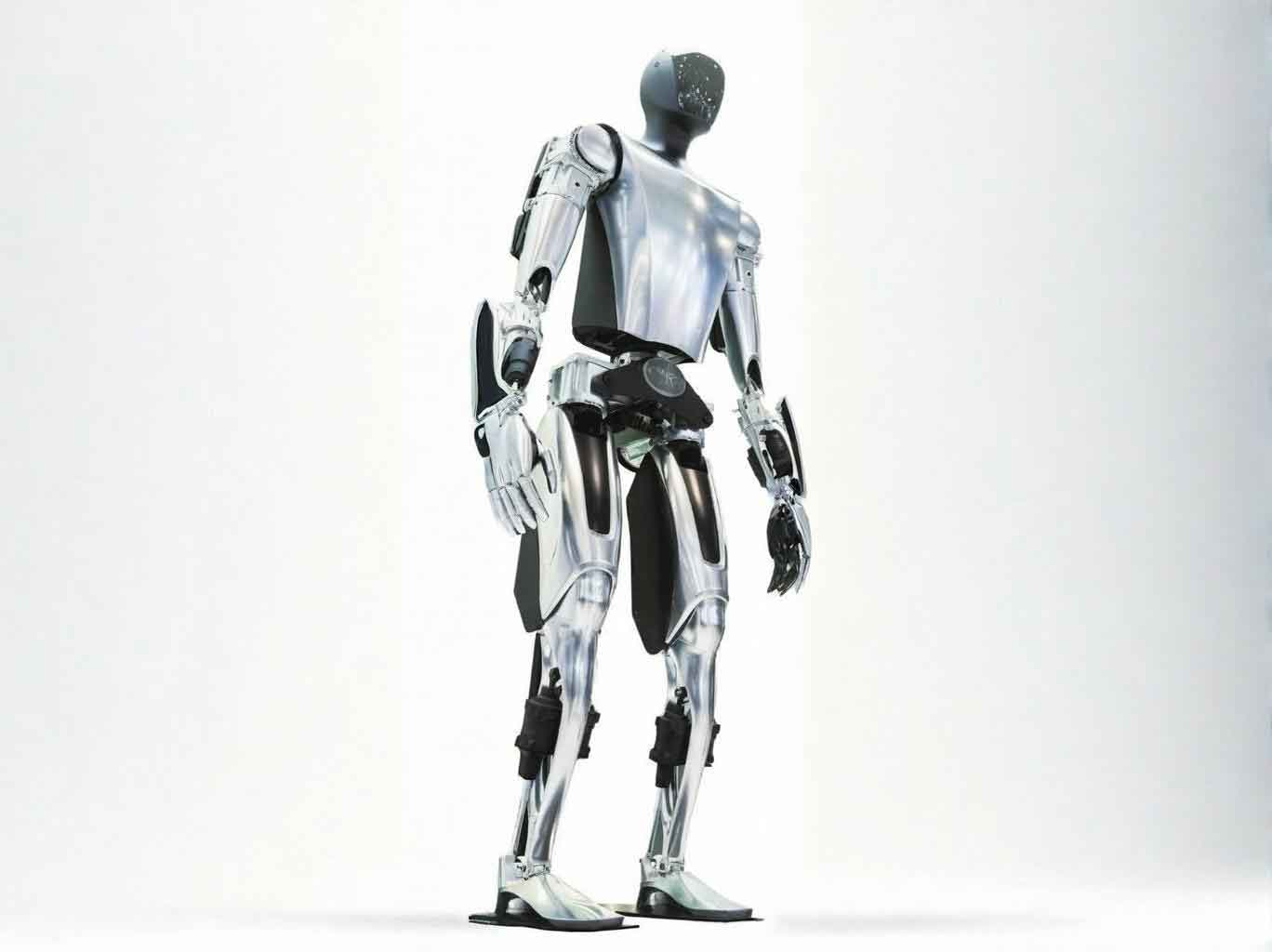
The integration of these technological elements empowers embodied AI robots to function as intelligent partners in retail. In the next section, I will illustrate how they drive innovation in human-machine interaction modes, transforming both customer experiences and backend operations.
Innovative Human-Machine Interaction Modes Driven by Embodied AI Robots
Embodied AI robots are redefining interaction paradigms in apparel retail through three primary modes: intelligent sales assistance, immersive consumption experiences, and data-driven operational innovation. From my perspective, these modes represent a holistic approach where technology enhances every touchpoint in the customer journey while streamlining store management.
Intelligent Sales Assistance and Personalized Service
Traditional sales assistance often relies on human staff whose availability and expertise may be limited. In contrast, an embodied AI robot can serve as a perpetual, knowledgeable companion that offers tailored guidance. By analyzing real-time multimodal data, such as a customer’s body dimensions, current attire, and facial expressions, the robot generates personalized outfit recommendations. For example, if a customer touches a specific garment, the embodied AI robot can use RFID or computer vision to identify the item and suggest complementary pieces via a display or voice output. Emotion recognition algorithms further refine these suggestions by assessing subtle cues like smile intensity or gaze direction. The interaction can be modeled as a utility maximization problem:
$$ U(r) = w_1 \cdot \text{StyleMatch}(r) + w_2 \cdot \text{FitScore}(r) + w_3 \cdot \text{PreferenceHistory}(r) $$
where \( U(r) \) is the utility of recommendation \( r \), and \( w_1, w_2, w_3 \) are weights adjusted based on contextual factors. Studies have shown that such embodied AI robots significantly improve information delivery and promotional engagement, though ongoing refinements are needed to boost user participation and cross-demographic validation. This mode not only elevates customer satisfaction but also reduces the workload on human employees, allowing them to focus on complex queries or creative tasks.
| Function | Technology Enabler | Impact Metric |
|---|---|---|
| Personalized Recommendations | Multimodal fusion, LLMs | Increase in conversion rate by 20-30% |
| Gesture-Based Interaction | Depth sensing, CNN classifiers | Reduction in service time by 15% |
| Emotion-Aware Adaptivity | Facial action coding, affective computing | Improvement in customer satisfaction scores |
| Multi-Robot Coordination | Distributed task planning | Enhanced floor coverage and efficiency |
Immersive Consumption Experiences
One of the most striking innovations brought by embodied AI robots is the creation of immersive, phygital (physical-digital) experiences. Augmented reality (AR) mirrors, often integrated with robotic systems, allow customers to visualize garments on their own bodies without physical try-ons. These systems use 3D body scanning and generative adversarial networks (GANs) to synthesize realistic try-on images, accounting for fabric drape and movement. The process can be described by:
$$ I_{\text{output}} = G(I_{\text{body}}, I_{\text{garment}}; \theta) $$
where \( G \) is a generative model with parameters \( \theta \), mapping input body and garment images to an output image \( I_{\text{output}} \). Haptic feedback devices can further simulate textures, addressing the tactile gap in online shopping. Moreover, metaverse-enabled retail spaces, accessible via virtual reality headsets or embodied AI robot interfaces, enable customers to explore digital showrooms, attend virtual fashion shows, and socialize with others’ avatars. This not only entertains but also fosters emotional connections with brands, driving loyalty and repeat visits. From my observation, such immersive experiences are particularly effective in attracting tech-savvy demographics and reducing return rates by providing more accurate previews.
Retail Operational Efficiency and Data-Driven Innovation
Beyond front-end interactions, embodied AI robots contribute substantially to backend optimization. By continuously monitoring store metrics—such as foot traffic heatmaps, dwell times, and inventory levels—these robots provide actionable insights for layout adjustments, staff scheduling, and stock replenishment. For instance, an embodied AI robot patrolling the aisles can detect low-stock shelves and automatically trigger restocking requests via wireless networks. The data collected from customer interactions, including try-on frequencies and purchase conversions, feeds into predictive analytics models to forecast trends and identify operational bottlenecks. A simplified predictive model for sales can be expressed as:
$$ \hat{S}(t) = \beta_0 + \beta_1 \cdot \text{Footfall}(t) + \beta_2 \cdot \text{EngagementScore}(t) + \epsilon $$
where \( \hat{S}(t) \) is predicted sales at time \( t \), and \( \beta \) coefficients are learned from historical data. To address privacy concerns, federated learning with differential privacy is employed, allowing multi-store aggregation without exposing individual records. This data-centric approach enables retailers to shift from reactive to proactive management, reducing costs and enhancing responsiveness. In essence, the embodied AI robot becomes a nexus of intelligence that transforms raw data into strategic advantage, paving the way for novel business models like on-demand customization or in-store micro-manufacturing.
Future Directions and Concluding Insights
Reflecting on these developments, it is clear that embodied AI robots are catalyzing a fundamental transformation in apparel retail. They bridge the experiential gaps between online and offline channels, deliver hyper-personalized services, and unlock unprecedented operational efficiencies. However, several challenges remain to be addressed for widespread adoption. From my viewpoint, future research should focus on three key areas: cross-scenario generalization, ethical and human-centric design, and scalability.
Firstly, enhancing the generalization capabilities of embodied AI robots across diverse retail environments—from boutique stores to large malls—is crucial. This requires advancements in transfer learning and meta-learning algorithms that allow robots to quickly adapt to new layouts, product assortments, and cultural contexts. Secondly, ethical considerations, such as data privacy, algorithmic bias, and human-robot trust, must be prioritized. Designing transparent interaction protocols and inclusive systems will foster acceptance among diverse customer demographics. Lastly, scalability concerns, including cost-effectiveness and integration with existing retail infrastructure, need innovative solutions, perhaps through modular robot designs or cloud-based service models.
In conclusion, embodied AI robots represent more than a technological upgrade; they embody a new philosophy of retail that centers on seamless, adaptive, and empathetic interactions. By leveraging multimodal perception, dynamic planning, and continuous learning, these robots are redefining what it means to shop for apparel. As the technology matures, I anticipate a future where embodied AI robots become ubiquitous partners in retail, not only enhancing economic performance but also enriching human experiences through intelligent collaboration. The journey has just begun, and the potential for innovation is boundless.