
The evolution of robotics, drawing from mathematics, mechanics, electronics, computer science, and control theory, has led to systems of remarkable capability. However, a profound gap persists between these engineered machines and their biological counterparts in areas such as systemic autonomy, environmental adaptability, and energy efficiency. This gap has catalyzed the field of bionic robot research. The core objective is not merely to replicate the outward form or a singular function of a biological entity but to understand and embody its underlying principles—its morphology, sensory-processing mechanisms, and control architectures. By doing so, researchers aim to create a new generation of bionic robot systems with drastically improved abilities to perceive, navigate, interact, and make intelligent decisions in complex, unstructured environments.
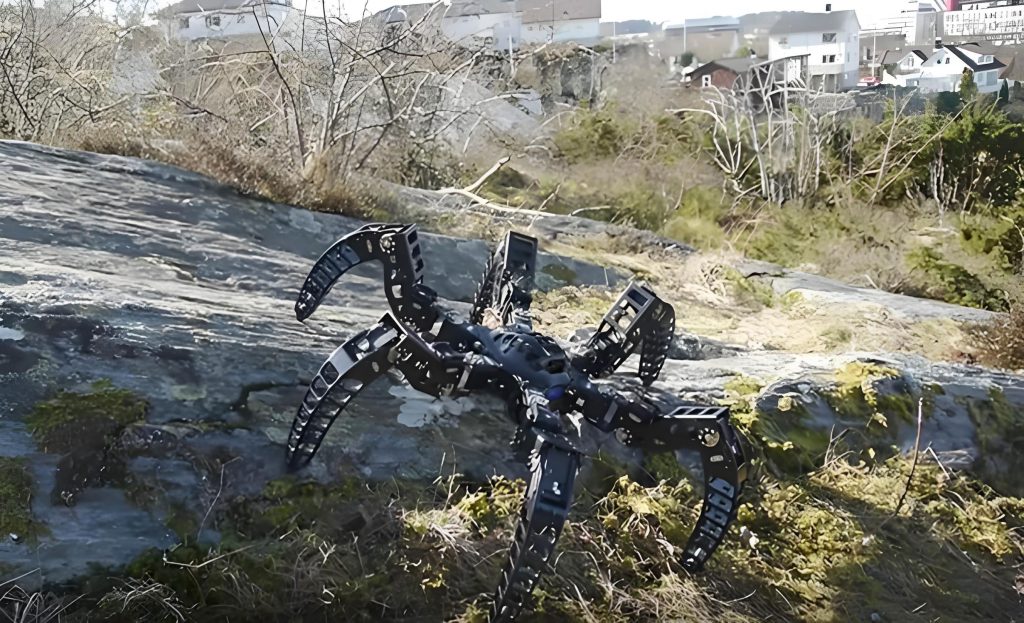
The development of a functional bionic robot rests upon the convergence of several key technological pillars. Each pillar addresses a fundamental aspect of what makes biological systems so effective.
| Key Technology Pillar | Biological Inspiration | Technical Implementation in Bionic Robots |
|---|---|---|
| Structural Biomimetics | Musculoskeletal systems, joint articulation, body morphology (e.g., fin shape, leg configuration). | Design of novel actuators (soft, hydraulic, pneumatic), compliant joints, tendon-driven mechanisms, and morphing structures that mimic biological flexibility and efficiency. |
| Sensory Biomimetics | Visual, tactile, auditory, olfactory, and electrosensory systems. | Development of advanced sensor suites including event-based vision, artificial skins with distributed pressure sensing, bio-inspired sonar, and chemical sensors for environmental mapping and interaction. |
| Control Biomimetics | Central Pattern Generators (CPGs), reflex arcs, and hierarchical motor control in the nervous system. | Implementation of CPG-based controllers for rhythmic locomotion, reflex-based reactive control for stability, and hybrid control architectures combining deliberative and reactive layers. |
| Cognitive Biomimetics | Learning, memory, decision-making, and social behaviors. | Integration of machine learning (reinforcement learning, deep learning) for adaptation, embodied AI for task planning, and swarm intelligence algorithms for multi-robot coordination. |
These pillars give rise to a diverse taxonomy of bionic robot systems, each designed to tackle specific challenges and environments.
Major Categories of Bionic Robots
Humanoid Robots (Anthropomorphic Bionic Robots)
These systems aim to replicate human form, bipedal locomotion, dexterous manipulation, and social interaction. The ultimate vision is a bionic robot capable of operating human tools, navigating built environments, and providing assistance in daily life or hazardous situations. Research focuses on dynamic walking, balance under perturbation, whole-body coordination, and human-robot interaction.
| Aspect | Technical Challenges | Performance Metrics |
|---|---|---|
| Locomotion & Balance | Under-actuation at foot-ground contact, handling of uneven terrain, recovery from pushes. | Walking speed (km/h), step length, stability margin, ZMP (Zero Moment Point) tracking error. |
| Dexterous Manipulation | High-degree-of-freedom hand design, compliant grip, fine force control, tool use. | Number of grasp types, maximum payload (kg), manipulation bandwidth (Hz). |
| Perception & Interaction | Real-time human pose tracking, gesture and speech recognition, natural dialogue. | Object recognition accuracy (%), latency in response (ms), dialogue success rate. |
The dynamics of a bipedal bionic robot are often described using the Lagrangian formulation. For a robot with \( n \) degrees of freedom, the equations of motion are:
$$ \mathbf{M}(\mathbf{q})\ddot{\mathbf{q}} + \mathbf{C}(\mathbf{q}, \dot{\mathbf{q}})\dot{\mathbf{q}} + \mathbf{G}(\mathbf{q}) = \boldsymbol{\tau} + \mathbf{J}_c^T \mathbf{F}_c $$
where \( \mathbf{q} \in \mathbb{R}^n \) is the vector of generalized coordinates, \( \mathbf{M} \) is the inertia matrix, \( \mathbf{C} \) represents Coriolis and centrifugal forces, \( \mathbf{G} \) is the gravitational vector, \( \boldsymbol{\tau} \) is the vector of actuator torques, \( \mathbf{J}_c \) is the contact Jacobian, and \( \mathbf{F}_c \) is the contact force vector. Control strategies often aim to regulate the Zero Moment Point (ZMP), a key dynamic stability criterion:
$$ x_{ZMP} = \frac{\sum_i m_i (\ddot{z}_i + g) x_i – \sum_i m_i \ddot{x}_i z_i – \sum_i I_{iy} \dot{\omega}_{iy}}{\sum_i m_i (\ddot{z}_i + g)} $$
(and similarly for \( y_{ZMP} \)), where \( m_i \), \( (x_i, z_i) \), \( I_{iy} \), and \( \omega_{iy} \) are the mass, CoM coordinates, moment of inertia, and angular acceleration of link \( i \).
Quadrupedal and Multi-legged Robots
Inspired by mammals and insects, legged bionic robot systems excel in traversing rough, unstructured terrain where wheels fail. They offer superior mobility over obstacles, ditches, and loose surfaces, making them ideal for search and rescue, exploration, and logistics in wild or disaster-stricken areas.
| Technical Approach | Characteristics | Typical Gait Patterns |
|---|---|---|
| Hydraulic Actuation | High power density, strong force output, good for dynamic motions and heavy payloads. Often accompanied by high noise. | Trot, pace, bound, gallop. Often uses model-predictive control for dynamic gait generation. |
| Electric Actuation | Quieter operation, easier control, higher efficiency. May use series elastic actuators (SEA) for compliance and energy storage. | Trot, walk. Frequently employs impedance control and virtual model control for adaptive compliance. |
| Bio-inspired Control | Uses Central Pattern Generators (CPGs) — networks of coupled nonlinear oscillators to generate rhythmic leg motion. | Gait transitions emerge naturally from CPG network parameters. Provides inherent robustness and adaptability. |
A simplified model for dynamic running in a legged bionic robot is the Spring-Loaded Inverted Pendulum (SLIP). The dynamics during the stance phase can be modeled as:
$$ m \ddot{r} = m r \dot{\theta}^2 + mg \cos \theta – k(r – r_0) $$
$$ m r^2 \ddot{\theta} + 2 m r \dot{r} \dot{\theta} = -mgr \sin \theta $$
where \( m \) is the body mass, \( (r, \theta) \) are polar coordinates of the foot relative to the body CoM, \( k \) is the spring constant, and \( r_0 \) is the spring rest length. This model captures the essential energy exchange between kinetic and potential energy in dynamic legged locomotion.
Underwater Bionic Robots (Robotic Fish, etc.)
Fish and marine mammals exhibit extraordinary propulsive efficiency, maneuverability, and stealth. A bionic robot that mimics their morphology and swimming modes offers significant advantages over traditional propeller-driven underwater vehicles in terms of energy consumption, acoustic signature, and ability to operate in cluttered environments (e.g., coral reefs, shipwrecks).
| Propulsion Mode | Biological Model | Mechanism & Advantages |
|---|---|---|
| Body and/or Caudal Fin (BCF) | Tuna, Shark, Dolphin | Oscillatory or undulatory motion of the body and tail. Achieves high cruise speed and efficiency. Thrust \( T \) can be estimated by elongated body theory: \( T \approx \frac{m}{2} [U^2 – v^2] \), where \( m \) is the virtual added mass per unit length, \( U \) is the forward speed, and \( v \) is the lateral speed of the tail. |
| Median and/or Paired Fin (MPF) | Ray, Cuttlefish, Labriform fish | Undulatory or oscillatory motion of pectoral, dorsal, or anal fins. Provides exceptional maneuverability, hovering, and backward swimming. Low acoustic noise. Thrust generation is often analyzed using blade element theory. |
| Undulatory Fin | Gymnotiform fish (Knifefish), Ray | A long ribbon fin along the body generates a traveling wave. Excellent for precise station-keeping and omni-directional movement. The wave equation is: \( y(x,t) = A(x) \sin(\kappa x – \omega t + \phi) \), where \( A(x) \) is the amplitude envelope, \( \kappa \) is the wave number, and \( \omega \) is the frequency. |
The hydrodynamic forces on an oscillating foil, a key component of many underwater bionic robot designs, can be analyzed using Theodorsen’s function for unsteady aerodynamics/hydrodynamics. The lift per unit span is:
$$ L = \pi \rho b^2 (\ddot{h} + U \dot{\alpha}) + 2\pi \rho U b C(k) [\dot{h} + U\alpha + b(\frac{1}{2})\dot{\alpha}] $$
where \( \rho \) is fluid density, \( b \) is the semi-chord, \( h \) is heave motion, \( \alpha \) is pitch angle, \( U \) is flow speed, and \( C(k) \) is Theodorsen’s function of reduced frequency \( k = \frac{\omega b}{U} \).
Other Notable Bionic Robot Paradigms
The principles of bionic robot design extend to numerous other forms, each solving unique mobility challenges.
- Snake-like Robots: Hyper-redundant serial chains inspired by snakes. Capable of traversing narrow, confined, and irregular spaces through a variety of gaits (serpentine, sidewinding, concertina, rolling). The kinematics of such a bionic robot are often described using follow-the-leader or backbone curve models.
- Amphibious Robots: Systems capable of transitioning between aquatic and terrestrial locomotion, often combining swimming appendages with walking legs or wheel-leg hybrids. Design focuses on managing the drastic changes in medium density and contact dynamics.
- Flying Bionic Robots (Ornithopters & Entomopters): Flapping-wing micro air vehicles (MAVs) mimic birds and insects to achieve high maneuverability, hover, and gust rejection at small scales. Lift and thrust generation is governed by unsteady aerodynamic phenomena like leading-edge vortices.
- Soft Robots: Entirely constructed from compliant materials, inspired by organisms like octopus, worms, or starfish. These bionic robot systems exhibit extreme adaptability and safe interaction. Their modeling often employs continuum mechanics, such as the Cosserat rod theory: $$ \partial_s \mathbf{n} + \mathbf{f} = \rho A \partial_{tt} \mathbf{r} $$ $$ \partial_s \mathbf{m} + \partial_s \mathbf{r} \times \mathbf{n} + \mathbf{l} = \partial_t (\mathbf{I} \boldsymbol{\omega}) $$ where \( \mathbf{n} \) and \( \mathbf{m} \) are internal forces and moments, \( \mathbf{f} \) and \( \mathbf{l} \) are distributed forces and torques, \( \mathbf{r} \) is the centerline position, and \( \mathbf{I} \) is the cross-sectional inertia tensor.
Mathematical Foundations and Modeling
The design and control of a sophisticated bionic robot rely heavily on mathematical formalisms. Beyond the specific equations mentioned, several unifying frameworks are critical.
1. Kinematics and Differential Geometry: For continuum and soft bionic robot systems, configuration space is often a Riemannian manifold. The forward kinematics maps from a high- or infinite-dimensional shape space \( S \) to task space \( T \): \( g_{st} = \psi(s) \), where \( s \in S \). The body velocity is given by \( V_{st}^b = \mathbf{J}(s)\dot{s} \), where \( \mathbf{J}(s) \) is a local connection form, a concept from geometric mechanics.
2. Optimal Control and Trajectory Optimization: Generating dynamic behaviors (e.g., a jump, fast turn) is often formulated as a constrained optimization problem:
$$ \min_{\mathbf{x}(t), \mathbf{u}(t)} \int_{t_0}^{t_f} L(\mathbf{x}(t), \mathbf{u}(t)) \, dt + \Phi(\mathbf{x}(t_f)) $$
subject to: \( \dot{\mathbf{x}} = f(\mathbf{x}, \mathbf{u}) \) (dynamics), \( \mathbf{h}(\mathbf{x}, \mathbf{u}) \leq 0 \) (path constraints), and \( \mathbf{g}(\mathbf{x}(t_0), \mathbf{x}(t_f)) = 0 \) (boundary conditions). Direct collocation methods are frequently used to solve this for complex bionic robot systems.
3. State Estimation and Sensor Fusion: Operating in the real world requires robust state estimation. Algorithms like the Kalman Filter (and its nonlinear variants, EKF, UKF) are fundamental:
$$ \text{Predict: } \hat{\mathbf{x}}_{k|k-1} = f(\hat{\mathbf{x}}_{k-1|k-1}, \mathbf{u}_{k-1}), \quad \mathbf{P}_{k|k-1} = \mathbf{F}_k \mathbf{P}_{k-1|k-1} \mathbf{F}_k^T + \mathbf{Q}_k $$
$$ \text{Update: } \mathbf{K}_k = \mathbf{P}_{k|k-1} \mathbf{H}_k^T (\mathbf{H}_k \mathbf{P}_{k|k-1} \mathbf{H}_k^T + \mathbf{R}_k)^{-1} $$
$$ \hat{\mathbf{x}}_{k|k} = \hat{\mathbf{x}}_{k|k-1} + \mathbf{K}_k (\mathbf{z}_k – h(\hat{\mathbf{x}}_{k|k-1})), \quad \mathbf{P}_{k|k} = (I – \mathbf{K}_k \mathbf{H}_k) \mathbf{P}_{k|k-1} $$
where \( \mathbf{F}_k \) and \( \mathbf{H}_k \) are Jacobians of the process and observation models.
Applications and Future Trajectory
While many bionic robot platforms remain in advanced research laboratories, their transition to real-world application is accelerating.
| Application Domain | Bionic Robot Type | Potential/Current Use |
|---|---|---|
| Inspection & Maintenance | Snake-like, Quadrupedal, Aerial | Inspecting pipelines, power lines, ship hulls, and aircraft interiors; performing maintenance in confined or hazardous spaces (e.g., nuclear facilities). |
| Search & Rescue | Quadrupedal, Snake-like, Humanoid | Navigating rubble after earthquakes or explosions to locate survivors, delivering supplies, providing situational awareness. |
| Environmental Monitoring | Underwater Robotic Fish, Aerial | Long-term, silent monitoring of marine ecosystems, pollution tracking, coral reef health assessment, atmospheric sampling. |
| Healthcare & Rehabilitation | Humanoid, Soft Exoskeletons | Assisting the elderly or disabled, providing physical therapy, enabling telepresence for medical consultation. |
| Education & Research | All Types (small-scale platforms) | Teaching robotics, biology, and control theory; serving as physical testbeds for studying biological locomotion and neural control principles. |
| Logistics & Warehousing | Quadrupedal, Humanoid | Autonomous material handling in complex, human-designed environments, loading/unloading in unstructured settings. |
Challenges and Frontier Research
The path forward for bionic robot technology is lined with significant, interdisciplinary challenges that define the current research frontier.
- Energy Density and Autonomy: Matching the endurance of animals requires breakthroughs in energy storage (batteries, fuel cells) and harvesting, as well as ultra-efficient actuation and control algorithms that minimize energy consumption, perhaps modeled by cost functions like the Cost of Transport (CoT): \( CoT = \frac{P}{mgv} \), where \( P \) is power, \( m \) is mass, \( g \) is gravity, and \( v \) is velocity.
- Material Science and Fabrication: Creating multifunctional, robust, and self-healing materials that mimic muscle, skin, and connective tissue is crucial for the next generation of compliant and durable bionic robot systems.
- Embodied Intelligence: Moving beyond pre-programmed gaits to systems that can learn, adapt their morphology and control in real-time, and exhibit true emergent intelligence grounded in their physical interaction with the world.
- Integration and Miniaturization: Seamlessly combining high-power actuators, sensitive sensors, powerful processors, and durable power sources into compact, animal-scale platforms remains a formidable engineering task.
- Human-Robot Symbiosis: Developing intuitive interfaces, trust models, and safe physical interaction protocols for bionic robot systems to work alongside humans effectively.
In conclusion, the field of bionic robot research represents a profound synthesis of biology and engineering. It is driven by the goal of not just copying nature, but of distilling its fundamental principles into engineering design rules. Each new bionic robot prototype is both an application of our current understanding and a tool for probing deeper questions about movement, perception, and intelligence in both natural and artificial systems. The continued convergence of advanced materials, novel manufacturing, sophisticated control theory, and machine learning promises to narrow the gap between engineered machines and living organisms, leading to robots with unprecedented capabilities to assist, explore, and understand our world.