
The deep integration of artificial intelligence with the physical world is catalyzing a transformative leap in robotics. Embodied intelligent robots, defined by their core capabilities of “deep coupling of AI with a physical entity” and “intelligent emergence through dynamic agent-environment interaction,” represent the frontier of this convergence. Unlike disembodied AI models that process information in isolation, an intelligent robot acquires, processes, and acts upon information through continuous sensorimotor interaction with its environment. This paradigm shift elevates robots from pre-programmed tools to adaptive, learning-capable agents. Recognized as a core engine for fostering new quality productive forces, the development of the embodied intelligent robot industry is not merely about creating a new sector; it fundamentally aims to reshape traditional production methods, restructure industrial landscapes, and trigger extensive socio-economic impacts through its powerful penetration and enabling effects.
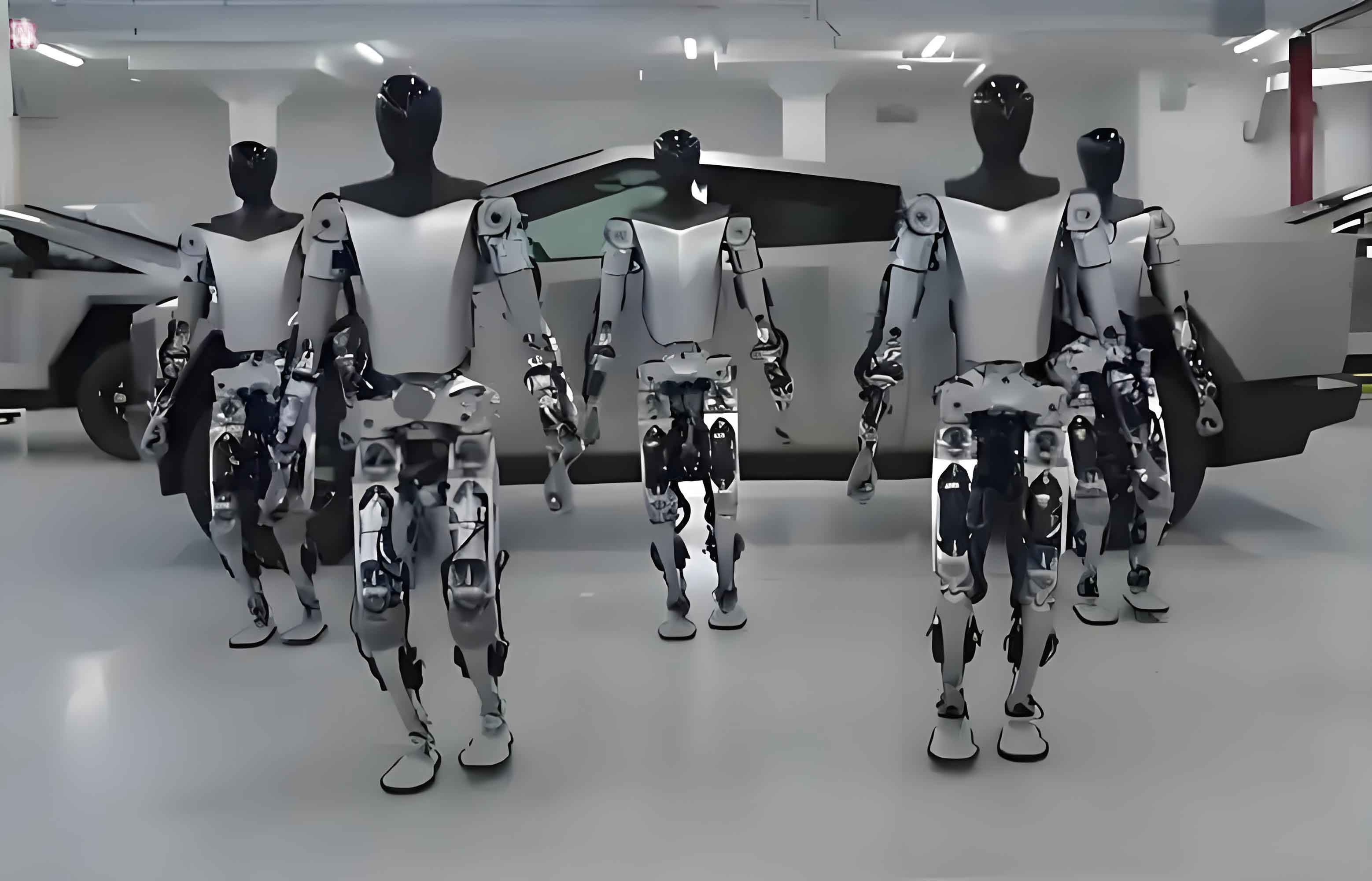
The pursuit of high-quality development in this industry necessitates a systematic understanding of its internal driving mechanisms and the formulation of targeted practical pathways. This analysis is grounded in three foundational theories: Innovation-Driven Development Theory, which focuses on technological breakthroughs; Industrial Organization Theory, which examines structural optimization; and Industrial Symbiosis Theory, which emphasizes ecological synergy. From these perspectives, the high-quality advancement of the intelligent robotics industry is propelled by a tripartite mechanism: pioneering technological innovation, continuous optimization of the industrial structure, and the strengthening of collaborative industrial ecosystems.
The Internal Mechanisms for High-Quality Development
The high-quality development of the embodied intelligent robot industry is an endogenous process driven by the complex interplay of technology, structure, and collaboration. The following table summarizes the core analytical framework.
| Theoretical Lens | Core Mechanism | Key Manifestations in the Intelligent Robotics Industry | Impact on High-Quality Development |
|---|---|---|---|
| Innovation-Driven Development Theory | Breakthrough Technological Innovation | Advances in embodied AI models, multi-modal sensing, precision actuation. Shift from single-agent to swarm intelligence via 5G/IoT. | Creates core competitive advantages, expands application boundaries, reduces costs, and forms endogenous growth momentum. |
| Industrial Organization Theory | Industrial Structure Optimization | Upgrading of upstream components (sensors, chips). Modularization/standardization in midstream integration. Proliferation of downstream applications (industry, services, healthcare). | Enhances chain efficiency, cultivates new business formats and models, and transitions the industry from “technology verification” to “value creation.” |
| Industrial Symbiosis Theory | Industrial Ecosystem Synergy | Top-down policy support and coordinated planning. Development of unified technical and safety standards. Deep collaboration between industry, academia, and research institutes. | Optimizes resource allocation, reduces systemic risks and transaction costs, accelerates technology transfer, and builds an open, win-win industrial ecology. |
1. The Mechanism of Breakthrough Technological Innovation
From the perspective of Innovation-Driven Development Theory, disruptive technological progress is the fundamental engine. The evolution of the intelligent robot is characterized by its “perception-decision-execution” closed-loop system, driven by breakthroughs in embodied AI architectures, multi-modal sensors, and precision actuators. This progression can be modeled as a technology adoption S-curve, where performance gains accelerate after overcoming initial thresholds. The technological advancement $T(t)$ over time $t$ can be influenced by R&D investment $I$, knowledge stock $K$, and interdisciplinary convergence $\gamma$:
$$
\frac{dT}{dt} = \alpha I^\beta \cdot K \cdot (1 – \frac{T}{T_{max}})^\gamma
$$
Here, $T_{max}$ represents a theoretical performance ceiling, and $\alpha, \beta$ are constants. Initial R&D focuses on core algorithms and hardware, creating endogenous source innovation. A critical effect is cost reduction through component localization; for instance, mass production of domestic high-precision harmonic reducers lowers the manufacturing cost $C_m$ of the intelligent robot, increasing profit margins $\pi$ for OEMs: $\pi = P – C_m – C_o$, where $P$ is price and $C_o$ is other costs. As applications expand, R&D shifts towards human-robot-environment interaction, enhancing adaptability. Furthermore, the fusion of embodied large models with robot本体 creates key competitive advantages. The transition from single-agent to swarm intelligence, enabled by 5G and cloud computing, generates significant network and scale effects, represented by Metcalfe’s Law, where the value $V$ of a network of $n$ intelligent robots is proportional to $n^2$. This collective capability pushes the industry into high-end manufacturing and complex service sectors, forming a core endogenous driver for high-quality development.
2. The Mechanism of Industrial Structure Optimization
Industrial Organization Theory reveals how the industry reshapes its own value chain and fosters new formats. China has cultivated a relatively complete industrial chain encompassing upstream core components, midstream本体 manufacturing, and downstream system integration and applications. Technological progress directly pulls the upgrading of upstream components. The demand $D_{up}$ for high-precision sensors, compliant actuators, and high-compute chips is a function of downstream application complexity $A$ and performance requirements $R$: $D_{up} = f(A, R)$. This demand stimulates innovation in supply $S_{up}$, creating a virtuous “demand-pull, supply-innovation” cycle that elevates the entire chain towards higher precision and quality.
In the midstream, modular and standardized design, characterized by soft-hardware decoupling, enhances industrial chain efficiency $E_{chain}$. This can be expressed as a reduction in integration time $t_{int}$ and cost $c_{int}$: $E_{chain} \propto \frac{1}{t_{int} \cdot c_{int}}$. Standardized interfaces lower the entry barrier for SMEs, fostering a more dynamic and competitive landscape. Downstream, the scaled deployment of intelligent robots generates vast amounts of real-world operational data $Data_{real}$. This data feeds back to improve algorithms $Alg$ and models $M$, forming a value-creating “scene-data-algorithm” closed loop: $Scene \rightarrow Data_{real} \rightarrow (Alg, M)_{improved} \rightarrow Scene_{optimized}$. This loop drives the industry’s evolution from pure “technology validation” to substantial “value creation.” New business models emerge across sectors, from “unmanned” manufacturing cells to “robot + digital human” services in tourism, continuously reshaping industrial and social service paradigms.
3. The Mechanism of Industrial Ecosystem Synergy
Industrial Symbiosis Theory emphasizes transforming externalities into economic opportunities through collaboration. The development path of China’s embodied intelligent robot industry aligns with this principle. First, multi-layered policy support, from top-level design to scenario opening, provides a foundational framework. Second, establishing a robust standards system is crucial for scalable application. Unified specifications for hardware interfaces, data formats, and safety levels (e.g., L1-L5 certification frameworks) solve interoperability and reliability issues, reducing systemic risk and transaction costs $TC$ for all participants: $TC = g(\text{incompatibility}, \text{uncertainty})$. Lower $TC$ facilitates smoother collaboration and market growth.
Third, industry-academia-research collaboration is a critical pathway for accelerating科技成果转化. Universities drive frontier research $Research_{frontier}$, while enterprises provide application scenarios $Scene_{app}$ and capital $I$. Their collaboration $Collab$ jointly tackles bottlenecks, with the output being accelerated technology iteration velocity $v_{tech}$ and increased commercialization success rate $r_{comm}$:
$$
(v_{tech}, r_{comm}) = h(Collab(Research_{frontier}, Scene_{app}, I))
$$
This synergistic model not only speeds up the innovation cycle but also strengthens upstream-downstream linkages, laying a solid foundation for the scaled, sustainable, and high-quality development of the intelligent robotics industry.
Regional Development Characteristics and Comparative Analysis
China’s embodied intelligent robot industry has formed a tripartite development pattern across the Beijing-Tianjin-Hebei (BTH), Yangtze River Delta (YRD), and Pearl River Delta (PRD) regions. Each leverages distinct resources and industrial foundations, resulting in differentiated yet complementary development paths.
| Dimension | Beijing-Tianjin-Hebei (BTH) Region | Yangtze River Delta (YRD) Region | Pearl River Delta (PRD) Region |
|---|---|---|---|
| Core Characteristic | Strong R&D, weak commercialization. | Full industrial chain development;突出 precision manufacturing. | Strong consumer-end innovation; fast supply chain response. |
| Industrial Ecology | Academic and research-oriented. | Tight upstream-downstream synergy. | Market-driven, rapid iteration. |
| Dominant Segment | Basic algorithms, frontier technology. | Core components, system integration. | Whole-machine design, scene application. |
| Representative Output | Special-purpose robots, AI models. | Industrial collaborative robots, reducers. | Service robots (delivery, guidance, education). |
| Primary Challenge | Inefficient R&D-to-production pipeline. | High-end technology lock-in; intra-regional协同不足. | Insufficient fundamental R&D supply chain resilience. |
Key Regional Experiences and Lingering Dilemmas
BTH Experience & Dilemma: This region excels in fundamental research, concentrating top-tier AI and robotics research institutes. Its experience lies in building innovation ecosystems (e.g., public AI compute pools) and promoting regional coordination (e.g., “Beijing R&D, Tianjin转化, Hebei application”). However, its primary dilemma is a disjointed innovation chain. A significant “pilot-scale gap” exists, where advanced algorithms developed in Beijing often rely on manufacturing bases in the YRD for prototyping and validation, leading to extended industrialization cycles $t_{cycle}^{BTH}$. The local supporting industry for core components is underdeveloped, creating a dependency that weakens the region’s industrial autonomy.
YRD Experience & Dilemma: The YRD boasts the most complete industrial chain, with strong capabilities in precision manufacturing and component production. Successful experiences include forming regional innovation alliances and promoting standard互认 (e.g., “one test, four-region validation”). Its dilemma involves persisting bottlenecks in high-end components (e.g., precision reducers, high-end chips) and the need for deeper intra-regional协同 to reduce redundant testing and administrative barriers, which currently increase coordination costs $C_{coord}^{YRD}$.
PRD Experience & Dilemma: The PRD’s strength is its exceptional market responsiveness and efficient supply chain, famously capable of “1-hour supply chain” responses. Its experience is demand-driven innovation, rapid product iteration based on user feedback, and cultivating a multi-tiered enterprise梯队. The core dilemma is a relative weakness in fundamental research. Innovation is often focused on integration and application-layer adaptation, with key underlying algorithms and components sourced externally. This can limit profit margins $\pi^{PRD}$ and long-term technological sovereignty. The ecosystem, while agile, is tiered towards assembly, with limited control over core component technologies.
Common Cross-Regional Challenges: All regions face shared obstacles: 1) Administrative barriers to factor flow: Talent, technology, and capital movement between regions are hampered by institutional hurdles (e.g., lack of full professional certification reciprocity). 2) Risk of homogeneous, low-end competition: Overlap in assembly-oriented, low-value-added segments (e.g., consumer cleaning robots) risks产能过剩 and reduced industry-wide profitability. 3) Underdeveloped national协同 innovation network: The lack of top-level coordination in technical standards, data sharing, and cross-regional testing场景 limits the efficiency of developing general-purpose embodied intelligent robots.
Practical Pathways for High-Quality Development
To propel the high-quality development of the intelligent robotics industry, integrated strategies spanning policy, technology, industrial chain, and talent are essential. These pathways must address both national objectives and regional specificities.
1. Strengthening Policy Drive: Constructing Top-Level Design and Institutional Guarantees
A cohesive national strategy is required to prevent inefficient “internal卷” competition. Central authorities should formulate guiding industrial layout opinions, clarifying differentiated positioning for major clusters. The BTH region should focus on bridging the R&D-commercialization gap by establishing cross-regional pilot-scale platforms. The YRD should deepen its “one test, universal recognition” mechanism for standards. The PRD should institute “Scenario Open Demonstration Zones” with market-scale-based incentives. A cross-regional industrial collaboration alliance with “innovation飞地” (R&D outposts) can be established, using mechanisms for intellectual property and tax revenue sharing to break administrative壁垒.
Financial innovation is critical. A national-level guidance fund for the embodied intelligent robot industry, operating in a “Fund-of-Funds + Direct Investment” model, should be established. Exploring intellectual property securitization, where patent portfolios serve as underlying assets for ABS products, can unlock new financing channels. Pilot programs like “robot leasing credit” with rental subsidies can lower the adoption barrier for SMEs.
2. Fortifying Technological Breakthroughs: Implementing Targeted Innovation Strategies
Technology攻坚 must be pursued on both共性 (common) and个性 (region-specific) fronts.
Common Technology Priorities:
• Perception: Advance multi-modal sensor fusion to enhance environmental understanding.
• Control: Breakthroughs in intelligent motion control algorithms and hardware through deepened industry-academia-research collaboration.
• Interaction: Develop more natural human-robot interaction through advances in affective computing and NLP.
Region-Specific Technology Focus:
• BTH: Build “Robotics Pilot-Scale Alliance” platforms to connect research with manufacturing capabilities.
• YRD: Launch “Core Component攻坚 Plans” targeting high-precision reducers and chips, forming cross-regional攻关联合体.
• PRD: Encourage企业-university共建 labs for service robot navigation and interaction algorithms, promoting a “technology introduction-digestion-re-innovation” model.
The technological progress function for a region $i$ can thus be refined as:
$$
\frac{dT_i}{dt} = \alpha_i I_i^{\beta} \cdot K_i \cdot (1 – \frac{T_i}{T_{max}})^\gamma \cdot \delta_i(Scene, Chain)
$$
Where $\delta_i(Scene, Chain)$ represents the regional advantage multiplier based on its unique scenario access and chain completeness.
3. Enhancing Industrial Chain Synergy: Building a “Dual-Circulation” Development Pattern
Leveraging the “leading enterprise牵引, local firms突围, SMEs补位”梯队 advantage is key.
• Enterprise Gradient Cultivation: Support leading “chain-master” enterprises to form industrial alliances, fostering mechanisms for technology sharing, capacity coordination, and market co-development.
• Standards Mutual Recognition Community: Accelerate the development of a unified national standard system for key parameters. Establish a “Component Mutual Recognition Database” using blockchain for traceability, helping firms match with compatible suppliers and reducing $C_{coord}$.
• Resilient and Efficient Supply Chain System: Strengthen inter-linkage within the industrial chain. Promote shared industrial internet platforms and flexible manufacturing lines among robot enterprises. Cultivate “core component industrial belts” and strategically layout national “Key Component Reserve Warehouses” for critical items like reducers and servo motors to enhance supply chain resilience $R_{chain}$ against external shocks. $R_{chain}$ can be modeled as a function of supplier diversity $Div$, inventory $Inv$, and localization rate $Loc$:
$$
R_{chain} = \lambda_1 \cdot Div + \lambda_2 \cdot \ln(Inv) + \lambda_3 \cdot Loc^2
$$
4. Cultivating Talent: Building a Compound Innovation Talent System
A “domestic cultivation + international recruitment” dual-strategy is imperative, tailored to regional needs.
• Region-Adapted Domestic Cultivation:
– BTH: Focus on “R&D + Commercialization” compound talent, integrating hardware/software courses with engineering practice.
– YRD: Strengthen “Precision Manufacturing + System Integration” skills through industry-academia institutes and skill competitions.
– PRD: Cultivate “Market + Technology”跨界 talent in vocational schools, emphasizing scene design and user experience.
• Facilitating Cross-Regional Talent Flow: Implement a “regional talent qualification mutual recognition mechanism” for robotics professions. Promote “talent飞地” policies allowing professionals to retain benefits from their home region while working in another.
• Constructing an International Talent Network: Set up international joint labs in BTH for foundational research. Encourage YRD enterprises to build joint R&D centers with global leaders for high-end manufacturing talent. Leverage PRD’s market to host global innovation competitions, attracting overseas teams with follow-up industrial fund support.
The talent stock $H_i$ for region $i$ evolves as:
$$
\frac{dH_i}{dt} = Cultivate_i(LocalEdu, IndCollab) + Inflow_i(MutualRecog, Policy) + Recruit_i(IntlLabs, Competitions) – Outflow_i
$$
A balanced and growing $H_i$ is fundamental for sustaining the innovation capacity of the intelligent robotics industry.
Conclusion
The high-quality development of the embodied intelligent robot industry is a multifaceted and systemic endeavor. It is intrinsically driven by a virtuous cycle where breakthrough technologies optimize industrial structures, which in turn foster more synergistic ecosystems that feed back into further innovation. The comparative analysis of China’s major economic circles reveals a promising yet imperfect division of labor: BTH as the technology source, YRD as the industrial bedrock, and PRD as the commercialization frontier. However, challenges such as innovation chain disconnects, high-end technology dependencies, and regional coordination gaps persist.
The proposed practical pathways—encompassing synergistic policy design, targeted technological攻坚, resilient industrial chain collaboration, and a dynamic talent strategy—provide a holistic framework for action. Success requires moving beyond regional silos to establish a truly national innovation ecosystem for intelligent robotics. By effectively implementing these integrated measures, the embodied intelligent robot industry can solidify its role as a cornerstone of new quality productive forces, driving profound and sustainable transformation across the economic landscape.