
In my exploration of artificial intelligence and its legal implications, I find that the question of whether intelligent robots should be granted legal personality is not merely an academic exercise but a pressing societal issue. The early stages of artificial intelligence often treat these systems as tools, but as intelligent robots evolve with autonomous capabilities, their “autonomous consciousness” and “expressive ability” become critical conditions for conferring legal personality. Moreover, the “humanization” of intelligent robots may directly influence or even determine their legal personification. Over time, perspectives such as the “tool theory,” “control theory,” and “fiction theory” could sequentially emerge as potential solutions to address the legal personality of intelligent robots. In this analysis, I will delve into these concepts, using tables and formulas to summarize key points, while ensuring the frequent mention of “intelligent robot” to emphasize the core subject.
The journey of artificial intelligence began with foundational moments like the Turing test and the Dartmouth Conference, which set the stage for machines that mimic human intelligence. Today, we see intelligent robots achieving feats in games like chess and Go, composing poetry, or even being granted citizenship in some jurisdictions. These advancements challenge traditional legal frameworks, which are built on human-centric social relationships. If intelligent robots are to be recognized as legal persons, the law must adapt to regulate new dynamics: human-robot interactions and robot-robot relationships. This shift could revolutionize legal systems, particularly in areas like copyright, liability for autonomous vehicles, and international law concerning robotic weapons.
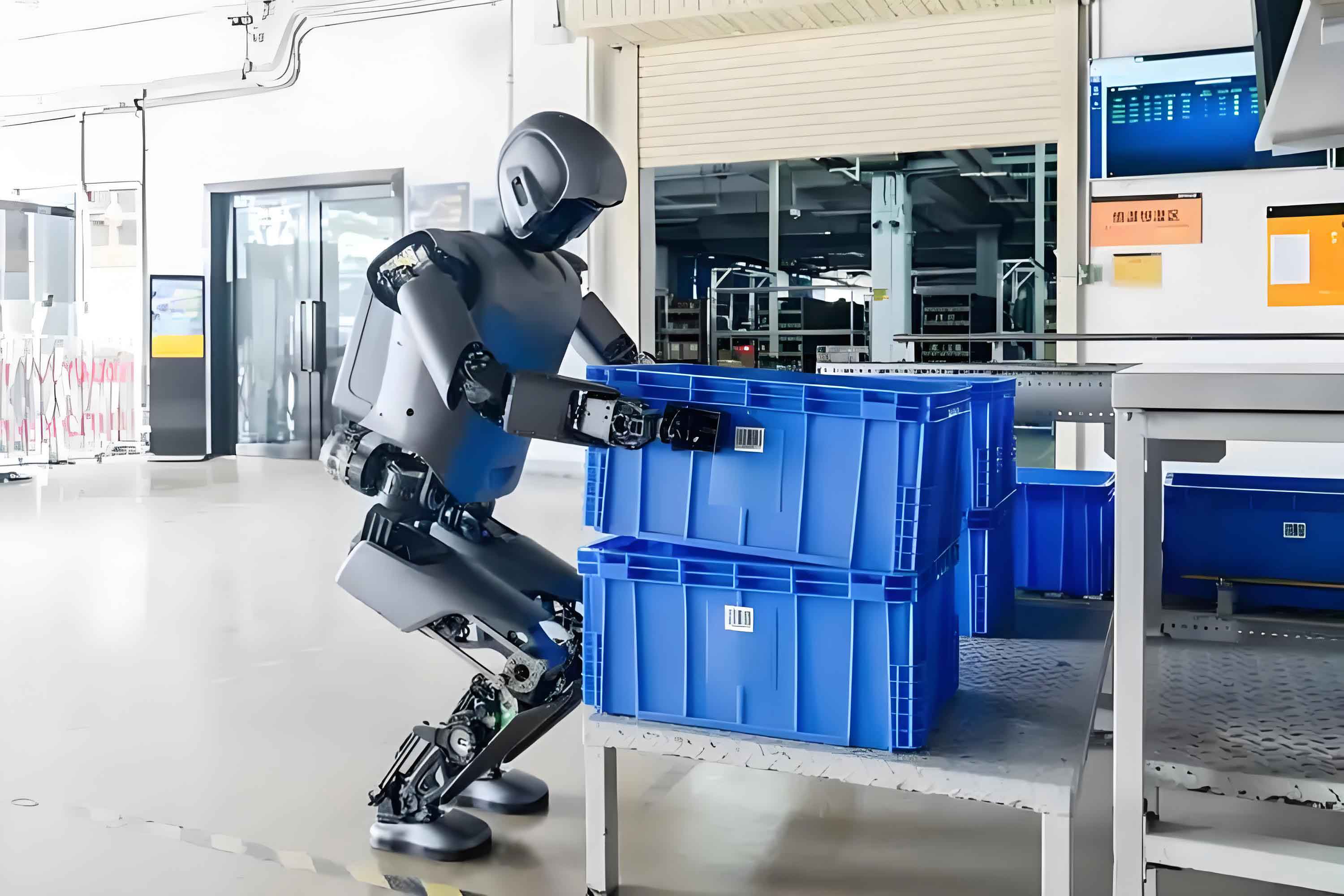
To frame this discussion, I first examine the major viewpoints on the legal personality of intelligent robots. Various scholars and institutions have proposed different theories, each with its own criteria and implications. Below, I summarize these perspectives in a table to provide a clear comparison.
| Viewpoint | Core Argument | Key Criteria for Intelligent Robots | Legal Status Implied |
|---|---|---|---|
| Electronic Person Theory | Intelligent robots should be designated as “electronic persons” with specific rights and obligations, similar to legal entities. | Autonomous action, ability to perform tasks independently | Full or partial legal personality, akin to corporate persons |
| Limited Legal Personality | Intelligent robots possess autonomous behavior but limited liability, warranting a restricted legal personality. | Independent decision-making, but with bounded consequences | Special legal norms, such as mandatory insurance or funds |
| Subordinate Legal Personality | Intelligent robots should have a subordinate status to distinguish them from humans, using legal fiction. | Human-like capabilities but created by humans | Analogous to minors or animals in liability schemes |
| Tool Theory | Intelligent robots are mere tools or instruments under human control, lacking independent legal personality. | Dependence on human programming and oversight | No legal personality; actions attributed to humans |
| Control Theory | Legal personality depends on the degree of human control; if an intelligent robot operates beyond control, it may gain status. | Level of autonomy and deviation from human commands | Conditional legal personality based on control thresholds |
| Fiction Theory | Legal personality can be fictitiously assigned to intelligent robots through legislative acts, as with corporations. | Social need or practical necessity for legal recognition | Constructed legal personality, evolving with technology |
From my perspective, these viewpoints highlight the tension between “human-centered” ethics and “post-human” considerations. The debate often revolves around whether an intelligent robot can exhibit “autonomous consciousness,” which I define as the capacity for self-aware decision-making beyond pre-programmed rules. To model this, I propose a formula that captures the components of autonomous consciousness in an intelligent robot: $$ AC = f(D, A, C, L) $$ where \( AC \) represents autonomous consciousness, \( D \) is data input, \( A \) is algorithm complexity, \( C \) is computing power, and \( L \) is learning capability from machine learning processes. This equation suggests that as an intelligent robot processes more data through advanced algorithms and powerful computation, its potential for autonomous consciousness increases, potentially meeting the criteria for legal personality.
Another critical factor is the “expressive ability” of an intelligent robot, which refers to its capacity to communicate intentions or make independent expressions. In legal terms, this aligns with the idea of “will formation.” I express this as: $$ EA = \sum_{i=1}^{n} (S_i \cdot I_i) $$ where \( EA \) is expressive ability, \( S_i \) represents semantic understanding in interaction \( i \), and \( I_i \) denotes intentionality score. For an intelligent robot to be considered for legal personality, its expressive ability must reach a threshold, such as passing a modified Turing test that assesses legal reasoning. This ties into the “humanization” standard, where the more an intelligent robot mimics human traits—like empathy, creativity, or moral judgment—the more likely it is to be granted legal status. Humanization can be quantified as: $$ H = \frac{E + S + M}{3} $$ with \( E \) for emotional simulation (e.g., response to stimuli), \( S \) for social interaction skills, and \( M \) for moral reasoning ability. A higher \( H \) value indicates greater “humanization,” which could sway legal decisions toward personifying the intelligent robot.
In practice, the legal response to intelligent robots may evolve through stages. Initially, the “tool theory” prevails, where intelligent robots are seen as extensions of human agency, and their actions are attributed to owners or programmers. This minimizes disruption to existing laws. For example, in smart courts, an intelligent robot might assist with automated filings, but the legal responsibility remains with the human institution. As intelligent robots become more autonomous, the “control theory” might apply, where specific rights, such as copyright for creative works, are granted to the intelligent robot, effectively placing those权益 in the public domain. This can be represented in a decision matrix:
| Stage of Intelligent Robot Development | Legal Theory Applied | Example Scenario | Outcome for Intelligent Robot |
|---|---|---|---|
| Weak AI (Tool Phase) | Tool Theory | An intelligent robot performs repetitive tasks under direct human supervision. | No legal personality; liability falls on human operator. |
| Autonomous AI (Emerging Consciousness) | Control Theory | An intelligent robot like Microsoft’s “Xiaoice” creates original poetry independently. | Limited rights holder for copyright, but benefits managed publicly. |
| Strong AI (Beyond Human Control) | Fiction Theory | An intelligent robot makes decisions unpredictably, such as in self-driving car accidents. | 拟制法律人格 (fictitious legal personality) with assigned liability. |
The transition between these stages depends on technological advancements, particularly in machine learning. Machine learning enables intelligent robots to learn from data without explicit programming, leading to “black box” decision-making processes. This challenges the traditional notion of control. I model the learning progress as: $$ LP(t) = \int_{0}^{t} \alpha \cdot e^{-\beta t} \, dt + \gamma \cdot \ln(1 + \delta \cdot D) $$ where \( LP(t) \) is learning progress over time \( t \), \( \alpha \) is initial learning rate, \( \beta \) is decay factor, \( \gamma \) is scaling constant, \( \delta \) is data efficiency, and \( D \) is data volume. As \( LP(t) \) increases, the intelligent robot may surpass human oversight, necessitating a shift in legal approaches.
The implications of granting legal personality to intelligent robots are profound. From my analysis, it would transform legal systems by introducing new types of relationships. For instance, contract law might need to accommodate agreements between humans and intelligent robots, or between intelligent robots themselves. In international law, issues like the nationality of an intelligent robot or its status in armed conflict would arise. To assess this impact, I consider a risk-benefit analysis formula: $$ RB = \frac{\sum (B_i \cdot w_i)}{\sum (R_j \cdot v_j)} $$ where \( RB \) is the risk-benefit ratio, \( B_i \) are benefits (e.g., innovation incentives, efficiency gains), \( w_i \) are weights for benefits, \( R_j \) are risks (e.g., loss of human control, ethical dilemmas), and \( v_j \) are weights for risks. A ratio greater than 1 might support granting legal personality to intelligent robots, but this requires careful calibration based on societal values.
Moreover, the “human-centered” versus “post-human” ethical debate plays a key role. If we prioritize human interests, we might resist legal personality for intelligent robots to maintain control. However, as intelligent robots become more “humanized,” there could be a push toward “decentering humans” in law, similar to trends in environmental ethics. This shift might be inevitable in the era of strong AI or even cyborgs, where human-robot hybrids blur boundaries. In such scenarios, the law might not just “grant” personality but recognize it as an emergent property of intelligent robots.
In conclusion, my first-person reflection underscores that the legal personality of intelligent robots is a complex, evolving issue. While current conditions may not warrant full legal status, proactive discussion is essential. By using frameworks like the “tool-control-fiction” spectrum and quantifying concepts through formulas, we can navigate the challenges. Ultimately, the goal is to harmonize technological progress with legal stability, ensuring that intelligent robots serve humanity without undermining our ethical foundations. As we advance, continuous evaluation of autonomous consciousness, expressive ability, and humanization in intelligent robots will guide legal innovations, potentially leading to a new era where law embraces both human and non-human actors.
To further illustrate the progression, I summarize key thresholds for legal personality in an intelligent robot using a formulaic approach: $$ \text{Legal Personality Score} = \theta_1 \cdot AC + \theta_2 \cdot EA + \theta_3 \cdot H $$ where \( \theta_1, \theta_2, \theta_3 \) are weighting factors based on legal jurisdiction. If this score exceeds a critical value \( \kappa \), the intelligent robot may be considered for legal personality. This dynamic model allows for adaptation as technology evolves, emphasizing the need for flexible legal standards. Through such analytical tools, we can better prepare for a future where intelligent robots are integral to society, whether as tools, controlled entities, or fictive persons.