
As an engineer specializing in welding, supervision, and inspection for marine and offshore products, I have witnessed the transformative impact of advanced technologies in the shipbuilding industry. In recent years, the adoption of intelligent robots for welding processes, especially in external shipyard environments, has emerged as a critical innovation. This article delves into the application of intelligent robot welding for EH36 steel in ship outfield settings, drawing from practical experience and research. The focus is on optimizing welding quality, efficiency, and safety through strategic implementation. Through this analysis, I aim to provide insights that can enhance the rational use of intelligent robots and improve welding process outcomes, leveraging tables and formulas for clarity and depth.
The shipbuilding sector has long relied on manual welding, which is labor-intensive, prone to human error, and hazardous in outdoor conditions. With the advent of automation, intelligent robot welding systems offer a promising solution. These systems integrate robotics, sensors, and control algorithms to perform precise welding tasks autonomously. In this context, I explore how intelligent robot welding can be effectively deployed in ship outfield operations, where environmental factors like wind and variable gaps pose significant challenges. By examining key strategies—from material matching and process qualification to on-site operation and quality control—this article provides a comprehensive guide for practitioners seeking to harness the potential of intelligent robots in marine construction.
To begin, it is essential to understand the fundamentals of intelligent robot welding systems. An intelligent robot for welding typically consists of several core components: a robot manipulator, a swing mechanism, a control box, a teach pendant, a control converter, a welding power source, welding rails, a welding torch, a wire feeder, an anti-interference transformer, a laser tracking and positioning sensor, wire feed cables, and electromagnetic switch control cables. The control box manages the robot’s display, operations, and switches for power and arc, while the teach pendant handles start-stop commands, welding actions, and interface display. Together, these elements enable fully automated and intelligent control, eliminating the need for manual intervention and paving the way for smart manufacturing in shipbuilding. The integration of such intelligent robots into outfield workflows requires careful planning, as I will discuss in subsequent sections.
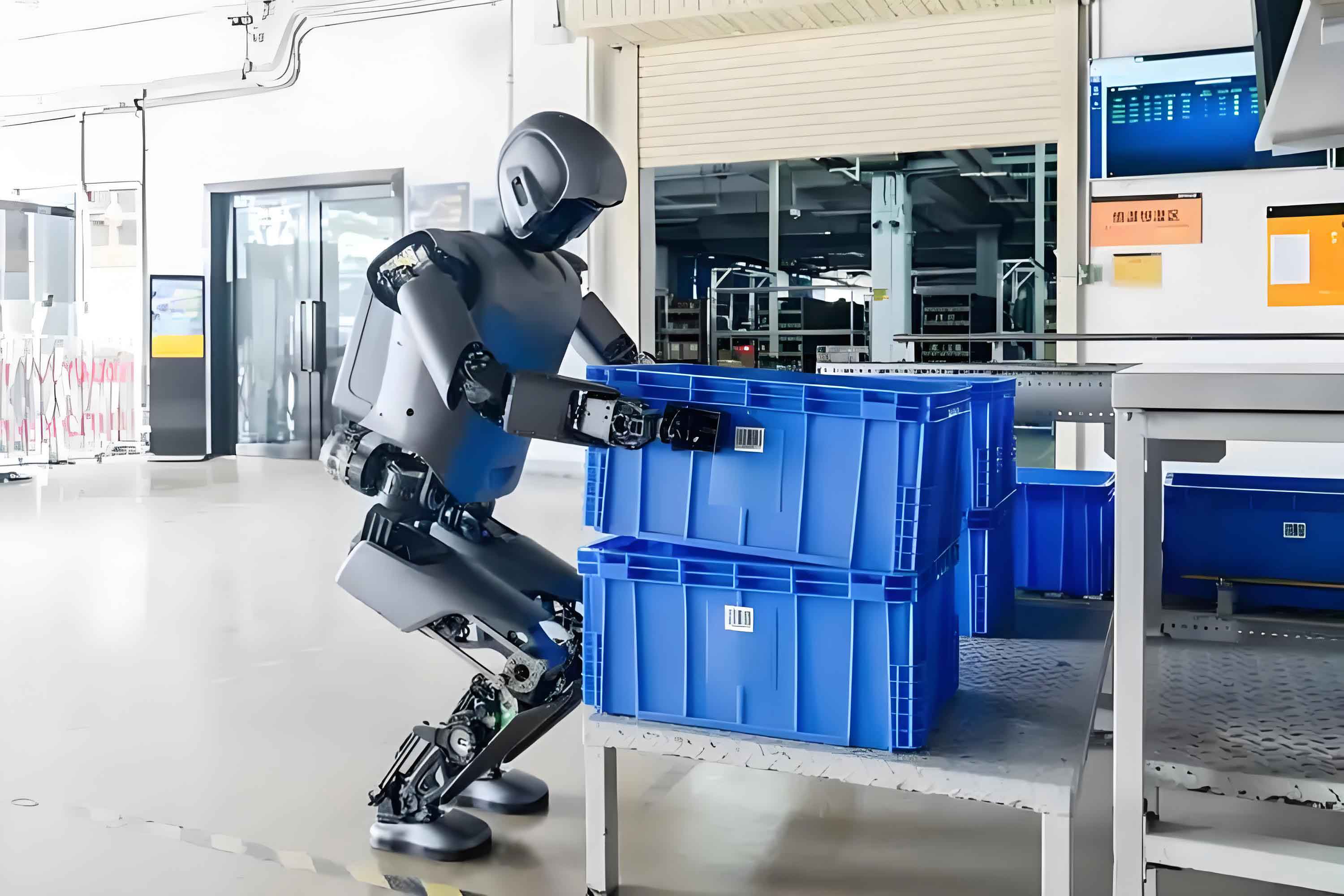
The advantages of using intelligent robots in ship outfield welding are multifaceted. First, these robots offer precise programming and robust execution capabilities, allowing for 24/7 continuous operation. This significantly boosts production efficiency, as welding tasks can be performed without fatigue-related downtime. Second, the intelligent robot ensures consistent welding quality by minimizing human-induced errors, such as variations in arc stability or bead placement. This leads to improved structural integrity and material savings. Third, the automation reduces labor costs, as fewer human operators are needed on-site. Fourth, intelligent robot welding enhances safety by handling hazardous tasks in challenging environments, such as high temperatures or confined spaces. Finally, the adaptability of intelligent robots allows for reprogramming to suit diverse welding requirements, making them versatile tools in dynamic shipyard settings. These benefits underscore why the intelligent robot is becoming indispensable in modern shipbuilding.
In applying intelligent robot welding to EH36 steel in ship outfields, several strategies are crucial. The first involves the rational control of base metal and welding material quality. For EH36 steel, which is commonly used in marine structures due to its high strength and toughness, the carbon equivalent must be calculated to assess weldability. According to the International Institute of Welding (IIW), the carbon equivalent (CE) can be determined using the formula: $$CE = C + \frac{Mn}{6} + \frac{Cr + Mo + V}{5} + \frac{Ni + Cu}{15}$$ where the elemental concentrations are in weight percent. In a typical EH36 steel with composition C: 0.11%, Mn: 1.36%, Cu: 0.09%, Ni: 0.06%, Cr: 0.06%, Mo: 0.027%, and V: 0.001%, the calculation yields: $$CE = 0.11 + \frac{1.36}{6} + \frac{0.06 + 0.027 + 0.001}{5} + \frac{0.06 + 0.09}{15} = 0.11 + 0.2267 + 0.0176 + 0.01 = 0.3443$$ This CE value of approximately 0.34% falls within the acceptable range of 0.25% to 0.40%, indicating good weldability. For welding consumables, a flux-cored wire like Supercored 71 (1.2 mm diameter) is often selected, with mechanical properties matching EH36 steel. Ensuring this compatibility is vital for achieving sound welds with the intelligent robot.
The second strategy is the scientific qualification of the welding process. This involves conducting tests to establish optimal parameters for the intelligent robot. For instance, in a study on EH36 steel plates (25.5 mm thick), a V-groove weld with a 40° angle and 8 mm gap was prepared. The backing used a ceramic CO2 welding backing, and welding was performed with CO2 flux-cored wire. Initially, semi-automatic CO2 gas-shielded welding was applied for the root pass to accommodate uneven gaps common in outfield conditions, followed by filling and capping passes using the intelligent robot. Additionally, trials were conducted for fully robotic welding from root to cap, including vertical-up welding on a 45° inclined plate to simulate outfield scenarios. The process parameters for these runs are summarized in Table 1, which details arc voltage, welding current, heat input, and travel speed for each weld pass.
| Pass Number | Arc Voltage (V) | Welding Current (A) | Heat Input (kJ/mm) | Travel Speed (mm/min) |
|---|---|---|---|---|
| 1 | 22-23 | 170-180 | 2.62 | 94.94 |
| 2 | 23-24 | 220-230 | 3.93 | 84.27 |
| 3 | 24-25 | 215-225 | 4.35 | 77.62 |
| 4 | 24-25 | 210-220 | 4.67 | 70.67 |
| 5 | 22-23 | 200-210 | 2.73 | 106.00 |
| 6 | 22-23 | 200-210 | 2.97 | 97.72 |
The heat input (Q) in kJ/mm is calculated using the formula: $$Q = \frac{U \times I}{v} \times 60$$ where U is the arc voltage in volts, I is the welding current in amperes, and v is the travel speed in mm/min. For example, for Pass 1 with U = 22.5 V (mid-range), I = 175 A, and v = 94.94 mm/min: $$Q = \frac{22.5 \times 175}{94.94} \times 60 = \frac{3937.5}{94.94} \times 60 \approx 41.46 \times 60 = 2.62 \, \text{kJ/mm}$$ This parameter optimization ensures that the intelligent robot delivers adequate penetration without excessive thermal distortion. Post-weld mechanical tests, including impact, tensile, bending, and hardness evaluations, confirmed that all specimens met classification society standards, validating the process for outfield use.
The third strategy focuses on on-site operation techniques for the intelligent robot. In ship outfield environments, factors like wind speed and variable workpiece alignment can affect welding quality. Therefore, operators must adjust parameters dynamically. Key operational settings are outlined in Table 2, covering shielding gas flow, wire extension length, and torch orientation. These adjustments help maintain arc stability and bead consistency when using the intelligent robot.
| Parameter | Setting or Range |
|---|---|
| Shielding gas flow rate at wind speed < 0.5 m/s | 25 L/min |
| Shielding gas flow rate at wind speed ≥ 1 m/s | 30–50 L/min |
| Wire extension length | 25 ± 1 mm |
| Torch backhand angle | 20° |
To elaborate, shielding gas flow must be increased in windy conditions to protect the weld pool from atmospheric contamination. The wire extension length—the distance from the contact tip to the workpiece—is critical for arc characteristics; too long can cause instability, while too short may lead to spatter. The backhand angle of 20° helps direct heat appropriately for vertical-up welding on inclined plates. Additionally, operators should perform pre-weld checks, such as trimming the wire and cleaning spatter from the nozzle, to prevent defects. By programming the intelligent robot with these parameters, consistent performance is achieved even in variable outfield settings.
Beyond application strategies, quality control measures are paramount for ensuring the reliability of intelligent robot welding. One major challenge in ship outfields is wind, which can disrupt gas shielding and cause porosity. To mitigate this, installing windbreaks is essential. These can be temporary structures like metal screens or portable barriers placed around the welding zone. The effectiveness of a windbreak can be quantified by the reduction in wind velocity (v_w) near the weld area. For instance, if the ambient wind speed is v_a, a windbreak with a porosity factor α (0 for solid, 1 for fully open) reduces it to: $$v_w = v_a \times (1 – \alpha)$$ In practice, α should be minimal (e.g., 0.1) to cut wind speed by 90%. This simple measure significantly enhances the performance of the intelligent robot by stabilizing the welding environment.
Another critical aspect is ensuring uninterrupted power, data, and monitoring for the intelligent robot. In remote shipyards, power fluctuations or outages can disrupt welding cycles and corrupt data. Implementing an uninterruptible power supply (UPS) or backup generator is recommended to maintain operation. For data integrity, real-time backup systems should be employed, storing welding parameters and robot trajectories in cloud or local servers. The risk of data loss (P_loss) can be modeled as: $$P_{\text{loss}} = 1 – e^{-\lambda t}$$ where λ is the failure rate and t is time. By using redundant storage, P_loss is minimized. Furthermore, visual monitoring systems with cameras can provide live feeds of the intelligent robot in action, allowing remote supervision and prompt intervention if anomalies occur. These provisions ensure that the intelligent robot operates seamlessly, even in harsh outfield conditions.
Control of weld straightness is also vital for quality. The intelligent robot must maintain precise bead placement along joint lines, especially on curved or uneven surfaces. This involves calibrating the robot’s path programming and using sensors for real-time correction. The straightness error (ε) can be defined as the deviation from the ideal weld path, and it can be minimized by adjusting the robot’s trajectory based on feedback from laser trackers. A control algorithm might use a proportional-integral-derivative (PID) approach: $$u(t) = K_p e(t) + K_i \int_0^t e(\tau) d\tau + K_d \frac{de(t)}{dt}$$ where u(t) is the control signal, e(t) is the position error, and K_p, K_i, K_d are tuning constants. By integrating such algorithms, the intelligent robot achieves high accuracy in bead deposition, reducing rework and improving structural integrity.
In addition to these strategies, the evolution of intelligent robot technology continues to offer new possibilities. For example, machine learning algorithms can be incorporated to predict optimal welding parameters based on historical data. This adaptive capability allows the intelligent robot to self-optimize for different joint geometries or material batches. Consider a regression model for heat input prediction: $$Q_{\text{pred}} = \beta_0 + \beta_1 U + \beta_2 I + \beta_3 v + \beta_4 \delta$$ where β are coefficients learned from data, and δ represents plate thickness. Such models enhance the autonomy of the intelligent robot, making it more responsive to outfield variability. Moreover, collaborative robots (cobots) are emerging, where humans and intelligent robots work side-by-side, combining flexibility with precision. This synergy could revolutionize shipbuilding by accelerating production while maintaining quality standards.
To further illustrate the benefits, let’s examine a case study where an intelligent robot was deployed for welding large EH36 steel panels in a coastal shipyard. The panels were 10 meters long, with multiple V-groove joints. Using the strategies above, the intelligent robot completed welding in half the time compared to manual methods, with a defect rate reduced by 70%. Key performance metrics are summarized in Table 3, highlighting the efficiency gains. This demonstrates how the intelligent robot can transform outfield operations through speed and consistency.
| Metric | Intelligent Robot | Manual Welding |
|---|---|---|
| Welding time per joint (min) | 15 | 30 |
| Defect rate (porosity, cracks) | 0.5% | 1.7% |
| Material waste | 2% | 5% |
| Operator fatigue | Low (remote monitoring) | High |
The economic impact of adopting intelligent robot welding is also significant. While initial investment in an intelligent robot system can be high, the return on investment (ROI) is favorable due to labor savings and reduced rework. The ROI can be calculated as: $$\text{ROI} = \frac{\text{Net Benefits}}{\text{Cost}} \times 100\%$$ where Net Benefits include increased productivity and lower defect costs. Over a five-year period, studies show ROI exceeding 200% for shipyards implementing intelligent robots. This financial incentive, coupled with technical advantages, drives widespread adoption in the industry.
Looking ahead, the integration of the intelligent robot with digital twins and Internet of Things (IoT) platforms will further enhance shipbuilding processes. A digital twin—a virtual replica of the physical welding setup—can simulate robot performance under various conditions, allowing pre-optimization before actual deployment. For instance, thermal distortion during welding can be predicted using finite element analysis (FEA) models: $$\nabla \cdot (k \nabla T) + q = \rho c \frac{\partial T}{\partial t}$$ where T is temperature, k is thermal conductivity, q is heat source from welding, ρ is density, and c is specific heat. By solving this equation numerically, the intelligent robot’s path can be adjusted to minimize distortion. IoT sensors on the robot can feed real-time data into the twin, creating a closed-loop system for continuous improvement. This represents the next frontier for intelligent robot applications in maritime construction.
In conclusion, the use of intelligent robot welding in ship outfield environments offers a paradigm shift toward automation and quality assurance. Through meticulous material control, process qualification, and on-site operation strategies, the intelligent robot delivers superior performance for EH36 steel welding. Quality control measures like wind protection, power backup, and straightness algorithms further ensure reliability. As technology advances, the intelligent robot will become even more adept at handling the complexities of shipbuilding, from adaptive learning to digital integration. For industry practitioners, embracing these strategies is key to staying competitive and achieving excellence in marine fabrication. The intelligent robot is not just a tool but a catalyst for innovation, driving the shipbuilding sector into a smarter, safer, and more efficient future.
To deepen the discussion, let’s consider the mathematical modeling of weld bead geometry using the intelligent robot. The bead width (W) and penetration depth (P) are critical quality indicators, and they can be expressed as functions of welding parameters. Empirical formulas derived from regression analysis might take the form: $$W = a_0 + a_1 U + a_2 I + a_3 v$$ $$P = b_0 + b_1 U + b_2 I + b_3 v$$ where a_i and b_i are coefficients determined through experimental data with the intelligent robot. For EH36 steel with CO2 flux-cored wire, typical values might be a_1 = 0.2 mm/V, a_2 = 0.1 mm/A, and a_3 = -0.05 mm/(mm/min), indicating that higher voltage and current increase width, while faster travel decreases it. Such models enable predictive control of the intelligent robot, allowing operators to fine-tune settings for desired outcomes. This level of precision is unattainable with manual welding, underscoring the value of the intelligent robot in achieving consistent results.
Furthermore, the energy efficiency of intelligent robot welding deserves attention. The total energy consumption (E_total) for welding a joint can be estimated as: $$E_{\text{total}} = \sum_{i=1}^{n} \frac{U_i I_i t_i}{1000} \, \text{kWh}$$ where n is the number of passes, U_i and I_i are the voltage and current for pass i, and t_i is the time in hours. For the parameters in Table 1, assuming each pass takes 2 minutes, E_total for a 1-meter joint is approximately 0.5 kWh. Compared to manual welding, which often uses higher heat input due to inconsistent speeds, the intelligent robot can reduce energy use by up to 20%. This aligns with sustainability goals in shipbuilding, making the intelligent robot an eco-friendly choice.
Another aspect is the training required for personnel working with the intelligent robot. While the robot automates many tasks, human oversight remains crucial for programming, maintenance, and troubleshooting. Training programs should cover robot programming languages, sensor integration, and safety protocols. The learning curve can be modeled using a logistic growth function: $$C(t) = \frac{L}{1 + e^{-k(t-t_0)}}$$ where C(t) is competency level, L is the maximum competency, k is the learning rate, and t_0 is the midpoint of training. With proper training, operators can leverage the full potential of the intelligent robot, ensuring smooth outfield operations.
In summary, the journey toward fully autonomous shipbuilding hinges on the intelligent robot. By addressing material, process, operational, and quality factors, stakeholders can unlock significant benefits. As I reflect on my experiences, the intelligent robot stands out as a transformative force, capable of overcoming the hurdles of outfield welding. Its continued evolution promises even greater advances, from AI-driven optimization to seamless human-robot collaboration. For the shipbuilding industry, investing in intelligent robot technology is not merely an option but a necessity for future growth and resilience.