
In the rapidly evolving landscape of artificial intelligence, the issue of tort liability for intelligent robots has emerged as a critical legal and societal challenge. As an researcher in this field, I aim to explore the complexities surrounding intelligent robot侵权行为, assessing whether existing tort law frameworks can adequately address these novel scenarios. This article delves into the academic debates, comparative legislative approaches, and proposes a structured liability system tailored for intelligent robots, incorporating配套制度 such as technological aids and insurance mechanisms. Throughout, the term “intelligent robot” will be frequently emphasized to underscore the focus on autonomous physical entities capable of learning and decision-making.
The rise of intelligent robots, from autonomous vehicles to service machines, has been accompanied by high-profile incidents highlighting their potential for harm. For instance, there have been reports of intelligent robots causing property damage or personal injury due to autonomous actions, raising urgent questions about accountability. These cases illustrate that intelligent robots, while technologically advanced, remain legal objects under current law, necessitating a reevaluation of traditional tort principles. In this analysis, I adopt a first-person perspective to systematically examine how liability should be allocated among various actors—producers, designers, users, and data providers—in the context of intelligent robot侵权行为.
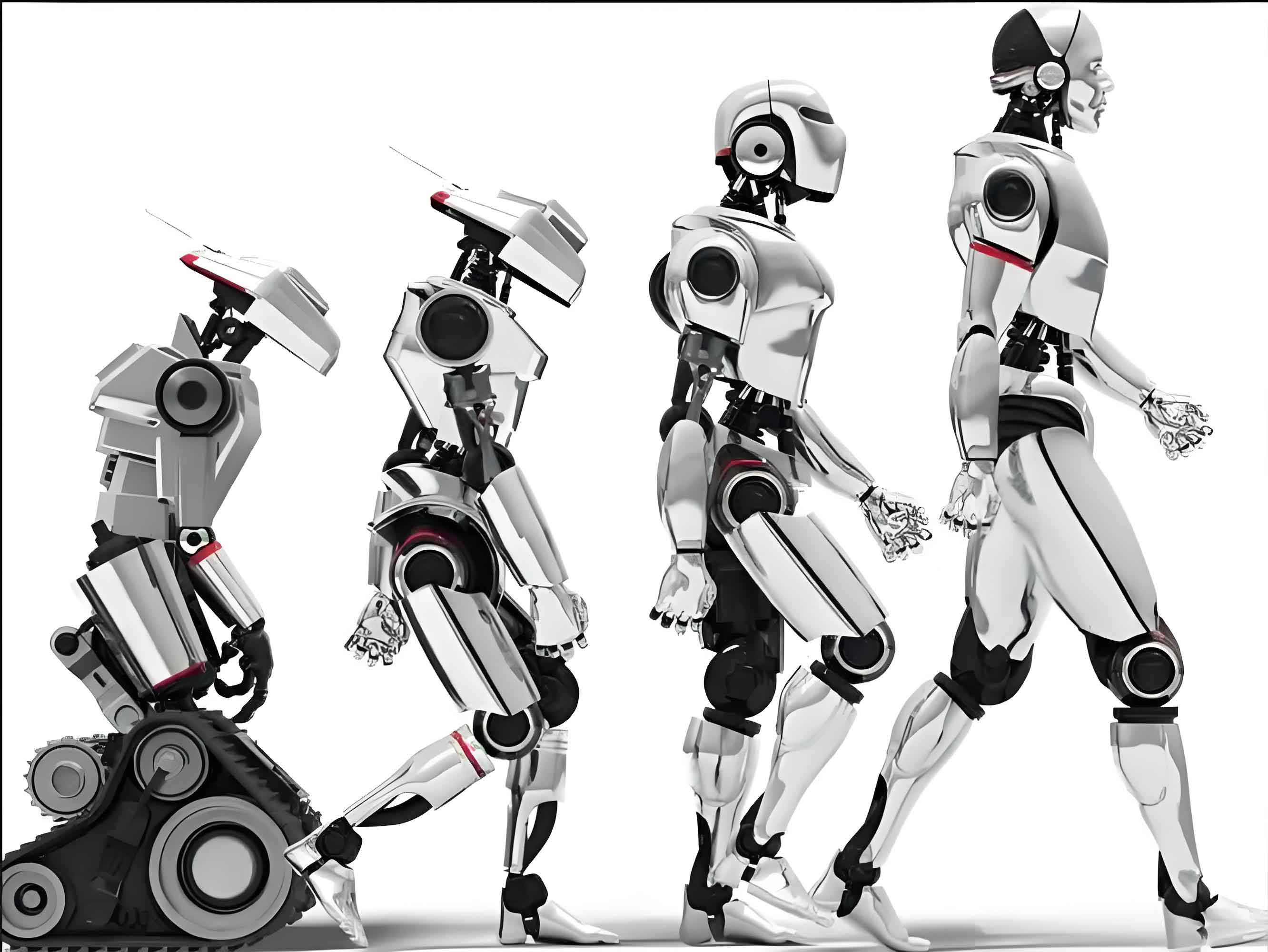
To begin, it is essential to define the scope: an intelligent robot refers to a physical embodiment of artificial intelligence, not limited to humanoid forms, that can act autonomously through mechanical or algorithmic processes. This excludes purely algorithmic侵权行为 like algorithmic discrimination, which do not involve physical entities. The core problem revolves around how to assign liability when an intelligent robot causes harm due to defects in design, manufacturing, or operation. As I navigate this topic, I will draw on academic discussions and legislative examples to build a comprehensive framework.
Academic Debates and Legislative Overview
The scholarly discourse on intelligent robot tort liability is rich with diverse viewpoints, which can be broadly categorized into three approaches: adhering to traditional tort frameworks,参照其他法律责任 models, and creating entirely new liability systems. Below, I summarize these perspectives in a table to clarify the key arguments.
| Approach | Key Points | Pros and Cons |
|---|---|---|
| Traditional Tort Framework | Intelligent robots are treated as products; liability falls on producers or sellers under product liability rules, with users liable for their negligence. | Pros: Leverages existing laws, provides clear victim compensation. Cons: May not address autonomous decision-making by intelligent robots. |
| 参照其他法律责任 | Analogies to minor’s vicarious liability or corporate liability: intelligent robots are like minors or legal persons, with makers or users as guardians or entities bearing responsibility. | Pros: Handles autonomous acts better. Cons: May stretch legal analogies too far, creating uncertainty. |
| New Liability Creations | Includes “技术中立” theory (producers liable only for malicious intent) or granting intelligent robots legal personhood to be independently sued. | Pros: Encourages innovation. Cons: Risks undercompensating victims or overcomplicating liability structures. |
From my analysis, I concur that at the current stage of development, intelligent robots should remain legal objects, as they lack true consciousness or emotions required for legal subject status. Thus, existing tort rules can partially apply, but modifications are needed to address the unique aspects of intelligent robot侵权行为. This view is supported by legislative trends globally, as seen in the European Union, United States, and Germany, which I will now explore through another comparative table.
| Jurisdiction | Legislative Measures | Focus on Intelligent Robot Liability |
|---|---|---|
| European Union | “机器人民事法律规则” (2017): Recommends human liability for now, but suggests future “electronic person” status for autonomous intelligent robots; emphasizes training responsibility and强制保险. | Highlights the need for adaptive rules as intelligent robots evolve, with a focus on designer and data provider roles. |
| United States | Largely federal inactivity; state laws like Michigan’s AV rules define intelligent robots as “drivers” and separate manufacturer from tech developer liability. | Shows a patchwork approach, favoring case-by-case adjudication but acknowledging intelligent robot-specific issues. |
| Germany | Amended “道路交通法” (2017): Introduces driver vigilance and takeover duties for autonomous vehicles, mandates “black boxes,” and increases强制保险 limits. | Demonstrates practical steps for intelligent robot侵权责任, especially in transportation contexts. |
These legislative examples reinforce that intelligent robot侵权责任 requires nuanced adjustments rather than wholesale replacement of current systems. In the following sections, I will construct a detailed liability framework for intelligent robots, incorporating product liability, designer liability, user liability, and data provider liability, using formulas and tables to elucidate key principles.
Constructing a Liability Framework for Intelligent Robots
Based on the premise that intelligent robots are legal objects, I propose a multi-layered liability system. This system accounts for the diverse actors influencing intelligent robot behavior, ensuring that victims are adequately compensated while promoting responsible innovation. The core liability分配 can be expressed through a formula:
$$L_{total} = L_p + L_d + L_u + L_{dp}$$
Where $L_{total}$ represents total liability, $L_p$ is producer liability, $L_d$ is designer liability, $L_u$ is user liability, and $L_{dp}$ is data provider liability. Each component will be analyzed in turn, with specific归责原则 and举证责任 rules.
Product Liability for Intelligent Robots
Under traditional product liability, producers of defective intelligent robots bear no-fault liability for harms caused. However, I argue that for intelligent robots, design defects should be剥离 from producer liability and assigned directly to designers, unless the producer and designer are the same entity. This is because the autonomous capabilities of an intelligent robot stem primarily from its core design, not mere manufacturing. Thus, the product liability rule can be modified as follows:
$$L_p =
\begin{cases}
0 & \text{if defect is design-related and designer is separate} \\
\text{Strict liability} & \text{for manufacturing or warning defects}
\end{cases}$$
Sellers, on the other hand, should retain their usual liability, forming joint liability with producers or designers to protect victims. This aligns with social justice goals, as victims often face information asymmetries with intelligent robot products. The table below summarizes the application of product liability to intelligent robots.
| Defect Type | Liability Holder | 归责原则 | Remarks |
|---|---|---|---|
| Design Defect | Designer (if separate) | Strict liability | Core intelligent robot technology; producer exempted. |
| Manufacturing Defect | Producer | Strict liability | Applies to physical flaws in intelligent robot production. |
| Warning Defect | Producer/Seller | Strict liability | Failure to warn about intelligent robot risks. |
This adjustment ensures that liability for intelligent robot侵权行为 is allocated to the most relevant party, encouraging safer design practices without overburdening producers.
Designer Liability for Intelligent Robots
Designers of intelligent robots, particularly those responsible for core algorithms and autonomous functions, play a pivotal role in shaping behavior. I contend that designer liability should be distinct and subject to strict liability, not fault-based, to enhance victim protection and incentivize caution in intelligent robot development. The外延 of “designer” includes both original designers and unauthorized modifiers who alter the intelligent robot’s core design. The归责原则 can be represented as:
$$L_d = \int_{t_0}^{t} \delta(D(t)) \, dt$$
Where $L_d$ is designer liability, $D(t)$ represents design defects over time $t$, and $\delta$ is a function indicating defect impact. This symbolizes the ongoing responsibility for design flaws in intelligent robots. Designer举证责任 should be inverted: victims need only provide prima facie evidence of a defect, after which designers must prove absence of defect or causation. This addresses the technical complexity of intelligent robot systems.免责事由 must be tailored; for instance, the “state-of-the-art” defense should not apply, as it could allow designers to self-judge their own intelligent robot technology. Instead, exemptions include: defects not existing at the time of testing or release, and unauthorized third-party modifications. The following table outlines designer liability specifics.
| Aspect | Details for Intelligent Robots |
|---|---|
| Liability Scope | Core intelligent robot design only (e.g., autonomous driving systems). |
| 归责原则 | Strict liability (no-fault). |
| 举证责任 | Designer bears burden after victim’s prima facie show. |
| 免责事由 | Defects absent at testing/release; third-party interventions. |
By imposing strict liability on designers, we balance innovation with accountability, ensuring that intelligent robot侵权行为 do not go uncompensated.
User Liability for Intelligent Robots
Users of intelligent robots, including owners or operators, should bear fault-based liability for harms caused by their negligence. Typical过错 scenarios include: improper instructions, failure to maintain the intelligent robot, and接管过错 during human-robot切换. The latter is crucial in contexts like autonomous vehicles, where users must respond to takeover requests. I propose a two-step test to determine接管过错:
- Determine if the request was explicitly mandatory.
- Calculate the reasonable response time $T_r$ using:
$$T_r = T_{perc} + T_{react} + T_{act} + T_{mech}$$
Where $T_{perc}$ is perception time, $T_{react}$ is cognitive reaction time, $T_{act}$ is action conversion time, and $T_{mech}$ is mechanical effect time for the intelligent robot.
If the intelligent robot demands instant接管 without reasonable notice, no user过错 should be found. This aligns with ethical standards, such as those in Germany’s autonomous driving guidelines. User liability thus serves as a check on negligent interactions with intelligent robots, complementing product and designer责任.
Data Provider Liability for Intelligent Robots
Data providers supply the information that fuels intelligent robot learning and decision-making, significantly influencing autonomous behavior. I argue that data providers should incur fault-based liability for harms caused by defective data, such as biased or unlawful datasets that lead to intelligent robot侵权行为. The归责原则 can be expressed as:
$$L_{dp} = \alpha \cdot E_{data}$$
Where $L_{dp}$ is data provider liability, $\alpha$ represents the过错 factor (e.g., negligence in data curation), and $E_{data}$ is the harm caused by data-induced intelligent robot actions. Data providers are entities that profit from data management, not mere data originators. Their举证责任 mirrors that of designers: victims show初步证据 of harmful data, and providers must prove data无害. This addresses power imbalances, as providers have superior access to data details. Common过错 situations include providing data with legal violations, biases, or unsecured personal information. The table below summarizes data provider责任.
| Element | Application to Intelligent Robots |
|---|---|
| Liability Basis | Fault-based (negligence in data provision). |
| 举证责任 | Provider proves data harmlessness after victim’s初步 show. |
| 典型过错 | Data with illegal content, biases, or privacy breaches affecting intelligent robot behavior. |
Including data providers in the liability framework acknowledges the critical role of data in shaping intelligent robot actions, ensuring comprehensive accountability.
Supporting Systems for Intelligent Robot Tort Liability
To effectively implement the above liability rules,配套制度 are essential. I focus on two key aspects: technological aids like “black boxes” and强制责任保险 for designers.
Leveraging “Black Box” Technology for Evidence
“Black box” devices, mandated in laws like the EU recommendations and German traffic code, can revolutionize举证 in intelligent robot侵权 cases. These devices should record comprehensive data on intelligent robot operations, such as control modes, instructions, internal processes, and external interactions. I propose that all intelligent robots be required to have black boxes with至少功能 including:
- Control mode of the intelligent robot.
- All instructions and responses.
- Internal运行 processes.
- Human-robot interaction videos/audio.
- Data sources used by the intelligent robot.
- External 360-degree video monitoring.
- Third-party network intrusions (if any).
- 故障情况 (if any).
Failure to install or tampering with black boxes should lead to presumptions of过错 against producers or users. This technology bridges the evidence gap, making it easier to ascertain causes in intelligent robot侵权行为, especially during人机切换 scenarios.
Establishing强制责任保险 for Designers
Given the strict liability imposed on designers of intelligent robots, a强制责任保险 system is necessary to ensure compensation capacity and distribute risk. Unlike traditional insurance, this should specifically target designers, as they face potentially massive liabilities from design defects in intelligent robots. The insurance can be modeled as:
$$I_d = \min(C_{damage}, P_{insurance})$$
Where $I_d$ is insurance coverage for designer liability, $C_{damage}$ is the damage amount from intelligent robot侵权行为, and $P_{insurance}$ is the policy limit. This aligns with EU and German approaches that advocate for enhanced保险 for autonomous systems. By mandating insurance, we protect victims while allowing designers to innovate without bearing full financial brunt, fostering a sustainable ecosystem for intelligent robot development.
Conclusion
In summary, the tort liability of intelligent robots demands a refined approach that builds on existing法律框架 while addressing unique challenges. From my first-person analysis, I conclude that intelligent robots should remain legal objects for now, with liability allocated across producers, designers, users, and data providers. Key reforms include separating design defects from product liability, imposing strict liability on designers, fault-based liability for users and data providers, and supportive measures like black boxes and designer强制保险. By integrating these elements, we can create a robust system that compensates victims, encourages responsible innovation, and adapts to the evolving capabilities of intelligent robots. This framework not only addresses current intelligent robot侵权问题 but also provides a foundation for future legal developments as人工智能 technology advances.
Throughout this discussion, I have emphasized the term “intelligent robot” to highlight the focus on autonomous physical entities. The proposed liability model, with its formulas and tables, offers a structured way to navigate the complexities of intelligent robot侵权行为, ensuring that legal systems keep pace with technological progress. As we move forward, continuous evaluation and adaptation will be crucial to balancing accountability and innovation in the age of intelligent robots.