
From coordinated humanoids on futuristic assembly lines to the ubiquitous mechanical arms welding car frames, a quiet yet profound transformation is sweeping through China’s industrial heartlands. The ‘new colleagues’—robots of increasing sophistication—are no longer a novelty but a growing workforce, reshaping production, redefining jobs, and propelling the nation’s manufacturing prowess. The journey from experimental labs to the gritty reality of the factory floor marks a pivotal shift in China’s technological ascent, moving from algorithmic prowess in the virtual realm to mastery in the physical world of automation.
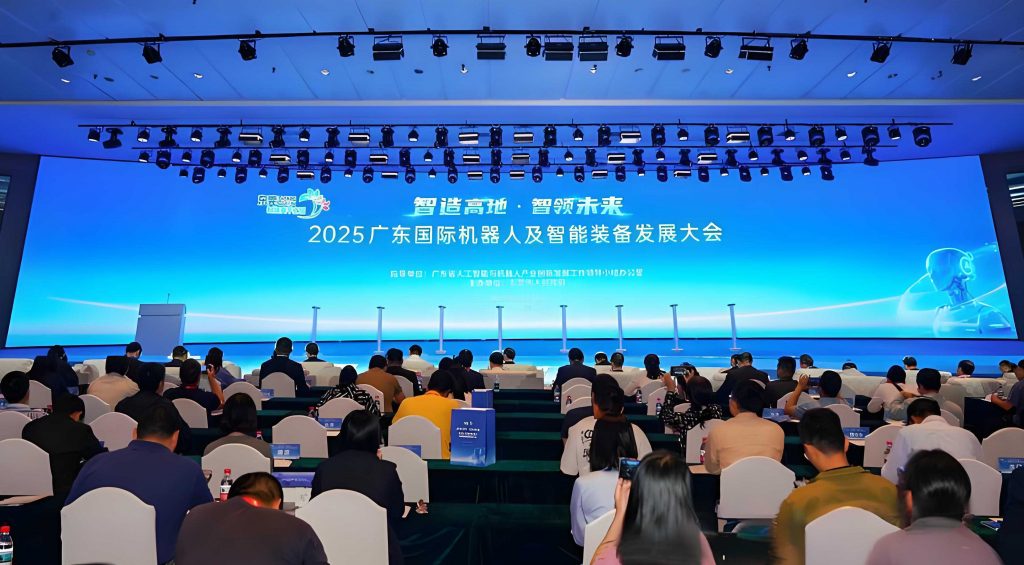
The scale and speed of this adoption were on full display at the 2025 World Robot Conference in Beijing. The event highlighted a dominant trend: China is not just a participant but the central arena for robotic innovation and deployment. For twelve consecutive years, China has maintained its position as the world’s largest market for industrial robots. In a staggering testament to its research and development focus, data revealed that China accounted for two-thirds of global robot patent applications in 2024. The conference floor itself mirrored this industrial pivot; gone were the crowds gathered merely for dancing or boxing robot spectacles. The focus had decisively shifted to ‘practical operation,’ with a significant increase in humanoid robots demonstrating real-world tasks like sorting on production lines, retrieving goods in retail settings, and conducting surveys in mining areas. This evolution underscores a broader transition within the China robot ecosystem—from virtual algorithms to physical entities, from the ‘showroom’ to the ‘workshop.’
The efficiency revolution is palpable, and the first to sense its tremors are the frontline industrial workers themselves. They are the ones sharing workspace with these mechanical teammates, navigating a changing landscape where collaboration with machines is becoming the new norm.
- The ‘Internship’ of Humanoid Robots
A vision of the future materialized in March at Zeekr’s 5G smart factory in Ningbo, Zhejiang province. Here, a team of humanoid robots worked in unison, performing tasks like sorting materials, moving containers, and conducting precision assembly. These were Walker S1 industrial humanoid robots, developed by Shenzhen-based UBTech Robotics. They operated across complex zones including the final assembly workshop, SPS instrument area, quality inspection area, and door assembly area, demonstrating multi-task collaborative operations.
The path to this point, however, was not smooth. The concept of ’embodied AI’ and ‘intelligent robots,’ newly emphasized in China’s government work report, finds its ultimate expression in humanoids. Yet, their ’employment’ journey has been one of iterative, rapid improvement. In July of the previous year, an earlier model, the 1.35-meter-tall Walker S Lite, began a 21-day ‘internship’ at the same factory, tasked with material handling. Its performance was underwhelming—slow, reliant on scanning QR codes for positioning, and achieving only one-fifth of human efficiency. Just three months later, the 1.72-meter Walker S1 took over, boosting efficiency by 30%. By July of this year, the latest 1.76-meter Walker S2 model commenced work, featuring a groundbreaking capability for autonomous battery swapping, turning the dream of continuous, uninterrupted robot labor into reality.
- Welcoming the New ‘Co-Workers’
A critical question arises: Are human workers ready to welcome these robotic colleagues? For many across the China robot-integrated manufacturing sector, that question is already answered. They have long been active participants in this technological shift. According to the International Federation of Robotics’ latest World Robotics Report, of the approximately 4.28 million industrial robots operating in factories worldwide, over half are in China.
The automotive industry, a trailblazer in automation, offers a clear picture. At the Hongqi Prosperity plant of China FAW Group, the scene is one of orchestrated precision. Cars glide along conveyance systems as robotic arms extend and rotate with purpose. A new energy vehicle rolls off the line every 54 seconds. The facility boasts extensive automation: 71.4% in stamping, 100% welding automation achieved by 739 robots in the body shop, and a final assembly line capable of flexible production across multiple vehicle platforms. For master technicians like Yang Yongxiu, a chief skill master at FAW, coexistence has meant evolution. Workers have become the ‘commanders’ of their robotic teams, overseeing and optimizing automated processes.
This pattern of augmentation, rather than simple replacement, is a common theme. Fan Zhiqin, a welding expert at Taiyuan Heavy Industry Group, recalled initial anxieties when the company purchased its first automated welding robot. “We did worry about whether we would lose our jobs,” he admitted. Instead, he and his colleagues discovered new value. “After robots improved efficiency, we had more time and energy to delve into the more challenging technical problems, which also brought a greater sense of personal achievement,” Fan explained. The subsequent launch of a new smart industrial park in 2022, filled with various robots, dramatically accelerated intelligent manufacturing while significantly improving the working environment for personnel.
It is important to note the current limitations. Humanoid robots, in particular, are still in a developmental phase. In training labs, data collectors wearing VR headsets can be seen ‘teaching’ humanoids to grasp items or fold cartons. A task like picking up a part might take a robot 20 seconds, compared to a human’s 5 seconds. One enterprise负责人 candidly noted that the current generation of humanoids operates at about a quarter of human speed, necessitating intense, ongoing training.
This leads to a fundamental question from skeptics: Why invest vast resources into training robots that are currently inferior to humans for tasks they already perform? Ruan Qiang, a regional head at Jiangsu Rui Tong Tian Qing Robot Technology Co., Ltd., provides a clear rationale. “The original intention of training robots is to let them do work unsuitable for humans,” he states. His company trains vertical large models for industry using real production line data. The ‘primary target positions’ for these China robot platforms are repetitive, mechanical, or hazardous jobs—like stacking boxes or handling toxic materials. The ultimate goal is far more complex tasks currently beyond human capability, but the learning must start with the basics. “We must be participants in the future, not bystanders,” Ruan asserts. He believes the social value reconstruction in the AI era will be more profound than previous industrial revolutions, and only active participants will thrive.
| Metric | Data / Description | Context |
|---|---|---|
| Global Market Leadership | 12 consecutive years as largest market | China robot industrial adoption scale |
| Global Patent Share (2024) | ~66% (Two-thirds) of applications | China robot innovation output |
| Installed Base (Global) | Over 2 million units (Est. >50% of 4.28M global) | Operational China robot footprint in factories |
| Annual Production (2024) | 556,000 sets of industrial robots | Output of the China robot manufacturing sector |
| Key Policy Goal (2025) | Batch production & demonstration applications | Official roadmap for humanoid China robot development |
- From Observation to Embrace: The Workers’ Shift
A subtle but significant shift is occurring on the ground. Exposure and firsthand experience are changing perceptions. After visiting FAW in Changchun, Zhou Ganchao, a worker from the Daqing Oilfield, was so impressed by the robots that he worked with scientists to customize one for his own workplace. Similarly, Chen Long, a miner in Henan, submitted three proposals to management recommending the adoption of robots after seeing them in use at a sister mine.
The appetite for upskilling is powerful. The success story of Chen Zhaochun, who won the national championship in a robotics skills competition less than four years after first studying industrial robot welding, has inspired many. Recognizing this demand, trade unions have mobilized. Since 2024, the All-China Federation of Trade Unions has offered over 25,000 audio-video courses and hundreds of thousands of practice questions covering 39 trades through its platform. In May 2025, it launched a nationwide “Artificial Intelligence+” learning initiative for industrial workers, featuring instruction from university experts, internet professionals, and master craftsmen, already training over ten thousand workers. As Yang Yongxiu puts it, workers who seek innovation and change will not be replaced.
- Forging the Next Generation of ‘Smart Colleagues’
While the current China robot workforce is formidable, the industry’s gaze is fixed on the next leap: the widespread deployment of more capable AI-driven humanoids. Marina Bill, President of the International Robotics Federation, forecasts continued growth in annual industrial robot installations through 2027, with the China robot market providing crucial support, maintaining an annual growth rate of 5% to 10%.
The distinction between traditional industrial robots and humanoids is fundamental. Humanoids are designed with a ‘brain.’ At the Beijing Humanoid Robot Innovation Center, robots are tested on grass, sand, and gravel. Their control architecture mimics a ‘cerebellum’ for coordination and a ‘cerebrum’ for cognition. Xiong Youjun, a company负责人, explains that these capabilities—enabled by multi-modal perception and autonomous decision-making—are essential for the flexible workstations of future production lines. This capacity for autonomous evolution, or becoming ‘smarter with use,’ aims to address the inflexibility of traditional industrial robots.
Critical hardware challenges are also being tackled. A team led by Academician Liu Hong at the Harbin Institute of Technology is focusing on the ‘dexterous hand.’ “Picking up an egg without crushing it or dropping it is an innate human skill, but a major challenge for robots,” explains project lead Li Wangyang. Designing hands that are nimble, compact, robust, and compliant, with numerous components integrated into a small space, can account for up to half of the entire machine’s development effort.
National policy has set 2025 as a key milestone. The Ministry of Industry and Information Technology’s “Guiding Opinions on the Innovative Development of Humanoid Robots” targets initial establishment of an innovation system, breakthroughs in key technologies like the ‘brain, cerebellum, and limbs,’ and the achievement of international advanced levels in batch-produced整机 products for demonstration applications.
Regions are also competing on this new track of qualitative productivity. This year, Wuxi in Jiangsu province designated ‘humanoid robots’ as an independent industrial cluster for the first time, aiming to grow the sector to over 30 billion yuan and 200 related enterprises within three years, striving to build an ‘AI City.’ Local enterprises like Tianqi Automation Engineering Co., Ltd., with decades of experience in automotive智能装备, are leveraging their synergies to enter the humanoid arena. They have established the country’s first humanoid robot training base that simulates real automotive manufacturing conditions. “This is the starting point for the humanoid robot industry, and Tianqi must be part of it,” said Wang Zhao, head of corporate communications, reflecting a widespread determination within the China robot industry to lead the next wave.
- The Primacy of Mindset in the Machine Age
As humanoid robots step from labs into reality over half a century since their inception, perspectives on them vary. At the 2025 World Artificial Intelligence Conference, Turing Award laureate Geoffrey Hinton offered an analogy: humanity is raising a cute tiger cub, faced with the choice of getting rid of it or finding a way to ensure its own safety.
For Chen Liang, a national model worker and teacher at Jiangsu Vocational College of Information Technology, the crucial choice lies in how one views the present. “Thought decides everything. Innovators do not纠结 about the future; they only participate and make it happen,” he stated.
This forward-looking mindset is evident among the workers immersed in this revolution. When engaging with them on the factory floor, a sense of focused calm prevails. Their drive is to keep pace with the times, to continue pursuing and achieving excellence. In this respect, some things remain unchanged. “People used to think China’s advantage lay in its abundant labor force as a labor-intensive country,” Chen Liang reflected. “Actually, our greatest advantage is the inheritance of the craftsman spirit. This power, ingrained in our血脉, is the real strength embedded within Chinese industry.” From skilled workers to industrial robots and now to humanoids, the mode of labor on China’s production lines is transforming, but the craftsman spirit of dedication and excellence persists. This, perhaps, remains the core value where humans excel above the machine—a guiding principle for the evolving partnership between workers and their new China robot colleagues.