
NINGBO, China – The Third Annual China Robot Summit and Global Returnees Ningbo Conference officially commenced on June 13 in Yuyao, marking a pivotal moment for the intelligent manufacturing and technology sectors. The high-profile event attracted a constellation of top-tier political leaders, renowned academics, and pioneering industry figures from across the globe, all converging to chart the future of robotics and smart technology.
The opening ceremony was graced by the presence of Xia Baolong, Secretary of the Zhejiang Provincial Committee of the People’s Republic of China and Chairman of the Standing Committee of the Provincial People’s Congress. Yuan Jiajun, Member of the Provincial Standing Committee and Executive Vice Governor, declared the summit open. Other distinguished attendees included Chen Jinbiao, Member of the Provincial Standing Committee and Secretary-General; Cao Jianlin, former Vice Minister of Science and Technology and Deputy Leader of the “Made in China 2025” Leadership Group; and Tang Yijun, Deputy Secretary of the Ningbo Municipal Committee and Acting Mayor of Ningbo, who delivered the welcoming address.
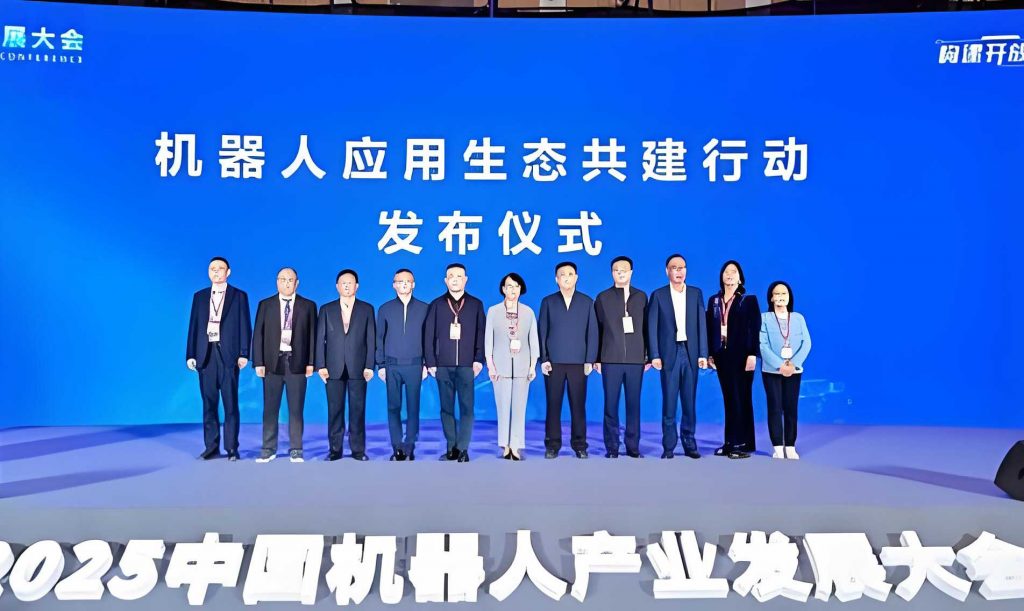
The gathering underscored the strategic importance of robotics to China’s industrial future. The event’s significance was further amplified by the announcement that the China Robot Summit will be permanently hosted in Ningbo, cementing the city’s role as a national hub for robotics innovation and industry convergence. A formal ceremony was held to mark this permanent settlement.
The summit’s theme, “Human-Robot Integration, Making Robots More Intelligent,” reflects the cutting-edge focus of the discussions. The event is jointly organized by the Ningbo Municipal People’s Government, the China Mechatronics Technology Application Association, and the North Science and Technology Information Institute of China Ordnance Industries.
A Gathering of Global Minds
The conference floor buzzed with intellectual energy, featuring an extraordinary assembly of experts from the world’s leading scientific and engineering institutions. This demonstrated the global recognition of China’s robot industry ambitions. The delegation included:
- Xu Zhihong, Academician of the Chinese Academy of Sciences and former President of Peking University.
- Ding Han, Academician of the Chinese Academy of Sciences.
- Cai Hegao and Li Deyi, Academicians of the Chinese Academy of Engineering.
- Tan Jianrong, Academician of the Chinese Academy of Engineering.
- Professor Kurt Levy, Academician of the United States National Academy of Engineering.
- Gu Chunyuan, Academician of the Royal Swedish Academy of Engineering Sciences.
- Li Ming, Academician of the Royal Society of Canada.
- Professor Toshio Fukuda, Academician of the Engineering Academy of Japan.
- Lindl, Executive Director of the German Industry 4.0 Alliance.
- Zhang Jianwei, Academician of the Academy of Sciences in Hamburg, Germany.
Also present were Zhang Rutong, Vice Chairman of the China Mechatronics Technology Application Association, and Wang Wenming, Party Committee Secretary of the North Science and Technology Information Institute of China Ordnance Industries. This international lineup highlights the summit’s role as a premier platform for knowledge exchange in the global China robot ecosystem.
Ningbo’s Ambition as a Smart Economy Leader
In his opening speech, Acting Mayor Tang Yijun extended a warm welcome to all attendees and articulated Ningbo’s vision. He emphasized that as a crucial advanced manufacturing base in China, Ningbo possesses a solid foundation and vast potential for developing an intelligent economy and applying smart equipment.
“Ningbo is taking the opportunity of studying and implementing the spirit of the National Science and Technology Innovation Conference to vigorously develop an intelligent economy and promote economic transformation, upgrading, and innovation-driven development,” Tang stated. He outlined the city’s concrete efforts, noting that Ningbo is currently pooling municipal resources to construct a distinctive Robot Town and planning to build a Smart Economy Demonstration Zone. These initiatives, he said, are designed to provide a stage for innovative talents and enterprises in the smart economy field worldwide to realize their dreams and create value.
Tang positioned this “Dual Summit” as a critical bridge connecting Ningbo with the world and fusing technology with industry, asserting it would inject powerful new momentum into the development of Ningbo’s robot industry. “Ningbo, standing at the forefront of intelligent economic development, is more eager than ever for the participation of elite talents from home and abroad,” he proclaimed, inviting collaboration to “step into an intelligent era of wisdom flow and unlimited creation, and jointly share the enormous dividends of the intelligent economy.” He pledged that Ningbo would act as a dedicated “shopkeeper” to provide the best possible services and environment for all talents aspiring to start businesses in the city.
Launch of the “TOP30 Robot Think Tank” and Major Project Signings
A key highlight of the opening ceremony was the reading of the “Robot TOP30 Initiative Proposal” by Gan Zhongxue, Vice President of the National “Thousand Talents Plan” Expert Association and President of the Ningbo Intelligent Industry Research Institute. This initiative saw 30 top robot scientists collectively launch the “TOP30 Robot Think Tank,” a high-level advisory body poised to shape the strategic direction of the China robot industry. This move signals a concerted effort to pool top-tier intellectual resources for the sector’s advancement.
Isobe Masashi, Chairman of Kawasaki Robotics (Tianjin) Co., Ltd., also delivered a speech, reflecting the active involvement of leading international robot manufacturers in the China market.
The ceremony witnessed a significant round of project signings, with total investment exceeding 20 billion yuan (approximately 3 billion USD at the time). The agreements spanned three key areas:
- Smart Economy Industrial Projects: Direct investments in robotics and automation manufacturing and R&D facilities.
- Government Service Projects: Partnerships between municipal authorities and companies to foster the industry ecosystem.
- Talent Cooperation Projects: Initiatives aimed at attracting and cultivating expert human resources for the burgeoning China robot field.
Comprehensive Forum Agenda Drives In-Depth Dialogue
The summit is structured to foster comprehensive dialogue through a combination of keynote reports, thematic forums, and exhibition displays. The diverse forum lineup ensures coverage of the most dynamic segments within the broader China robot landscape:
- National Industrial Robot Forum
- Service Robot Forum
- Artificial Intelligence and Unmanned Driving Technology Forum
- Medical Robot Industry Development Forum
- Parallel Robot Application Forum
Five additional specialized forums round out the agenda, creating over ten parallel tracks for discussion on applications, challenges, and future trends. This structure facilitates granular conversations about the commercialization and technological hurdles facing different segments of the China robot industry, from heavy-duty industrial arms to delicate medical devices and autonomous vehicles.
Demonstrations Highlight Grassroots Innovation and Practical Application
Beyond the conference halls, the summit featured interactive exhibitions showcasing the tangible progress of the China robot sector. Attendees, including senior leadership, engaged directly with robotic technologies. These demonstrations provided a vivid snapshot of both current industrial capabilities and the future generation of innovators.
One notable interaction involved Secretary Xia Baolong, who was seen in conversation with robots on the exhibition floor, highlighting the leadership’s personal interest in technological engagement. In another inspiring moment, young students from the Yuyao Dongfeng Elementary School Robot Club demonstrated their creative robotic projects. Secretary Xia enthusiastically encouraged the children, urging them to “study hard, and when you grow up, engage in researching and manufacturing robots.” This scene symbolized the long-term investment in human capital essential for sustaining the growth of the China robot industry, from top-level research to grassroots education.
The Strategic Significance for China’s Industrial Policy
The high-level political attendance underscores the strategic national priority assigned to robotics, a cornerstone of the “Made in China 2025” industrial policy. The presence of Cao Jianlin, a key architect of that policy, directly links the summit’s discussions to China’s broader ambition to ascend the global value chain through automation, digitization, and smart manufacturing.
Permanently anchoring the China Robot Summit in Ningbo is a strategic decision. It leverages Ningbo’s robust manufacturing base, its status as a key port city, and its proactive governmental support to create a stable, recurring platform for industry convergence. This move is expected to accelerate the formation of a complete industrial cluster in the Yangtze River Delta region, attracting continuous flows of capital, technology, and talent dedicated to advancing the China robot agenda.
The collaboration with the Global Returnees Conference is particularly astute, creating a direct pipeline for overseas Chinese experts and entrepreneurs—often trained at the world’s best institutions—to contribute their knowledge and networks to the domestic China robot ecosystem. This fusion of global insight with local industrial strength is a potent formula for innovation.
Looking Ahead: Integration and Intelligence
The focus on “Human-Robot Integration” moves the conversation beyond mere automation. It points toward a future of collaboration where robots augment human capabilities with precision, strength, and data-processing power, while humans provide judgment, creativity, and oversight. Making robots “more intelligent” involves advancements in artificial intelligence, machine learning, sensor fusion, and adaptive control—all areas where the China robot industry is investing heavily.
The projects signed and the networks forged during this summit are tangible steps toward this future. The establishment of the TOP30 Robot Think Tank will provide ongoing, high-caliber guidance to policymakers and industry leaders. The planned Robot Town and Smart Economy Demonstration Zone in Ningbo will serve as live testbeds and production bases for next-generation technologies.
In conclusion, the Third China Robot Summit has successfully launched not just a conference, but a sustained mechanism for growth. It has positioned Ningbo as the beating heart of China’s robotic ambitions and demonstrated a holistic approach that combines political will, global expertise, industrial capacity, financial investment, and educational nurturing. As the forums continue and partnerships deepen, the event solidifies its role as the definitive annual barometer for the health and direction of the China robot industry, setting the stage for a new chapter of intelligent manufacturing and technological leadership. The message is clear: the future of robotics is being actively built, and China is determined to be a primary architect of that future through focused events like this summit which continually propel the China robot narrative forward.