
In the field of industrial robotics, precision components such as reducers play a critical role in ensuring high performance, accuracy, and reliability. Among these, the RV reducer, also known as the rotary vector reducer, has gained significant attention due to its superior characteristics, including high transmission efficiency, compact design, and excellent torque capacity. As a researcher focused on advancing robotic technologies, I have designed and developed a comprehensive test bed specifically for evaluating the dynamic performance of RV reducers. This platform aims to address the growing need for standardized testing methodologies that can assess multiple parameters under various operating conditions. The motivation stems from the current reliance on imported RV reducers in many industries, which highlights the urgency to develop domestically produced alternatives with comparable or superior performance. By providing a robust testing environment, this test bed facilitates the analysis of key dynamic characteristics, ultimately contributing to the optimization and innovation of RV reducer designs.
The core objective of this work is to create a versatile and high-precision experimental setup that can measure a wide range of performance indicators for RV reducers. These indicators include transmission torque, speed, power, efficiency, transmission error, stiffness, backlash, starting torque, lifespan, temperature rise, vibration, and noise. The design philosophy centers on a modular approach, integrating a drive system, the unit under test (the RV reducer), and a load system into a single-table configuration. This modularity ensures flexibility, allowing for easy adaptation to different RV reducer models, such as the RV-20E, RV-40E, and RV-80E series. Moreover, the platform is built with cost-effectiveness and measurement accuracy in mind, utilizing advanced sensors and control systems to achieve reliable data acquisition. In this paper, I will detail the theoretical foundations, design process, implementation, and initial testing results of this comprehensive test bed, emphasizing its potential to accelerate research and development in RV reducer technology.
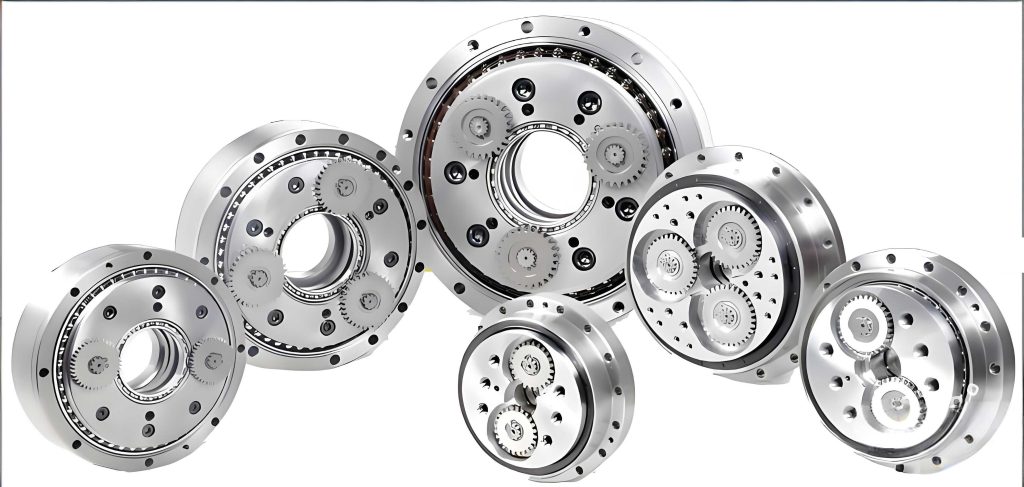
The design of the test bed is grounded in fundamental principles of mechanical dynamics and measurement theory. To accurately assess the performance of an RV reducer, it is essential to understand the key parameters and their mathematical representations. Transmission error, for instance, is a critical metric that reflects the precision of an RV reducer. It is defined as the difference between the actual output angle and the theoretical output angle when the input shaft rotates by a specified amount. The formula for transmission error can be expressed as:
$$\Delta \theta = \theta_2 – \frac{\theta_1}{i}$$
where \(\Delta \theta\) is the transmission error, \(\theta_2\) is the actual output angle, \(\theta_1\) is the input angle, and \(i\) is the transmission ratio of the RV reducer. This error arises due to factors like gear manufacturing inaccuracies, elastic deformations, and assembly tolerances. By minimizing transmission error, an RV reducer can achieve higher positioning accuracy, which is vital for applications in robotics and precision machinery. Another important parameter is backlash, which refers to the angular lag between the output and input shafts when the direction of rotation is reversed. Backlash is primarily caused by gear side clearance and tooth elasticity, and it can be calculated using the following equation:
$$\theta_T = \frac{\theta_{\text{in max}} – \theta_{\text{in min}}}{i} – (\theta_{\text{out max}} – \theta_{\text{out min}})$$
where \(\theta_T\) represents the total backlash, \(\theta_{\text{in max}}\) and \(\theta_{\text{in min}}\) are the maximum and minimum input angles under specific torque conditions, and \(\theta_{\text{out max}}\) and \(\theta_{\text{out min}}\) are the corresponding output angles. Additionally, torsional stiffness is a measure of an RV reducer’s resistance to angular deformation under applied torque. It is defined as the ratio of output torque to the resulting twist angle, given by:
$$K = \frac{T}{\phi}$$
where \(K\) is the torsional stiffness, \(T\) is the applied torque, and \(\phi\) is the twist angle. A high stiffness value indicates that the RV reducer can maintain its shape under load, reducing dynamic errors and improving overall performance. These formulas form the basis for the measurement algorithms implemented in the test bed’s data acquisition system, enabling real-time computation and display of performance metrics.
In designing the test bed, I established several key requirements to ensure its effectiveness and usability. First, the platform must be capable of real-time monitoring and detection of dynamic performance parameters for RV reducers under various operating conditions. Second, it should accommodate multiple series of RV reducers, both domestic and imported, with interchangeable mounting interfaces to facilitate quick installation and disassembly. Third, the system must offer a broad measurement range and high applicability, allowing for tests across different torque and speed levels. Fourth, operational simplicity and good controllability are essential for user-friendliness. Fifth, high measurement accuracy, system stability, and compatibility are critical for reliable results. Sixth, the test bed should cover a comprehensive set of performance indicators, including those mentioned earlier, to provide a holistic evaluation of RV reducers. Finally, integrated fault detection and alarm systems are necessary to ensure safe operation during prolonged testing. These requirements guided the selection of components and the overall architecture of the test bed.
The measurement range of the test bed is tailored to common RV reducer models, specifically the RV-20E, RV-40E, and RV-80E series. These models represent a typical cross-section of reducers used in industrial robots, with varying torque capacities and sizes. To cover this range, the test bed is designed to handle input torques up to 20 N·m, output torques up to 1000 N·m, input speeds up to 3000 rpm, and output speeds from 0 to 100 rpm. Such specifications ensure that the platform can perform tests under both normal and extreme conditions, including overload scenarios. The following table summarizes the key technical indicators of the test bed:
| Parameter | Technical Indicator |
|---|---|
| Input Power | 3 kW |
| Input Torque | Up to 15 N·m (rated), 20 N·m (peak) |
| Input Speed | 0–3000 rpm |
| Output Torque | Up to 1000 N·m |
| Output Speed | 0–100 rpm |
| Starting Torque Range | 0–10 N·m at input |
| Stiffness Testing Range | 0–500 N·m |
| Overload Testing | Up to 110% of rated output torque |
| Angle Measurement Accuracy | ±10 arcseconds |
The design of the test bed follows a schematic layout that integrates all modules into a cohesive system. As shown in the figure above, the setup consists of a drive motor, an input torque sensor, the RV reducer under test, an output torque sensor, a speed increaser, and a load motor. This configuration replaces traditional load methods, such as powder brakes, with a dual-motor system that offers better controllability and reduced vibration and noise. The drive motor provides controlled input to the RV reducer, while the load motor applies adjustable resistance to simulate real-world operating conditions. All components are mounted on a rigid cast iron platform to minimize vibrations and ensure alignment accuracy. The use of modular mounting brackets with rail guides allows for quick positioning and secure attachment of different RV reducer models, enhancing the platform’s versatility and repeatability.
Component selection was a critical aspect of the design process, as it directly impacts the test bed’s performance and reliability. For the drive and load motors, I chose servo motors with high precision and dynamic response. After calculating the torque and speed requirements for the target RV reducers, I selected a model with a rated power of 3 kW, a rated torque of 14.3 N·m, and a maximum speed of 3000 rpm. This motor is paired with a compatible driver that supports various control modes, including analog control and digital programming, enabling precise speed and torque regulation. The torque sensors were selected based on their measurement ranges and accuracy. The input torque sensor has a range of 0–20 N·m, while the output torque sensor covers 0–1000 N·m, both with high linearity and low hysteresis. These sensors use strain gauge technology to provide real-time torque data, which is essential for computing efficiency and other derived parameters.
For angular measurement, high-resolution encoders are installed on both the input and output shafts. The selected encoder model offers an accuracy of ±10 arcseconds and a maximum mechanical speed of 2000 rpm, suitable for the expected operating conditions. Although encoders are typically used at lower speeds to prevent damage, their integration allows for precise tracking of rotational positions, enabling the calculation of transmission error and backlash. Couplings between components were carefully chosen to ensure minimal backlash and misalignment. Between the motor and input torque sensor, a flexible coupling with zero-backlash is used to absorb minor misalignments and reduce vibrations. Between the RV reducer and output torque sensor, a custom expansion sleeve coupling is employed to handle higher torques while maintaining rigidity. The following table summarizes the key components and their specifications:
| Component | Model/Specification | Key Parameters |
|---|---|---|
| Drive Motor | Servo Motor | 3 kW, 14.3 N·m, 3000 rpm |
| Load Motor | Servo Motor | 3 kW, 14.3 N·m, 3000 rpm |
| Input Torque Sensor | Strain Gauge Type | 0–20 N·m, high accuracy |
| Output Torque Sensor | Strain Gauge Type | 0–1000 N·m, high accuracy |
| Encoder | High-Resolution Optical | ±10 arcseconds, 2000 rpm max |
| Couplings | Flexible and Rigid Types | Zero-backlash, torque-rated |
| Control System | Industrial PC with Software | Real-time data acquisition and control |
| Platform Base | Cast Iron Plate | 2.5 m × 1 m × 0.3 m, vibration damping |
The control system is built around an industrial computer (IPC) equipped with data acquisition cards and custom software. The IPC runs a user-friendly interface that allows operators to set test parameters, monitor real-time data, and generate reports. The software implements algorithms based on the formulas discussed earlier, automatically computing parameters like transmission efficiency, which is derived from input and output power measurements. The efficiency \(\eta\) of an RV reducer is calculated as:
$$\eta = \frac{P_{\text{out}}}{P_{\text{in}}} \times 100\% = \frac{T_{\text{out}} \cdot \omega_{\text{out}}}{T_{\text{in}} \cdot \omega_{\text{in}}} \times 100\%$$
where \(P_{\text{out}}\) and \(P_{\text{in}}\) are the output and input power, \(T_{\text{out}}\) and \(T_{\text{in}}\) are the output and input torques, and \(\omega_{\text{out}}\) and \(\omega_{\text{in}}\) are the output and input angular velocities. The system can perform tests at various load levels, such as 25%, 50%, 75%, 100%, and 110% of the rated torque, to evaluate efficiency across the operating range. Additionally, the software includes features for data logging, curve plotting, and fault diagnosis, enhancing the test bed’s functionality. The integration of vibration and noise sensors further extends its capability to assess the dynamic behavior of RV reducers under load, providing insights into factors like gear meshing quality and bearing performance.
During the construction phase, I developed a detailed 3D model of the test bed using CAD software to visualize the layout and ensure proper fit. The model includes all mechanical components, such as the motors, sensors, couplings, and mounting brackets, arranged on the cast iron platform. This virtual prototyping helped identify potential interference issues and optimize the placement for ease of access and maintenance. The actual assembly involved securing the platform to a robust foundation, installing the rail guides, and mounting the modular brackets. Each module—drive system, RV reducer holder, and load system—was then aligned and fastened to the rails using precision tools to achieve coaxiality. Electrical wiring and sensor connections were implemented with shielding to minimize electromagnetic interference, ensuring signal integrity. The completed test bed is a compact and integrated system, with all control elements housed in a dedicated cabinet for operator safety and convenience.
The test bed is capable of performing a wide array of tests on RV reducers, making it a comprehensive tool for research and quality control. The following list outlines the key functions it can execute:
- Conduct no-load, overload, lifespan, temperature rise, vibration, and noise tests on RV reducers.
- Measure starting torque, torsional stiffness, transmission error, and transmission efficiency with high precision.
- Display real-time data for input/output torque, speed, power, efficiency, ratio, temperature, vibration, and noise.
- Automatically detect and indicate positive and negative torque directions.
- Support manual or automatic data acquisition with adjustable sampling intervals.
- Plot real-time curves for parameters like torque, speed, power, and efficiency over time.
- Allow customizable curve coordinates to suit specific test requirements.
- Store and recall historical data for playback and analysis.
- Generate printed reports of test results, including data tables and graphs.
- Incorporate alarm systems for abnormal conditions such as overheating or excessive vibration.
These functions are implemented through the control software, which provides a graphical user interface for seamless operation. The test bed’s versatility makes it suitable not only for performance evaluation but also for comparative studies between different RV reducer designs or brands. By simulating real-world operating conditions, it helps identify design weaknesses and areas for improvement, ultimately contributing to the advancement of RV reducer technology.
To validate the test bed’s capabilities, I conducted a series of experiments on sample RV reducers, focusing on key dynamic characteristics. The starting torque test involves gradually increasing the load torque while monitoring the output shaft’s rotation. The starting torque is identified as the point where the shaft begins to move, indicating the minimum torque required to overcome static friction and inertia. The test results are plotted as torque versus angle curves, with the starting torque value extracted from the curve’s initial rise. For example, in one test, the starting torque for an RV-40E reducer was measured at approximately 4.7 N·m, consistent with theoretical expectations. This parameter is crucial for applications where precise motion control is needed, as high starting torque can lead to jerky movements and reduced efficiency.
The torsional stiffness test is performed by locking the input shaft and applying a gradually increasing torque to the output shaft, first in the positive direction and then in the negative direction, up to the rated torque. The resulting twist angle is measured using the output encoder, and the stiffness is computed from the slope of the torque-angle curve. Typically, the curve exhibits a hysteresis loop due to internal friction and elastic effects, but the central linear portion provides the stiffness value. For an RV reducer, high torsional stiffness is desirable to minimize angular deflection under load, ensuring accurate positioning. The test bed can generate stiffness curves for various torque levels, allowing for a comprehensive assessment of the RV reducer’s rigidity. The formula for stiffness, as mentioned earlier, is applied in real-time by the data acquisition system.
Transmission error testing involves rotating the input shaft at a constant speed while recording the input and output angles simultaneously. The transmission error is calculated as the difference between the actual output angle and the ideal output angle based on the transmission ratio. Over one full revolution of the output shaft, the error pattern reveals periodic variations due to gear tooth errors and assembly inaccuracies. The test bed’s high-resolution encoders enable precise measurement of these errors, with results displayed as error curves over angular position. For instance, a typical RV reducer might show a peak-to-peak transmission error of less than 1 arcminute, indicating high precision. This test is essential for applications like robotic arms, where repeatability and accuracy are critical.
Efficiency testing is conducted by running the RV reducer at various load levels and measuring the input and output power. The test bed automates this process by controlling the drive motor to maintain a set speed and the load motor to apply specific torques. Efficiency curves are then plotted against load torque, showing how the RV reducer’s performance changes with operating conditions. Generally, efficiency increases with load up to a point before declining due to factors like friction and heat generation. The test bed can also perform continuous monitoring over extended periods to assess efficiency degradation over time, providing insights into the RV reducer’s durability. The following table summarizes sample test results for an RV-40E reducer under different load conditions:
| Load Level (% of Rated Torque) | Input Torque (N·m) | Output Torque (N·m) | Input Speed (rpm) | Output Speed (rpm) | Efficiency (%) |
|---|---|---|---|---|---|
| 25% | 1.8 | 143 | 1500 | 3.75 | 85.2 |
| 50% | 3.6 | 286 | 1500 | 3.75 | 88.7 |
| 75% | 5.4 | 429 | 1500 | 3.75 | 90.1 |
| 100% | 7.2 | 572 | 1500 | 3.75 | 91.5 |
| 110% | 7.9 | 629 | 1500 | 3.75 | 90.8 |
These results demonstrate the test bed’s ability to provide detailed performance data, which can be used to optimize the design and manufacturing processes of RV reducers. Additionally, vibration and noise tests are conducted using accelerometers and microphones mounted near the RV reducer. The data is analyzed in the frequency domain to identify dominant vibration modes and noise sources, such as gear meshing frequencies or bearing defects. This information is valuable for improving the dynamic behavior of RV reducers, leading to quieter and more reliable operation in robotic systems.
In conclusion, the comprehensive test bed for RV reducers presented in this work represents a significant advancement in the evaluation of dynamic performance for these critical components. By integrating modular design, high-precision sensors, and advanced control software, the platform offers a versatile and accurate means of testing multiple parameters under various operating conditions. The ability to measure transmission error, torsional stiffness, efficiency, and other key indicators provides valuable insights into the behavior of RV reducers, facilitating research and development efforts aimed at enhancing their performance. The test bed’s design emphasizes usability, reliability, and cost-effectiveness, making it accessible for both academic and industrial applications. As the demand for high-quality RV reducers continues to grow, particularly in the robotics industry, such testing platforms will play a crucial role in driving innovation and ensuring the competitiveness of domestically produced reducers. Future work may involve expanding the test bed’s capabilities to include environmental testing, such as temperature and humidity control, or integrating artificial intelligence algorithms for predictive maintenance and fault diagnosis. Overall, this project underscores the importance of rigorous testing in the advancement of mechanical systems and contributes to the ongoing evolution of RV reducer technology.
The development of this test bed has also highlighted several challenges and opportunities in the field of RV reducer testing. One challenge is the need for standardized testing protocols that can be universally applied across different RV reducer models and brands. While the test bed is designed to accommodate various series, establishing common metrics and procedures would enhance comparability and benchmarking. Another challenge is the integration of real-time data analysis tools that can process large volumes of sensor data to extract meaningful patterns and trends. The current system provides basic plotting and computation, but advanced analytics could offer deeper insights into performance degradation or failure mechanisms. On the opportunity side, the test bed can be extended to test other types of reducers, such as harmonic drives or planetary gearboxes, by modifying the mounting interfaces and control algorithms. This would increase its utility and return on investment. Additionally, collaboration with industry partners could lead to the development of certification standards based on test bed results, promoting quality and reliability in the RV reducer market.
From a theoretical perspective, the test bed enables the validation of mathematical models used to predict RV reducer performance. For example, the transmission error formula mentioned earlier can be compared against measured data to refine model parameters like gear tooth profile errors or bearing stiffness. Such validation is essential for improving the accuracy of simulation tools used in the design phase. Moreover, the test bed can be used to study the effects of lubrication, temperature, and load cycling on RV reducer performance, contributing to a better understanding of their long-term behavior. These studies can inform maintenance schedules and design improvements, ultimately extending the lifespan of RV reducers in demanding applications.
In terms of practical implementation, the test bed has been designed with scalability in mind. The modular architecture allows for easy upgrades or replacements of components, such as swapping out sensors for higher-accuracy models or adding new measurement channels. The control software is built on an open platform, facilitating the integration of custom algorithms or third-party tools. This flexibility ensures that the test bed can evolve with changing technological needs and remain a valuable asset for years to come. Furthermore, the test bed’s user-friendly interface reduces the learning curve for operators, enabling efficient testing even for those with limited technical expertise. Training materials and documentation have been developed to support users in setting up tests, interpreting results, and performing routine maintenance.
Looking ahead, the test bed will be utilized in ongoing research projects focused on optimizing RV reducer designs. For instance, experiments will investigate the impact of different gear materials, heat treatment processes, and assembly techniques on dynamic performance. The goal is to identify key factors that influence parameters like transmission error and efficiency, leading to design guidelines for manufacturers. Additionally, the test bed will be used to compare domestic RV reducers against imported counterparts, identifying gaps and opportunities for improvement. This comparative analysis is crucial for advancing domestic manufacturing capabilities and reducing reliance on foreign suppliers. By providing a robust testing framework, the test bed supports the broader objective of enhancing the competitiveness of the robotics industry.
In summary, the design and implementation of this comprehensive test bed for RV reducers have resulted in a powerful tool for dynamic performance evaluation. Through detailed measurement of multiple parameters, real-time data acquisition, and flexible operation, the platform addresses a critical need in the research and development of RV reducers. The insights gained from testing will contribute to the optimization of these components, driving progress in robotics and precision machinery. As RV reducers continue to play a vital role in industrial automation, the importance of reliable testing methodologies cannot be overstated. This work represents a step forward in that direction, offering a foundation for future innovations and advancements in RV reducer technology.