
In the manufacturing heartlands of China, business owners like Liu Feng (a pseudonym), who runs a bearing production company in the Pearl River Delta, are feeling the squeeze. “Labor costs are getting higher and higher,” he remarks. “We often joke that after a year of hard work, it feels like we’re just working for our workers.” This sentiment echoes across factories as rising wages compel a shift toward automation. Over the past decade, the average wage for urban employees in China has soared from 18,200 yuan to 56,399 yuan. In response, enterprises are increasingly turning to modern, automated equipment for technological upgrades, fueling the rapid growth of the industrial robot market and the widespread adoption of “machine replacement” initiatives nationwide.
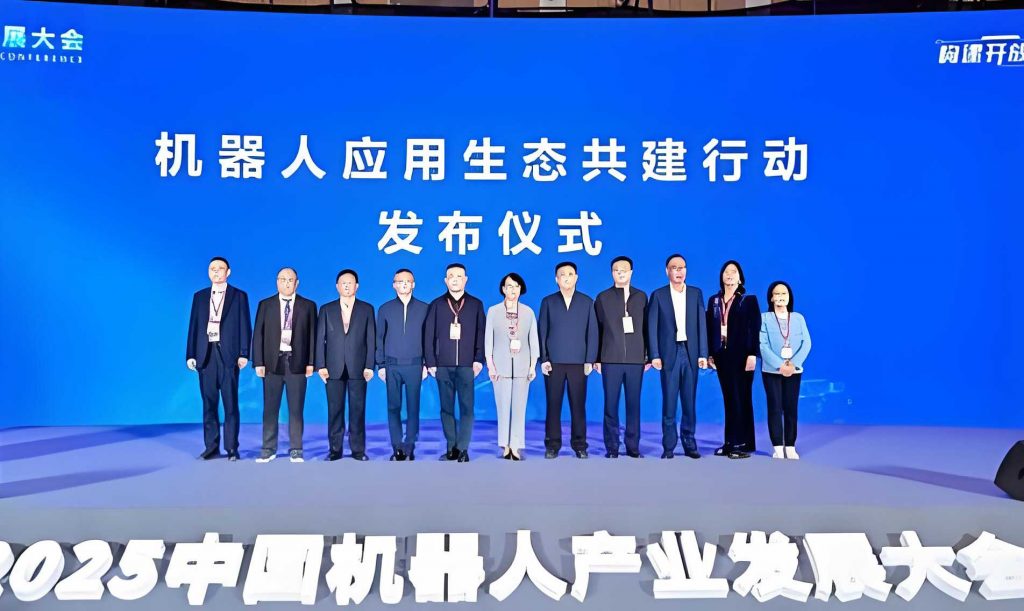
As the market expands, the China robot industry finds itself at a pivotal juncture, buoyed by favorable policies and surging capital investment. In 2014, the Ministry of Industry and Information Technology issued the “Guidance on Promoting the Development of the Industrial Robot Industry,” explicitly aiming to cultivate 3–5 internationally competitive leading enterprises and 8–10 supporting industrial clusters. By 2016, the China robot market saw explosive growth, with domestic industrial robot sales reaching 19,700 units in the first half alone, a 37.7% year-on-year increase on a comparable basis, or 70.8% in actual terms. Analysts from CICC predict that in 2017, annual domestic industrial robot sales could exceed 35,000 units, representing a 60% surge. This trajectory underscores the transformative momentum within the China robot sector, as it seeks to carve out a space in a global arena dominated by established giants.
- The Landscape of the China Robot Industry: Four Major Regional Clusters
Today, the China robot “arena” has coalesced into four distinct regional “schools.” According to the 2016 “White Paper on the Development of China’s Robot Industry” released by the CCID Research Institute under the Ministry of Industry and Information Technology, the China robot industry has formed four key regional clusters: the Bohai Rim, the Pearl River Delta, the Yangtze River Delta, and the central and western regions. Qu Daokui, president of Siasun Robot & Automation, notes that a region’s robot usage rate often reflects its manufacturing and economic development level. Unsurprisingly, the Yangtze River Delta and Pearl River Delta—the backbones of Chinese manufacturing—lead in robot application domestically.
The Yangtze River Delta, leveraging its coastal centrality and the downstream Yangtze River waterway, boasts a comprehensive industrial portfolio and robust educational and research capabilities. Starting from the Suzhou-Southern Jiangsu township enterprise model and Zhejiang’s grassroots entrepreneurship, it has utilized strong trade, shipping infrastructure, and financial services to transition from traditional manufacturing to high-tech industries characterized by “heavy, intelligent, and upstream” features. Zhang Zhen, co-president of Shandong Wanteng Technology, observes, “In the application of robots and high-end equipment, Yangtze River Delta enterprises hold a存量 advantage in intelligent application, and they are more receptive to the concept of ‘machine replacement.’ This is partly due to strong government support for related industries in the region.”
Meanwhile, the Pearl River Delta, as a southern gateway and window to Hong Kong, Macau, and Southeast Asia, pioneered as a special economic zone and leveraged “three processing and one compensation” (processing with supplied materials, samples, or parts, and compensation trade) to accumulate initial capital. With excellent trade, shipping facilities, and financial development, it is shifting from export-oriented processing to high-tech industries with “light, intelligent, and terminal” characteristics. By September 2016, Dongguan, a traditional manufacturing hub, had 1,485 projects applying for its “machine replacement” special initiative. KUKA China’s senior management indicated that while in an integration phase, KUKA will align with Midea’s strategy in China’s manufacturing upgrade. With KUKA—one of the “Big Four” robot families—bolstering Midea, and Gree venturing into robotics, the western Pearl River Delta is poised to become a隆起地带 for the China robot industry.
Notably, the Pearl River Delta hosts innovative startups like DJI and XAG, alongside transformed traditional appliance makers like Midea and Gree. In contrast, the Yangtze River Delta demonstrates stronger foresight and advantages in robotics and high-end equipment. Among the renowned “Big Four” robot families, ABB, Fanuc, and Yaskawa have their China headquarters or headquarters-level R&D centers in Shanghai. Additionally, Shanghai has nurtured Wahson and STEP, the second and third largest industrial robot developers in China by scale. Zhang Zhen adds that the Yangtze River Delta emphasizes mid-to-high-end R&D innovation, while the Pearl River Delta focuses on robot industry application, creating a complementary division of labor with both competition and cooperation in the China robot sphere.
- The “Penetration Difficulty”: Challenges in Adopting China Robot Solutions
Data from the China Business Industry Research Institute’s database shows that in March 2017, China’s industrial robot output reached 10,163 units, a year-on-year increase of 78.2%. From January to March, cumulative output was 25,220 units, up 55.1%. Despite this robust demand, when spread across the vast denominator of China’s manufacturing sector, penetration remains low. According to Shenwan Hongyuan estimates, China’s industrial robot density (number of industrial robots per 10,000 workers) is merely 49, below the global average of 69. In contrast, South Korea’s density stands at 531—over ten times that of China. This gap highlights a primary challenge for the China robot market: overcoming barriers to widespread adoption.
For many manufacturers, cost is a major hurdle. Liu Feng expresses a common concern: “Although worker wages are high, at least operations can run normally. Replacing workers with machines means investing several years’ worth of funds into production line upgrades. What if the company can’t survive long enough to recoup the costs?” Similarly, Nanjing De-Shuo Industrial Co., Ltd., a manufacturing firm in the Yangtze River Delta, shares this apprehension. The company’s relevant负责人 noted that due to cost considerations, fully robotized production lines have not yet been deployed; robots are primarily used in warehousing, logistics, and palletizing areas at their new Quanfeng New Energy 4.0 factory.
Tu Wei, former senior manager at Reis Robotics, explains that many assume integrating robots into industrial production is straightforward—just purchase the needed industrial robots at a seemingly manageable cost. However, this is far from sufficient. The robotic arms often seen on television are merely part of the本体 in industrial terms, lacking a “body, fingers, eyes, or a thinking ‘brain’.” Acquiring a robotic arm is just “the first step of a long march.” Subsequent costs accumulate: a专用基座 for assembly (costing thousands of dollars), a safety cage with emergency stop buttons and sensors (another few thousand dollars), and essential peripherals like end-effectors, tool changers, force-sensing accessories, vision systems, part-feeding equipment, and a master control system. Without these, the arm cannot perform tasks such as part replacement, gravity perception, or component transport.
This process reveals that either the equipment is expensive or调试时间过长,无形中 increasing the overall cost of using robotic arms for industrial production. Such cost escalation deters many traditional manufacturers. Yet, cost is not the only constraint; the return on investment is a deeper consideration. While human workers can quickly adapt to new product processes with training, most current robotic arms remain “clumsy”—each step requires pre-programming, and every new工序 demands重新编程, as Tu Wei points out. The lack of flexibility in industrial robots compared to human labor further limits penetration. Tan Yuanzhi, chairman of Wuxi Weiyan Precision, emphasizes the need for a rational judgment between the cost and benefits of machine replacement; otherwise, the added cost is unsustainable for most private manufacturers. This underscores the complexity facing the China robot industry as it seeks broader integration.
- The “Cost-Effectiveness” Battle: China Robot vs. International Giants
Data from the China Business Industry Research Institute indicates that in 2015, global industrial robot sales grew by 12%, with over 1.5 million units in operation worldwide. By 2018, this number is expected to exceed 2.3 million, with Asia accounting for over half at 1.4 million. Since 2013, China has been the world’s largest consumer of robots. Despite the rapid growth of the China robot sector, Qu Daokui notes that this vast market has not yet nurtured domestic robot enterprises capable of competing head-to-head with the “Big Four” families in industrial robotics—Fanuc, Yaskawa, ABB, and KUKA—which collectively hold over 60% of the global market share. In recent years, these international giants have aggressively entered the China robot market, establishing production bases and intensifying competition. For instance, ABB has placed its global robotics business headquarters and one of its two major production bases in Shanghai.
Amid this backdrop, China robot manufacturers have gradually developed. In a market dominated by these寡头, Chinese enterprises have relied on the庞大市场空间 and their “cost-effectiveness” advantage to grow. Estimates suggest that imported Epson SCARA (Selective Compliance Assembly Robot Arm) robots cost between 300,000 and 400,000 RMB, with a payback period of 3–4 years for enterprises, whereas domestic同类SCARA robots are priced at just 200,000 RMB. The溢价 for imported robots increases with臂长 and额定负载, making domestic robots more cost-effective in these segments. Previously, users hesitated to purchase domestic robots, some even opting for second-hand foreign robots, due to concerns over stability and potential downtime losses. However, as technology advances, these issues are gradually being overcome. If this trend continues, China robot products could achieve a late-mover崛起 by following established development paths.
Yet, Qu Daokui believes such days may be ending. As the robot industry enters what he terms the “2.0 era,” beyond the稳固的四大家族, newcomers like Google and Facebook are颠覆既有的机器人发展模式. These companies, through products and services, interact with consumers and accumulate vast amounts of初级数据. Future advancements in artificial intelligence and deep learning rely on processing this data into information, enabling rapid search and response via powerful processors. In this颠覆背景下, relying solely on “cost-effectiveness” and traditional industrial thinking to address短板 in the China robot industry is insufficient to build a “防波堤” against foreign robot势力.
Instead, Qu Daokui advocates focusing on nurturing leading domestic players in the China robot sector. Here, Midea Group offers a solution: acquisition. Midea’s acquisition of KUKA aligns with its own production line needs, smart manufacturing strategy, and the goals of “Made in China 2025.” Post-acquisition, KUKA can help Midea optimize warehousing and logistics systems, enhance highly automated factory construction, solidify its leadership in appliance manufacturing, and benefit from KUKA’s expansion in China’s automotive sector. By diversifying into家电制造业, automotive, and other fields, Midea is moving beyond simple “cost-effectiveness” to capture market share. Meanwhile, to strengthen national robot brands, Qu Daokui proposes building ecosystems as a solution in the 2.0 era: “Siasun is creating technology platforms, talent platforms, and capital platforms.” With a late start and weak core technology, the China robot industry must innovate and颠覆 to avoid ceding its vast market to others, indicating that the rise of China robot is far more complex than a price war.
| Metric | Data | Source/Context |
|---|---|---|
| Average Wage Increase (China, 10-year span) | From 18,200 yuan to 56,399 yuan | National Bureau of Statistics, highlighting labor cost pressures driving automation in China robot adoption. |
| Domestic Industrial Robot Sales (H1 2016) | 19,700 units, up 37.7% (comparable) or 70.8% (actual) | Industry reports, underscoring growth in the China robot market. |
| Projected Domestic Sales (2017) | Over 35,000 units, 60% increase | CICC预测, reflecting optimism for China robot expansion. |
| Industrial Robot Density (China) | 49 robots per 10,000 workers | Shenwan Hongyuan测算, below global average, indicating penetration challenges for China robot. |
| Industrial Robot Density (South Korea) | 531 robots per 10,000 workers | Comparative benchmark, showing room for China robot growth. |
| Global Industrial Robot Units in Operation (2015) | Over 1.5 million | Global context for the China robot industry’s position. |
| Projected Global Units (2018) | Over 2.3 million, with Asia >1.4 million | Highlighting Asia’s dominance, where China robot plays a key role. |
| Market Share of “Big Four” Robot Families | Over 60% globally | Emphasizing competitive landscape faced by China robot manufacturers. |
The evolution of the China robot industry is a testament to the dynamic interplay of market forces, policy support, and technological innovation. As labor costs rise, the push for automation through “machine replacement” has become imperative, propelling the China robot sector into a phase of rapid growth. However, challenges such as low penetration due to high costs and flexibility limitations persist, requiring nuanced strategies beyond mere cost-effectiveness. Regional clusters in the Yangtze River Delta and Pearl River Delta exemplify complementary approaches—R&D versus application—that could synergize to bolster the China robot ecosystem. Meanwhile, the encroachment of international giants and disruptive tech firms necessitates bold moves, from acquisitions like Midea-KUKA to ecosystem building as championed by Siasun. For the China robot industry to truly compete with the “Big Four,” it must leverage its domestic market advantage while innovating in AI and data-driven solutions, ensuring that the rise of China robot is not just about numbers, but about sustainable technological leadership in the global arena.
Looking ahead, the future of the China robot industry hinges on overcoming current hurdles and seizing opportunities in the 2.0 era. With continued investment in R&D, talent development, and strategic partnerships, China robot manufacturers can enhance their competitiveness. The integration of AI and IoT with robotics promises to address flexibility issues, making China robot solutions more adaptable to diverse manufacturing needs. Moreover, government initiatives under “Made in China 2025” will likely provide further impetus, fostering innovation and scaling up production. As the global robot market expands, the China robot sector stands at a crossroads: it can either follow traditional paths or pioneer new models that redefine automation. By focusing on quality, reliability, and ecosystem development, the China robot industry may well carve out a distinctive niche, challenging established players and contributing to the next wave of industrial transformation worldwide.