
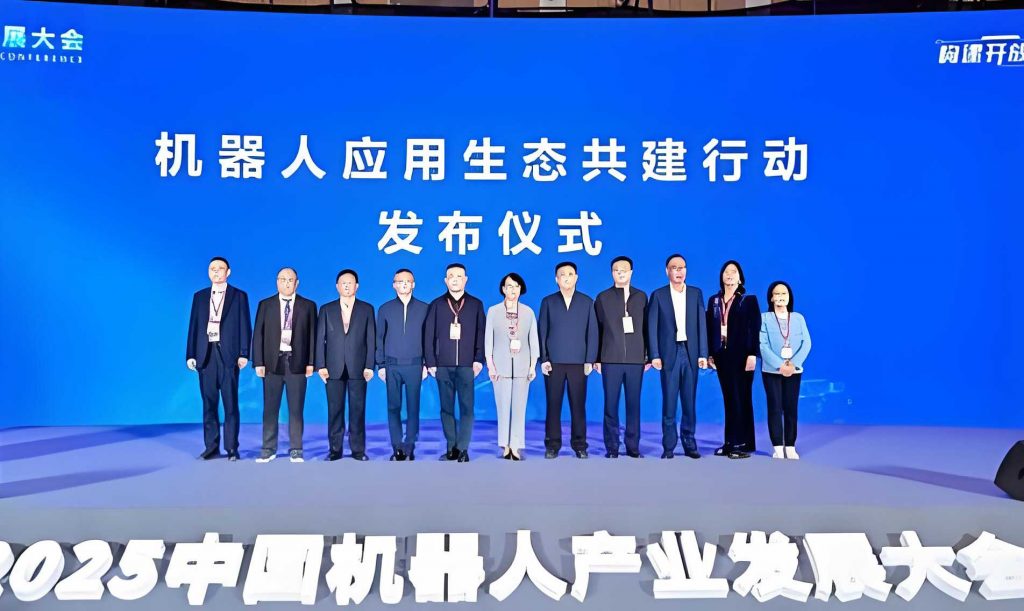
Fueled by national strategic vision and massive market demand, China’s robot industry has embarked on a journey of unprecedented expansion, positioning itself as the world’s largest consumer of industrial automation. However, beneath the surface of booming sales figures and proliferating industrial parks, concerns are mounting over overheating, technological dependency, and the profound socio-economic implications of a rapid transition to automation. The path for China robot development is at a critical crossroads, prompting a crucial debate on its pace and direction.
- National Strategic Imperative: From “Pearl” to Priority
The rise of the China robot sector is inextricably linked to top-level national strategy. As early as June 9, 2014, President Xi Jinping identified the “robot revolution” as a potential breakthrough point and key growth driver for the “Third Industrial Revolution,” predicting its power to reshape global manufacturing landscapes and create a market worth trillions of dollars. He famously described robots as “the pearl atop the crown of manufacturing equipment,” whose development, production, and application serve as a critical benchmark for a nation’s scientific innovation and high-end manufacturing prowess. This vision was reiterated in a congratulatory letter to the 2015 World Robot Conference, where President Xi highlighted the rise of intelligent industries, represented by robot technology, as a major symbol of modern technological innovation.
This high-level endorsement has acted as a powerful catalyst, propelling robotics and smart manufacturing into a prioritized field for national scientific and technological innovation. The China robot agenda is no longer just an industrial trend but a core component of the country’s ambition to ascend the global value chain.
- Market Explosion: The World’s Foremost Robot Buyer
Driven by a confluence of factors including a new wave of global industrial transfer, economic restructuring, the gradual disappearance of demographic dividends, and vigorous state support, the China robot market has experienced meteoric growth. The nation that once served as the “world’s factory” has now transformed into the globe’s primary marketplace for robots. Data indicates that in 2013, nearly 37,000 industrial robots were sold in the China robot market, accounting for approximately one-fifth of global sales. This volume surpassed Japan, cementing China’s position as the world’s number one market for industrial robots.
The prevailing belief within the industry is that the future of manufacturing hinges on the trinity of robotics, digital manufacturing, and artificial intelligence. Their convergence is expected to fundamentally alter the structural model of future industrial production. Consequently, while policy support has heavily favored industrial robotics, entrepreneurs and “makers” have simultaneously begun to collaboratively explore the vast potential of service and domestic robot markets.
- The Boom and the Bubble: An Industry at Risk of Overheating
The year 2014 saw various regional governments across China roll out supportive policies for the robot industry. Robot industrial parks sprung up like mushrooms after rain, putting the China robot industry on a fast-track development path. By 2015, deemed the “First Year of Robots,” capital that had previously flooded into the mobile app sector began diverting significantly into robotics.
However, amidst this蓬勃 development, dissenting voices have emerged, warning that the遍地开花的 (widespread) robot industry may be generating an asset bubble. It is observed that few of the numerous local robot industrial parks are actually profitable. A lack of core competitiveness and weak innovation capability are widely acknowledged as critical weaknesses plaguing the China robot industry.
In the short span of just one to two years, the number of enterprises in the China robot field skyrocketed to over 400. Yet, among these, few are capable of producing high-quality products. A common practice involves purchasing designs and components, then simply assembling the robots—a method employed by the more正规 (standard) firms. The industry is reportedly rife with speculators who hype the market without making technological contributions, seemingly intent on “grabbing subsidies and leaving.” Such dynamics inevitably threaten to rapidly inflate a bubble within the火热 (red-hot) China robot market.
- Technical Complexity and the “Assembler” Dilemma
Those with even a basic understanding of robotics recognize it as an immensely complex field. Mere assembly is considered far more challenging than assembling a smartphone, let alone manufacturing the highly precise core components. Currently, many Chinese enterprises are applying the old “mobile phone model” to the China robot business: importing core components like speed reducers and sensors from abroad, then following instruction manuals to assemble robotic units.
The critical issue is that robotics technology is not yet mature enough globally for any single company to offer a complete, turnkey solution for robots akin to MediaTek providing chipset solutions for phones. Furthermore, the actual demand for “machines replacing humans” remains unclear and undefined in many sectors. This precarious situation risks transforming tons of steel and circuitry into a massive speculative bubble, vulnerable to collapse at the first sign of market correction or unmet expectations. The fundamental technological foundations for a sustainable China robot ecosystem are still being laid.
| Year | Key Event / Data Point | Significance for China Robot Industry |
|---|---|---|
| 2013 | ~37,000 industrial robots sold. | China becomes global #1 industrial robot market by sales volume. |
| 2014 | Widespread local policy support begins; robot industrial parks proliferate. | Marks the start of accelerated, policy-driven expansion of the China robot sector. |
| 2015 | Dubbed “Robot First Year”; significant capital inflow. | Highlights peak market excitement and investment focus on China robot ventures. |
- Technological Limitations and Premature Commercialization
Presently, the application of robots in China’s industrial sector remains concentrated in fields like automobile manufacturing, handling relatively crude processes such as spraying and welding. Precision assembly still largely relies on human hands, as no sufficiently sensitive robotic arm can fully replicate human dexterity and neural control. Consequently, managers in Chinese manufacturing continue to recruit millions of workers annually to meet production demands.
Simultaneously, the service robot segment is rapidly gaining attention. Examples include courteous robot waiters, sophisticated entertainment androids, and medical robots free from doctor-patient conflicts. While these concepts appear cutting-edge, within the specific context of China’s current socio-economic and technological environment, the demand is far from ready for mass production. Moreover, the maturity of domestic robots hinges on the协同 development (collaborative development) of software and hardware, involving advancements in sensor sensitivity, big data analytics, and cloud computing. For robots to genuinely enter ordinary households, they require not just a metallic shell but also a “soft soul”—advanced AI and adaptive intelligence. Therefore, many of these high-end concepts might be better served by quiet, sustained development in laboratories rather than premature promotion in the public sphere.
- The Social Equation: “Machine Replacement” vs. Employment Stability
The potential for robots to become a “bubble of steel” represents a significant drain on societal resources—not merely financial capital, but also the cultivation of尖端 talent (top-tier talent). An atmosphere of急功近利 (eager for quick success) risks diverting focus from essential basic research, as the allure of quick returns through investment and promotion overshadows the painstaking work needed to master core technologies like servo systems and precision reducers. This can result in an entire industry with low added value, perpetually confined to superficial tasks.
Perhaps the most profound challenge for the China robot strategy lies in its social impact. China remains a populous nation, where廉价劳动力 (cheap labor) has been a cornerstone of its manufacturing奇迹 (miracle). As labor costs rise, leading enterprises are indeed beginning to transition towards automation. However, they must simultaneously balance the imperative of maintaining employment rates. Deliberately preserving low-end manufacturing for the sake of jobs may seem paradoxical, yet given the national conditions, it is a reality that must be gradually managed. Some experts posit that robot development itself can create new job opportunities. The problem, however, is that the current generation of production line workers often lacks the advanced vocational education required to rapidly transition from assembly roles to R&D positions. An excessively fast pace of “machine replacement” could trigger widespread unemployment and consequent social instability. A more feasible path may involve a gradual transition, allowing the current workforce to age out while concurrently upskilling the next generation.
- Charting a Sustainable Path: From Hype to Strategic Patience
Given the过热发展 (overheated development), some industry experts suggest that given China’s current societal demand, the market might healthily sustain only 4-5 high-quality enterprises, not the existing hundreds. The most prudent approach for developing a robust China robot industry may not be for governments or new entrepreneurs to lead the charge, but rather for established manufacturing enterprises to take the helm. These firms possess the deepest understanding of market demands and employment realities, positioning them best to calibrate the pace of automation integration. Instead of channeling subsidies to speculative startups, government support might be more effectively directed to frontline manufacturers as funding for genuine robotics R&D.
Furthermore, given the high cost of a single robot—equivalent to the annual income of 5-6 employees—its smooth integration is not a simple task. Perhaps China’s immediate strategic focus should shift from a blanket “robot replacement” agenda to a broader “automation strategy.” The primary goal should not be to replace humans outright, but to achieve human-machine collaboration. The objective is to liberate workers from繁重,枯燥,单调 (arduous, dull, monotonous) tasks, granting them the time and energy for upskilling and growth. This represents a more stable and socially harmonious pathway for the integration of China robot technologies.
The journey for China robot advancement is undeniably complex, requiring deep technological沉淀 (accumulation) and strategic foresight. The imperative now is to carefully consider pacing—to perhaps slow down, consolidate gains, build core competencies, and navigate the profound technical and social challenges with patience. Only through such a measured and technically grounded approach can the “pearl” of robotics truly shine sustainably within the crown of China’s manufacturing future, avoiding the pitfalls of a speculative bubble and fostering genuine, long-term innovation.