
As I reflect on the evolution of industrial robotics, it becomes evident that the development of robots is intrinsically linked to the entire manufacturing supply chain. While the United States was the birthplace of industrial robots, over time, its highest employment sectors shifted from manufacturing to healthcare and social assistance, leading to a stagnation in its robot本体 industry. This allowed Japan to surpass the U.S. in the 1980s, becoming the “robot kingdom.” Learning from history, I believe that the massive demand for transformation and upgrading in China’s manufacturing sector will inject strong momentum into the rise of China’s robot industry. This review aims to delve into the growth patterns, investment considerations, rational perspectives on automation, and potential challenges facing the China robot sector, with a focus on fostering a robust ecosystem for China robot advancement.
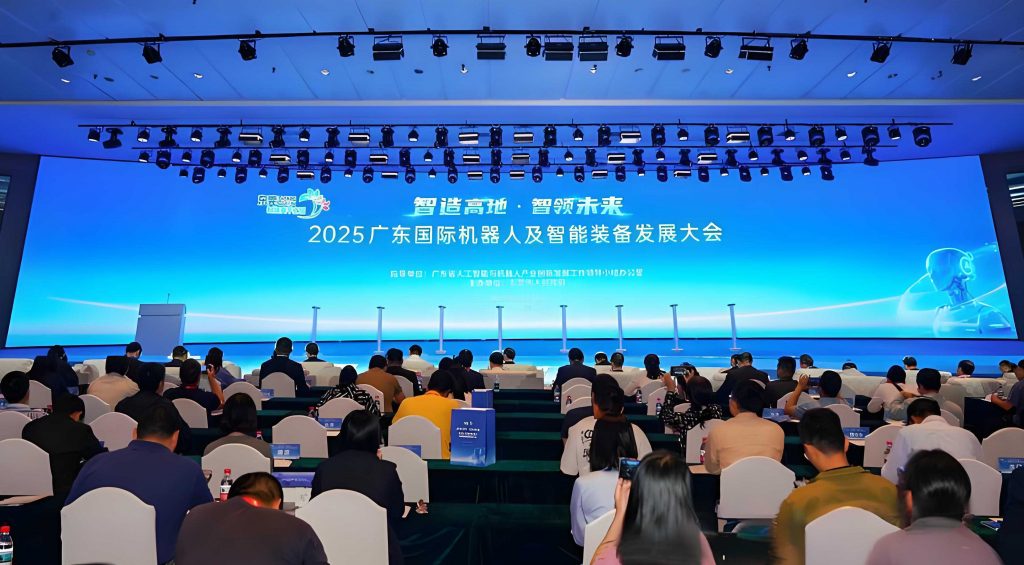
The growth of the China robot industry is multifaceted, shaped by both global influences and domestic realities. I have identified several key models that characterize the development trajectory of China robot enterprises. To summarize, these models can be categorized as follows, each contributing uniquely to the expansion of China robot capabilities.
| Growth Model | Core Characteristics | Typical Pathways | Impact on China Robot Ecosystem |
|---|---|---|---|
| Gene Inheritance Type | Companies with strong manufacturing DNA transition into robot production. | Leveraging internal application to refine technology before external sales. | Provides deep industry experience and scalable production, enhancing China robot quality. |
| Research Institute Conversion Type | Academia and research institutions spin off robot companies through innovation. | Focus on proprietary technology development in robots and components. | Drives innovation and intellectual property creation for China robot systems. |
| Merger and Acquisition Type | Acquiring international robot firms to gain technology and market access. | Strategic purchases to accelerate competitiveness in global robot markets. | Rapidly elevates China robot industry scale and international presence. |
| System Integration Application Type | Specializing in integrating robot本体 with peripherals for end-user solutions. | Serving diverse sectors with customized automation solutions. | Expands China robot adoption across industries, especially in SMEs. |
From my perspective, the gene inheritance model is particularly potent for China robot development, as it embeds robotics within existing manufacturing expertise. For instance, large manufacturers entering the robot space can utilize their production lines as testbeds, reducing costs and improving reliability. This aligns with the strategic logic seen in global leaders, where internal adoption precedes external market expansion. The success of such models underscores the importance of manufacturing roots in nurturing sustainable China robot enterprises. Moreover, the innovation from research institutes fuels a vibrant startup scene, contributing to the diversity of China robot offerings. However, each model faces challenges; for example, system integrators often grapple with project non-standardization, limiting scalability. To quantify the potential of these models, consider the market penetration rate for China robot adoption, which can be expressed as: $$ P(t) = \frac{N_{\text{robots}}(t)}{N_{\text{industries}}} \times 100\% $$ where \( P(t) \) is the penetration percentage at time \( t \), \( N_{\text{robots}}(t) \) is the number of robots deployed, and \( N_{\text{industries}} \) is the total industrial sectors. As China robot deployment increases, this rate is expected to rise, driven by these growth models.
Investment in the China robot industry is a critical enabler for its maturation. After observing periods of overheated capital influx, I advocate for a more rational and focused approach. The investment landscape can be segmented into several key areas, each with distinct opportunities and risks for China robot development. Below is a summary of investment directions, emphasizing their relevance to the China robot ecosystem.
| Investment Area | Key Focus | Potential Returns | Challenges for China Robot Sector |
|---|---|---|---|
| Robot本体 Manufacturing | High-tech, integrated automation systems. | Long-term gains from technology leadership and产业链 integration. | High capital intensity and long payback periods; requires patient capital. |
| Lightweight Robot本体 | Economical robots for non-automotive sectors like 3C and food processing. | High demand from “low-end” automation, offering quick market uptake. | Competition on cost and customization; need for local service advantages. |
| User-Customized Special Robots | Niche applications in sectors like inspection or logistics. | Differentiated products with loyal customer bases. | Limited market size; reliance on continuous innovation. |
| Robot System Integration | Downstream application and solution provision. | Short cash cycles and profitability from service-oriented models. | Low barriers to entry leading to fragmentation; pressure on margins. |
| Industrial Parks | Clusters with supporting infrastructure for robot companies. | Synergistic benefits from concentrated talent and resources. | Risk of homogeneity and wasteful duplication; need for strategic planning. |
In my analysis, investing in China robot本体 manufacturing is essential for building core competitiveness, albeit with high upfront costs. The formula for return on investment (ROI) in this area can be modeled as: $$ \text{ROI} = \frac{\text{Net Profit}}{\text{Total Investment}} = \frac{R(t) – C(t)}{I_0} $$ where \( R(t) \) represents revenue from China robot sales over time, \( C(t) \) denotes cumulative costs, and \( I_0 \) is the initial investment. Given the “three highs and one long” nature—high investment density, high technology, high talent requirements, and long cycles—investors must adopt a patient stance. Conversely, China robot system integration offers quicker returns, with average gross margins around 30%, as per industry reports. This segment benefits from local adaptation and cost advantages, making it attractive for small to medium investments. Furthermore, the growth in non-automotive sectors presents a significant opportunity for China robot expansion. For example, robot density in China’s non-automotive industries is much lower than in developed countries, indicating vast potential. The demand for lightweight China robot models can be estimated using a linear growth model: $$ D_{\text{light}} = \alpha \cdot G_{\text{sector}} + \beta $$ where \( D_{\text{light}} \) is the demand for lightweight robots, \( G_{\text{sector}} \) is the growth rate of sectors like electronics, and \( \alpha, \beta \) are constants derived from market data. As China robot adoption accelerates, these investment areas will likely yield substantial benefits.
A crucial aspect of the China robot discourse is the rational understanding of fully automated factories, often termed “unmanned plants.” Based on historical and contemporary examples, I argue that an overemphasis on complete automation can be misguided. Instead, the concept of “moderate automation”—where robots and humans collaborate optimally—is more aligned with practical realities. This approach balances efficiency with cost-effectiveness, avoiding the pitfalls of over-automation seen in some high-profile cases. For instance, in automotive assembly lines, human-robot hybrid configurations often outperform fully robotic setups in terms of flexibility and cost. The efficiency of such a system can be expressed as: $$ E_{\text{hybrid}} = \frac{W_{\text{robot}} \cdot \eta_r + W_{\text{human}} \cdot \eta_h}{C_{\text{total}}} $$ where \( E_{\text{hybrid}} \) is the hybrid efficiency, \( W_{\text{robot}} \) and \( W_{\text{human}} \) are the work contributions of robots and humans, \( \eta_r \) and \( \eta_h \) are their respective productivity coefficients, and \( C_{\text{total}} \) is the total cost. Maximizing \( E_{\text{hybrid}} \) involves tuning these parameters based on specific tasks—a principle that resonates with China’s国情 of diverse manufacturing capabilities. In China robot applications, this means prioritizing automation where it adds clear value, such as in hazardous or repetitive tasks, while retaining human involvement for complex, adaptive work. The炒作 around unmanned factories can lead to wasteful investments; hence, I urge decision-makers to adopt a measured stance. Drawing parallels to other technologies like autonomous driving, where full automation remains elusive, it is prudent for the China robot industry to focus on incremental improvements rather than utopian ideals. This perspective not only conserves resources but also fosters sustainable growth in China robot deployment across various sectors.
Another concern that merits attention is the potential vulnerability of the China robot industry to external制裁, particularly regarding core technologies like control chips. While current assessments suggest minimal immediate threat—given that China robot industries are still developing and rely on global supply chains—the long-term risks cannot be ignored. The reliance on imported components could pose a bottleneck if geopolitical tensions escalate. To mitigate this, the China robot ecosystem must prioritize indigenous innovation in critical areas such as servo drives, controllers, and chips. The strategic importance of self-reliance can be quantified by assessing the dependency ratio: $$ \text{Dependency Ratio} = \frac{M_{\text{imported}}}{M_{\text{total}}} \times 100\% $$ where \( M_{\text{imported}} \) is the value of imported core components for China robot production, and \( M_{\text{total}} \) is the total component value. Reducing this ratio through domestic R&D is essential for securing the future of China robot industries. Although robot control chips are less complex than those in consumer electronics, their development requires sustained investment. I recommend that policymakers and enterprises collaborate to build a resilient供应链, fostering homegrown talent and technology. This proactive approach will ensure that China robot advancements are not hindered by external pressures, allowing the industry to thrive independently. Moreover, as China robot companies expand globally, such self-sufficiency will enhance their competitive edge, aligning with broader national strategies for technological sovereignty.
In conclusion, the trajectory of the China robot industry is shaped by diverse growth models, thoughtful investment strategies, rational automation practices, and strategic foresight on technological dependencies. From my vantage point, manufacturing基因 remains a powerful driver for China robot enterprises, offering a solid foundation for scaling innovation. Investment opportunities in China robot sectors are still burgeoning, with areas like lightweight robots and system integration holding particular promise as capital markets mature towards more sustainable engagements. Regarding automation, the principle of “moderate automation” serves as a pragmatic guide for China robot implementation, ensuring cost-efficiency and adaptability to local conditions. While concerns about core芯片 may not be immediate, addressing them through dedicated R&D is vital for long-term resilience in the China robot ecosystem. Reflecting on these facets, I am optimistic that the China robot industry will undergo significant transformation by 2025, potentially reshaping global robotics landscapes. The journey ahead requires continued collaboration, innovation, and a balanced approach—all aimed at solidifying China’s position as a leader in robot technology. Through persistent efforts, the vision of a robust and self-sustaining China robot industry can be realized, contributing to broader economic and technological progress.
To further elaborate on the economic impact of China robot adoption, consider the productivity gains across sectors. The overall productivity increase due to robot integration can be modeled as: $$ \Delta P = \sum_{i=1}^{n} ( \lambda_i \cdot R_i ) $$ where \( \Delta P \) is the total productivity change, \( \lambda_i \) is the productivity multiplier for robot type \( i \), and \( R_i \) is the number of robots deployed in sector \( i \). For China robot applications, this formula highlights the cumulative benefits as deployment scales. Additionally, market share dynamics for China robot companies can be analyzed using competition models. For instance, the Lotka-Volterra equations can be adapted to describe the interaction between domestic and international robot firms: $$ \frac{dC_{\text{domestic}}}{dt} = \alpha C_{\text{domestic}} \left(1 – \frac{C_{\text{domestic}} + \beta C_{\text{foreign}}}{K}\right) $$ $$ \frac{dC_{\text{foreign}}}{dt} = \gamma C_{\text{foreign}} \left(1 – \frac{C_{\text{foreign}} + \delta C_{\text{domestic}}}{L}\right) $$ where \( C_{\text{domestic}} \) and \( C_{\text{foreign}} \) represent the market shares of China robot companies and foreign competitors, respectively, \( \alpha, \gamma \) are growth rates, \( \beta, \delta \) are competition coefficients, and \( K, L \) are carrying capacities. This framework helps in understanding how China robot firms can capture greater market share through strategic initiatives. Furthermore, the cost-benefit analysis for robot investments in SMEs can be summarized in a table to guide decision-makers.
| Cost Factor | Description | Typical Range for China Robot Projects | Mitigation Strategies |
|---|---|---|---|
| Initial Robot Purchase | Cost of robot本体 and basic software. | $20,000 – $100,000 per unit, depending on type. | Utilize leasing options or government subsidies. |
| Integration and Installation | Expenses for system design and setup. | 30-50% of robot cost for custom integrations. | Partner with local integrators for cost-effective solutions. |
| Maintenance and Upgrades | Ongoing costs for servicing and updates. | 10-15% of initial cost annually. | Invest in training for in-house maintenance teams. |
| Productivity Gains | Increased output and efficiency benefits. | ROI of 20-30% over 3-5 years for well-planned deployments. | Conduct pilot projects to measure impact before scaling. |
This detailed analysis underscores the multifaceted nature of the China robot industry. By embracing these insights, stakeholders can navigate the complexities and harness the full potential of robotics. The continued emphasis on innovation, coupled with prudent investment and realistic automation goals, will propel the China robot sector forward. As I look ahead, the integration of advanced technologies like AI and IoT with China robot platforms will further enhance capabilities, opening new frontiers for application. The journey is challenging, but with concerted efforts, the China robot industry is poised for remarkable achievements, contributing to global advancements in automation and smart manufacturing.