
As I observe the rapid evolution of artificial intelligence, I am convinced that embodied AI represents a paradigm shift in how intelligent systems interact with the physical world. Embodied AI, or embodied artificial intelligence, refers to intelligent systems that perceive, understand, and act within their environment through a physical form, such as an embodied AI robot. This integration of AI with robotics enables these systems to learn from real-world interactions, making them more adaptive and capable. In my analysis, the convergence of large AI models, advanced robotics, and robust connectivity is driving this field forward, with significant implications for various sectors, including telecommunications operators who stand at the crossroads of opportunity and challenge.
The core of embodied AI lies in its ability to bridge the digital and physical realms. An embodied AI robot relies on key components: a physical body (本体), an intelligent agent, data streams, and a learning evolution framework. The agent learns through interaction, using sensors to gather environmental data and actuators to execute actions. This process can be modeled as a reinforcement learning problem, where the robot maximizes cumulative rewards through trial and error. For instance, the decision-making process in an embodied AI robot can be represented by the following equation:
$$ \pi^*(a|s) = \arg\max_{\pi} \mathbb{E} \left[ \sum_{t=0}^{\infty} \gamma^t R(s_t, a_t) \right] $$
Here, $$ \pi $$ denotes the policy mapping states $$ s $$ to actions $$ a $$, $$ R $$ is the reward function, and $$ \gamma $$ is the discount factor. This formulation highlights how an embodied AI robot optimizes its behavior over time, leveraging large AI models for enhanced perception and planning.
Market projections underscore the explosive growth potential of embodied AI. According to industry reports, the embodied AI market is expected to expand significantly, driven by technological breakthroughs and increasing demand. For example, forecasts indicate a compound annual growth rate that could see the market value rising substantially by 2027. This growth is fueled by the deployment of embodied AI robots across diverse applications, from manufacturing to healthcare. The following table summarizes key market trends and drivers:
| Factor | Description | Impact on Embodied AI Robot Adoption |
|---|---|---|
| Technological Advancements | Progress in large AI models, sensor fusion, and edge computing. | Enhances the cognitive and physical capabilities of embodied AI robots, enabling complex task execution. |
| Policy Support | Government initiatives promoting future industries like embodied AI. | Accelerates R&D investment and ecosystem development, fostering innovation in embodied AI robot platforms. |
| Demand in Sectors | Growing need for automation in industrial, domestic, and service settings. | Drives the deployment of embodied AI robots for tasks such as logistics, caregiving, and maintenance. |
| Connectivity Infrastructure | Expansion of 5G/6G networks and edge computing resources. | Provides low-latency, high-bandwidth support essential for real-time control of embodied AI robots. |
Government policies globally are recognizing embodied AI as a strategic future industry. In recent policy documents, embodied AI and intelligent robots have been highlighted for cultivation, signaling strong institutional backing. This support not only accelerates research but also encourages public-private partnerships to scale embodied AI robot solutions. As I reflect on this, it is clear that embodied AI is transitioning from a niche research area to a mainstream technological frontier, with embodied AI robots poised to become ubiquitous in our daily lives.
The competitive landscape is intensifying as tech giants and startups alike vie for dominance in the embodied AI space. Companies are investing heavily in large model development and robotics integration to create advanced embodied AI robots. Below is a table outlining the activities of selected enterprises in this domain. This table illustrates how diverse players are contributing to the embodied AI ecosystem, each focusing on different aspects such as model training, robot hardware, or application deployment.
| Domain | Enterprise | Key Initiatives |
|---|---|---|
| Large Model R&D | OpenAI | Develops foundational models like GPT series, enhancing multimodal capabilities for embodied AI robot perception and reasoning. |
| Large Model R&D | Advances Gemini models with improved world knowledge, supporting embodied AI robot applications in dynamic environments. | |
| Large Model R&D | Huawei | Introduces PanGu models, collaborating on scenarios integrating large models with embodied AI robots for industrial use. |
| Large Model R&D | Alibaba Cloud | Releases Qwen2 models, accelerating humanoid robot development through scalable AI frameworks for embodied AI robots. |
| Large Model R&D | ByteDance | Launches GR-2 robot model, training on video data to enable embodied AI robots to learn human-like behaviors. |
| Humanoid Robots | Tesla | Deploys Optimus robots in factory settings, leveraging autonomous driving tech for tasks like搬运 and inspection in embodied AI robot systems. |
| Humanoid Robots | Fourier Intelligence | Offers GRx series humanoid robots with dexterous hands for services, showcasing embodied AI robot versatility in导览 and healthcare. |
| Humanoid Robots | SoftBank Robotics (inferred from context) | Develops humanoid robots for educational and interactive services, expanding embodied AI robot applications. |
| Autonomous Driving | Tesla | Implements end-to-end neural networks in FSD, relevant for embodied AI robot navigation and decision-making. |
| Autonomous Driving | Huawei | Enhances ADS with fused perception networks, improving obstacle detection for embodied AI robot mobility. |
As these companies advance, the role of telecommunications operators becomes increasingly critical. Operators possess unique assets—network infrastructure, computational resources, and customer reach—that can catalyze the embodied AI revolution. For instance, the deployment of 5G-A networks enables embodied AI robots to achieve high-precision定位 and real-time control, as demonstrated in recent product launches. This synergy between connectivity and robotics is foundational for scaling embodied AI solutions.
However, the path to ubiquitous embodied AI robots is fraught with challenges. From my perspective, technical hurdles remain significant. Current approaches often rely on large models pre-trained on static datasets, which may not fully capture the complexities of real-world interaction. An embodied AI robot must adapt to unpredictable environments, requiring models that generalize beyond predefined tasks. This can be expressed through the generalization error in machine learning:
$$ \epsilon_g = \epsilon_t + \epsilon_a $$
Here, $$ \epsilon_g $$ is the generalization error, $$ \epsilon_t $$ is the training error, and $$ \epsilon_a $$ is the approximation error. For an embodied AI robot, minimizing $$ \epsilon_g $$ involves continuous learning from environmental feedback, which is computationally intensive. Moreover, achieving true通用智能 necessitates architectures that support autonomous goal-setting, beyond mere task optimization. I propose that future embodied AI robots will incorporate meta-learning frameworks, allowing them to learn how to learn. This can be modeled as:
$$ \theta’ = \theta – \alpha \nabla_\theta \mathcal{L}_{\mathcal{T}_i}(f_\theta) $$
In this meta-update, $$ \theta $$ represents model parameters, $$ \alpha $$ is the learning rate, and $$ \mathcal{L}_{\mathcal{T}_i} $$ is the loss on a task $$ \mathcal{T}_i $$. Such approaches could enable embodied AI robots to rapidly adapt to novel scenarios, enhancing their autonomy.
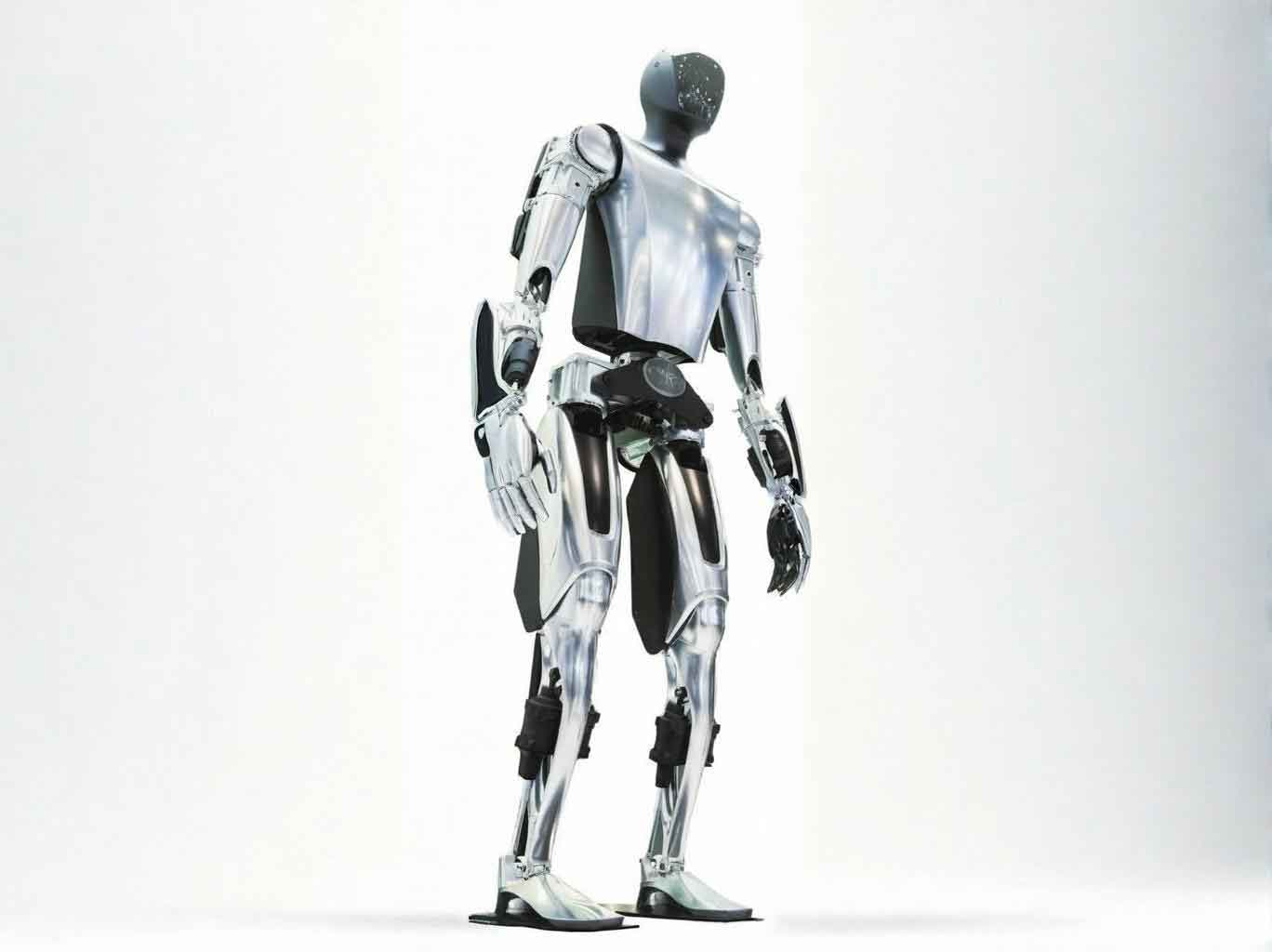
Data-related challenges are equally daunting. Embodied AI robots require vast amounts of multimodal data—visual, tactile, auditory—collected from physical interactions. Acquiring this data is costly and labor-intensive, especially in complex or hazardous settings. Additionally, data annotation for tasks like object manipulation demands expertise, increasing time and financial burdens. From a privacy standpoint, embodied AI robots operating in homes or healthcare must handle sensitive information securely. Techniques such as federated learning could mitigate risks by training models on decentralized data. The federated learning objective for an embodied AI robot network can be formulated as:
$$ \min_w \sum_{k=1}^K \frac{n_k}{n} F_k(w) $$
Where $$ w $$ are global model parameters, $$ K $$ is the number of devices, $$ n_k $$ is the data size on device $$ k $$, and $$ F_k $$ is the local loss. This ensures that an embodied AI robot can learn collaboratively without exposing raw data, addressing privacy concerns while improving model robustness.
In this context, telecommunications operators are uniquely positioned to address these challenges and drive embodied AI adoption. As I see it, operators can leverage their infrastructure to provide the backbone for embodied AI robot ecosystems. First, by expanding 5G and future 6G networks, operators can offer the high bandwidth and ultra-low latency required for real-time communication between embodied AI robots and cloud or edge servers. The latency requirement for critical applications, such as remote surgery via an embodied AI robot, can be expressed as:
$$ \tau_{\text{total}} = \tau_{\text{trans}} + \tau_{\text{proc}} + \tau_{\text{queue}} \leq \tau_{\text{max}} $$
Here, $$ \tau_{\text{total}} $$ is the total latency, with components for transmission, processing, and queuing, and $$ \tau_{\text{max}} $$ is the maximum tolerable delay, often in milliseconds. Operators can optimize these parameters through network slicing and edge computing deployments, ensuring that embodied AI robots operate seamlessly.
Second, operators can invest in edge computing to bring computational resources closer to the point of action. By deploying lightweight AI models at the edge, an embodied AI robot can process data locally, reducing dependency on central clouds and enhancing responsiveness. The trade-off between accuracy and latency in edge-based decision-making for an embodied AI robot can be analyzed using:
$$ \text{Utility} = \frac{\text{Accuracy}}{\text{Latency}} $$
Maximizing this utility involves balancing model complexity with hardware constraints, a area where operators can provide tailored solutions through their edge nodes.
Third, operators can pioneer new application scenarios for embodied AI robots. In industrial settings, collaboration with manufacturers to deploy embodied AI robots for assembly or quality control can boost productivity. The efficiency gain from using an embodied AI robot in a production line can be quantified as:
$$ \eta = \frac{T_{\text{manual}} – T_{\text{robot}}}{T_{\text{manual}}} \times 100\% $$
Where $$ T_{\text{manual}} $$ and $$ T_{\text{robot}} $$ are task completion times for human and embodied AI robot respectively. Operators can offer integrated services combining network support, data analytics, and robot leasing, creating new revenue streams.
In domestic environments, embodied AI robots can serve as companions or assistants, providing security monitoring or elderly care. Operators can develop subscription-based models for these services, leveraging their customer relationships. For public services, embodied AI robots can be deployed in transportation hubs for guidance or surveillance, enhancing operational efficiency. The versatility of an embodied AI robot in such roles underscores its transformative potential, and operators can act as integrators, bundling connectivity with robot-as-a-service offerings.
To fully capitalize on these opportunities, operators must engage in strategic partnerships. The embodied AI landscape is fragmented, with expertise dispersed across hardware, software, and domain-specific applications. By collaborating with tech firms, robotics companies, and research institutions, operators can co-create solutions and establish industry standards. For example, joint ventures to develop open APIs for embodied AI robot control could foster interoperability. The value of such ecosystems can be modeled using network effects:
$$ V = k \cdot n^2 $$
Where $$ V $$ is the ecosystem value, $$ k $$ is a constant, and $$ n $$ is the number of participants. As more entities join, the utility for each, including operators and embodied AI robot developers, increases exponentially.
In summary, the era of embodied AI is dawning, with embodied AI robots at its forefront. From my vantage point, this technology promises to redefine human-machine interaction, but its success hinges on overcoming technical and data barriers. Telecommunications operators, with their infrastructural prowess and market access, are key enablers. By focusing on network advancement, edge intelligence, and collaborative innovation, they can not only navigate the challenges but also emerge as leaders in the embodied AI revolution. As embodied AI robots become more pervasive, from factories to homes, the synergy between connectivity and robotics will unlock unprecedented value, heralding a future where intelligent systems seamlessly integrate into our world.