
The global manufacturing landscape is undergoing a seismic shift, driven by the relentless advancement of automation and intelligent systems. At the heart of this transformation lies the robot industry, a sector now widely recognized as a cornerstone of national strategic competitiveness. A comprehensive analysis reveals that nations worldwide are racing to harness this technology, with the China robot market not only participating but rapidly ascending to a position of global leadership.
- International Landscape: A Global Race for Robotic Supremacy
The international stage is defined by a pressing need for manufacturing mode变革. Initiatives like America’s “re-industrialization” and Europe’s “New Industrial Revolution” are fundamentally strategies to reclaim manufacturing dominance through artificial intelligence, robotics, and digital fabrication. This global competition underscores a critical juncture: the old models reliant on abundant, cheap labor are becoming obsolete.
For China, this pressure is particularly acute. The diminishing demographic dividend, rising labor costs, and the urgent need for sustainable development models necessitate a rapid and profound industrial upgrade. Furthermore, the dual challenge of high-end manufacturing回流 to developed economies and low-end manufacturing迁移 to countries with lower labor costs creates a powerful imperative for China to innovate its production paradigm. Here, the China robot industry presents a compelling solution, offering a path to mitigate labor shortages, bridge the high-end manufacturing gap, reduce operational costs, and dramatically enhance efficiency.
- Industrial Robots: The Core of the Manufacturing Revolution Technologically mature, industrial robots have evolved into standard equipment, with automated production lines becoming the mainstream and future direction. This segment is dominated by established international giants, yet the explosive growth of the China robot market is creating new champions and reshaping the competitive landscape.
- Military Robots: The Future Instruments of Warfare The development of unmanned systems for military applications is a top priority for major powers. The United States, Russia, South Korea, Israel, and European nations are all investing heavily in tactical robotic systems for reconnaissance, logistics, and combat, aiming to field armies where robotic units may soon outnumber human soldiers.
- Service Robots: Entering Homes and Everyday Life This sector represents the frontier of human-robot interaction. From vacuum-cleaning drones and surgical assistants to experimental autonomous vehicles, service robots are moving from laboratories into commercial and domestic settings. Nations like Japan and South Korea, facing aging populations, are strategically fostering their service robot industries as vital economic growth engines, anticipating a future where robots are as ubiquitous as personal computers.
The economic potential is staggering. Analysts project that advanced robotics could generate trillions of dollars in value across manufacturing, healthcare, and services by 2025. This immense opportunity has attracted massive capital investment from technology conglomerates like Google and SoftBank, signaling a transformative phase for the entire industry.
- The Confluence of Forces Driving Robotic Adoption
The widespread adoption of robotic manufacturing is not a singular event but the result of a powerful convergence of technological, economic, and social factors.
- Technology as the Enabler: Breakthroughs in artificial intelligence, machine vision, force control, and network connectivity have endowed robots with unprecedented perception, decision-making, and coordination capabilities. They can now perform complex, delicate tasks and operate as interconnected nodes within smart factories, moving far beyond simple, repetitive motions.
- Market Demand as the Pull: The shift towards shorter product lifecycles and highly customized production requires extreme manufacturing flexibility. Intelligent robots, supported by information platforms, are uniquely suited to meet this demand for small-batch, multi-variant production. Furthermore, the rising and volatile cost of human labor, contrasted with the decreasing cost and increasing reliability of robots, has made automation a financially superior choice for an expanding range of applications, solidifying the business case for the China robot solution.
- The Social Dimension: Contrary to common fears, empirical studies by international bodies have found no direct correlation between increased robot adoption and higher overall unemployment in major economies like the US, Germany, Japan, and China. Instead, evidence suggests that robotics adoption drives a necessary transition and upskilling of the labor force, moving human workers towards more creative, supervisory, and technical roles.
- The China Robot Industry: An Overview of a Booming Ecosystem
China has firmly established itself as the world’s largest market for industrial robots. International federation data confirms that China accounts for approximately one-quarter of global sales, with domestic demand growing at a pace that far exceeds the world average. This massive market is nurturing a vibrant and rapidly maturing domestic industry.
The China robot ecosystem has expanded from virtually nothing to encompass over 500 companies engaged in R&D, manufacturing, system integration, and component supply. The capital market reflects this enthusiasm, with dozens of listed companies now centered on robotics concepts. Leading the pack is Siasun Robot & Automation Co., Ltd., a pioneer whose market valuation ranks it among the top global pure-play robotics firms.
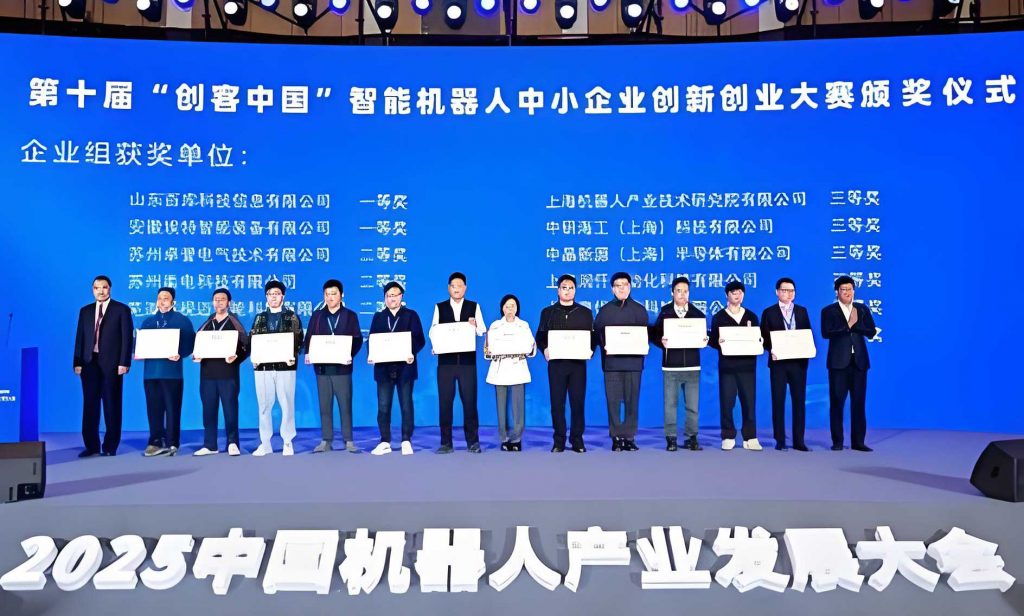
This growth is geographically widespread, with more than 30 specialized robotics industrial parks under development or planning across the country. The application of robots, a key indicator of the China robot industry’s penetration, extends far beyond the traditional automotive sector into electronics, semiconductors, food and beverage, logistics, and even traditionally labor-intensive fields, indicating vast potential for further expansion.
- A National Champion: Siasun’s Comprehensive Robot Portfolio
Siasun Robot & Automation Co., Ltd. stands as a flagship enterprise within the China robot industry. As a publicly listed high-tech company, it has built a complete industrial chain encompassing core technologies, critical components, leading products, and tailored industry solutions. Its diverse product portfolio showcases the breadth of the domestic industry’s capabilities:
- Industrial Robots: For welding, handling, assembly, and palletizing, performing on par with international counterparts.
- Cleanroom Robots: Critical for semiconductor and flat-panel display production, this segment represents a strategic breakthrough where Siasun has successfully challenged foreign monopolies.
- Mobile Robots (AGVs): The intelligent core of automated logistics, Siasun’s systems dominate the domestic automotive and power markets and are competitive internationally.
- Special Robots: Developed for heavy logistics, defense, and emergency rescue, addressing critical national needs.
- Service Robots: An emerging growth area, with products ranging from elderly companion and healthcare robots to hospitality and educational assistants.
Beyond individual robots, Siasun exemplifies the system integration strength of the China robot sector by providing complete digital factory solutions. These integrate robotics with manufacturing execution systems, smart logistics, and data management platforms, offering clients a holistic path towards the “smart factory” of the future.
- Future Horizons: Integration with Megatrends
The future trajectory of the China robot industry is inextricably linked with two dominant technological megatrends.
- Robots and Industry 4.0: The concept of Industry 4.0 envisions fully connected, self-optimizing smart factories. Within this framework, networked robots are the essential intelligent components. Industrial and mobile robots provide the physical automation, while their integration with Manufacturing Execution Systems and the Industrial Internet of Things enables the data-driven, flexible, and often lights-out manufacturing operations that define this new era. The progress of the China robot industry is thus a fundamental prerequisite for the nation’s broader Industry 4.0 ambitions.
- Service Robots and “Internet Plus”: The convergence of service robotics with the “Internet Plus” model—which integrates mobile internet, cloud computing, big data, and the Internet of Things—promises to profoundly alter daily life. Imagine “Internet Plus” healthcare platforms connected to assistive robots for remote elderly care, or smart交通 systems enabling advanced driver assistance and autonomous vehicles. In this synergy, the robot acts as the intelligent physical agent, while the “Internet Plus” cloud platform provides massive data processing, learning, and coordination capabilities, vastly extending the robot’s perception and utility. This fusion is where the next wave of innovation for the China robot industry will likely occur.
- Conclusion: An Era of Transformative Change
We stand at a historic inflection point where a global technological revolution intersects with China’s urgent manufacturing转型升级. This synergy has propelled, and will continue to fuel, China’s position as the world’s premier market for industrial robotics. Simultaneously, the convergence of robotics with IoT, AI, and big data is ushering in the age of the service robot, poised to permeate every facet of human life.
The China robot industry, now on the cusp of explosive growth, is at the forefront of this change. From reshaping global supply chains and manufacturing best practices to redefining the nature of work, security, and domestic life, the era of robotics is no longer a distant future—it is unfolding now, with the China robot industry playing an increasingly central and decisive role on the world stage.
| Segment | Global Context / Trend | China Robot Industry Position / Note |
|---|---|---|
| Industrial Robot Market Size | Largest single market globally (~25% share) | Sales growth significantly higher than global average |
| Industry Ecosystem | Mature players (ABB, FANUC, KUKA, Yaskawa) | Over 500 domestic companies; Siasun a top-valued pure-play firm |
| Primary Application Areas | Automotive, Electronics, Metal, Rubber & Plastics | Widening to include food, pharma, ceramics, and other labor-intensive sectors |
| Strategic Focus | Industry 4.0, Smart Manufacturing, Productivity | Core component for national manufacturing upgrade and “Internet Plus” integration |
| Future Growth Driver | Service Robotics, Collaborative Robots, AI Integration | Major R&D and investment focus for healthcare, domestic, and logistics applications |