
The Third China Robot Summit and Global Returnees Ningbo Summit was grandly held on June 13-14, 2016, in the picturesque city of Yuyao, Zhejiang Province. This annual event, a premier platform for the robotics community, brought together government officials, industry leaders, academics, researchers, users, and financial experts to foster communication and collaboration. Against the backdrop of China’s economic transformation and the global rise of intelligent manufacturing, the summit underscored the pivotal role of robotics as “the jewel in the crown of manufacturing” and a key indicator of a nation’s technological innovation and high-end manufacturing prowess.
With the official launch of strategic plans like “Made in China 2025” and the “Robot Industry Development Plan (2016-2020)”, China is ushering in a new era of smart manufacturing centered on digitalization, networking, and intelligence. The summit served as a critical nexus for discussing how China robot technology can drive industrial upgrading, enhance supply-side structural reforms, and capture global market share.
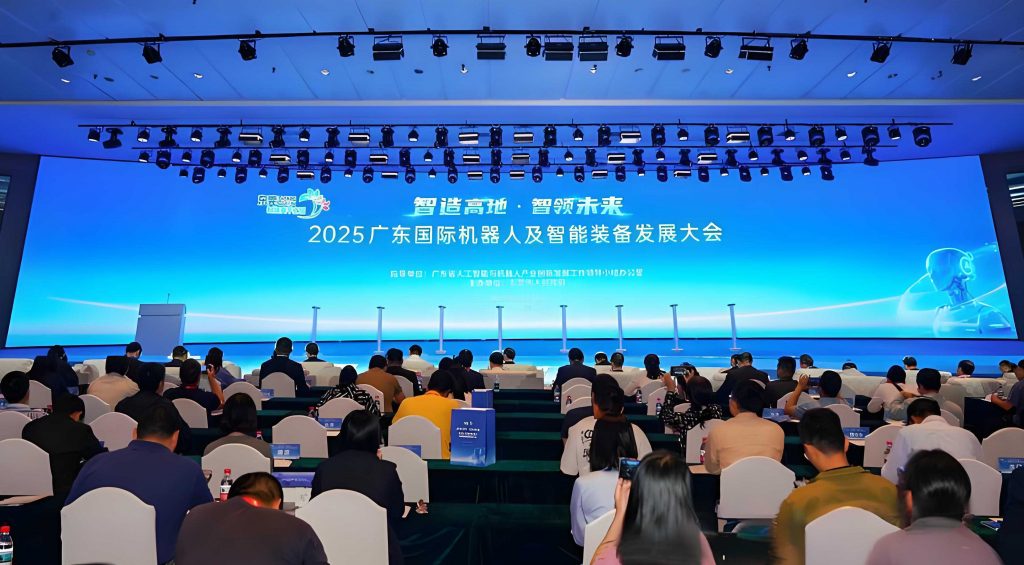
The following sections detail the background, content, and environment of this landmark event, highlighting the vibrant future of the China robot industry.
- Summit Background: Global Robotics Revolution and China’s Strategic Push
The year 2016 witnessed a new wave of industrial transformation in robotics, with nations worldwide partaking in an intelligent feast driven by automation. Initiatives such as the US Industrial Internet, Germany’s Industry 4.0, Japan’s Manufacturing Revival, and China’s Made in China 2025 all position robotics as a core national strategy. In February 2016, the US President’s Economic Report highlighted that robotics, akin to the steam engine revolution, would bring profound changes to human production and lifestyle.
Market projections underscore this growth. According to an IDC research report, the global robotics industry and related services market is expected to achieve a compound annual growth rate of 17%, with the industry scale reaching USD 135.4 billion by 2019. The following table summarizes this projection:
| Year | Projected Global Robot Industry Market Size (USD billions) |
|---|---|
| 2019 | 135.4 |
2016 marked the first year of China’s 13th Five-Year Plan, where the robot industry garnered significant attention. The introduction of new national plans, particularly the “Robot Industry Development Plan (2016-2020)” jointly issued by the Ministry of Industry and Information Technology, the National Development and Reform Commission, and the Ministry of Finance in March 2016, aims to guide the rapid, healthy, and sustainable development of China’s robot industry, ushering it into a new phase.
Furthermore, President Xi Jinping’s concept of “supply-side structural reform,” introduced in late 2015, has clarified the direction for China’s industrial development. This reform emphasizes improving the quality and efficiency of the supply system, providing fertile ground for advancing China robot technology and enabling it to “occupy as much market as possible.” The new robot industry plan sets clear tasks and goals: achieving “two breakthroughs” in key components and high-end products, and “three enhancements” in quality reliability, market share, and the competitiveness of leading enterprises. This strategic framework is vital for propelling the China robot sector forward.
- Summit Content: A Confluence of Ideas, Innovation, and Investment
Building on the success of its two predecessors, the Third China Robot Summit (ROBOTOP) was designed as a comprehensive forum. Its theme, “Human-Machine Integration, Making Robots More Intelligent,” resonated throughout the proceedings. The summit aimed for high-end exchange, consensus building, cooperative integration, pioneering win-win outcomes, and innovative development. The agenda was rich and multifaceted, encompassing:
- Keynote Reports: Covering global macroeconomics, the manufacturing environment, the latest policies and trends in robotics, and cutting-edge research findings in China robot technology.
- Robot Lecture Hall: A gathering of technical experts, industry leaders, financial investors, and entrepreneurial pioneers sharing technological innovation directions and successful startup experiences.
- Industry Matchmaking: Facilitating precise connections between supply and demand enterprises, aligned with Zhejiang Province’s “Machine Replacement” initiative to promote manufacturing upgrades.
- Exhibition and Exchange: Showcasing robot technology applications, new products, achievements, and innovations in the China robot field.
- High-End Interviews: Discussions among renowned robotics experts and personalities on the industry’s future and development blueprint.
- Vocational Training Exchange: Including a post-graduate innovation competition in intelligent manufacturing and discussions on entrepreneurial funds.
- Innovation and Entrepreneurship Conference: Panels on entrepreneurship, with mentors guiding startups and investment institutions focusing on SME development.
- Alliance Joint Meeting: Exchanging successful experiences among various robot alliances, associations, and bases across China to explore collaborative development and promote orderly industry growth.
- Technical Forums: Specialized exchanges organized by field and technology.
The summit schedule featured parallel forums on June 14th, including the National Industrial Robot Forum, National Service Robot Forum, National AI and Autonomous Driving Technology Forum, National Medical Robotics Industry Development Forum, National Parallel Robot Forum, Robot Lecture Hall, Global Robot Black Tech Forum, and National Robot Core Components Forum. Afternoon sessions covered the National Vocational Skills Talent Exchange Seminar, National Smart Factory Practice Forum, another Robot Lecture Hall, National Robot Testing Platform Forum, and National Educational Robot Forum.
- Summit Environment: Yuyao – A Hub for Robotics and Intelligent Manufacturing
The choice of Yuyao as the host city was strategic. “Machine replacement” is seen as an essential path for upgrading Zhejiang’s labor-intensive traditional industries. Ningbo, with its发达 manufacturing base, is a key pilot region for implementing “Made in China 2025” and has shown significant results from its machine replacement strategy, driving robust demand for robots and intelligent equipment.
Yuyao has been intensely focused on industrial upgrading, aiming to achieve “four reductions and two improvements” by deeply implementing its “machine replacement” action plan. The local government has issued several supportive documents, including the “Three-Year Action Plan for Accelerating Enterprise ‘Machine Replacement’ Technological Transformation (2014-2016)” and corresponding扶持 policies, guiding enterprises to enhance automation and intelligence levels.
To host a规模化, modern, and international China robot summit, Yuyao constructed a dedicated峰会 conference center covering 5,000 square meters, capable of accommodating over 1,000 attendees and completed by the end of May. This venue, set by the beautiful Siming Lake, was transformed into a robot theme park for the event, featuring diverse,有趣, and interactive robots.
Yuyao’s manufacturing sector is vigorous, and to propel its transformation, the city is vigorously implementing the “Hundred Teams Plan,” accelerating the construction of the “Thousand Talents Plan” industrial park and robot industry agglomeration zones. It is cultivating scaled, branded robot and intelligent equipment manufacturing enterprises to form a complete industrial chain encompassing “robots, professional robot systems, robot flexible automation lines, and smart cloud factories.”
Moreover, Yuyao is planning to create a “Robot Town,” spanning 3 square kilometers with a total investment of 5 billion yuan. Over three years, it aims to establish functional blocks including a robot exhibition and trading center, a Yangtze River Delta entrepreneurship service center for “Thousand Talents” experts, a robot industry manufacturing base, a robot industry academy, and a robot specialty supermarket. This initiative seeks to build an intelligent town integrating robot industry, culture, tourism, and community functions, further solidifying the region’s role in advancing the China robot ecosystem.
- Conclusion: A Bright Future for China Robot Industry
The Third China Robot Summit and Global Returnees Ningbo Summit successfully provided a dynamic platform for dialogue and collaboration. It highlighted the convergence of政策 support, technological innovation, and industrial application that is driving the China robot industry forward. As the global robotics market expands, events like this summit are crucial for sharing knowledge, forging partnerships, and navigating the challenges of intelligent manufacturing. The developments in Yuyao exemplify the local commitment to becoming a leader in this field. The future of the China robot sector appears promising, guided by strategic planning, entrepreneurial spirit, and a focus on human-machine integration to create smarter, more efficient systems for the world.