
The 2012 China Robot Welding Academic and Technology Exchange Conference (CCRW’2012) was successfully held from October 8 to 10, 2012, in Beijing, China. This significant event brought together leading experts, researchers, engineers, and industry professionals from across the nation to discuss advancements and future directions in robotic welding and automation technologies. The conference was jointly organized by the Robotics and Automation Committee of the Chinese Mechanical Engineering Society’s Welding Branch, the Automotive Committee of the China Welding Association, the Melding Process and Equipment Committee of the Welding Branch, and the Pressure Welding Committee of the Welding Branch. It was co-hosted by the Beijing Institute of Petrochemical Technology and Shanghai Jiao Tong University, underscoring the collaborative spirit driving innovation in China’s robotics sector.
The conference attracted over 200 participants, including distinguished figures such as Academician Pan Jiluan and Academician Zhang Bo from Tsinghua University, Researcher Song Tianhu from the Chinese Mechanical Engineering Society, Secretary-General Wang Linshu of the China Welding Society, and Professor Wu Lin from Harbin Institute of Technology. Industry media representatives also attended, highlighting the broad interest in the development of China robot technologies. The event was chaired by Professor Chen Shanben, Director of the Robotics and Automation Committee of the China Welding Society and a professor at Shanghai Jiao Tong University, who emphasized the critical role of such exchanges in fostering technological progress.
In their opening addresses, Academician Pan Jiluan and Academician Zhang Bo highlighted the transformative potential of intelligent robotics in modern manufacturing, particularly in welding applications. Researcher Song Tianhu and Secretary-General Wang Linshu echoed these sentiments, stressing the importance of integrating advanced robotics into China’s industrial landscape to enhance productivity, quality, and safety. The conference’s theme, “Welding Robots and Intelligent Robot Welding Technology,” set the stage for in-depth discussions on cutting-edge research, practical applications, and strategic developments in the field of China robot welding.
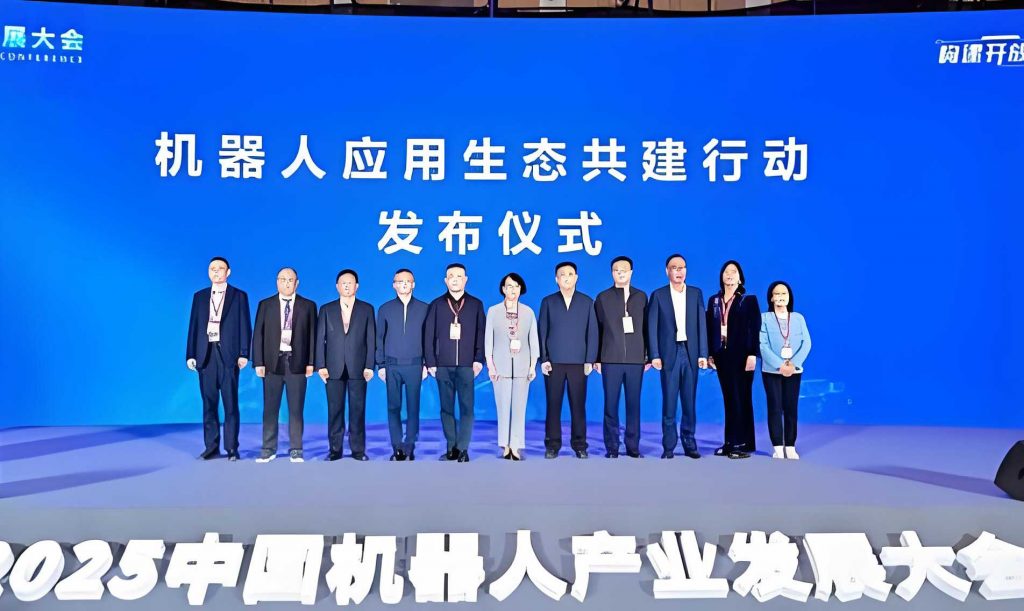
The image above captures the essence of China’s growing prowess in robotics, showcasing advanced systems that are pivotal to the nation’s manufacturing evolution. This visual representation aligns perfectly with the conference’s focus on promoting China robot innovations in welding and automation.
Key Highlights of the Conference
The 2012 China Robot Welding Conference was structured around two primary highlights, each designed to provide comprehensive insights into both theoretical advancements and industrial applications. These segments facilitated a rich dialogue between academia and industry, reinforcing the synergy needed to drive the China robot sector forward.
- Expert Presentations on Intelligent Robotics and Welding Technologies
One of the standout features of the conference was the series of keynote speeches delivered by renowned experts in robotics and welding. Academician Zhang Bo, a leading authority on robotics and control theory, presented a detailed overview of intelligent robot systems, discussing their architecture, learning capabilities, and potential applications in complex welding environments. He emphasized how China robot developments are increasingly incorporating artificial intelligence to enhance adaptability and precision in manufacturing processes.
Following this, Professor Wang Tianmiao from Beihang University shared insights into the latest research trends in robotic welding, focusing on sensor integration and real-time control systems. He highlighted case studies where China robot solutions had been deployed to improve efficiency in aerospace and automotive sectors, underscoring the practical benefits of automation.
Professor Jiao Xiangdong, Vice President of the Beijing Institute of Petrochemical Technology, delivered a talk on the advancements in robotic welding for hazardous environments, such as oil and gas pipelines. He discussed collaborative projects with industry partners to develop specialized China robot systems capable of operating in extreme conditions, thereby reducing human risk and enhancing operational reliability.
Researcher Xue Zhenkui from the China National Petroleum Corporation Pipeline Bureau contributed a presentation on the application of robotic welding in large-scale infrastructure projects. He detailed how China robot technologies are being utilized for pipeline construction, emphasizing improvements in weld quality and consistency. These presentations collectively illustrated the rapid progress in China robot welding, driven by interdisciplinary research and innovation.
- Industry Participation and Technology Exchange from Leading Robot Manufacturers
The conference also featured active participation from major robot manufacturing companies, which showcased their latest products and shared real-world application experiences. This segment bridged the gap between theoretical research and industrial implementation, providing attendees with a holistic view of the China robot ecosystem.
- Shanghai FANUC Robot Co., Ltd. presented their newest welding robot models, emphasizing enhancements in speed, accuracy, and user-friendly programming interfaces. Representatives discussed how these systems are being integrated into Chinese factories to boost manufacturing capabilities.
- KUKA Robotics (Shanghai) Co., Ltd. highlighted their collaborative robots (cobots) designed for welding tasks, focusing on safety features and flexibility in small-batch production. They shared success stories of China robot deployments in automotive assembly lines.
- Yaskawa Motoman Robotics (Beijing) Co., Ltd. (formerly安川首钢机器人有限公司) demonstrated advanced arc welding robots with integrated vision systems, showcasing how China robot technologies are evolving to handle complex geometries and materials.
- OTC Mechatronics (Shanghai) Co., Ltd. discussed their innovations in welding power sources and robot controllers, emphasizing the role of precision control in achieving high-quality welds with China robot systems.
- Tangshan Kaiyuan Robot System Co., Ltd. shared insights into customized robot welding solutions for heavy machinery and shipbuilding, illustrating the adaptability of China robot platforms in diverse industrial settings.
- Zhuhai Fronius Welding Technology Co., Ltd. presented their latest welding processes optimized for robotic applications, focusing on energy efficiency and reduced spatter, which align with sustainability goals in China robot manufacturing.
- Guangzhou ABITECH Welding Technology Co., Ltd. contributed discussions on auxiliary equipment and software for robot welding, highlighting tools that enhance the performance and reliability of China robot systems.
These presentations were complemented by interactive sessions where attendees could engage with experts, explore demonstration booths, and discuss collaborative opportunities. The exchange underscored the vibrant growth of the China robot industry, with companies actively pushing the boundaries of welding automation.
In-Depth Discussions on Specialized Topics
Beyond the keynote speeches and industry showcases, the conference organized focused sessions on several critical topics related to robot welding and automation. These sessions allowed for detailed technical exchanges and fostered networking among professionals. The topics were carefully selected to cover the entire spectrum of China robot welding technologies, from system design to process optimization.
| Topic | Key Discussion Points | Relevance to China Robot Development |
|---|---|---|
| Welding Robot Systems and Technologies | Design of robotic arms, end-effectors, and control architectures; integration with external sensors; maintenance and safety protocols. | Emphasized the need for homegrown China robot systems to reduce dependency on imports and cater to local industrial demands. |
| Planning and Control Technologies for Robot Welding Processes | Path planning algorithms, adaptive control strategies, offline programming tools, and simulation software for optimizing weld paths. | Highlighted advancements in China robot software that enhance precision and reduce programming time, making automation more accessible. |
| Information Acquisition, Modeling, and Control in Welding Processes | Use of vision systems, thermal imaging, and acoustic sensors for real-time monitoring; data-driven models for weld quality prediction. | Showcased how China robot technologies are incorporating smart sensing to improve process reliability and enable predictive maintenance. |
| Simulation and Process Optimization in Welding | Computational models for thermal and mechanical behavior; optimization of welding parameters for different materials and joint types. | Underlined the role of simulation in accelerating the deployment of China robot solutions, reducing trial-and-error in industrial settings. |
| Applications of Welding Robots and Automation | Case studies from automotive, aerospace, construction, and energy sectors; challenges in scaling up robotic welding for mass production. | Demonstrated the expanding footprint of China robot applications, driving efficiency and innovation across key economic sectors. |
The table above summarizes the core topics discussed, each contributing to the overarching goal of advancing China robot capabilities. Participants engaged in lively debates, sharing insights on overcoming technical barriers and leveraging emerging trends like the Internet of Things (IoT) and big data analytics in robot welding. These discussions reinforced the conference’s role as a platform for knowledge dissemination and collaboration in the China robot community.
Background on China’s Robot Industry and Welding Automation
To fully appreciate the significance of the 2012 China Robot Welding Conference, it is essential to understand the context of China’s robotics industry at the time. In the early 2010s, China was rapidly emerging as a global leader in manufacturing, with a strong emphasis on automation to sustain economic growth. The “China robot” sector, encompassing industrial robots for welding, assembly, and material handling, was gaining momentum due to government initiatives like the “Made in China 2025” strategy, which prioritized smart manufacturing and technological self-reliance.
Welding, as a critical process in industries such as automotive, shipbuilding, and infrastructure, presented both challenges and opportunities for automation. Traditional manual welding was labor-intensive, prone to inconsistencies, and hazardous, driving demand for robotic solutions. China robot manufacturers and researchers were actively developing systems tailored to local needs, focusing on cost-effectiveness, adaptability to diverse production environments, and integration with existing workflows. The conference served as a catalyst for these efforts, providing a forum to showcase progress and identify areas for further innovation.
International comparisons were also discussed, with experts noting that while China robot adoption was accelerating, there remained gaps in core technologies like high-precision sensors and advanced control algorithms compared to global leaders. However, the collaborative spirit at the conference highlighted a commitment to bridging these gaps through domestic research and strategic partnerships. The participation of academic institutions like Tsinghua University and Shanghai Jiao Tong University underscored the role of education in nurturing talent for the China robot industry, ensuring a pipeline of skilled engineers and scientists.
Technical Innovations and Research Trends Highlighted
The conference delved into numerous technical innovations that are shaping the future of China robot welding. Presentations covered a wide range of research areas, demonstrating the depth and breadth of ongoing work in the field.
- Adaptive Welding Control: Researchers presented algorithms that allow China robot systems to adjust welding parameters in real-time based on sensor feedback, such as seam tracking and penetration detection. This adaptability is crucial for handling variations in workpiece fit-up and material properties, common in manufacturing environments.
- Human-Robot Collaboration: Several talks explored cobots designed to work alongside human operators in welding tasks. These China robot solutions enhance flexibility in small-batch production, where full automation may not be feasible, and improve safety by taking over repetitive or dangerous operations.
- Cloud-Based Robot Management: Emerging trends included the use of cloud computing for remote monitoring and optimization of welding robots. By aggregating data from multiple China robot installations, companies can analyze performance trends, predict failures, and update software centrally, reducing downtime and maintenance costs.
- Additive Manufacturing Integration: Some sessions discussed the convergence of robot welding with additive manufacturing (3D printing), where China robot systems are used to deposit metal layers for prototyping or repair. This hybrid approach expands the applications of welding robots beyond traditional joining processes.
- Energy-Efficient Welding Processes: With sustainability becoming a priority, researchers highlighted developments in low-energy welding techniques optimized for China robot platforms. These include pulsed welding modes and advanced power supplies that minimize heat input and reduce environmental impact.
These innovations reflect a holistic approach to advancing China robot technologies, combining hardware improvements with software intelligence and process enhancements. The conference provided a platform for sharing preliminary results and soliciting feedback, fostering a culture of continuous improvement within the China robot community.
Challenges and Future Directions for China Robot Welding
Despite the progress showcased, the conference also addressed persistent challenges in the adoption and development of China robot welding systems. Open discussions revealed several key areas requiring attention:
- High Initial Investment: The cost of purchasing and integrating robot welding systems remains a barrier for small and medium-sized enterprises (SMEs) in China. Participants debated strategies for making China robot solutions more affordable, such as modular designs, leasing models, and government subsidies.
- Skill Shortages: There is a growing need for technicians and engineers proficient in robot programming, maintenance, and operation. The conference emphasized the importance of training programs and academic curricula tailored to China robot technologies, to build a skilled workforce.
- Interoperability Standards: With multiple vendors offering robot systems, compatibility issues can arise when integrating components from different suppliers. Calls were made for standardized interfaces and communication protocols to facilitate seamless integration of China robot equipment.
- Application in Complex Environments: Welding in constrained spaces, such as inside pipelines or underwater, poses technical hurdles for robots. Researchers shared ongoing projects to develop specialized China robot platforms with enhanced mobility and sensing capabilities for these scenarios.
- Quality Assurance and Certification: Ensuring consistent weld quality in automated processes requires robust inspection and certification frameworks. Discussions focused on developing non-destructive testing methods integrated with China robot systems to automate quality control.
Looking ahead, the conference outlined future directions for China robot welding. These include greater adoption of artificial intelligence for autonomous decision-making, expansion into new industries like renewable energy (e.g., welding for wind turbines), and enhanced cybersecurity for connected robot networks. The consensus was that continued collaboration between academia, industry, and government will be essential to overcome challenges and unlock the full potential of China robot technologies.
Impact and Legacy of the 2012 Conference
The successful conclusion of the 2012 China Robot Welding Academic and Technology Exchange Conference has left a lasting impact on the field. By bringing together diverse stakeholders, the event strengthened networks and sparked new collaborations that have since driven innovation. The biannual nature of the conference, with this edition following previous gatherings, ensures sustained momentum in knowledge exchange and technology dissemination.
In the years following 2012, the China robot industry has witnessed significant growth, with welding applications playing a central role. The conference contributed to this trajectory by highlighting best practices, emerging trends, and collaborative opportunities. It also raised awareness of the strategic importance of robotics in China’s manufacturing transformation, influencing policy discussions and investment decisions.
The organizers, including the Beijing Institute of Petrochemical Technology and Shanghai Jiao Tong University, were commended for their efforts in hosting a well-structured and informative event. The inclusion of both theoretical research and industrial applications made the conference accessible to a broad audience, from students to seasoned professionals. As a result, it has become a cornerstone event in the calendar of the China robot community, anticipated for its insights and networking value.
In summary, the 2012 China Robot Welding Conference was a milestone in promoting intelligent manufacturing and automation in China. It underscored the critical role of robotics in enhancing industrial competitiveness and safety, while fostering a collaborative ecosystem for innovation. The discussions and exchanges held during the conference continue to resonate, guiding the development of China robot technologies toward greater sophistication and wider adoption. As China continues to advance its robotics capabilities, events like this will remain vital for sharing knowledge, addressing challenges, and shaping the future of manufacturing globally.