
In the rapidly evolving landscape of global manufacturing, the integration of industry, big data, and the internet has become an undeniable trend. Compared to the previous three industrial revolutions, Industry 4.0 represents a significant leap forward by leveraging the internet to activate traditional industrial processes, enabling factories to become intelligent, communicative, and thoughtful entities. This paradigm shift is reshaping production worldwide, and China is actively positioning itself at the forefront of this transformation through strategic initiatives and indigenous innovation in the robotics sector.
Wu Fengli, Chairman of Guangdong Tuosda Technology Co., Ltd., has been at the heart of this movement, relentlessly engaging with automation experts, including those from Taiwan’s Industrial Technology Research Institute, to seek breakthroughs for China’s robotics and automation development. His efforts underscore a broader national ambition: to transition China from a manufacturing giant to a manufacturing powerhouse. This ambition was crystalized in the government work report with the inaugural mention of “Made in China 2025,” a blueprint aiming for China to become a leading industrial nation by approximately 2045 through three-decade action plans. The implementation of “Made in China 2025” is the pivotal first step in this monumental shift.
The journey, however, is fraught with challenges. When examining historical legacy, talent pool, and core technologies, China’s industrial base still lags behind developed nations like Germany and Japan. The nation’s industrial automation and robot industry remain in a relatively foundational stage. A critical gap exists: the chain linking ontology manufacturing, software development, and terminal applications is not fully connected. This disconnection hinders the complete realization of unmanned workshops, let alone smart factories. While Germany’s Industry 4.0 emphasizes the application of data and the internet in automation—a concept seemingly distant from China’s current needs—China’s actual industrial maturity is estimated to be between Industry 2.0 and 2.5, reaching at most Industry 3.0. This disparity necessitates a tailored approach for the China robot sector, one that builds a robust ecosystem rather than merely adopting foreign models.
- Industry 4.0: A Global Tide and China’s Adaptive Course
Industry 4.0, championed by Germany, is a “next-generation smart factory plan” that uses the Internet of Things (IoT) as its foundation. It focuses on merging information networks with physical production systems to revolutionize existing industrial production and service models. In the Industry 4.0 era, products and production equipment, as well as different pieces of equipment, are interconnected through data exchange. This integration allows vertical connections within a factory and horizontal linkages between factories to form a cohesive, intelligent production organism.
In China, traditional manufacturing inevitably faces issues of resource integration. The fusion of automation, informatization, big data, and the internet is poised to become an inexorable trend. Over three decades of manufacturing development have led to a product-centric, rather than market- or customer-centric, mindset. This inherent focus creates a rift with market demands and client needs, jeopardizing sustainable enterprise growth. For the China robot industry to thrive, it must overcome this historical inertia.
Scholars point out that the expanding scope of knowledge and technology, coupled with the limitations of a company’s internal knowledge structure, makes the externalities of innovation increasingly apparent. The evolution from endogenous, closed independent innovation to alliance-based collaborative innovation, and further to borderless, platform-oriented open innovation reflects the intrinsic logic of technological development. The trends toward precision, high-end, automation, and informatization in manufacturing are driving industrial upgrades, leading to advanced “unmanned factories” and “lights-out factories.” Germany’s current leadership stems from its successful synthesis of robots, big data, and the internet, achieving truly intelligent workshops—a model the China robot industry aspires to adapt.
The rise of the “Internet+” concept, elevated to a national strategy, epitomizes this essence of integrated innovation. Premier Li Keqiang, in the government work report, outlined the need to formulate an “Internet+” action plan, promoting the integration of mobile internet, cloud computing, big data, and IoT with modern manufacturing. This strategy aims to foster healthy development in e-commerce, industrial internet, and internet finance, while guiding internet companies to expand internationally. Ma Huateng, CEO of Tencent and proponent of the “Internet+” concept, describes it as utilizing the internet platform and information communication technology to combine the internet with all traditional industries, thereby creating new ecosystems in new domains. This vision is central to propelling the China robot industry forward.
- The Ecosystem Imperative: Constructing a Cohesive China Robot Industrial Circle
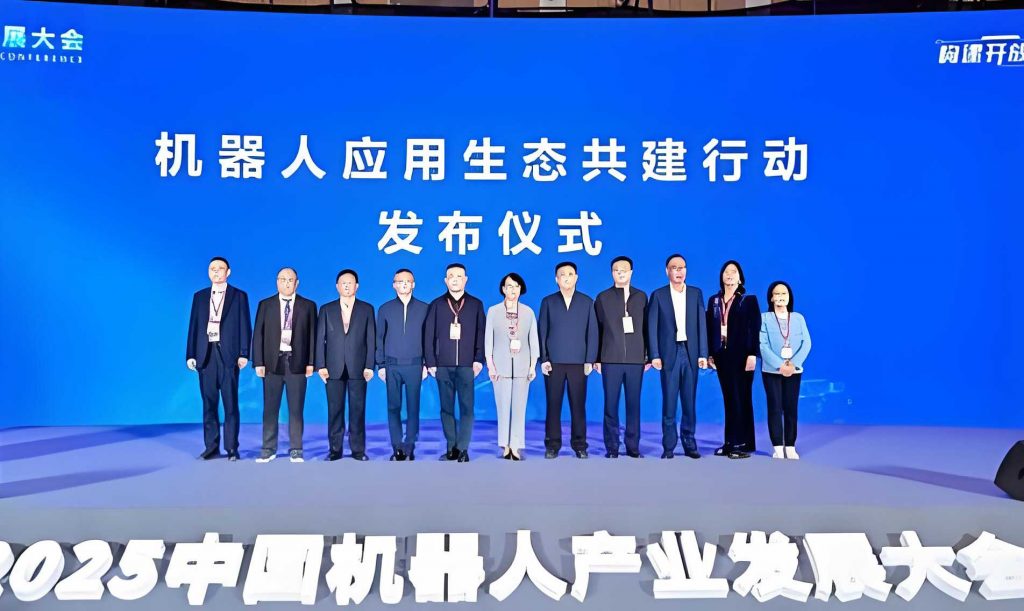
A complete industrial ecosystem comprises three interlinked segments: ontology manufacturing, integration application, and terminal application. Presently, within the domestic China robot field, a fragmentation exists. Ontology manufacturers often focus solely on production, while integration application providers lack manufacturing capabilities. Crucially, both lack a synergistic platform to leverage each other’s strengths, a situation untenable for long-term development. The mission for stakeholders in the China robot sector is to bridge these segments, creating a fully integrated, complete robot ecological industry chain.
Despite surface-level fervor, many players in the automation and robot industry are grappling with underlying struggles. The root cause lies in the industry’s service to manufacturing, which itself faces significant headwinds; when manufacturing suffers, the automation and China robot domain inevitably feels the impact. More critically, much of the current robot production involves basic assembly work—lacking core technologies, proprietary software, and substantive invention patents. Many entities rely on assembling others’ components, resulting in a deficit of core competitiveness. This dependency means future upgrades and optimizations are constrained by external parties, leading to solutions that are non-upgradable, non-replicable, and non-optimizable.
Tuosda Technology, as a domestic enterprise claiming to offer comprehensive full-industry-chain automation solutions, asserts its commitment to mastering core R&D technologies. This focus purportedly grants it主动权 (initiative), enabling the provision of solutions characterized by four unique advantages: upgradability, replicability, universality, and open architecture. To date, in the realms of industrial robots and 3D printers, Tuosda has secured nearly 40 invention and utility model patents, with over 10 additional patents under application. This dedication to intellectual property is vital for strengthening the China robot industry’s foundation.
| Patent Category | Number Held | Status |
|---|---|---|
| Invention and Utility Model Patents | Nearly 40 | Granted |
| Patents in Application Process | Over 10 | Pending |
In pursuit of more advanced automation technology, Wu Fengli has invested in a Taiwan-based automation R&D institution. Furthermore, significant resources have been deployed to recruit top-tier technical talent from overseas, including Canada, South Korea, Malaysia, and Taiwan. High-end talent is the primary competitive edge; without it, enterprises cannot achieve sustainable development, and the nation risks perpetual lag. For the China robot ecosystem to flourish, attracting and nurturing such talent is non-negotiable.
- The “One-Year Payback” Philosophy: Grounding Automation in Pragmatism
The introduction of the “Made in China 2025” plan in this year’s government work report marks a milestone for China’s manufacturing development. In 2010, amid the global financial crisis, China regained its status as the world’s largest manufacturing nation—a position lost 150 years prior. Yet, the title of a manufacturing “power” remains elusive, necessitating a concerted transition from scale to strength.
While industrial development in Germany and Japan leads globally, blind technological replication is not the answer for China. The path forward involves aligning with the current state of China’s industrial and manufacturing landscape, exploring routes suitable for local enterprises to upgrade from traditional production to automated, intelligent operations. The goal is authentic接地气 (groundedness)—staying close to the market and customers, ensuring product marketability. As a本土 (local) enterprise, Tuosda professes a deeper understanding of national conditions and the immediate needs of domestic companies. Currently, many manufacturing firms still view industrial automation and robots as lofty, unattainable concepts, considering talk of Industry 4.0 premature.
Addressing this reality, Tuosda has concentrated on delivering automation solutions premised on a “one-year payback” period. The approach begins with R&D, continuously exploring core technologies and optimizing production processes and工艺 (craftsmanship) to enhance product quality and reduce production costs for clients, as opposed to resorting to mere cost-cutting through inferior materials. Tuosda’s aim is to create a “high-end” solution suited to本土制造企业 (local manufacturing enterprises), transforming industrial automation and robots from perceived “luxuries” into essential “necessities” for production firms. This pragmatic strategy is key to accelerating the adoption of China robot technologies.
- The Current Reality: Human-Machine Collaboration and Systemic Hurdles
China presently occupies a stage characterized by collaboration and integration between humans and machines. Historically, many products were manufactured solely by workers; now, automation equipment is progressively replacing hazardous, monotonous, and labor-intensive positions and工种 (job types). However, certain flexible tasks remain difficult for equipment to supplant entirely. Consequently, China’s automation sector cannot yet fully achieve unmanned workshops or smart workshops—a clear indicator of the growth potential for the China robot industry.
Moreover, the absence of comprehensive big data and inadequate information integration are fundamental barriers to realizing unmanned or smart workshops. Although Tuosda has implemented automation for some enterprises, the lack of informatization导入 (integration)—which requires extracting big data across production aspects like capacity, motive power, order scheduling, and shipping rhythms—prevents a complete transition to lights-out factories. The软硬结合 (integration of software and hardware) remains incomplete. Additionally, the prevalent business model in China’s manufacturing, especially in client订单 (orders), relies heavily on代工 (OEM/contract manufacturing). This model’s hallmark—small volumes, high variety, and frequent changeovers—poses inherent challenges for standardizing processes and推行 (implementing) unmanned workshops at scale.
Humans possess灵性 (spirituality) and智慧 (wisdom). The ideal vision is not to eliminate human roles but to liberate people from dangerous and low-end work, redirecting human potential toward more innovative and intelligent endeavors. This aligns with the value proposition of allowing industrial civilization to回归自然之美 (return to the beauty of nature). For the China robot ecosystem, this means designing systems that augment human capabilities rather than merely replacing them, fostering a harmonious advancement of technology and workforce.
In summary, the construction of a robust China robot industry ecosystem is a multifaceted endeavor. It demands strategic alignment with national plans like “Made in China 2025” and “Internet+,” a focus on integrating the ontology, integration, and application layers, relentless innovation in core technologies, and a pragmatic approach that addresses the specific needs and constraints of local manufacturers. As companies like Tuosda navigate this landscape with initiatives such as the “one-year payback” model and investments in talent and patents, the foundation for a sustainable and intelligent China robot sector is being laid. The journey from Industry 2.5/3.0 to 4.0 will be iterative, but with a cohesive ecosystem, China is poised to transform its manufacturing paradigm and solidify its position on the global stage.