
In a significant leap forward for manufacturing and service integration, researchers and industry leaders are pioneering innovative Product-Service System (PSS) design methodologies that seamlessly blend physical products with digital services. This approach, particularly when combined with advancements in China robot technology, is revolutionizing sectors such as home appliances, enabling predictive maintenance, remote monitoring, and sustainable lifecycle management. The convergence of these fields promises to reduce故障 rates, extend product lifespans, and enhance user experience through intelligent, connected solutions. This news report delves into the core PSS design framework, its application in real-world examples like washing machines, and the pivotal role of China robot systems in driving this transformation, underscoring China’s growing influence in smart manufacturing and service robotics.
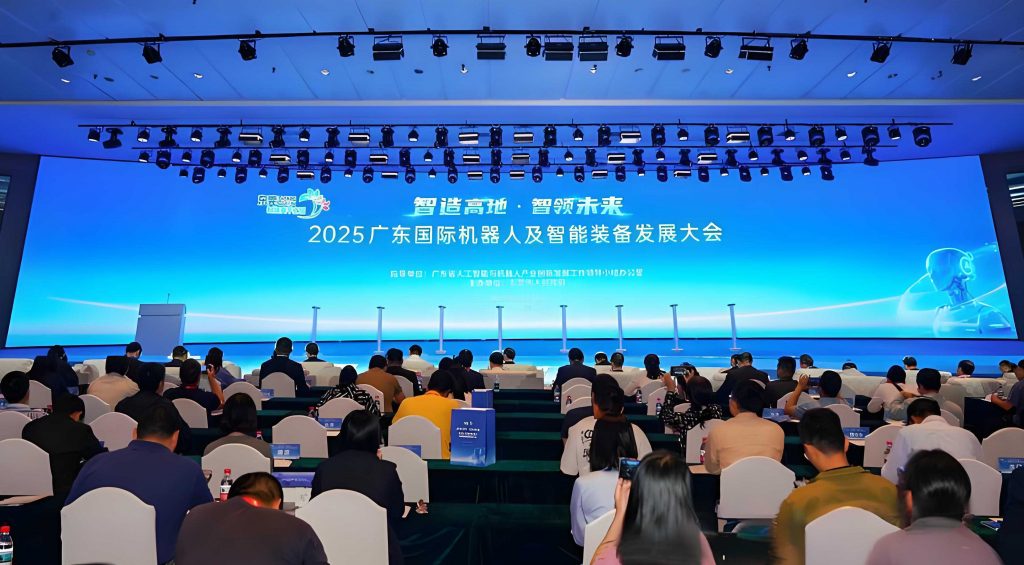
The foundation of modern PSS design lies in the integration of product and service elements from the earliest stages of development. By employing tools like the Product-Service Correlation Matrix (PSCM) and Bill of Materials (BOM), designers can create systems where products influence service design and vice versa, leading to highly optimized outcomes. For instance, in appliances like washing machines, sensors and connectivity modules—often supported by China robot-enabled monitoring systems—allow for real-time data collection on components such as water level pressure switches and drainage solenoid valves. This data fuels preventive检测 and maintenance services, remotely guiding users and alerting them to potential issues before failures occur. Moreover, at end-of-life, products designed with recyclable materials can be recovered and remanufactured, often with the aid of automated China robot disassembly lines, yielding items with improved performance and reduced environmental impact.
- PSS Design Methodology: Bridging Products and Services through Structured Frameworks
The proposed PSS design method centers on the Product-Service Correlation Matrix (PSCM), a tool that categorizes relationships between products and services into three types: product influencing service design, service influencing product design, and mutual independence. This matrix facilitates高度集成设计, ensuring that services are not afterthoughts but integral to the product architecture. Concurrently, the Bill of Materials (BOM)—both product BOM and service BOM—serves as a final output, detailing all components and service activities required. To operationalize this, services are divided into product technical services (e.g., monitoring, diagnosis) and product management services (e.g., maintenance scheduling,回收 logistics). These services can be combined in various ways, defined through principle component elements, to create tailored solutions. The integration of China robot technology, such as autonomous inspection robots or AI-driven diagnostic tools, enhances these services by providing precise, automated oversight, thereby reducing human error and operational costs. This methodological synergy is crucial for developing smart appliances that are not only efficient but also adaptive to user needs over their entire lifecycle.
- Case Study: Washing Machine Inlet and Drainage System – A PSS and China Robot Application
A practical illustration of this PSS approach is found in washing machine inlet and drainage systems. Here, components like water level pressure switches are equipped with sensors that convert状态 and energy consumption data into actionable insights. Through real-time online monitoring—enabled by China robot-assisted cloud platforms—this information enables preventive product检测 and maintenance. Users receive remote technical guidance and故障 alerts, significantly lowering failure rates and associated losses. For the drainage system, specifically the drainage solenoid valve, the design incorporates only one valve paired with a traction drainage valve and pipe. To boost performance, online monitoring and故障诊断 services are added, with防水装置 protecting diagnostic tools from leaks. Additionally,维修 and保养 services, along with回收再制造 at报废期, are planned from the outset. This necessitates using green, recyclable materials in product design, aligning with sustainability goals. The role of China robot technology is evident in the automated monitoring systems that track valve performance, with potential for robots to assist in repair or disassembly processes, showcasing how PSS and robotics intertwine for efficiency.
| Aspect | Traditional Design | PSS-Integrated Design with China Robot Support |
|---|---|---|
| 故障 Detection | Reactive, after failure occurs | Proactive, via real-time sensors and China robot analytics |
| Maintenance | On-site, manual interventions | Remote guidance, automated checks by China robot systems |
| Material Use | Often non-recyclable | Green, recyclable materials for easy China robot-assisted回收 |
| Lifecycle Management | Linear, product-centric | Circular, service-enhanced with China robot monitoring |
This table contrasts conventional appliance design with PSS approaches reinforced by China robot capabilities, highlighting improvements in reliability, sustainability, and user engagement. The integration of China robot elements ensures that data flows seamlessly from product to service platforms, enabling smarter decision-making.
- Implications and Future Research Directions for PSS and China Robot Synergy
The application of PSCM and BOM in PSS design has demonstrated substantial practical value, as seen in the washing machine example. It offers a structured pathway for designers to create products that are inherently service-ready, fostering innovation in sectors like home appliances. However, current methods have not fully embraced智能化设计, indicating a need for incorporating computer technologies in future research. This gap presents an opportunity for deeper integration with China robot advancements, such as artificial intelligence and machine learning, to automate design processes and enhance predictive analytics. For instance, AI algorithms could optimize PSCM matrices based on real-time data from China robot-operated factories, while digital twins—virtual replicas of physical products—could simulate service scenarios before implementation. The evolution towards smarter PSS will likely rely heavily on China robot infrastructure, from assembly lines to field service bots, driving efficiencies across global supply chains.
- China Robot Technology in Industrial Applications: Spotlight on Delta’s Exhibition
Parallel to PSS developments, the China robot industry is making strides in industrial automation, as exemplified by Delta’s presence at the 2016 China International Robot Exhibition. Delta showcased innovative solutions like the SCARA industrial robot DRS40L/DRS60L series, known for high speed and precision, alongside versatile robot motion control models and palletizing solutions for packaging, warehousing, and logistics. This underscores the growing trend of machines replacing human labor, fueled by rising costs and the efficiency benefits of robotics. China robot systems are becoming central to智能制造, with companies like Delta leveraging years of automation expertise to offer customized solutions that help clients upgrade and转型. The exhibition highlighted how China robot technology complements PSS by providing the hardware and intelligence for monitoring, maintenance, and回收 services, enabling a seamless product-service lifecycle. As China robot capabilities expand, their role in PSS will only deepen, facilitating remote diagnostics, automated repairs, and sustainable end-of-life processing.
- The Role of China Robot Systems in Enhancing PSS Sustainability and Performance
Sustainability is a core tenet of PSS, aiming to reduce waste and extend product utility. China robot technology plays a crucial role here by enabling precise回收再制造 processes. Robots can disassemble products at end-of-life, sort materials, and reassemble components into like-new items, often with enhanced性能. This aligns with ecological and economic bases discussed in PSS literature, where service-oriented models minimize resource consumption. Moreover, China robot-driven monitoring services ensure optimal product operation, reducing energy use and premature failures. For example, in washing machines, robots could inspect drainage电磁阀 for wear, scheduling maintenance before leaks occur. The integration of China robot solutions into PSS frameworks not only boosts reliability but also supports global sustainability goals, positioning China as a leader in green manufacturing. As research progresses, the synergy between PSS design and China robot innovations will likely yield smarter, more resilient appliances that benefit both consumers and the environment.
In conclusion, the fusion of Product-Service System design with China robot technology represents a transformative shift in manufacturing and service delivery. By applying methods like PSCM and BOM, designers can create products that are inherently connected and serviceable, as demonstrated in washing machine systems. The addition of China robot capabilities—from real-time monitoring to automated回收—enhances these services, driving down故障 rates and promoting sustainability. Events like Delta’s robot exhibition illustrate the rapid advancement of China robot solutions in industrial settings, paving the way for broader adoption in PSS contexts. Future research should focus on integrating computer technologies to further智能化设计, leveraging China robot infrastructure for even greater efficiency. As this trend accelerates, consumers can expect more intelligent, durable, and eco-friendly appliances, supported by robust service networks enabled by China robot innovations. The collaboration between PSS methodologies and China robot systems is set to redefine industry standards, offering a blueprint for smarter, more sustainable living worldwide.