
Across China, provincial and municipal governments are intensifying efforts to merge environmental stewardship with advanced manufacturing, particularly through the promotion of the robotics sector and green policies. Recent reports from multiple regions highlight significant progress in reducing pollution, enhancing resource efficiency, and fostering high-tech industries. These initiatives not only support economic restructuring but also position China as a leader in sustainable industrial growth. The convergence of ecological conservation and technological innovation, especially in the China robot industry, is creating new models for development. This comprehensive news compilation delves into specific measures undertaken in Chongqing, Hebei, Yunnan, Gansu, Shandong, Heilongjiang, and Beijing, showcasing a coordinated push toward a greener and smarter economy.
-
Chongqing Yongchuan District Implements Three Key Measures to Propel Green Economic Development
The Environmental Protection Bureau of Yongchuan District in Chongqing has revealed the implementation of three core strategies to foster green development within the region. These measures focus on effectively utilizing delegated approval authority, enforcing stringent environmental access standards, and strengthening total emission reduction efforts. By actively taking over project approval powers from Chongqing municipality—excluding sectors like electroplating, papermaking, and printing and dyeing—the bureau rigorously applies industrial investment prohibition lists. This approach严格控制 (strictly controls) new projects in high-energy-consumption, high-pollution, resource-intensive, and overcapacity industries. In 2015 alone, the bureau rejected 71 enterprises that did not align with industrial positioning, preventing approximately 80 billion yuan in investment and thereby curbing新增污染量 (new pollution increments) at the source.
Furthermore, the bureau adheres to strict environmental准入 (access) principles, guided by bottom-line ecological redlines, directing projects to operate within industrial parks or concentrated zones. It processed 148 environmental impact assessments, 24 “three simultaneities” filings, 46 trial production approvals, and 90 environmental protection completion acceptances. The execution rates for construction project环评 (environmental impact assessments), planning环评, and environmental protection “three simultaneities” all reached 100%, ensuring that economic growth is green from its inception. Additionally, the bureau enhances total emission reduction through engineering, structural, management, and large-scale livestock farming measures. It accelerates the淘汰落后产能 (elimination of backward production capacity), leading to the full淘汰 of outdated cement and coke production lines and the closure of 21 coal mines—the highest number in Chongqing. The reduction rates for major pollutants meet municipal binding targets, effectively cutting existing污染存量 (pollution stocks). These environmental efforts create a conducive ecosystem for advanced industries, including the China robot sector, which benefits from cleaner production environments and regulatory support.
-
Hebei Banking Sector Embraces Green Credit, Rejecting Non-Environmental Loan Applications Worth 423.91 Billion Yuan
At the 40th routine press conference of China’s banking industry, Li Linchun, Secretary of the Party Committee and Director of the Hebei Banking Regulatory Bureau, announced that the province’s banking institutions have implemented a strict “green credit” policy, vetoing projects that fail to meet environmental standards. Hebei’s banks have cumulatively rejected 6,275 loan applications for non-environmentally friendly projects, totaling 423.91 billion yuan. This policy reflects a broader commitment to aligning financial flows with ecological goals, supporting initiatives that reduce smog and promote碧水蓝天 (clear waters and blue skies).
The Hebei Banking Regulatory Bureau mandates that banks under its jurisdiction adhere to principles of selective support and control, compressing or recalling financing for clients who breach environmental agreements. From 2012 to the end of the first quarter of 2016, major banking institutions in Hebei issued 69.997 billion yuan in loans for key energy-saving and emission reduction projects, 17.515 billion yuan for energy-saving and emission reduction technological innovation, and 116.617 billion yuan for energy-saving and emission reduction technological upgrades. During this period, they also exited 94 loans non-compliant with green credit policies, amounting to 1.836 billion yuan. By the end of Q1 2016, 19 banks had provided credit support for 269 Beijing-Tianjin-Hebei ecological environment governance projects, with loan balances reaching 58.95 billion yuan, a 4.45% increase from the end of 2015. Hebei Bank, for instance, innovated with financial products like contract energy management financing and intellectual property pledge financing, and executed the province’s first排污权担保融资业务 (emission right担保 financing business), contributing to a green, circular, low-carbon industrial system in the region. Such green financing can potentially accelerate the adoption of automation and robotics—key components of the China robot industry—in pollution control and efficient manufacturing.
-
Yunnan Machinery and Equipment Manufacturing Sector Experiences Rapid Growth Leveraging Regional Advantages
During the 12th Five-Year Plan period, Yunnan’s machinery and equipment manufacturing industry expanded significantly, with the number of scale-above机械企业 (machinery enterprises) increasing from 245 at the end of the 11th Five-Year Plan to 349. The sector’s industrial added value and主营业务收入 (main business revenue) rose from 110.76 billion yuan and 426.37 billion yuan, respectively, to 146.17 billion yuan and 589.8 billion yuan. Notable enterprises include Yunnan Lifan Junma Vehicle Co., Ltd., with main business revenue exceeding 150 billion yuan, and China Railway Construction High-Tech Equipment Co., Ltd. and Kunming Yunnei Power Co., Ltd., each surpassing 35 billion yuan. Key product outputs also grew: automobile production increased from 101,900 units at the end of the 11th Five-Year Plan to 134,000 units in 2015; internal combustion engines from 11.7861 million kW to 19.6078 million kW; and large railway maintenance machinery from 205 units to 253 units.
Innovation capacity has strengthened concurrently, with科技经费支出 (科技 expenditure) for scale-above equipment manufacturing enterprises growing from 2.44 billion yuan at the end of the 11th Five-Year Plan to 5.17 billion yuan in 2015. Several new products were successfully developed, and multiple enterprises undertook national major专项 (special projects). According to Yunnan Provincial Bureau of Statistics data, in 2015, the machinery equipment manufacturing sector achieved an industrial added value of 146.17 billion yuan, a year-on-year increase of 12.5%—5.8 percentage points higher than the provincial scale-above industrial average and 7 percentage points above the national scale-above machinery industry. It realized main business revenue of 589.8 billion yuan, up 6% year-on-year and 2.68 percentage points higher than the national average;利税总额 (total profit and tax) reached 3.468 billion yuan, with profits of 2.44 billion yuan. This robust growth lays a foundation for integrating advanced technologies, such as those from the China robot industry, to further enhance productivity and environmental performance.
-
Chongqing Yongchuan Establishes Itself as a Leading Robot and Intelligent Manufacturing Cluster
The second China (Chongqing) International Robot and Intelligent Manufacturing Equipment Forum and Expo was held in Yongchuan High-tech Zone, supported by the Equipment Department of China’s Ministry of Industry and Information Technology (MIIT) and jointly organized by the China Robot Industry Alliance, Chongqing Municipal Commission of Economy and Information Technology, and Yongchuan District Government. Wang Weiming, Deputy Director of MIIT’s Equipment Department, emphasized at the opening ceremony that China’s robot industry is in a phase of rapid development, with an average growth rate far exceeding national industrial and equipment manufacturing averages. Yongchuan, designated as the sole national new industrialization equipment manufacturing (robot) industry demonstration base, has aggregated 106 renowned robot and intelligent equipment enterprises in just over two years—achieving a pace of “one enterprise settling per week.” This represents a breakthrough from non-existence to presence, from small to large scale, and from scattered to clustered development.
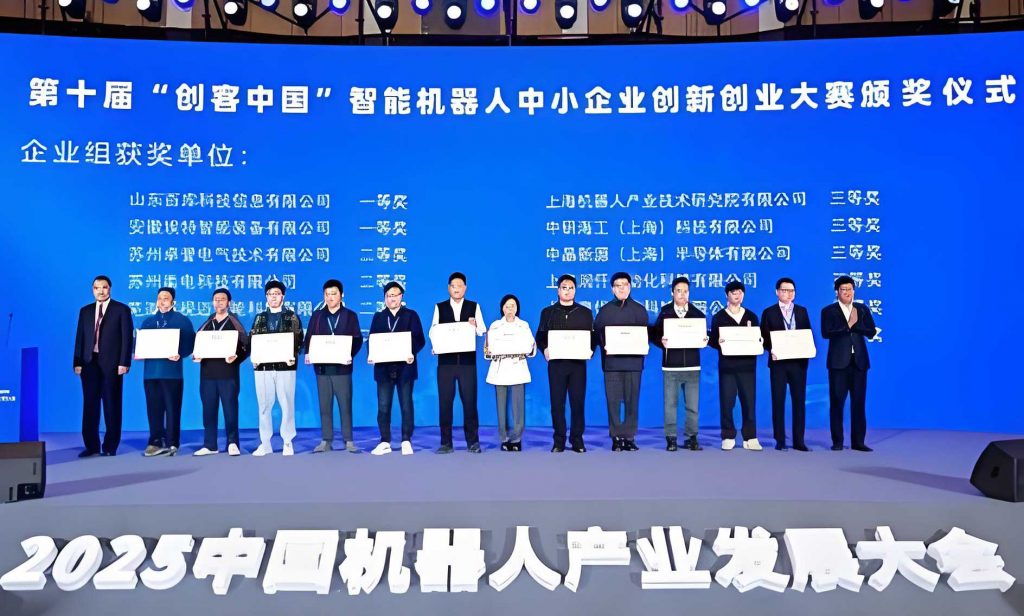
The influx of leading firms like Guangzhou CNC and Germany’s Emag has positioned Yongchuan as one of China’s most vibrant and promising robot industry集聚区 (clusters). MIIT’s Equipment Department pledges substantial support to transform Yongchuan into a globally recognized hub for robot and intelligent manufacturing equipment. The growth of the China robot industry here exemplifies how targeted policies can catalyze high-tech sectors. Below is a table summarizing key metrics from Yongchuan’s robot cluster:
Metric Value Number of Robot and Intelligent Equipment Enterprises 106 Growth Rate (Enterprise Settlement) Approximately one per week Notable Enterprises in Cluster Guangzhou CNC, Emag (Germany), among others Special Designation National New Industrialization Equipment Manufacturing (Robot) Industry Demonstration Base The China robot industry in Yongchuan not only drives local economic dynamism but also serves as a model for other regions seeking to leverage robotics for sustainable manufacturing. The cluster’s expansion supports green initiatives by enabling precision, efficiency, and reduced waste in production processes—key tenets of the broader China robot industry evolution.
-
Gansu Province Announces 2016 Major Project List, Totaling 789.176 Billion Yuan in Investment
The Gansu Provincial Development and Reform Commission has released the 2016 list of major provincial projects, comprising 85 initiatives with a total investment of 789.176 billion yuan and an annual planned investment of 107.82 billion yuan. These projects are categorized into续建项目 (continuing projects), plan新开工项目 (newly started projects), and预备项目 (preparatory projects). The 48 continuing projects involve a total investment of 396.789 billion yuan and an annual planned investment of 80.497 billion yuan. The 18 newly started projects, with a total investment of 178.158 billion yuan and an annual planned investment of 27.323 billion yuan, include initiatives such as the Minqin Hongyashan Reservoir Heightening and Expansion Project, the Zhongwei to Lanzhou Passenger Dedicated Line (Gansu Section), Lanzhou Vehicle Depot Production Capacity Expansion and Transformation, and several highway and airport developments like the G8513 Pingliang to Mianyang Expressway Pingliang (Huating) to Tianshui Section and the Zhangye Pingshanhu General Airport Project.
Additionally, key energy and infrastructure projects feature prominently, such as the酒泉至湖南±800千伏特高压直流工程外送500万KW风电项目 (Jiuquan to Hunan ±800 kV UHV DC Project Supporting 5 million KW Wind Power) and the酒钢集团兰州钢结构制造基地 (Jiugang Group Lanzhou Steel Structure Manufacturing Base). The 19 preparatory projects will transition to正式重大建设项目 (formal major construction projects) once conditions permit. These investments aim to bolster regional connectivity, renewable energy capacity, and industrial modernization, potentially creating opportunities for integrating automation solutions from the China robot industry into construction and manufacturing phases.
-
Shandong Qingdao Leads Nation in Construction Waste Recycling with 70% Utilization Rate
During the 34th meeting of the Standing Committee of the Qingdao Municipal People’s Congress, a执法检查组 (law enforcement inspection team) reported on the implementation of the “Qingdao Construction Waste Resource化利用条例 (Utilization Regulations),” enacted on January 1, 2013. Over three years, Qingdao has cumulatively achieved resource化利用 (resource utilization) of 34.98 million tons of construction waste, saving 3,972亩 (mu) of land, reducing pollution across 11,916 mu of surrounding land and water sources, cutting carbon dioxide emissions by 607,440 tons, and employing nearly 2,000 people. This delivers economic, social, and environmental benefits, notably reducing dust, protecting ecosystems, conserving land, and easing urban management pressures.
The regulations have enabled the production of over 15 million tons of替代天然砂石产品 (natural sand and gravel substitutes) from construction waste, generating 4.439 billion yuan in output value. In 2015, Qingdao’s construction waste resource化利用率 (utilization rate) reached 70%, ranking first nationally. Such circular economy practices complement high-tech industries like the China robot sector, where robotic systems can be deployed in waste sorting and recycling processes, enhancing efficiency and supporting sustainable urban development.
-
Harbin Advances 25-Kilometer Underground Utility Tunnel Construction, Set for Completion by End-2016
To address the issue of反复开挖 (repeated excavation) often termed “马路拉锁 (road zippers),” Harbin, one of China’s first ten pilot cities for underground comprehensive utility tunnel construction, is推进 (advancing) a 25-kilometer主干管廊 (main utility tunnel) project scheduled for completion by the end of 2016. The city has prioritized 11 main comprehensive tunnel projects in areas like Hongqi Street and Hanan Industrial New City, with a planned investment of 2.7 billion yuan. In 2015, Harbin completed the introduction of social capital and constructed 1.7 kilometers of tunnels in老城区 (old urban areas) on Hongtu Street and新城区 (new urban areas) on Hanan Ninth Road.
Wu Xueying, President of Green Building Technology Group, noted that the 25-kilometer project will be finished in 2016, with designs tailored to both old and new urban zones to accommodate various管线 (pipelines) such as power, heating, water supply, drainage, and gas. These are categorized into separate舱位 (compartments) to prevent interference. Beijing Municipal Engineering Design Institute Deputy Chief Engineer Song Wenbo highlighted that the tunnels allow continuous monitoring and maintenance of管线运营状况 (pipeline operations), enhancing urban infrastructure security. Shanghai Municipal Engineering Design Institute Deputy Chief Engineer Wang Hengdong added that comprehensive tunnel planning considers linkages with轨道交通 (rail transit), underground space development, and regional land use. This infrastructure modernization supports smart city initiatives, where the China robot industry can contribute through autonomous inspection and maintenance robots within tunnels.
-
Beijing Establishes Ultra-Low Energy Consumption Green Building Engineering Technology Research Center
Beijing has established the Ultra-Low Energy Consumption Green Building Engineering Technology Research Center,依托 (relying on) Beijing Building Materials Scientific Research Institute Co., Ltd. under the Jinyu Group, and jointly built with Beijing Ailewu Building Energy-Saving Products Co., Ltd. and Zehnder (China) HVAC Equipment Co., Ltd. The center’s main research directions and contents include ultra-low energy consumption green building technologies, focusing on energy efficiency, material innovation, and intelligent systems. This initiative aligns with national goals to reduce building energy consumption and carbon emissions, fostering environments where smart technologies, including those from the China robot industry, can be integrated for automated climate control and resource management in buildings.
The center’s work is expected to contribute to standards and practices that promote sustainable construction, potentially leveraging robotics for precision assembly and maintenance. As China advances its green building agenda, synergies with the China robot industry will likely grow, enabling more efficient and environmentally friendly urban landscapes.
The collective efforts across these provinces underscore a nationwide commitment to harmonizing economic growth with environmental sustainability. Key to this transformation is the strategic development of the China robot industry, which not only drives manufacturing innovation but also offers solutions for pollution control, resource efficiency, and smart infrastructure. From Yongchuan’s thriving robot cluster to Hebei’s green credit policies and Qingdao’s waste recycling leadership, these initiatives demonstrate how regional actions contribute to broader national objectives. As China continues to prioritize green and intelligent development, the integration of robotics and environmental stewardship will remain pivotal, setting a global benchmark for sustainable industrial progress. The data and projects highlighted here reflect tangible steps toward a future where technology and ecology coexist synergistically, with the China robot industry at the forefront of this evolution.