
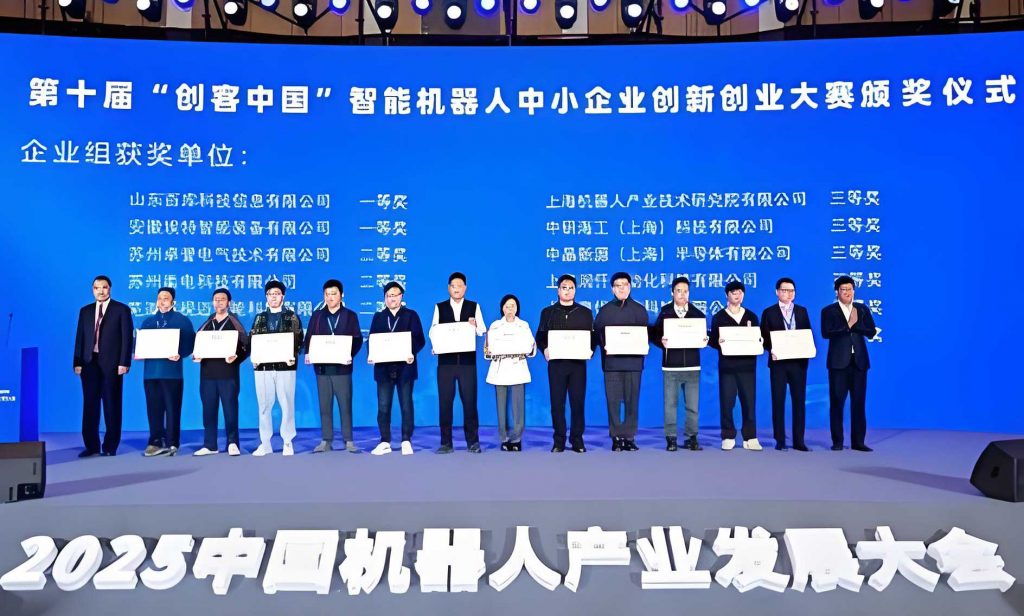
As the world’s largest and most dynamic market for industrial automation, China represents the central arena for innovation and deployment of robotic technologies. My analysis, drawn from extensive observation of this market, reveals an ecosystem in rapid flux—one where domestic champions are ascending, international giants are deepening their roots, and technological convergence is redefining application boundaries. The post-pandemic era has not merely restored demand but has accelerated a fundamental shift towards intelligent, flexible manufacturing, placing the China robot at the heart of global industrial transformation.
The resilience and subsequent surge of the Chinese manufacturing sector in 2020 provided a powerful catalyst for the robotics industry. While global supply chains faced disruptions, domestic production and demand for automation solutions entered a phase of explosive growth. This period underscored the strategic importance of robotic automation for supply chain security and operational resilience. The performance of the China robot market is no longer just an indicator of automotive sector health but a broad barometer for the technological upgrading of general industries.
I. Current State of the China Robot Market and Industrial Development
The quantitative story of the China robot market in the recent period is one of robust recovery and strategic deepening. National data indicates significant year-on-year growth in production volume, a trend that has solidified China’s position as the paramount market for industrial robotics. This growth is structurally supported by several key phenomena, which I have summarized in the following analysis.
1. Dominance and Deepening of International Brands. Leading global robot manufacturers have not only maintained but expanded their footprint in China. Their strategies have evolved from pure sales and distribution to localized manufacturing, R&D, and even the debut of globally significant products within the China market. This reflects a recognition of China’s unique application demands and its role as a primary innovation testbed.
| Manufacturer Type | Representative Market Activity & Performance |
|---|---|
| Global Robot Giant A | Reported sales growth in China exceeding 30%, reaching a historical peak in new installations. |
| Global Robot Giant B | Executed a major order worth billions of RMB shortly after pandemic onset; annual output showed substantial increase. |
| Global Robot Giant C | While global orders declined, the China market saw a 7% year-on-year increase in order value in a key quarter. |
| Domestic Leader X | Achieved over 80% revenue growth in the first three quarters, targeting a yearly shipment increase exceeding 25%. |
| Domestic Leader Y | Reported a quarterly revenue increase of approximately 20%, indicating strong market traction. |
The commitment is further evidenced by major capital investments. New “future factories” and expanded production bases, announced and underway by international players, are designed to cater specifically to the requirements of Chinese manufacturers. This local-for-local strategy is crucial for responding with agility to the fast-paced China robot application landscape.
2. The Ascent of Domestic Robotics Forces. The most compelling narrative is the rapid rise of Chinese robot companies across the value chain. Domestic brands are steadily gaining market share, reducing the historical gap with foreign counterparts. This progress is fueled by significant capital inflow. In 2020 alone, the industrial robotics segment accounted for a major portion of total robotics financing in China, with dozens of deals amounting to billions of RMB. This influx of capital is accelerating R&D, scaling production, and enabling more competitive pricing.
3. Expansion into New Application Verticals. The traditional dominance of the automotive sector in robot consumption has plateaued, giving way to explosive growth in general industries. My assessment indicates that over 60% of new demand增量 now originates from sectors like electronics (3C), new energy (particularly battery manufacturing), and metal fabrication. Furthermore, pioneering applications are emerging in ceramics, furniture, pharmaceuticals, and even healthcare—the latter being notably accelerated by pandemic-driven automation needs. The China robot is thus becoming a versatile tool for productivity enhancement across the economic spectrum.
4. Formation of a Complete Indigenous Supply Chain. China has successfully cultivated a comprehensive industrial robotics ecosystem. The progress is most evident in core components. While challenges remain in high-precision RV reducers, domestic manufacturers have achieved mass production and competitive performance in harmonic reducers, servo systems, and controllers. The existence of this complete chain, from core parts to本体制造 to system integration, enhances supply security and provides a foundation for innovation tailored to local needs.
II. Structural and Technological Characteristics of the China Robot Industry
The development of the China robot industry exhibits distinct characteristics in market structure, application patterns, and technological direction. Understanding these is key to forecasting its future trajectory.
1. Market Structure Dynamics.
- Core Component Specialization: Specialized manufacturers of precision reducers and servo systems have emerged as pivotal nodes in the产业链. Their technological breakthroughs and scaling capabilities directly constrain or enable the performance and cost-competitiveness of domestic robot本体.
- Proliferation of Niche Champions: Beyond traditional articulated arm makers, a new wave of China robot companies has risen in specific segments: Delta (parallel) robots, SCARA robots, and particularly in collaborative and Autonomous Mobile Robots (AMRs). These “New Forces” are often agile, software-focused, and are driving innovation in user-friendly interfaces and specific application solutions.
- Diverse Business Models: A contrast exists in manufacturing philosophy. Some global leaders adhere to highly automated, large-scale, standardized production in their home countries (exemplified by the “robot-making-robot” model). Others, including many domestic players, employ more flexible,订单-driven, and human-collaborative assembly lines. In product strategy, a segmentation is visible, with some firms focusing intensely on a single robot type (e.g., collaborative arms).
- System Integrator Ecosystem: The downstream system integration layer is the most crowded, comprising thousands of companies in China. They possess the crucial local application knowledge and provide the tailored solutions that connect standardized robot本体 to the unique processes of Chinese factories. This segment is a significant driver of adoption and innovation at the application level.
| Value Chain Segment | Key Domestic Player Categories |
|---|---|
| Core Components | Harmonic Reducer Mfrs.; RV Reducer Mfrs.; Servo System Providers; Controller & Software Developers. |
| Robot本体制造 | Articulated Robot Mfrs.; SCARA Robot Mfrs.; Delta (Parallel) Robot Mfrs.; Collaborative Robot (Cobot) Mfrs.; Autonomous Mobile Robot (AMR) Mfrs.; Heavy-Payload Robot Mfrs. |
| System Integration | Automation Solution Providers for welding, painting, assembly, palletizing, machine tending, and complete turnkey lines across industries. |
2. Application Landscape Evolution. The deployment of robots in China is characterized by increasing diversity and complexity.
- Morphological and Configurational Diversity: Applications demand not just standard 6-axis articulated arms but also SCARA, Delta, gantry, and mobile robots. Installation methods have evolved beyond floor-mounting to include wall- and ceiling-mounting, track-mounted systems, and the integration of robotic arms on mobile platforms (AMR/AGV), creating highly flexible work cells.
- Multi-Robot Coordination: In complex tasks like automotive body-in-white welding or painting, the coordinated operation of multiple robots is standard. This requires sophisticated synchronization software and hardware, a capability now standard among leading China robot solution providers. The coordination efficiency can be modeled as a function of the number of robots $n$ and their communication latency $l$:
$$ T_{cycle} = f(n, l, \theta_1, \theta_2, … \theta_n) $$
Where $T_{cycle}$ is the total task cycle time and $\theta_i$ represents the operational parameters of robot $i$.
3. Pervasive Technological Trends. Three interconnected technological vectors are defining the next generation of China robot capabilities.
a) The Path to Intelligence: The inherent “blind” and “rigid” nature of traditional industrial robots is being overcome through sensor fusion. The integration of machine vision (2D & 3D), force-torque sensing, and tactile sensors is paramount. This sensory endowment transforms a pre-programmed machine into an adaptive system capable of handling variability. The intelligent China robot can perform complex bin-picking, force-controlled assembly, and real-time quality inspection. This intelligence function $I$ can be conceptualized as:
$$ I = \sum_{s=1}^{k} w_s \cdot C(S_s) $$
Where $S_s$ represents different sensor inputs (vision, force, etc.), $C(\cdot)$ is the processing capability for that input, and $w_s$ is the contextual weighting factor.
b) From Collaboration to Coexistence (Cobots to Co-bots): Collaborative robots (cobots) are evolving beyond safe physical proximity (“collaboration”) towards true intuitive interaction and shared task execution (“coexistence” or “共融”). This involves natural language programming, gesture recognition, and AI-driven task learning. The new generation China robot cobot is designed to be a responsive partner, not just a safeguarded tool. The safety and efficiency parameter $SE$ for a human-robot team can be expressed as an optimization:
$$ \max SE = \alpha \cdot Safety_{Margin}(d, F) + \beta \cdot Throughput_{Team}(T_h, T_r) $$
Subject to: $d \ge d_{min}$, $F \le F_{max}$.
Here, $d$ is distance, $F$ is force, $T_h$ and $T_r$ are human and robot task times, and $\alpha, \beta$ are priority coefficients.
c) The Mobility Revolution (AMRs, Forklift AGVs, Case-Handling Robots): The growth of intelligent logistics within smart factories has made mobile robots a primary focus. Three subtypes are critical:
- Autonomous Mobile Robots (AMRs): Using advanced SLAM (Simultaneous Localization and Mapping) technology, primarily LiDAR-based, these robots navigate dynamic environments without fixed infrastructure. Their navigation certainty $P_{nav}$ in a changing map $M_t$ can be modeled: $$ P_{nav} = \int SLAM(Sensor_t, M_{t-1}) \, dt $$
- Forklift AGVs: These automate material handling in warehouse and production line contexts, capable of high-stacking and handling heavy loads, filling a crucial niche between conveyor belts and mobile carts.
- Case-Handling Robots: Operating on a “goods-to-person” principle, these robots manage individual bins or totes, dramatically increasing storage density and picking efficiency in e-commerce and distribution centers. The throughput gain $\Delta \Phi$ versus manual picking is significant: $$ \Delta \Phi = N_{bots} \cdot v_{bot} \cdot (E_{pick}^{bot} – E_{pick}^{human}) $$ where $v$ is speed and $E_{pick}$ is picking efficiency.
| Robot Type | Key Technology | Primary Advantage | Typical Application |
|---|---|---|---|
| Autonomous Mobile Robot (AMR) | LiDAR/Visual SLAM, Dynamic Path Planning | High flexibility, no fixed infrastructure needed | Material delivery in flexible assembly lines |
| Forklift AGV | Laser guidance or Natural Feature Navigation | Heavy payload, high stacking, replaces manual forklifts | Warehouse pallet handling, loading dock operations |
| Case-Handling Robot | Dense storage algorithms, bin-level control | High storage density, fast item retrieval | E-commerce fulfillment centers, pharmaceutical distribution |
III. Outlook and Future Trajectory for the China Robot Ecosystem
The future of the China robot industry is poised at the convergence of immense market potential, accelerated technological innovation, and strategic national priorities. Several definitive trends will shape the coming decade.
1. Sustained and Broad Market Growth. The fundamental drivers remain powerful. Robot density (units per 10,000 employees) in Chinese manufacturing, while growing rapidly, still lags significantly behind leading industrialized nations. This gap, $D_{gap}$, represents a vast addressable market:
$$ D_{gap} = \rho_{target} – \rho_{current} $$
where $\rho$ represents robot density. Furthermore, the post-pandemic urgency for resilient, automated production systems ensures sustained investment. The market size $S(t)$ can be projected with a compounded growth model:
$$ S(t) = S_0 \cdot (1 + r_{auto} + r_{tech} + r_{policy})^t $$
Here, $r_{auto}$, $r_{tech}$, and $r_{policy}$ are growth rates attributed to automation demand, new technology adoption, and policy support, respectively.
2. Accelerated Domestic Substitution and Segment Diversification. The trend of increasing market share for domestic China robot brands will continue and likely accelerate, particularly in the mid-range performance segment and in general industry applications. The国产化 rate $R_{local}(t)$ for core components and complete systems is a function of cumulative R&D investment $I_{R&D}$ and manufacturing scale $M$:
$$ R_{local}(t) \propto \log(I_{R&D}(t) \cdot M(t)) $$
Application frontiers will expand deeper into food & beverage, textiles, construction, and agriculture, driven by tailored solutions from domestic system integrators.
3. The Era of “Coexistence” and Cloud Robotics. The evolution towards robots that can seamlessly perceive, understand, and adapt to human co-workers and unstructured environments will define high-end innovation. Concurrently, the concept of cloud robotics will gain traction. By offloading heavy computation for AI, path planning, and system-wide optimization to the cloud, individual robots can become lighter, cheaper, and more intelligent. A cloud-connected China robot fleet enables swarm optimization and centralized learning. The cloud-based control function for a robot $i$ can be represented as:
$$ Action_i = Cloud\_Brain(State_i, State_{Fleet}, Global\_Objective) $$
This architecture allows for real-time, factory-wide production rescheduling and predictive maintenance orchestration.
4. Exponential Growth of Mobile Robotics and Global Expansion. The mobile robot segment within the China robot landscape is forecast to maintain the highest growth rate. The demand for flexible, intelligent intralogistics is insatiable across all manufacturing and distribution sectors. Moreover, leading Chinese AMR and AGV manufacturers have begun to successfully export their solutions, indicating the maturation and global competitiveness of this segment. Their overseas revenue $X(t)$ may follow an S-curve adoption model in key markets:
$$ X(t) = \frac{K}{1 + e^{-b(t – t_0)}} $$
where $K$ is the market potential, $b$ is the growth rate, and $t_0$ is the inflection point.
5. Deep Fusion with Disruptive Technologies. The next-generation China robot will be a product of convergence. The integration of 5G (enabling real-time cloud control and massive sensor data transfer), Edge Computing (for low-latency decision making), Advanced AI/Computer Vision, and Digital Twin technology (for simulation and virtual commissioning) will create robots that are more connected, predictive, and easier to deploy and maintain. The overall capability index $CI$ of a future robot system could be expressed as a multiplicative function of these enabling technologies:
$$ CI = \gamma \cdot (Perception_{AI} \cdot Connectivity_{5G} \cdot Analysis_{Edge/Cloud} \cdot Model_{DigitalTwin}) $$
In conclusion, the trajectory for the China robot industry is unequivocally toward greater intelligence, flexibility, and ubiquity. Propelled by a vast domestic market undergoing digital transformation, strategic policy support, and a vibrant ecosystem of innovators, China is not only the world’s foremost application ground for industrial robotics but is rapidly becoming a leading source of technological advancement and novel solutions that will shape the future of global manufacturing.