
Under the guidance of national strategies for industrial modernization and technological self-reliance, a pivotal moment for the robotics sector occurred with the establishment of a central collaborative body. The formation of the China Robot Industry Alliance (CRIA) marks a significant institutional advancement, designed to consolidate efforts across the entire ecosystem of robotics development and application within the country. This initiative represents a concerted move to harness collective expertise, streamline resources, and elevate the global standing of the China robot domain.
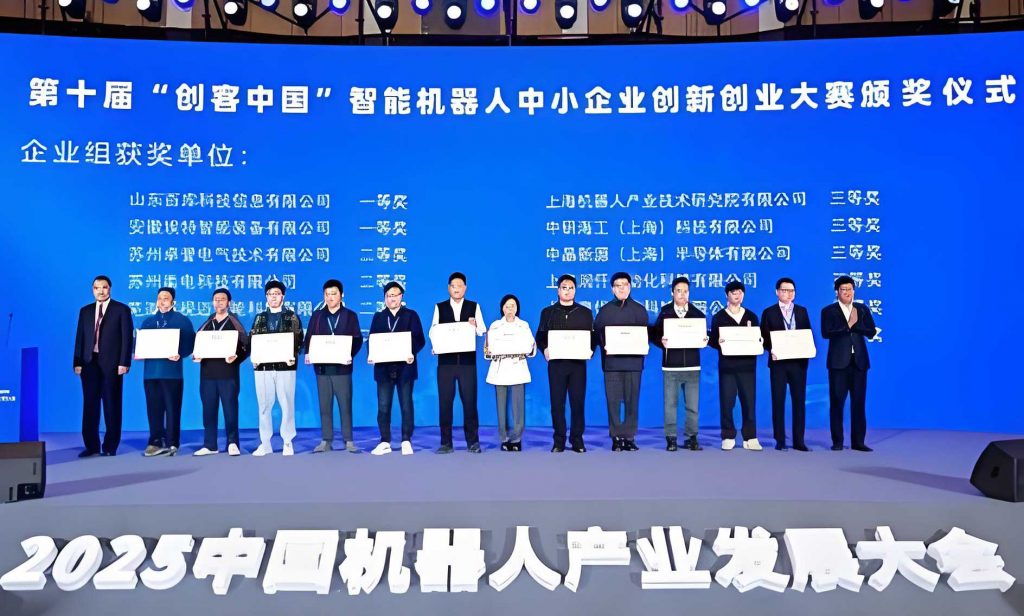
The foundational meeting saw participation from a broad spectrum of stakeholders, including government advisory bodies, industrial associations, research institutions, and leading enterprises. The alliance was structured with a clear governance model, electing a presiding unit, an executive chair, and several vice-chair units to steer its objectives. The initial membership comprised numerous entities, reflecting the wide-ranging interest and commitment to fostering a robust China robot industry. The alliance’s core identity is that of a national, non-profit consortium. It voluntarily brings together organizations dedicated to every facet of the robot lifecycle—from fundamental R&D and manufacturing to application services and end-use. This includes enterprises, universities, research institutes, and user units, creating a synergistic platform for industry-academia-research-application integration.
The guiding philosophy of the alliance is firmly rooted in a market-oriented, enterprise-led approach, aligned with overarching national industrial policies. Its mission is to pool and coordinate critical industry resources comprehensively. The ultimate goals are to enhance the innovation, manufacturing, and service capabilities of member organizations, accelerate the healthy development of the complete industrial chain for China robot technologies, cultivate the domestic robot market, and bolster international competitiveness. The scope of work is multifaceted and strategic, encompassing several key pillars essential for systemic growth.
First, the alliance acts as a bridge between policy-makers and the industry. It is tasked with disseminating and implementing relevant governmental policies while simultaneously gathering foundational industrial data. By analyzing the current status, trends, and challenges facing the China robot sector, the alliance articulates the collective concerns and aspirations of its members to inform evidence-based policy formulation. Second, it actively fosters collaboration and exchange among members in sensitive and crucial areas like technology, market development, and intellectual property. A primary objective is to establish and refine a complete, resilient domestic supply and value chain for robotics. Third, the alliance leverages major industry events as practical platforms for deep engagement. Notably, it utilizes exhibitions like the China International Robot Exhibition (CIROS) to catalyze substantive partnerships between robot producers and diverse user industries, thereby accelerating the adoption and integration of China robot solutions across the economic landscape.
The operational ethos of the alliance emphasizes practicality, candor, and tangible results. By building upon established industrial frameworks, it focuses on addressing the most pressing and complex issues hindering the sector’s progress. Through strategic resource integration and expanding channels for cross-industry cooperation, the alliance aims to expedite the industrialization process of robotics. This mission is not undertaken in isolation but is intrinsically linked to serving the broader, urgent needs of national economic transformation and upgrading.
The forward-looking agenda of the China Robot Industry Alliance is structured around several core operational vectors. The following table summarizes the key focus areas and their strategic objectives:
| Focus Area | Key Objectives & Activities | Expected Outcome for the China Robot Industry |
|---|---|---|
| Organizational Development | Strengthening internal governance, expanding qualified membership, and establishing specialized committees. | A more representative, efficient, and influential industry body. |
| Data & Economic Research | Systematic collection of production, sales, and application data; analysis of market trends and economic impact. | High-quality intelligence for business strategy and government policy support. |
| System Building & Common Issue Resolution | Promoting standards, quality certification, and addressing shared technical or supply chain bottlenecks. | A more standardized, reliable, and efficient industrial ecosystem. |
| Promotion & Platform Building | Hosting conferences (e.g., China Robot Industry Promotion Conference), exhibitions (CIROS), and public outreach. | Enhanced industry visibility, networking, and market creation for China robot products. |
| Policy Advocacy | Lobbying for supportive policies in taxation, financing, vocational training, and R&D subsidies. | A more favorable regulatory and support environment for industry growth. |
The effectiveness of the alliance can be conceptualized through its role in optimizing the innovation and market penetration rate for the China robot industry. We can model the desired acceleration in industry capability as a function of coordinated inputs. Let \( I(t) \) represent the aggregate industrial capability index (encompassing tech level, market share, chain completeness) at time \( t \). The growth without coordinated effort might follow a baseline rate \( \alpha \). The alliance’s interventions—resource integration \( R(t) \), policy efficacy \( P(t) \), and collaboration depth \( C(t) \)—act as multiplicative accelerators. A simplified differential equation could express this as:
$$ \frac{dI}{dt} = \alpha \cdot I(t) + \beta \cdot R(t) \cdot P(t) \cdot C(t) \cdot I(t) $$
Here, \( \beta \) is a coupling coefficient representing the effectiveness of the alliance’s coordination. The term \( \beta \cdot R(t) \cdot P(t) \cdot C(t) \cdot I(t) \) captures the synergistic growth driven by the alliance’s work. The strategic goal is to maximize this term over time through the focused activities outlined in the table above.
To understand the potential market evolution, we can consider a logistic growth model for the adoption of China robot solutions, influenced by alliance activities. Let \( M(t) \) be the domestic market penetration (as a proportion of the total addressable market). The standard logistic equation is modified to include an alliance-induced growth parameter \( g_A(t) \):
$$ \frac{dM}{dt} = r \cdot M(t) \left(1 – \frac{M(t)}{K}\right) + g_A(t) $$
where \( r \) is the intrinsic growth rate, \( K \) is the market carrying capacity, and \( g_A(t) \) represents the additional push from alliance-led promotion, standardization, and user-industry matchmaking. This function \( g_A(t) \) is directly tied to the outputs of the “Promotion & Platform Building” and “System Building” focus areas.
The composition of the alliance membership is critical to its “industry-academia-research-application” mandate. While specific entity names are not disclosed here, the distribution across different organizational types highlights the ecosystem approach. The following table illustrates a hypothetical but representative breakdown of the founding membership, underscoring the collaborative foundation essential for advancing the China robot industry:
| Member Category | Primary Role in the China Robot Ecosystem | Approximate % of Founding Members |
|---|---|---|
| Industrial Robot Manufacturers | Core technology development, system integration, and production of robot units. | 35% |
| Key Component & Software Providers | Supply of controllers, drives, sensors, vision systems, and specialized software. | 25% |
| Academic & Research Institutions | Fundamental research, talent cultivation, and pioneering advanced technologies. | 20% |
| System Integrators & End-User Industries | Deployment of robot solutions in automotive, electronics, logistics, etc., providing critical application feedback. | 15% |
| Industry Associations & Service Agencies | Providing market analysis, consultancy, standards support, and investment services. | 5% |
The synergy within this diverse membership is quantified not just by numbers but by the cross-linkages formed. The potential number of valuable collaborative interfaces \( N_c \) within the alliance can be approximated by considering partnerships across categories. If we model it as a network where beneficial connections are more likely between complementary categories (e.g., manufacturer + research institute, or component supplier + integrator), the number of potential strategic links grows polynomially with active membership engagement fostered by the alliance, far exceeding what isolated entities could achieve.
The policy advocacy dimension is another complex, multi-variable function. The alliance must translate member needs into actionable policy proposals. This involves identifying key leverage points \( L_i \) (e.g., R&D tax credits, import substitution incentives, national standards). The probability of successful advocacy for policy \( i \), \( P_s(L_i) \), can be modeled as dependent on the quality of aggregated data \( D \), the unity of member consensus \( U \), and the alignment with national strategic goals \( S \):
$$ P_s(L_i) = f(D, U, S) = \frac{1}{1 + e^{-(w_d D + w_u U + w_s S)}} $$
where \( w_d, w_u, w_s \) are weighting factors. The alliance’s work in data collection and consensus-building directly increases \( D \) and \( U \), thereby enhancing the likelihood of creating a favorable policy environment for the China robot industry.
In conclusion, the establishment of the China Robot Industry Alliance represents a sophisticated, system-level intervention aimed at orchestrating the rapid and sustainable development of a critical high-tech sector. By functioning as the central nexus for information, collaboration, and advocacy, it addresses market and systemic failures that can impede technological industries. Its multi-pronged strategy—encompassing internal organization, external promotion, deep research, and policy dialogue—is designed to create a positive feedback loop. Enhanced collaboration leads to better products and standards, which improve market perception and adoption of China robot solutions, which in turn generates more data and resources for further innovation and supportive policy. The ultimate metric of success will be the tangible acceleration in the technological sophistication, market share, and global brand strength of the China robot industry, contributing decisively to the nation’s advanced manufacturing capabilities and economic resilience. The alliance’s commitment to practical, results-driven cooperation positions it as a fundamental pillar in this ambitious national endeavor.