
As a researcher deeply embedded in the field of automation and intelligent manufacturing, I have witnessed a profound transformation unfolding. The concept of the ‘China robot’ market has evolved from a speculative notion into a central pillar of the nation’s industrial strategy. The world’s manufacturing hub is now poised to become its most significant automation frontier. This is not merely about replacing human labor; it is a fundamental re-engineering of production, service, and societal paradigms, driven by a confluence of economic necessity, technological possibility, and strategic vision.
The imperative for this shift is rooted in three powerful, interrelated drivers, which can be summarized as a compelling economic equation. The rising cost of labor (L), the shrinking and aging workforce (W), and the imperative for higher-value manufacturing (V) create an undeniable pressure (P) for automation.
$$ P = \frac{\Delta L + \Delta (1/W)}{\Delta V} $$
Where a sustained increase in P makes robotics investment not just feasible, but essential for competitive survival. The following table quantifies the initial surge that signaled this shift:
| Year | Annual Robot Installations in China | Year-on-Year Growth | Global Ranking by Shipment |
|---|---|---|---|
| 2011 | ~23,000 units | 51% | 4th |
| 2012 | ~27,000 units | 19.5% | N/A |
| 2014 | ~32,000 units | 16% | N/A |
This growth trajectory positioned China as the world’s fastest-growing market. The ‘China robot’ opportunity was born from the need to move beyond labor-intensive assembly towards high-precision, flexible, and technologically advanced production. Industries like automotive, electronics, and metal fabrication were the first to adopt, seeking consistency and quality unattainable through manual processes alone.
To understand the present, one must appreciate the historical context of robotics. The intellectual foundation was laid in the 1920s with the conceptualization of artificial workers. However, the practical birth of the industrial robot occurred in the United States in the late 1950s. The first programmable, servo-controlled robotic arm, Unimate, was installed in a General Motors plant in 1961. It performed die-casting and spot welding, tasks that were dangerous and monotonous for human workers. Its basic operational principle involved replaying a sequence of points (P) stored in memory, a revolutionary concept at the time.
$$ \text{Path} = {P_1(x_1, y_1, z_1, \theta_1), P_2(x_2, y_2, z_2, \theta_2), …, P_n(x_n, y_n, z_n, \theta_n)} $$
Japan observed this development and, driven by its own post-war economic needs, aggressively pursued robotics. By the 1980s, it had earned the title “Robot Kingdom,” dominating both production and consumption. The Japanese philosophy often viewed robots not just as tools but as potential partners, integrating advanced sensor technology to create machines with preliminary perception. This historical arc shows that leadership in the ‘China robot’ domain requires more than manufacturing scale; it demands a similar fusion of mechanical engineering, electronics, and computer science—a field known as mechatronics.
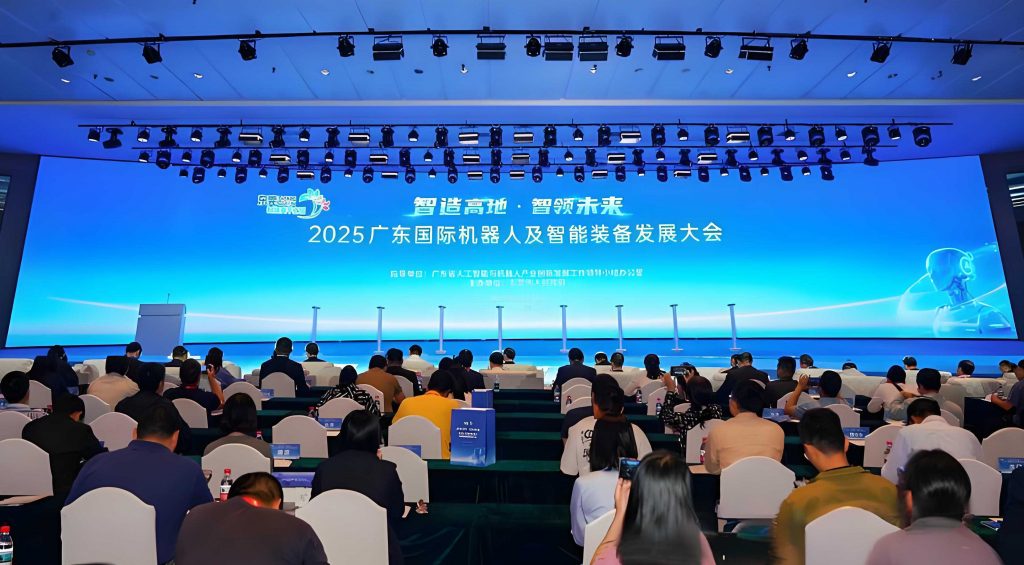
The contemporary ‘China robot’ ecosystem is a complex and competitive landscape. The market is structured along a clear value chain: Core Components → Robot Manipulator (本体) → System Integration → End-User Application. For years, international giants, often referred to as the “Big Four” (ABB, FANUC, Yaskawa, KUKA), commanded over 90% of the market, particularly in the automotive sector where they have deep, entrenched relationships with global OEMs. A domestic ‘China robot’ industry faced significant hurdles, especially in core components like precision reducers, servo motors, and controllers. The cost disparity was staggering, with domestic manufacturers paying up to five times more for a reducer than their foreign competitors. This made domestic manipulators less price-competitive despite lower assembly costs.
| Market Segment | Key Players (Representative) | Characteristics & Challenges for China |
|---|---|---|
| Core Components (Reducers, Servos, Controllers) |
Nabtesco, Harmonic Drive (JP); Keys, Estun (CN) |
Highest technical barriers; high import dependency; critical for cost reduction and performance of domestic ‘China robot’ arms. |
| Robot Manipulator | Big Four (EU/JP); EFORT, SIASUN (CN) |
Foreign brands dominate on reliability and speed. Domestic ‘China robot’ arms are improving but face cost and brand perception challenges. |
| System Integration | Both International and Numerous domestic firms |
Area of strongest domestic ‘China robot’ activity. Requires deep understanding of specific industry processes (e.g., welding, painting, assembly for 3C). Low barrier to entry leads to fragmented competition. |
| Industry Application | Automotive, 3C, Logistics, Food & Beverage, etc. |
Automotive share is high but slowing. 3C (Computers, Communication, Consumer Electronics) is the fastest-growing sector for ‘China robot’ adoption, driven by need for miniaturization and flexibility. |
However, the tide is turning. The strategic importance of robotics has been elevated to the highest levels of national policy. The “Made in China 2025” blueprint explicitly prioritizes robotics as a key domain for breakthrough development. This is not an isolated plan; it mirrors and competes with national strategies from the United States (“A Roadmap for U.S. Robotics”), Japan’s “Robot Revolution Initiative,” and South Korea’s “Intelligent Robot Basic Plan.” The Chinese government’s commitment was spectacularly demonstrated by the 2015 World Robot Conference in Beijing, which garnered messages from the nation’s top leadership, emphasizing that robotics and smart manufacturing are national innovation priorities. The goal is clear: to cultivate a self-sufficient, globally competitive ‘China robot’ industry.
The application landscape for ‘China robot’ solutions is diversifying rapidly. While automotive remains the largest segment, its growth rate is being outpaced by the 3C industry—a sector characterized by short product lifecycles, complex miniaturized assembly, and intense cost pressure. This shift favors different types of robots. The heavy-duty, high-payload six-axis arms common in car plants are supplemented by high-speed SCARA robots and collaborative robots (cobots) designed to work safely alongside humans on electronics assembly lines.
$$ \text{Robot Selection for Task T} \propto \frac{\text{Speed} \times \text{Precision}}{\text{Payload} \times \text{Workspace}} $$
For a high-speed PCB assembly task, a SCARA robot (high speed/precision, low payload) is optimal. For a heavy part transfer in metalworking, a six-axis arm (high payload, large workspace) is chosen. The evolving ‘China robot’ market is mastering this equation across more and more industries.
The future of the ‘China robot’ ecosystem lies in what many call Robot Industry 2.0 or Next-Generation Robotics. This is the shift from automated machines to intelligent systems. The core of this transition is the integration of advanced Artificial Intelligence, particularly machine learning and computer vision, transforming robots from pre-programmed actors into adaptive assistants. A simple functional representation of this intelligence can be modeled as a perception-action loop enhanced by learning:
$$ \text{Action}_{t+1} = \pi(\text{State}_t, \theta); \quad \theta \leftarrow \theta – \alpha \nabla_\theta J(\theta) $$
Here, the policy $\pi$ (controlling the robot’s actions) is parameterized by $\theta$. Through learning (e.g., gradient descent with learning rate $\alpha$), the robot minimizes a cost function $J(\theta)$, improving its performance based on sensory input (State). This allows a ‘China robot’ to handle variable tasks like bin-picking irregular objects or adjusting force for delicate polishing.
This next generation expands beyond factories. Service robots for healthcare, logistics, and domestic assistance represent a vast new frontier for the ‘China robot’ industry. Their development relies on a synergistic technology stack, represented below:
| Technology Layer | Function | Impact on ‘China Robot’ Capability |
|---|---|---|
| Cloud Computing & Big Data | Centralized processing, knowledge sharing, swarm intelligence. | Enables fleet learning; a robot in Shanghai can learn from the experience of robots in Shenzhen. Reduces on-board computation needs. |
| Internet of Things (IoT) | Ubiquitous connectivity and sensor networks. | Provides rich environmental context. A logistics ‘China robot’ knows inventory levels in real-time and coordinates with smart elevators and doors. |
| Advanced Sensors (LiDAR, 3D Vision) | High-fidelity perception of environment. | Critical for navigation, object recognition, and safe human-robot interaction in unstructured spaces. |
| Open-Source Platforms (ROS, etc.) | Standardized software frameworks. | Accelerates development, lowers barriers for startups and researchers in the ‘China robot’ field, fosters ecosystem innovation. |
The ultimate expression of this trend may not be in selling individual ‘China robot’ units, but in providing “Robotics-as-a-Service” (RaaS). Companies could offer picking, welding, or inspection services by the hour, managed via a cloud platform that monitors performance, schedules maintenance, and continuously updates software. This model lowers the entry barrier for small and medium-sized enterprises (SMEs), a vast segment of Chinese manufacturing, allowing them to tap into advanced automation without massive upfront capital expenditure.
In conclusion, the ‘China robot’ opportunity is a multi-dimensional phenomenon. It is a response to demographic and economic pressures, a strategic play in global high-tech competition, and a testing ground for the fusion of industrial and information technologies. The path forward requires continued breakthroughs in core components to build cost-competitive and reliable domestic manipulators. It demands that system integrators develop even deeper vertical expertise to unlock efficiency gains in diverse industries. Most critically, it necessitates a strong push into the fundamental research of Robot Industry 2.0—artificial intelligence, machine vision, and human-robot collaboration. By fostering a robust ecosystem that connects academic research, agile startups, and large industrial players, the ‘China robot’ sector can transition from being the world’s largest application market to becoming a leading source of innovation. The opportunity is not just to automate production, but to redefine it, shaping the future of manufacturing and service on a global scale.