
As an observer and analyst in the field of automation, I have witnessed a remarkable transformation in the logistics sector, particularly driven by the rapid ascent of robotics. In recent years, the China robot market has experienced unprecedented growth, fueled by a confluence of economic, technological, and social factors. The demand for logistics automation equipment has surged, leading to the widespread application of logistics robots. This article delves into the new dynamics shaping the China robot landscape, exploring the key drivers, technological advancements, and future trajectories. I will employ various data summaries and analytical models to provide a comprehensive view.
The explosion of e-commerce and express delivery industries has been a primary catalyst for the boom in logistics robotics in China. The need for faster, more efficient handling of parcels has propelled robots from performing simple tasks like palletizing and depalletizing to becoming integral in warehousing, sorting, and even last-mile delivery. This shift is not merely operational but strategic, positioning the China robot ecosystem at the forefront of global supply chain innovation.
| Driver | Impact Description | Estimated Contribution to Market Growth |
|---|---|---|
| E-commerce & Express Growth | Surge in parcel volume demands high-speed, automated sorting and handling solutions. | ~35% |
| Industrial 4.0 & Policy Support (e.g., “Made in China 2025”) | National strategies promoting smart manufacturing and robotics adoption in industrial logistics. | ~25% |
| Declining Demographic Dividend & Rising Labor Costs | “Machine replacement” becomes economically viable, driving automation in manufacturing and logistics. | ~20% |
| COVID-19 Pandemic | Accelerated demand for unmanned, contactless operations in warehouses and delivery. | ~15% |
| Technology Convergence | Integration of IoT, AI, and 5G enabling more capable and connected China robot systems. | ~5% |
Under these multifactorial pushes, the scale of the China robot market for logistics has expanded rapidly. We can model this growth using a simplified exponential function. Let \( M(t) \) represent the market size in billion USD at time \( t \) (in years since 2020). A reasonable approximation, based on industry reports, is:
$$ M(t) = M_0 \cdot e^{gt} $$
where \( M_0 \) is the initial market size (e.g., ~$2.5$ billion in 2020) and \( g \) is the compound annual growth rate (CAGR). For the China robot sector, \( g \) has been exceptionally high, often estimated between 25% to 30%. Thus:
$$ M(t) \approx 2.5 \cdot e^{0.275t} $$
This model highlights the explosive trajectory, underscoring why the China robot market is a focal point for global investors and technologists.
Technological progress in the China robot domain has been equally impressive, spanning both hardware and software. In hardware, innovations in robot本体 (本体), drive units, transmission systems, and precision reducers have enhanced performance and reliability. Software advancements, particularly in control systems, navigation, visual perception, and fleet调度 systems, have enabled greater autonomy. The synergy of these elements defines the modern China robot.
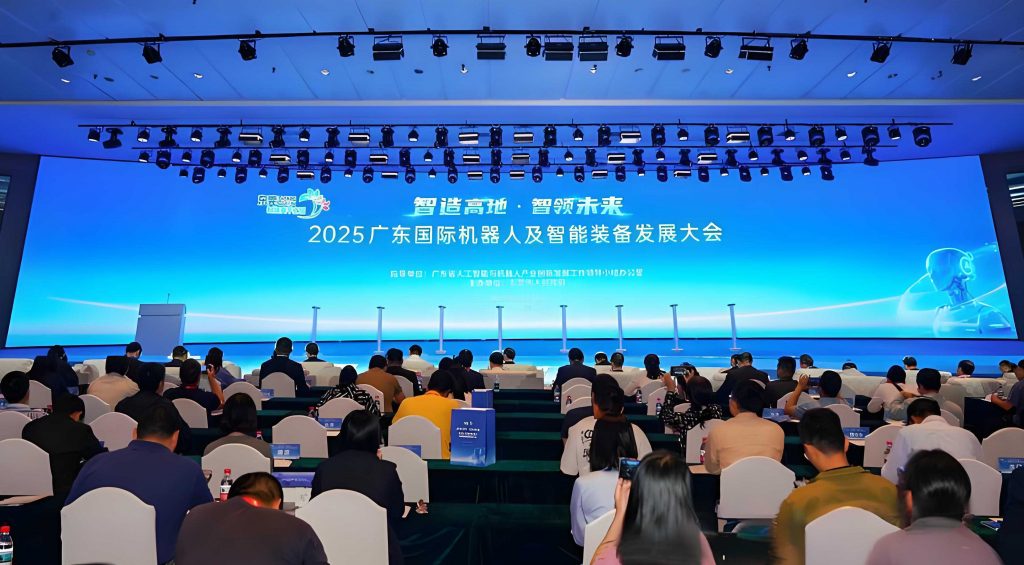
The integration of emerging technologies like the Internet of Things (IoT), Artificial Intelligence (AI), digital twins, and 5G communication is catalyzing new breakthroughs. For instance, AI-driven computer vision allows a China robot to identify and handle diverse objects with high accuracy. The efficiency gain from such technologies can be quantified. Let \( \eta_{\text{old}} \) be the efficiency (e.g., items sorted per hour) of a traditional system, and \( \eta_{\text{new}} \) be that of an AI-enhanced China robot system. The improvement ratio \( R \) is:
$$ R = \frac{\eta_{\text{new}} – \eta_{\text{old}}}{\eta_{\text{old}}} \times 100\% $$
In practical deployments, \( R \) often exceeds 50% for sorting tasks, demonstrating the tangible impact of technological fusion on the China robot ecosystem.
| Technology Category | Specific Innovations | Key Impact on China Robot Capabilities |
|---|---|---|
| Hardware | Lightweight yet durable manipulators, high-torque servo drives, harmonic drives for precision. | Increased payload, speed, and operational lifespan of China robot units. |
| Navigation & Perception | SLAM (Simultaneous Localization and Mapping), multi-sensor fusion (LiDAR, vision), real-time 3D mapping. | Enhanced autonomy and adaptability in dynamic warehouse environments for China robot fleets. |
| Control & Software | Cloud-based control platforms, AI调度 algorithms, predictive maintenance software. | Optimized fleet coordination and reduced downtime for China robot operations. |
| Enabling Technologies | 5G for low-latency communication, digital twins for simulation, edge computing for real-time AI. | Enabled large-scale, synchronized, and intelligent China robot集群 applications. |
Looking ahead, intelligent logistics is the inevitable trend, and this dictates the innovation direction for companies in the China robot space. The future will revolve around high intelligence, flexibility, and diversification. Key thematic areas include “Smart Logistics,” “Technology Fusion,” “Deep Learning,” and “Cluster Applications.” Each of these represents a vector for the evolution of the China robot.
To understand the path towards smarter China robot systems, consider the concept of system intelligence \( I_s \), which could be modeled as a function of various parameters:
$$ I_s = \alpha \cdot C_{\text{data}} + \beta \cdot A_{\text{algo}} + \gamma \cdot N_{\text{connect}} $$
Here, \( C_{\text{data}} \) represents data collection and processing capability, \( A_{\text{algo}} \) denotes the sophistication of AI algorithms (e.g., deep learning models), and \( N_{\text{connect}} \) is the level of network connectivity and interoperability. The coefficients \( \alpha, \beta, \gamma \) weigh the importance of each factor. For next-generation China robot systems, \( \beta \) and \( \gamma \) are becoming increasingly dominant as deep learning enables adaptive behavior and 5G facilitates massive machine-type communication.
Cluster application of China robot fleets is particularly promising. The efficiency of a fleet of \( n \) robots can be analyzed through queueing theory and coordination models. Let the total throughput \( T \) of a warehouse using a China robot集群 be a function of the number of robots \( n \), their individual service rate \( \mu \), and the coordination efficiency factor \( \phi(n) \) which decreases due to potential interference or optimal调度 limits:
$$ T(n) = \phi(n) \cdot n \cdot \mu \quad \text{where} \quad 0 < \phi(n) \leq 1 $$
Advanced fleet management algorithms aim to keep \( \phi(n) \) close to 1 even for large \( n \), enabling scalable China robot deployments. This is a critical research frontier for the China robot industry.
| Trend Keyword | Explanation | Expected Outcome for China Robot Market |
|---|---|---|
| High Intelligence | Incorporation of advanced AI, machine learning, and cognitive computing for decision-making. | China robots capable of unsupervised learning and handling complex, unstructured tasks. |
| Flexibility & Modularity | Design of reconfigurable robot systems that can adapt to different tasks and environments quickly. | Reduced deployment costs and increased versatility of China robot solutions across sectors. |
| Technology Fusion | Deep integration of robotics with IoT, big data analytics, cloud/edge computing, and 5G networks. | Creation of cyber-physical systems where China robots are seamlessly connected nodes. |
| Deep Learning Integration | Use of neural networks for perception, planning, and control, enabling continuous improvement. | China robots that optimize their own performance over time based on operational data. |
| Large-Scale Cluster Apps | Deployment of hundreds or thousands of robots working in coordination within a single facility. | Order-of-magnitude improvements in logistics throughput and resilience, showcasing China robot scale. |
| Sustainability Focus | Development of energy-efficient robots and systems that contribute to green logistics. | China robot technologies aligned with global environmental, social, and governance (ESG) goals. |
The journey of the China robot from a peripheral tool to a central pillar of logistics infrastructure is a testament to strategic focus and innovation. The convergence of market pull and technology push has created a vibrant ecosystem. From my perspective, the continued success of the China robot sector hinges on several factors: sustained R&D investment, talent cultivation, standard setting, and fostering open collaboration between academia, industry, and government.
In conclusion, the new动向 in the China robot market are characterized by accelerated adoption, technological depth, and a clear roadmap towards intelligent, flexible, and large-scale systems. The formulas and tables presented here summarize the quantitative and qualitative aspects of this evolution. As the China robot continues to evolve, it will not only redefine logistics within the country but also set benchmarks for the global automation industry. The future of logistics is intelligent, and the China robot is poised to be at its very heart, driving efficiency, resilience, and innovation for years to come. The exploration of these trends provides valuable insights for stakeholders looking to navigate and contribute to this dynamic landscape.
To further illustrate the economic impact, consider the total cost of ownership (TCO) model for deploying a China robot system versus traditional manual labor. Let \( C_{\text{robot}} \) be the upfront and operational costs of the robot system over a period, and \( C_{\text{labour}} \) be the costs associated with human workers for the same output. The breakeven point occurs when:
$$ C_{\text{robot}} = C_{\text{labour}} $$
Given the rising labor costs and falling costs of robotics, this equation increasingly favors the adoption of China robot solutions. Moreover, the China robot offers additional value \( V_{\text{add}} \) from factors like 24/7 operation, higher precision, and data insights, making the value proposition even stronger:
$$ \text{Net Benefit} = (C_{\text{labour}} – C_{\text{robot}}) + V_{\text{add}} $$
This fundamental economic calculus underpins the massive shift towards automation, solidifying the role of the China robot in modern industrial strategy.