
As we delve into the intricacies of the robot industry in China, it is imperative to understand the multifaceted dynamics that govern its evolution. The China robot sector stands at a pivotal juncture, influenced by global trends and domestic imperatives. In this comprehensive analysis, we explore the theoretical and practical aspects of forming a robust China robot industry, drawing comparisons with international experiences and assessing the unique conditions within China. Our goal is to outline a pathway that aligns with China’s national context, emphasizing the role of technology, economy, and society in shaping this critical industry.
The robot industry, fundamentally defined as the manufacturing of robots, encompasses the production of complete robots, key components, and essential配套 equipment. Its formation is a complex process driven by the interplay of technological, economic, and social factors. We can conceptualize the robot industry as a subsystem within a larger societal framework, where it occupies a领先 position among industries. As an emerging manufacturing sector, the China robot industry provides advanced automation equipment to other industries, thereby enhancing productivity and generating significant economic and social benefits. To formalize this, consider the robot industry as a function of technological (T), economic (E), and social (S) variables:
$$ RI = f(T, E, S) $$
where RI represents the robot industry’s development level. The成熟 of these subsystems determines the industry’s formation, which can be quantified through indicators such as the number of manufacturing firms, employment figures, production value, and growth rates. For instance, the annual growth rate of the China robot industry can be expressed as:
$$ G_{RI} = \frac{RI_{t} – RI_{t-1}}{RI_{t-1}} \times 100\% $$
This growth is contingent upon the成熟 of underlying conditions, which we will explore in detail.
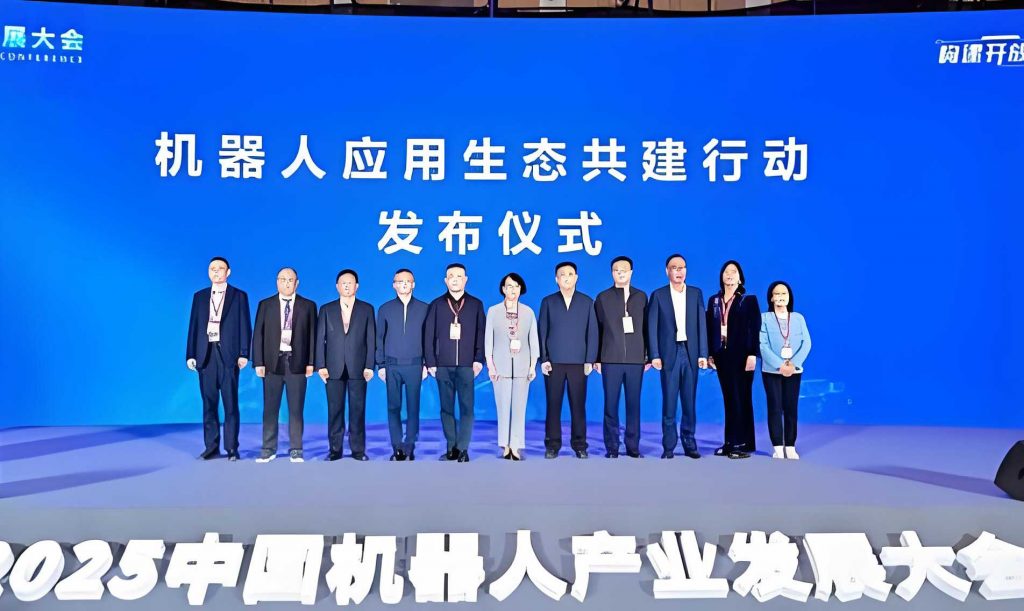
The formation mechanism of the robot industry hinges on the interactions among technological, economic, and social subsystems. We can simplify these conditions into binary states—成熟 (represented as “+”) and not成熟 (represented as “-“)—to analyze various development scenarios. Based on comparative studies of foreign robot industries, we identify three primary formation mechanisms, as summarized in Table 1. This table illustrates how the China robot industry might evolve under different configurations of conditions.
| State | Technological Condition (T) | Economic Condition (E) | Social Condition (S) | Formation Mechanism | Example |
|---|---|---|---|---|---|
| State 1 | + | + | + | Natural Growth Mechanism | United States robot industry |
| State 2 | + | + | – | 成熟牵引 Mechanism | Japan robot industry |
| State 3 | + | – | + | 成熟牵引 Mechanism | Germany robot industry |
| State 4 | – | + | + | 成熟牵引 Mechanism | South Korea robot industry |
| State 5 | + | – | – | Tracking Development Mechanism | Developing countries’ robot industries |
| State 6 | – | + | – | Tracking Development Mechanism | Potential for China robot industry |
| State 7 | – | – | + | Tracking Development Mechanism | Early-stage China robot initiatives |
| State 8 | – | – | – | No Formation | Pre-industrial contexts |
From this table, we derive the following mechanisms. The Natural Growth Mechanism occurs when all three conditions are mature, leading to spontaneous industry formation, as seen in the U.S. The成熟牵引 Mechanism involves two mature conditions pulling the third toward成熟, often through government intervention, exemplified by Japan’s robot industry. The Tracking Development Mechanism applies when only one condition is mature; here, the industry evolves by leveraging that成熟 system while追蹤 advanced technologies, typical for developing nations. For the China robot industry, we posit that it is transitioning from a tracking development phase toward a成熟牵引 mechanism, requiring strategic interventions to accelerate growth.
To understand these mechanisms in depth, we must define the成熟 conditions for each subsystem. Technologically, a成熟 system for the China robot industry entails several key elements. First, robot整机 must exhibit comprehensive technical性能 that meet quality and quantity demands, with reliability and maintainability aligned with production cycles. This can be modeled using reliability functions, such as the mean time between failures (MTBF):
$$ MTBF = \frac{\text{Total Operational Time}}{\text{Number of Failures}} $$
For the China robot industry, achieving an MTBF of hundreds of hours is crucial for commercial viability. Second, breakthroughs in key technologies—like control systems and sensors—are essential, with core components largely国产化. Third, a complete production体系 encompassing auxiliary and配套 equipment must be established. Fourth, user enterprises need a certain level of automation and management capability. Economically,成熟 conditions include rapid economic growth驱动 demand,科技进步 fostering innovation, and strategic economic policies. The robot industry thrives when final products have robust markets, both domestic and international. A product structure dominated by small-to-medium batch and multi-variety production favors robot adoption due to flexibility advantages.支付能力 for robots is critical, influenced by factors like robot cost relative to labor. We can express the cost-benefit ratio for adopting China robot systems as:
$$ CBR = \frac{\text{Benefits from Robot Adoption}}{\text{Total Cost of Robot System}} $$
where benefits include productivity gains and labor savings. Socially,成熟 conditions involve openness and stability, labor force characteristics, educational levels, and cultural values. For instance, the aging population in China may drive demand for robots in极限作业 environments, where human labor is scarce or hazardous.
Now, let’s assess the current state of the China robot industry across technological, economic, and social dimensions. Technologically, China has made strides with nearly a hundred units engaged in robot technology, forming a basic research and development体系. In整机 development, first-generation teach-and-repeat robots have been mastered, performing at levels comparable to international standards from the mid-1970s. However, reliability remains a challenge, with MTBF around tens of hours, due to issues in control system components and processing. Key technologies and components are薄弱 links; for example, automatic control systems require further development. Estimates suggest that within 3-5 years, China could achieve basic国产化 of key components for first-generation robots. Yet, a comprehensive production体系 for robots and配套 equipment is still nascent, with tendencies to prioritize整机 over components and practical application. The automation level in Chinese enterprises is relatively low, with semi-mechanized and manual tools predominating. Precision in manufacturing, such as in automotive壳体加工, often falls short of robot requirements, typically in the range of:
$$ \text{Precision Error} \approx 0.1 \text{ mm} $$
which may not suffice for applications like arc welding robots demanding higher accuracy.
Economically, the China robot industry faces both opportunities and constraints. The cost of a first-generation teach-and-repeat robot in China is approximately 200,000 yuan, with配套 equipment adding 2-3 times that amount, making robots expensive compared to cheap labor. The average annual wage per worker is only 1/10 to 1/20 of a robot’s cost, reducing immediate incentives for adoption. Many R&D entities lack funds for commercializing robots, and enterprises have limited支付能力 for imports. In the short term, China’s production structure remains oriented toward large-batch,少品种 output, where robots may not outshine specialized machinery in连续性 and flexibility. However, the competitive environment for industrial products is evolving. Final products like automobiles and electromechanical goods have growing domestic markets; for instance, the automotive industry is expected to rebound within 3-5 years. In 2020, China’s electromechanical products reached 60% of international levels from the 1990s, with exports worth $150 billion, accounting for 15% of the electromechanical industry’s output. To enhance competitiveness, investment in robot development and application is increasing, which bodes well for the China robot industry. Resource-wise, China experiences overall demand-supply imbalances, with shortages in steel and energy affecting both robot production and final product manufacturing. This necessitates efficient resource utilization to support the China robot sector.
Socially, China’s open and stable policies since reforms have created a conducive environment for新兴产业 like the China robot industry. International exchanges have trained robot experts, and the government has prioritized robot technology in national plans, such as the “14th Five-Year Plan.” However, labor人口过剩 poses阻力, yet demographic shifts—like an aging population and独生子女 entering the workforce—are altering labor structures. Approximately 10 million workers are in极限条件 jobs, with annual costs for labor protection and welfare reaching 10 billion yuan. As living standards rise and values change, reluctance to engage in hazardous work will grow, driving demand for China robot solutions in these areas. The shortage of skilled technicians, with only 10% of workers having advanced skills and an aging workforce, underscores the need for robots to替代 skilled labor. Education levels, particularly in vocational training, are low, with a gap in professionals for robot开发, production, and application. Currently, few universities offer robotics programs, and enterprise training systems are underdeveloped. Internationally, high-technology competition, especially in military applications, pressures China to advance its robot capabilities. Meanwhile, technology transfer from countries like Japan and the U.S. has become more favorable, aiding the China robot industry. Trade policies, such as adjusted关税 rates, support domestic industries like automotive, indirectly benefiting robot adoption.
Given this analysis, we propose targeted对策 for forming a viable China robot industry. We believe that in the short term, achieving small-batch commercialization of国产 robots is a先锋 step. Below, we outline key strategies in Table 2, which summarizes the对策 aligned with China’s国情.
| Strategy Category | Specific Measures | Rationale and Impact on China Robot Industry |
|---|---|---|
| Selection of Robot Types | Focus on spray painting, spot welding, and搬运 robots; adopt fixed-program, variable-program, and简易专用机型. | These types have lower精度 requirements, fit existing industrial bases, ease reliability achievement, and address极限作业 needs, accelerating China robot commercialization. |
| Technology Development | Develop simple and专用 robots with basic sensory functions; prioritize多用化 in key technologies and components. | Combines第一代 and第二代 robot advantages, enhances reliability, avoids冗余功能, and improves economic效益 for China robot applications. |
| Industrial Structure | Establish robot专业 companies via high-tech横向联合; create示范 centers, factories, and workshops. | Centralizes resources, avoids duplication, forms integrated supply chains, and promotes practical application of China robot systems. |
| Financial Support | Provide财政拨款 for R&D offer贴息 loans and分期付款 for enterprises; implement租赁业务 for robot adoption. | Reduces financial barriers, encourages investment in China robot production and use, and facilitates widespread deployment. |
| International Collaboration | 引进 foreign advanced technology; engage in技贸结合 and合资经营. | Accelerates technology acquisition, addresses funding and expertise gaps, and boosts China robot industry competitiveness. |
| Export Orientation | Strengthen robot and final product production for export markets. | Leverages international demand, enhances product quality via China robot integration, and drives industry growth. |
| Talent Development | Set up robotics programs in universities; establish training centers in enterprises for操作,维护, and管理 skills. | Addresses skill shortages, ensures workforce readiness for China robot adoption, and supports long-term industry sustainability. |
These strategies are designed to navigate the transition from tracking development to成熟牵引 mechanisms. For instance, selecting appropriate robot types can be modeled as an optimization problem:
$$ \max_{R} \left( \text{Utility}(R) = \alpha \cdot \text{Technical Fit} + \beta \cdot \text{Economic Viability} + \gamma \cdot \text{Social Acceptance} \right) $$
where R represents robot types, and α, β, γ are weights reflecting China’s priorities. Similarly, financial incentives can be quantified using net present value (NPV) calculations for robot investments:
$$ NPV = \sum_{t=0}^{n} \frac{C_t}{(1+r)^t} $$
where C_t are cash flows from robot adoption, and r is the discount rate. By subsidizing interest rates, the government can effectively increase NPV for enterprises, promoting China robot integration.
In terms of technology, the development of sensory robots aligns with global trends. For example, a simple force-sensing robot can be described by a control law:
$$ \tau = J^T F + K_p e + K_d \dot{e} $$
where τ is joint torque, J is the Jacobian, F is sensed force, and K_p, K_d are control gains. Implementing such features in简易 robots can enhance their applicability in China’s manufacturing sectors. Moreover, the多用化 of key components—like controllers and actuators—can reduce costs through economies of scale, expressed as:
$$ \text{Cost per Unit} = \frac{\text{Fixed Costs} + \text{Variable Costs}}{\text{Production Volume}} $$
Increasing production volume for China robot components lowers per-unit costs, fostering commercialization.
The establishment of robot专业 companies should leverage regional economic strengths. For example, in the Yangtze River Delta, high-tech clusters can collaborate to form a China robot hub. This can be analyzed using network theory, where nodes represent firms and edges represent collaborations, optimizing for knowledge flow and resource sharing.示范 centers play a crucial role in showcasing China robot applications, potentially increasing adoption rates by reducing uncertainty. The impact can be measured through diffusion models, such as the Bass diffusion model:
$$ \frac{dN(t)}{dt} = p \cdot (M – N(t)) + q \cdot \frac{N(t)}{M} \cdot (M – N(t)) $$
where N(t) is the number of adopters, M is the market potential, p is the innovation coefficient, and q is the imitation coefficient. Government-led示范 can boost q, accelerating China robot diffusion.
Financial mechanisms like租赁业务 can address liquidity constraints. The rental cost for a China robot system can be structured as:
$$ \text{Monthly Rental} = \frac{\text{Robot Cost} \times (1 + i)^n}{n \times 12} $$
where i is the interest rate and n is the lease term in years. This makes robots accessible to small and medium enterprises, broadening the China robot market. International collaboration, through joint ventures, can transfer technology efficiently. For instance, a合资 firm might share profits based on contribution ratios, modeled as:
$$ \text{Profit Share} = \theta \cdot \text{Total Profit} $$
where θ is the ownership stake. This incentivizes foreign partners to contribute advanced技术 to the China robot industry.
Export-oriented production aligns with China’s manufacturing升级. By integrating China robot systems into export goods, quality improvements can enhance competitiveness. The relationship can be expressed as:
$$ \text{Export Quality Index} = \sum_{i} w_i \cdot Q_i $$
where w_i are weights for product attributes, and Q_i are quality scores influenced by robot automation. Talent development is critical; we propose expanding educational outputs. The number of robotics graduates can be projected as:
$$ G_t = G_0 \cdot (1 + g)^t $$
where G_0 is the initial number, g is the growth rate, and t is time in years. Increasing g through政策支持 will supply the skilled workforce needed for the China robot industry.
In conclusion, the China robot industry is on a transformative path, shaped by evolving technological capabilities, economic realities, and social dynamics. Our analysis underscores the importance of a holistic approach that balances internal development with global integration. By implementing the proposed strategies—ranging from targeted robot selection to robust talent培养—we can catalyze the formation of a sustainable China robot industry. The journey from tracking development to成熟牵引 will require persistent effort, but with strategic interventions, the China robot sector can emerge as a global leader, driving innovation and prosperity. As we look ahead, continuous monitoring and adaptation will be key, ensuring that the China robot industry remains resilient and responsive to changing conditions.