
In examining the global landscape of industrial automation, we find ourselves at a pivotal moment where one nation’s strategic focus is reshaping entire supply chains and manufacturing paradigms. From my perspective as an observer deeply embedded in technological trends, the narrative of robotics is increasingly being written in Chinese characters. The term ‘China robot’ is no longer a futuristic concept but a present-day reality, driving innovation and economic transformation. This article delves into the multifaceted expansion of the China robot ecosystem, analyzing its regional strategies, market dynamics, and the underlying forces propelling its growth. We will employ quantitative summaries through tables and mathematical models to crystallize the scale and trajectory of this phenomenon.
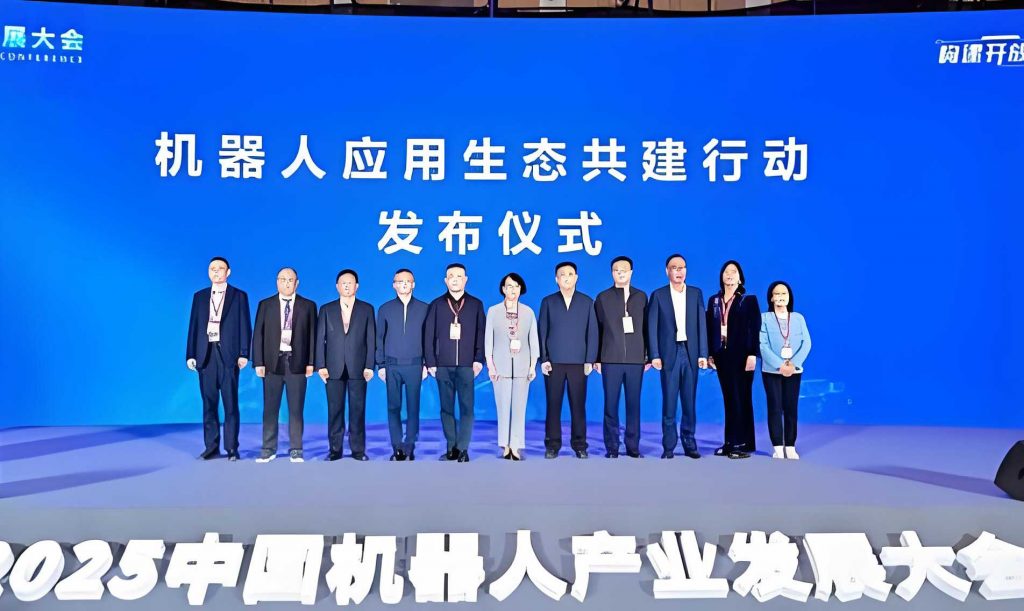
The foundation of the China robot surge is a carefully orchestrated regional development blueprint. Across the nation, distinct clusters have emerged, each cultivating specialized competencies within the broader robotics value chain. Rather than a monolithic approach, this decentralized yet coordinated strategy leverages local advantages to build a robust national industry. We can summarize the core ambitions and scale of these primary clusters as follows.
| Cluster Region (Generalized) | Primary Focus & Strategic Goal | Projected Industrial Scale (Representative Years) |
|---|---|---|
| Eastern Coastal Megalopolis | Comprehensive hub for R&D, manufacturing, and service; aims to be a global demonstration zone for robot technology. | ~$32B (2020), targeting ~$96-$128B (2020 target). |
| Southern Yangtze Delta Zone | Advanced manufacturing base for industrial robots, with various cities specializing in different segments like components or system integration. | Exceeds $80B in specific sub-zones, with cluster-wide targets reaching over $160B. |
| Southwestern Industrial Hub | Major domestic and globally influential base for robot production, aspiring to become a “global capital” for robotics. | Focused on building integrated base with dedicated functional zones for industrial, service, and special-purpose robots. |
| Pearl River Delta Core | Regional center for equipment manufacturing and robotics, from R&D to application. | Aiming to cultivate intelligent equipment clusters worth over $160B centered on industrial robots. |
| Southern Tech Innovation Corridor | Leading base for robotics, wearable devices, and smart equipment, excelling in core components like controllers and servo drives. | Targeting value-added output exceeding $320B for the integrated industry by 2020. |
| Manufacturing Transformation Zones | Key bases for application integration and demonstration, focusing on deploying robots within traditional manufacturing. | Targeting industry output of ~$56B, aiming to double to ~$112B. |
This geographical diversification is a hallmark of the China robot strategy. It mitigates risk and fosters intra-national competition and collaboration. The momentum is not confined to these areas; numerous other provinces are launching initiatives to build large-scale robot clusters, targeting outputs in the hundreds of billions, indicating a nationwide consensus on the strategic importance of robotics.
The market data underscores why this push is so urgent and promising. The adoption curve for robots in China has been exceptionally steep. International federation statistics indicate that the China robot market has sustained an average annual growth rate exceeding 40% for several years. A simple exponential growth model can frame this expansion:
$$ M(t) = M_0 \cdot (1 + r)^t $$
Where \( M(t) \) is the market size at time \( t \), \( M_0 \) is the initial market size, and \( r \) is the compound annual growth rate. For the China robot market with \( r > 0.4 \), the doubling period is remarkably short, calculated by:
$$ t_{\text{double}} = \frac{\ln(2)}{\ln(1+r)} $$
With \( r = 0.4 \), \( t_{\text{double}} \approx 1.9 \) years. This aligns with reports forecasting the Chinese market to double within two years. Despite achieving the top global rank in annual sales volume, a critical metric reveals immense latent potential: robot density. The number of robots per 10,000 manufacturing workers in China stands at merely 23, a stark contrast to over 330 in leading nations and below the global average of 55. This density gap, \( D_{\text{gap}} \), represents the core growth driver:
$$ D_{\text{gap}} = D_{\text{global avg}} – D_{\text{China}} \approx 32 $$
$$ D_{\text{gap}} = D_{\text{leader}} – D_{\text{China}} \approx 309 $$
This gap signifies not just room for growth, but a compelling economic imperative. The convergence of rising labor costs and falling robot manufacturing costs has created a powerful crossover point for automation. We can model the economic incentive for substitution as a function of cost differential. Let \( C_L(t) \) represent the total cost of human labor and \( C_R(t) \) represent the total cost of robot operation and ownership. The incentive function \( I(t) \) for adopting a China robot solution is:
$$ I(t) = C_L(t) – C_R(t) $$
When \( I(t) > 0 \), substitution becomes economically viable. Empirical trends show \( \frac{dC_L}{dt} > 0 \) (rising wages, social insurance) and \( \frac{dC_R}{dt} < 0 \) (improving scale, localized supply chains), ensuring \( I(t) \) grows positively over time, fueling the China robot adoption wave.
The technological underpinnings of the China robot industry are evolving rapidly. Initially reliant on imported core components, significant progress is now evident in the domestic production of reducers, servo motors, and control systems. This localization reduces costs, enhances supply chain security, and increases the value captured within the country. The formation of industrial technology alliances is a strategic move to accelerate this. These consortia pool R&D resources to tackle common technical challenges, establish intellectual property frameworks, and facilitate the commercialization of innovations. The focus spans both industrial and service robots, aiming to build a complete technological ecosystem.
Several macro-factors synergistically propel the China robot industry forward. We can quantify their influence through a multi-factor model:
$$ \text{Growth Momentum} = f(G, C, A, W, S) $$
Where:
– \( G \): Globalization pressure, demanding higher efficiency and flexibility.
– \( C \): Shortened product life cycles, necessitating reconfigurable automation.
– \( A \): Aging demographics, reducing the traditional labor force pool.
– \( W \): Rising wage levels, directly increasing \( C_L \) in our earlier model.
– \( S \): Stricter health, safety, and environmental regulations, where robots excel.
The positive gradient of each factor amplifies the total momentum for robotics adoption. Policy acts as a powerful catalyst. The issuance of national guidelines to promote industrial robot development has provided a top-down framework, explicitly encouraging the cultivation and support of domestic China robot enterprises. This has triggered a wave of capital investment, with numerous listed entities diversifying into robotics and intelligent automation projects, many for the first time, signaling strong market confidence.
The application landscape for China robot technology is continuously broadening. Beyond traditional automotive and electronics assembly, robots are penetrating sectors like logistics, food processing, construction, and agriculture. The service robot segment, for consumer and professional use, is identified as having explosive potential, particularly for integration into smart homes and healthcare. The progression can be seen as an expansion in application space \( \mathcal{A} \):
$$ \mathcal{A}(t) = \mathcal{A}_{\text{industrial}} \cup \mathcal{A}_{\text{service}}(t) $$
$$ \frac{d|\mathcal{A}_{\text{service}}|}{dt} > \frac{d|\mathcal{A}_{\text{industrial}}|}{dt} \quad \text{for future projections} $$
where \( |\mathcal{A}| \) denotes the scope and diversity of applications.
From an investment and corporate perspective, the sector is in a phase of explosive growth. The advancement in core component localization improves profitability and competitiveness for domestic firms. Companies with strengths in capital and technology are positioned for sustained expansion. The ecosystem includes entities focused on industrial robot manufacturing, critical component production, and specialized system integration.
Looking ahead, the trajectory of the China robot industry appears set on a steep upward climb. The combination of massive unmet demand (as quantified by the robot density gap), strong policy tailwinds, improving technological capability, and favorable macroeconomic drivers creates a potent mix. The national target of developing multiple 100-billion-yuan clusters is well within reach. Future challenges include navigating international competition, fostering higher-level innovation, and ensuring the smooth integration of robots into the social fabric. However, the strategic direction is clear: to transition from being the world’s largest market for robots to being a leading global power in robot innovation and manufacturing. The era of the China robot is not merely coming; it is actively being constructed across industrial parks and research labs from coast to coast, defining the next chapter of global manufacturing and automation.
| Metric | China Robot Industry Status | Global Benchmark / Average | Implied Growth Potential |
|---|---|---|---|
| Annual Sales Volume (Units) | Leader (~1/5 of global total) | Global sales distributed | High base, but linked to global growth |
| Robot Density (Units/10k workers) | 23 | 55 (Global Avg), 332 (Leader) | Extremely High (139% to 1343% increase needed to match benchmarks) |
| Market Growth Rate (CAGR) | > 40% | ~10-15% (Global Average) | Growth rate 3-4 times global average |
| Core Component Localization Rate | Progressing significantly | High in traditional leader nations | Critical for value chain control and cost reduction |
In conclusion, our analysis reveals an industry at an inflection point. The systematic development of the China robot sector, characterized by strategic regional clustering, rapid market absorption, and accelerating technological maturation, is a defining economic story. The mathematical models and tabular data presented consistently point towards sustained, high-growth expansion. As the industry evolves, it will not only reshape Chinese manufacturing but also offer new paradigms for automation worldwide. The focus on ‘China robot’ capabilities will undoubtedly intensify, making it a central theme in the discourse on the future of industry and technology for decades to come.