
As I reflect on the global technological landscape, I am struck by the profound significance of robots, often hailed as the “pearl on the crown of manufacturing.” This metaphor underscores how the development, production, and application of robots serve as critical indicators of a nation’s innovation prowess and advanced manufacturing capabilities. In recent years, the international robot industry has embarked on a path of steady growth, prompting China to accelerate its efforts in intelligent robot technology and industry to carve out a distinctive space globally. The momentum is undeniable, with over 60 listed companies in China venturing into the robot sector, and nations like the United States, Germany, Japan, and South Korea elevating robot development to a national strategy through initiatives such as the “Third Industrial Revolution” and “Industry 4.0.” Driven by this environment, I believe it is imperative for China to expedite its robot industrialization process, seizing technological and market advantages to foster the rise of the China robot ecosystem.
The surge in robot adoption across China, particularly in manufacturing hubs like Guangdong and Zhejiang, has been remarkable. This “machine replacement” wave is largely a response to diminishing demographic dividends and soaring labor costs, addressing challenges in recruitment and high employment expenses. In Zhejiang, the machine replacement project launched in 2013 aimed to implement 5,000 projects annually over five years, with investments totaling 500 billion yuan to transition from “manufacturing” to “intelligent manufacturing.” A survey revealed that 75.7% of enterprises cited high labor costs as the primary driver, and 61.5% reduced frontline staff by at least 10%, with some cuts exceeding 30%. This initiative has not only alleviated labor shortages but also boosted productivity by 10% to 30%. Similarly, Dongguan’s action plan for 2014-2016 targeted 1,000-1,500 projects, aiming to increase labor productivity from 80,000 yuan per person to over 110,000 yuan by 2016. With policies like special funds and financial support, Dongguan has seen 60% of its industrial enterprises adopt machine replacement, paving the way for an upgrade from “Dongguan manufacturing” to “Dongguan intelligence.” To encapsulate these trends, I present the following table summarizing key regional initiatives:
| Region | Initiative | Timeframe | Key Outcomes | Impact on China Robot Adoption |
|---|---|---|---|---|
| Zhejiang Province | Machine Replacement Project | 2013 onwards | 75.7% enterprises cite high labor costs; 61.5% reduce staff by ≥10%; productivity rises 10-30% | Accelerates integration of China robot solutions in traditional industries |
| Dongguan City | Machine Replacement Action Plan | 2014-2016 | Targets 1000-1500 projects; labor productivity increase to 110,000 yuan/person; 60% enterprises engaged | Enhances scalability and示范 of China robot applications in manufacturing |
In analyzing the broader industry trends, I observe that the China robot sector is poised at an unprecedented juncture, buoyed by policy incentives and market demand. However, challenges such as slow industrialization, reliance on imported key components, and low product reliability persist. The potential, though, is immense: while China’s industrial robot application rate stands at 6.4%, compared to 26.6% in Japan and 13.8% in the U.S., this gap signifies vast room for growth. According to the International Federation of Robotics (IFR), global industrial robot sales reached 225,000 units in 2014, with China accounting for approximately 56,000 units. Projections indicate that China will lead in industrial robot ownership by 2017, driven by a 54% growth rate in demand. This expansion is not limited to traditional sectors; emerging areas like the 3C industry (computers, communications, and consumer electronics) are rapidly adopting robots due to demands for precision and efficiency, while fields such as aerospace, logistics, and shipping are becoming new frontiers. To quantify this growth, I employ a simple exponential model: let \( S(t) \) represent robot sales in China at time \( t \), with an initial sales \( S_0 \) and an annual growth rate \( r \). The sales over time can be expressed as:
$$ S(t) = S_0 (1 + r)^t $$
For instance, given China’s average annual growth rate of 36% over five years and a peak of 54% in 2014, this formula highlights the explosive trajectory of the China robot market. Furthermore, the shift toward intelligentization, emphasized in national strategies like “Made in China 2025,” underscores the need for robots to integrate with mobile internet, big data, and IoT. This transformation aims to achieve digital, networked, and intelligent manufacturing, fostering innovation in key technologies. The following table contrasts robot densities across countries, illustrating China’s position and potential:
| Country/Region | Robot Density (per 10,000 workers) | Implication for China Robot Development |
|---|---|---|
| South Korea | 347 | Highlights benchmark for China robot industry to aspire toward |
| Japan | 339 | Reflects advanced adoption levels that China robot sector can learn from |
| Germany | 251 | Demonstrates integration in high-precision manufacturing relevant to China robot goals |
| China | 23 | Underscores the vast untapped potential for China robot expansion |
| Global Average | 55 | Serves as a midpoint indicator for China robot market growth |
The widespread application of robots, initially in electronics and automotive manufacturing, now extends to small and medium enterprises, significantly reducing costs and improving efficiency. As technology advances, robots are permeating national security, agriculture, healthcare, and scientific exploration, generating substantial economic and social benefits. For example, the productivity gain from robot adoption can be modeled as a function of labor reduction and efficiency improvement. If \( P_0 \) is the initial productivity and \( \Delta P \) is the increase due to robots, we have:
$$ P_{\text{new}} = P_0 + \Delta P = P_0 \times (1 + \alpha) $$
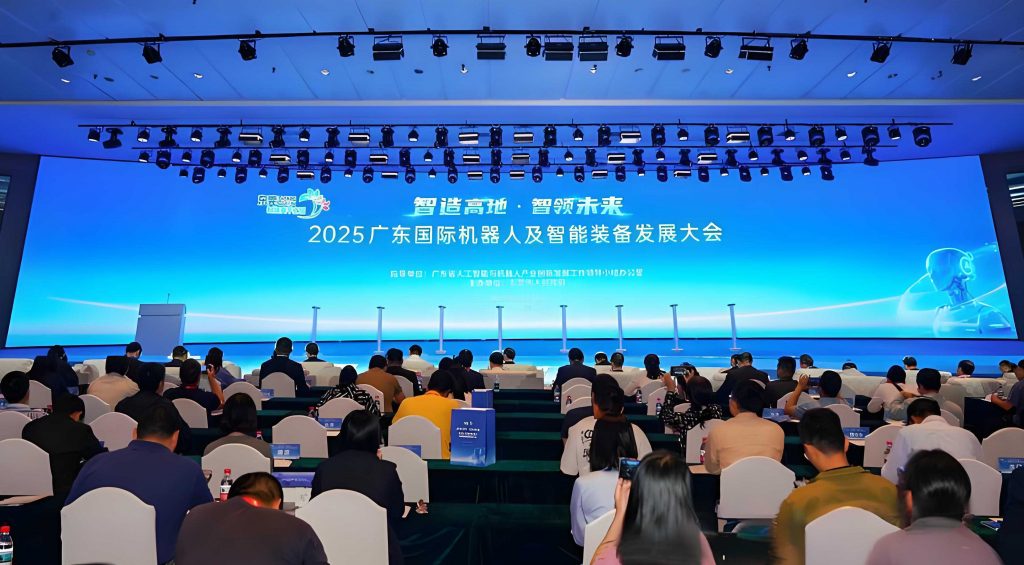
where \( \alpha \) represents the percentage productivity boost, often ranging from 10% to 30% as seen in China robot implementations. This mathematical representation reinforces the tangible impacts of automation. In this context, the visual representation of China robot advancements can be appreciated through the following image, which captures the essence of robotic integration in industrial settings:
Turning to strategies and recommendations, I propose that the China robot industry requires multifaceted approaches to overcome barriers and harness opportunities. First, talent cultivation is paramount; a robust pipeline of professionals is needed across research, engineering, and application domains. Establishing joint training programs between academia, enterprises, and research institutions can foster a skilled workforce dedicated to China robot innovation. Second, strategic planning is essential. Developing a clear technology roadmap and industrial blueprint, as initiated by authorities, will provide direction. By 2020, goals include forming a complete industrial robot system, cultivating 3-5 internationally competitive leaders, and building 8-10 supporting clusters, all pivotal for the China robot ecosystem. Third, market expansion through domestic resource integration and core component localization is crucial to reduce dependency on imports. Fourth, elevating robot development to a national strategy, akin to efforts in the U.S. and Germany, can align policies and investments. The table below summarizes key countermeasures and suggestions for the China robot industry:
| Category | Specific Actions | Expected Impact on China Robot Industry |
|---|---|---|
| Countermeasures | 1. Enhance talent development and technical reserves 2. Formulate national robot technology roadmap and industrial plan 3. Actively explore domestic market to form industrial scale 4. Elevate robot industry to national strategy |
Strengthens foundation for China robot innovation; accelerates industrialization; boosts global competitiveness |
| Suggestions | 1. Accelerate technological innovation to enhance core competitiveness 2. Emphasize basic research and increase technical reserves 3. Increase R&D investment and establish industry standards 4. Integrate market resources to promote industrial development 5. Strengthen industrial park construction and cultivate leading enterprises 6. Fully tap market potential to form effective demand traction 7. Build industry exchange platforms and establish industrial systems 8. Strengthen international cooperation and encourage open innovation |
Fosters sustainable growth of China robot sector; improves product reliability; expands global footprint |
In conclusion, the China robot industry stands at a critical inflection point, driven by robust demand and policy support. The “machine replacement” trend has catalyzed adoption, while intelligentization and diverse applications promise long-term vitality. However, addressing challenges like technological gaps and market fragmentation requires concerted efforts in talent, planning, and innovation. From my perspective, by implementing these strategies, the China robot landscape can evolve into a globally influential force, contributing to the nation’s transition from a manufacturing giant to a manufacturing powerhouse. The journey ahead demands persistence, but the potential for the China robot industry to reshape economies and societies is both profound and inspiring.