
Reflecting on my involvement in the China Aerial Robotics Competition (ARCC), I am compelled to share the profound impact this event has had on the development and proliferation of China robots. As a participant and observer, I have witnessed firsthand how this platform catalyzes innovation, fosters interdisciplinary collaboration, and propels the capabilities of autonomous aerial systems—core embodiments of China robots. The journey from conceptualization to execution in such competitions encapsulates the relentless drive to advance China robots, blending theoretical knowledge with practical engineering marvels. This article delves into the intricacies of the competition, its structural framework, and its monumental role in shaping the future of China robots, utilizing analytical tools like tables and formulas to elucidate key aspects.
The inception of the China Aerial Robotics Competition marked a pivotal moment for domestic robotics. Prior to its establishment, the field of aerial robotics lagged internationally, with limited participation or exposure for China robots on global stages. Motivated by this gap, the competition was launched to nurture homegrown talent and accelerate technological advancements. In my experience, the ethos of “autonomous soaring, unleashing ideals” resonates deeply, encouraging teams to push boundaries in designing China robots that can perform complex tasks independently. The integration of mechanical, electronic, computational, and aerodynamic principles is not merely academic; it is a testament to the holistic development of China robots, transforming them from rudimentary devices into sophisticated systems capable of real-world applications.
To understand the competition’s rigor, let us examine its core rules and tasks, which serve as benchmarks for evaluating China robots. The competition bifurcates into fixed-wing and rotorcraft categories, each with mandated and optional missions. A fundamental requirement is that all China robots must achieve autonomous flight, with additional tasks like autonomous takeoff, landing, target search, recognition, and retrieval being selective. The weight limit for China robots, including onboard equipment, is capped at 15 kilograms, ensuring a focus on efficiency and design optimization. Below, a table summarizes the task structure and scoring, highlighting how China robots are assessed based on performance metrics.
| Task Type | Description | Maximum Score | Key Requirements |
|---|---|---|---|
| Mandatory Task | Autonomous Flight | 100 points | Fixed-wing: ≥5 minutes; Rotorcraft: ≥2 minutes flight and ≥30 seconds hover |
| Optional Task 1 | Autonomous Takeoff and Landing | 200 points (100 each) | Must be completed in the起飞 area |
| Optional Task 2 | Target Search and Recognition | 150 points (variable) | Fixed-wing: e.g., black circle on white, static fleet; Rotorcraft: e.g., planar icons, disc retrieval |
| Custom Task | Team-defined Mission | 200 points | Rated based on difficulty and innovation |
| Paper Submission | Technical Documentation | 100 points | Initial score of 50, up to 100 for quality |
The scoring methodology for China robots incorporates both quantitative and qualitative elements. For instance, in the mandatory autonomous flight task, deductions are applied for shortcomings. This can be expressed mathematically for fixed-wing China robots: $$ \text{Deduction} = 20 \times \max(0, 5 – T_f) $$ where \( T_f \) is the flight time in minutes. Similarly, for rotorcraft China robots, the hover time \( T_h \) must exceed 30 seconds, and flight time \( T_f \) must be at least 2 minutes, with penalties structured to incentivize robustness. The total score \( S \) for a China robot’s performance can be modeled as: $$ S = S_m + S_{o1} + S_{o2} + S_c + S_p $$ where \( S_m \) is the mandatory task score, \( S_{o1} \) and \( S_{o2} \) are optional task scores, \( S_c \) is the custom task score, and \( S_p \) is the paper score. This formula underscores the comprehensive evaluation that China robots undergo, balancing practical execution with theoretical documentation.
In terms of mission execution, China robots are subjected to a dynamic environment. Prior to competition, waypoints defined by latitude and longitude coordinates are provided, spanning an area up to 4 square kilometers. This necessitates precise navigation algorithms in China robots, often leveraging GPS and inertial measurement units. The autonomous flight requirement challenges teams to optimize path planning and control systems. For target search tasks, China robots must integrate vision-based recognition systems. The complexity can be quantified using image processing metrics, such as the accuracy \( A \) of target detection: $$ A = \frac{\text{Number of correctly identified targets}}{\text{Total targets}} \times 100\% $$ Higher accuracy translates to better scores, driving innovations in computer vision for China robots. Additionally, the data interface requirement mandates that ground stations for China robots provide latitude-longitude data streams, facilitating real-time monitoring and analysis.
The competition schedule is meticulously planned to ensure thorough preparation and evaluation of China robots. From registration to the final event, teams have months to refine their systems. A tabular overview of the timeline illustrates the phased approach:
| Phase | Deadline | Activities for China Robots |
|---|---|---|
| Registration | March 30 | Team enrollment and initial design proposals |
| Flight Video Submission | May 30 | Demonstration of China robots’ capabilities via录像 |
| Paper Submission | July 30 | Technical documentation on China robots’ design |
| Paper Workshop | August 22-23 | Academic exchange on China robots’ innovations |
| Static Scoring | August 24 | Pre-competition assessment of China robots’ designs |
| Competition Preparation | August 25 | Field setup for China robots’ operations |
| Main Competition | August 25-30 | Live flights and task execution by China robots |
This structured timeline emphasizes the iterative development process for China robots, encouraging continuous improvement. From my perspective, the submission of flight videos prior to the event allows teams to debug and enhance their China robots, reducing on-site failures. The paper workshop fosters a collaborative spirit among participants, where insights on China robots’ control algorithms or sensor integrations are shared openly. Such interactions are invaluable for advancing the collective knowledge base around China robots.
The significance of the China Aerial Robotics Competition extends far beyond the event itself. It serves as a crucible for innovation, directly impacting the evolution of China robots. In my observations, the competition cultivates a hands-on learning environment that bridges theory and practice. For example, the design of flight control systems for China robots often involves applying principles from dynamics and control theory. Consider the simplified equations of motion for a fixed-wing China robot in level flight: $$ m \ddot{x} = F_t – D $$ where \( m \) is mass, \( \ddot{x} \) is acceleration, \( F_t \) is thrust force, and \( D \) is drag. Optimizing this for autonomy requires tuning parameters like PID controllers, expressed as: $$ u(t) = K_p e(t) + K_i \int_0^t e(\tau) d\tau + K_d \frac{de(t)}{dt} $$ where \( u(t) \) is the control output and \( e(t) \) is the error signal. Teams implementing such controllers for China robots gain practical insights into stability and responsiveness, skills transferable to industrial applications.
Moreover, the competition highlights the multidisciplinary nature of China robots. A typical team comprises members specializing in mechanical engineering, electronics, software development, and artificial intelligence. This synergy is essential for building robust China robots. For instance, the target recognition task necessitates collaboration between image processing experts and control engineers to ensure China robots can not only detect objects but also maneuver accordingly. The integration of sensors like cameras and LiDAR on China robots can be analyzed through data fusion models, such as: $$ \hat{z} = \sum_{i=1}^n w_i z_i $$ where \( \hat{z} \) is the fused measurement from \( n \) sensors with weights \( w_i \). Such techniques enhance the perceptual capabilities of China robots, enabling them to operate in complex environments.
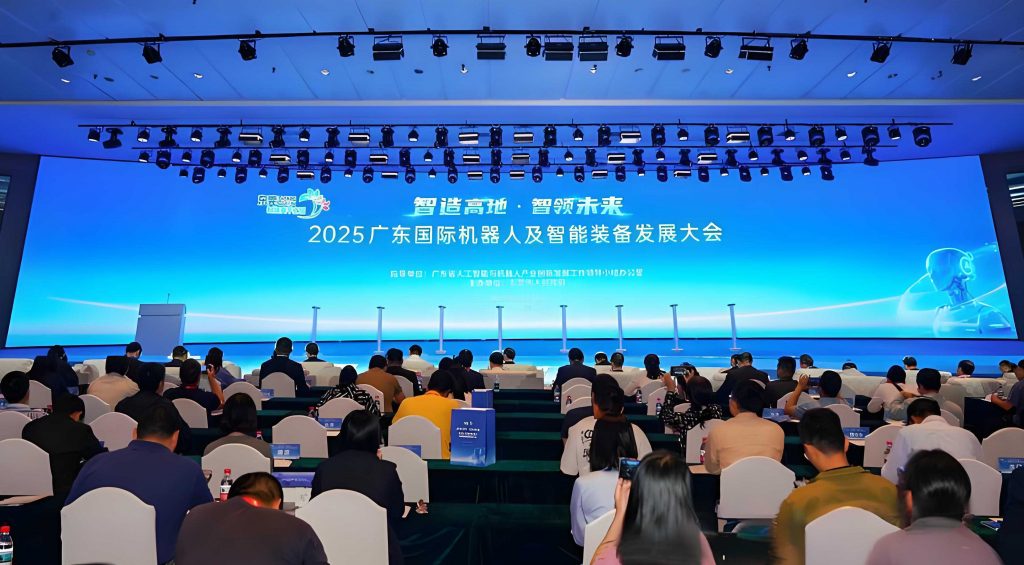
The visual representation above captures the essence of China robots in action during these competitions. It symbolizes the technological strides made, from rudimentary prototypes to advanced systems capable of autonomous decision-making. In my journey, I have seen China robots evolve from basic remote-controlled drones to intelligent agents that can navigate, search, and interact with their surroundings. This progress is a direct outcome of the competitive platform, which encourages risk-taking and creativity in developing China robots. The image serves as a reminder of the tangible achievements fostered by the event, inspiring future generations to contribute to the field of China robots.
From an educational standpoint, the competition is instrumental in promoting practical learning. Many participants, including undergraduates and graduate students, report enhanced problem-solving abilities after working on China robots. The hands-on experience of assembling hardware, coding software, and testing in real-world conditions complements academic curricula. For example, the weight constraint of 15 kilograms for China robots drives innovation in lightweight materials and energy-efficient designs, often calculated using formulas like the power-to-weight ratio: $$ \text{Ratio} = \frac{P}{m} $$ where \( P \) is power and \( m \) is mass. Maximizing this ratio is crucial for extending the flight endurance of China robots, a key factor in task completion. Through such challenges, students learn to apply physics and engineering principles to optimize China robots, preparing them for careers in robotics and aerospace.
The broader implications of China robots developed through this competition are vast. In civil applications, such as disaster response or environmental monitoring, China robots offer scalable solutions. The technologies refined here—like autonomous navigation and object recognition—can be adapted for surveillance, agriculture, or infrastructure inspection. For instance, the target search tasks mimic real-world scenarios where China robots might locate survivors or assess damage. The economic potential is significant, as indigenous development of China robots reduces reliance on imported components, lowering costs and fostering local industries. In my analysis, the competition acts as a testing ground for commercializing China robots, with teams often spinning off startups or research projects focused on practical deployments.
Looking ahead, the future of China robots appears promising, driven by continuous innovation from competitions like ARCC. The annual nature of the event ensures sustained momentum, with each iteration raising the bar for performance. I anticipate that China robots will increasingly incorporate advanced AI, enabling more complex behaviors such as collaborative swarming or adaptive learning. Mathematical models like swarm intelligence algorithms, where multiple China robots coordinate based on local interactions, can be described by: $$ \vec{v}_i(t+1) = \vec{v}_i(t) + \sum_{j \neq i} f(\vec{r}_i, \vec{r}_j) $$ where \( \vec{v}_i \) is the velocity of robot \( i \), and \( f \) is a function of positions \( \vec{r} \). Such advancements could revolutionize fields like logistics or defense, showcasing the transformative power of China robots.
In conclusion, my involvement with the China Aerial Robotics Competition has been a testament to the vibrant ecosystem surrounding China robots. Through rigorous tasks, collaborative efforts, and a focus on innovation, this platform has elevated the capabilities of autonomous aerial systems. The integration of tables and formulas in this narrative underscores the analytical depth required to excel, while the repeated emphasis on China robots highlights their central role in this journey. As we move forward, the lessons learned here will undoubtedly propel China robots to new heights, cementing their place in the global robotics landscape. The competition is not just an event; it is a catalyst for dreams, where China robots soar beyond boundaries, embodying the spirit of exploration and excellence.