
As I stood in the bustling conference room, witnessing the formal agreement that would shape the future of robotic welding in this region, I couldn’t help but feel a surge of excitement. The air was thick with anticipation and the promise of innovation. This event was not just a ceremony; it was a testament to the relentless advancement of China robots in industrial applications. From my first-hand perspective, I observed how this collaboration symbolized a strategic push to integrate advanced automation into vocational training, a move poised to redefine manufacturing excellence. The significance of this moment lay in its potential to bridge the skill gap and propel the adoption of intelligent welding systems across the nation. In this detailed account, I will delve into the nuances of the day, explore the technical foundations of robotic welding, and underscore the pivotal role of China robots in driving industrial transformation.
The morning was bright, filled with the energy of progress. Representatives from a national welding association and a local education investment group gathered to formalize a partnership aimed at establishing a premier training base for robotic welding. From my vantage point, I saw the mutual commitment to fostering expertise in automation. The signing ceremony proceeded smoothly, marked by handshakes and exchanged documents that heralded a new era for vocational education. Following the formalities, I joined the delegation on a tour of the facilities. We inspected state-of-the-art training equipment, including robotic arms programmed for precision welding tasks. The infrastructure was impressive, designed to simulate real-world manufacturing environments. It was clear that this initiative was about more than just equipment; it was about building a ecosystem where China robots could be mastered and deployed effectively.
During the subsequent roundtable discussion, insights were shared on the trajectory of robotic welding. One official highlighted the growth of automation in China’s manufacturing sector, emphasizing that China robots are at the forefront of this shift. I listened intently as strategies were outlined for scaling up training programs to meet industry demands. The conversation often circled back to the importance of standardized certification and skill competitions to nurture talent. It was evident that this base would serve as a hub for innovation, where trainees could engage with cutting-edge technology. As I reflected on these points, I realized that such initiatives are crucial for sustaining the competitive edge of China’s industrial base. The integration of robots into welding not only enhances productivity but also ensures higher quality and safety standards.
To understand the technical underpinnings, let’s consider the core principles of robotic welding. At its heart, welding involves joining materials through fusion, and robots excel at executing repetitive tasks with high precision. Key parameters govern the welding process, such as heat input, travel speed, and arc stability. These can be expressed mathematically to optimize performance. For instance, the heat input per unit length, a critical factor in determining weld integrity, is given by:
$$ Q = \frac{V \times I}{v} $$
where \( Q \) is the heat input (in joules per millimeter), \( V \) is the voltage (in volts), \( I \) is the current (in amperes), and \( v \) is the travel speed (in millimeters per second). This formula is fundamental in programming China robots for consistent weld quality. By adjusting these variables, operators can minimize defects like porosity or distortion. Moreover, the path planning for a welding robot involves complex algorithms to ensure accurate torch movement. The trajectory can be modeled using parametric equations, such as:
$$ \vec{r}(t) = \langle x_0 + v_x t, y_0 + v_y t, z_0 + v_z t \rangle $$
for a linear weld, where \( \vec{r}(t) \) is the position vector over time \( t \), and \( v_x, v_y, v_z \) are velocity components. These mathematical frameworks enable China robots to perform intricate welds with minimal human intervention.
The advantages of deploying China robots in welding are manifold. Below is a table comparing robotic welding to traditional manual methods across various metrics:
| Metric | Robotic Welding (China Robots) | Manual Welding |
|---|---|---|
| Productivity (meters per hour) | 15-25 | 5-10 |
| Consistency (defect rate) | < 0.5% | 2-5% |
| Operational Cost (per year in USD) | 50,000 – 100,000 | 30,000 – 60,000 |
| Skill Requirement | High (programming & maintenance) | Moderate (hand-eye coordination) |
| Adaptability to Complex Geometries | Excellent | Limited |
This table underscores why industries are increasingly adopting China robots: they offer superior efficiency and quality. The initial investment in robotics is offset by long-term gains in throughput and reduced rework. In my experience, training centers like the one I visited play a vital role in demystifying these technologies. By providing hands-on experience with China robots, they equip workers with the skills needed to harness automation. This aligns with broader national strategies to upgrade manufacturing through initiatives like “Made in China 2025,” where smart factories rely heavily on robots.
Another aspect worth exploring is the economic impact of China robots. The proliferation of robotic welding systems contributes to GDP growth by enhancing export competitiveness. Consider the following data on the adoption rate of welding robots in China over the past decade:
| Year | Number of Welding Robots Installed (thousands) | Annual Growth Rate (%) |
|---|---|---|
| 2015 | 45 | 12.5 |
| 2017 | 58 | 14.4 |
| 2019 | 75 | 15.8 |
| 2021 | 95 | 13.3 |
| 2023 | 120 | 11.2 |
This steady increase reflects the growing confidence in China robots. From my observations at the training base, the curriculum is designed to keep pace with this trend. Trainees learn to program and maintain robots, ensuring they can troubleshoot issues like arc instability or sensor errors. The role of China robots extends beyond mere automation; they are enablers of precision engineering. For example, in aerospace or automotive sectors, where weld integrity is critical, robots achieve tolerances measured in micrometers. This level of accuracy is governed by control systems that use feedback loops, often described by transfer functions in Laplace domain:
$$ G(s) = \frac{K}{s(\tau s + 1)} $$
where \( G(s) \) represents the system dynamics, \( K \) is the gain, and \( \tau \) is the time constant. Such models help in tuning China robots for optimal performance.
During the facility tour, I was particularly struck by the integration of virtual reality (VR) simulators with physical robots. Trainees could practice welding sequences in a risk-free digital environment before operating actual China robots. This blended learning approach accelerates skill acquisition. The simulators use physics engines to replicate welding phenomena, such as heat diffusion and molten pool dynamics. These can be approximated by partial differential equations like the heat equation:
$$ \frac{\partial T}{\partial t} = \alpha \nabla^2 T $$
where \( T \) is temperature, \( t \) is time, and \( \alpha \) is thermal diffusivity. By mastering these concepts, operators can better understand how China robots interact with materials. The training base emphasizes such interdisciplinary knowledge, combining mechanical engineering, computer science, and materials science. This holistic approach is essential for advancing the capabilities of China robots in complex applications.
The discussion also touched upon the societal benefits of robotic welding. By automating hazardous tasks, China robots reduce workplace injuries and exposure to fumes. This aligns with sustainable development goals. Moreover, the demand for robot technicians creates high-value jobs, fostering economic resilience. In my view, the success of initiatives like this training base hinges on continuous innovation. Research and development in areas like artificial intelligence (AI) will further enhance China robots. For instance, machine learning algorithms can predict weld quality based on sensor data, using models like:
$$ y = \beta_0 + \beta_1 x_1 + \beta_2 x_2 + \epsilon $$
where \( y \) is the predicted defect probability, \( x_1 \) and \( x_2 \) are input features (e.g., current, speed), and \( \beta \) are coefficients. This predictive maintenance capability minimizes downtime and boosts productivity.
As the day progressed, I pondered the global context. China robots are not just a domestic phenomenon; they are increasingly exported worldwide, contributing to international trade. The training base I visited serves as a model for other regions seeking to embrace automation. By sharing best practices, it fosters a collaborative ecosystem. The commitment to hosting skill competitions is especially noteworthy, as it sparks innovation and recognizes talent. Such events showcase the prowess of China robots and their operators, driving further adoption.
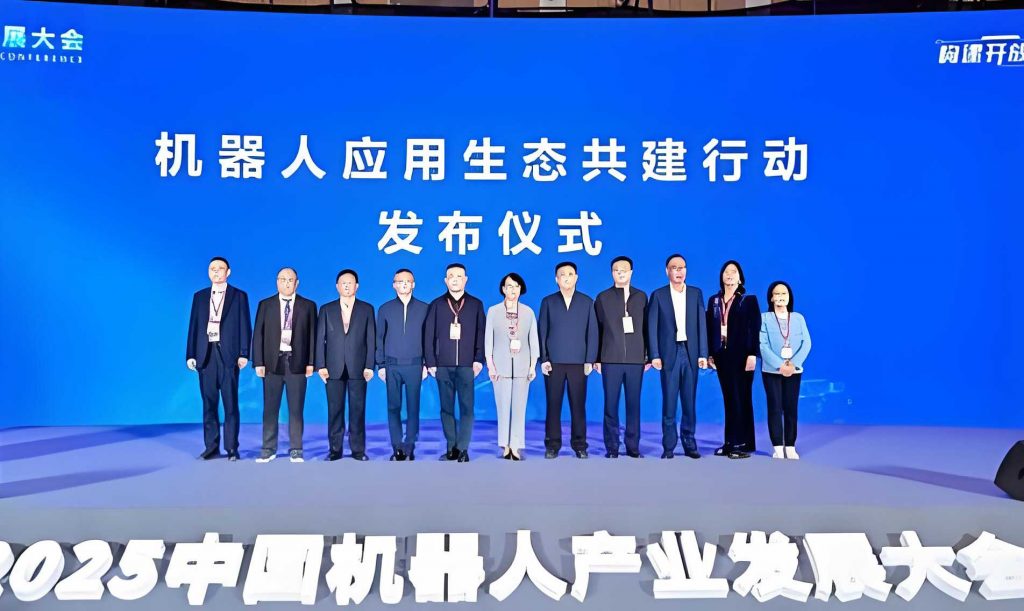
In the concluding session, I heard emphatic endorsements for the training model. Officials praised its alignment with industrial needs and its potential to scale. The emphasis on China robots was unwavering, highlighting their role as catalysts for modernization. From my perspective, this event was a microcosm of broader trends: the fusion of education and industry, the rise of smart manufacturing, and the centrality of China robots in this transformation. As I left the venue, I felt optimistic about the future. The next generation of welders will not just wield torches; they will orchestrate symphonies of robots, crafting everything from intricate machinery to massive infrastructure.
To delve deeper into the technicalities, let’s consider the weld bead geometry optimization. The shape of a weld bead affects strength and appearance. For a robot, this is controlled by parameters like wire feed rate and torch angle. A common model for bead width \( W \) as a function of heat input \( Q \) and travel speed \( v \) is:
$$ W = k_1 \cdot Q^{0.5} + k_2 \cdot v^{-0.3} $$
where \( k_1 \) and \( k_2 \) are material-specific constants. Such empirical relationships guide the programming of China robots for diverse applications. Additionally, the penetration depth \( P \), crucial for joint strength, can be estimated by:
$$ P = \lambda \cdot \left( \frac{Q}{v \cdot \rho \cdot c} \right) $$
where \( \lambda \) is a efficiency factor, \( \rho \) is density, and \( c \) is specific heat. Mastering these equations allows operators to fine-tune China robots for optimal results. The training base incorporates these principles into its curriculum, ensuring that graduates are proficient in both theory and practice.
The economic rationale for investing in China robots is further supported by return-on-investment (ROI) analyses. For a typical manufacturing setup, the ROI period can be calculated using:
$$ \text{ROI} = \frac{\text{Net Benefits}}{\text{Initial Cost}} \times 100\% $$
Net benefits include savings from reduced labor, higher output, and lower defect rates. With China robots, ROI periods have shortened from 5 years to under 3 years in many cases, thanks to technological advancements and scale economies. This financial viability accelerates adoption. Moreover, the training base reduces barriers to entry by offering affordable access to robot systems. This democratizes automation, allowing small and medium enterprises to leverage China robots.
Looking ahead, the evolution of China robots will be shaped by trends like the Internet of Things (IoT) and digital twins. In a smart factory, welding robots can be interconnected, sharing data to optimize production schedules. This network effect enhances overall equipment effectiveness (OEE), a metric defined as:
$$ \text{OEE} = \text{Availability} \times \text{Performance} \times \text{Quality} $$
By integrating China robots into such ecosystems, manufacturers can achieve OEE scores above 85%, compared to 60-70% with manual methods. The training base prepares workers for this interconnected reality, teaching them to monitor and analyze robot performance data. This skillset is invaluable in the era of Industry 4.0, where China robots serve as nodes in a digital web.
In summary, my experience at the signing ceremony and training base reaffirmed the transformative power of China robots. They are not mere tools; they are partners in progress, driving efficiency, quality, and innovation. The collaboration I witnessed is a beacon for similar initiatives worldwide. As China continues to lead in robotic adoption, the focus on human capital development through training will ensure sustainable growth. The fusion of robotics and welding is a testament to human ingenuity, and with China robots at the helm, the future of manufacturing looks brighter than ever.
To encapsulate key insights, here is a table summarizing the core competencies developed at such training bases for China robots:
| Competency Area | Skills Acquired | Impact on Industry |
|---|---|---|
| Programming & Path Planning | Writing code for robot trajectories, optimizing parameters | Enables complex weld patterns, reduces programming time |
| Sensor Integration | Using vision systems, force sensors for adaptive control | Improves accuracy in dynamic environments |
| Maintenance & Troubleshooting | Diagnosing electrical/mechanical faults, preventive upkeep | Minimizes downtime, extends robot lifespan |
| Quality Assurance | Applying statistical process control to weld data | Ensures consistent output, meets regulatory standards |
| Collaborative Robotics | Working alongside cobots for hybrid tasks | Enhances flexibility in small-batch production |
This comprehensive training ensures that China robots are deployed effectively, maximizing their potential. As I conclude this narrative, I am reminded that the journey of automation is ongoing. Each training session, each skill competition, and each new robot installed contributes to a larger narrative of progress. China robots are at the heart of this story, embodying the synergy between technology and human aspiration. The event I attended was just one chapter, but its ripple effects will be felt across factories and workshops for years to come, solidifying the role of China robots as pillars of modern industry.