
As I observe the current industrial landscape, a pressing question emerges: is the fervent development of industrial China robots a sustainable and strategically sound pathway for national economic advancement? This topic has ignited vigorous debate within academic, industrial, and public circles. Having dedicated recent months to a deeper examination of this trajectory, I find it necessary to re-evaluate, learn, and reflect on several critical issues. This article presents my perspectives on the historical context, current status, developmental trends, market dynamics, and the complex issue of labor substitution concerning China robots. The aim is to foster discussion among stakeholders and provide insights for governmental policy formulation.
Historical Context and Evolutionary Trajectory
The genesis of industrial China robots can be traced back to the early 1970s. Over the subsequent four decades, the journey has unfolded through three distinct phases: a germination period in the 1970s, a development period in the 1980s, and a period of practical application beginning in the 1990s.
Initial research and development commenced around 1972. A significant milestone was reached in 1985 when industrial robotics was designated a key project within the national Seventh Five-Year Plan. This initiative focused on foundational technologies, core components, and the development of several types of robot manipulators and application engineering projects. By this stage, some performance indicators of domestically produced China robots had reached levels comparable to international products from the early 1980s, enabling limited small-batch production.
The 1990s marked a substantial leap forward, primarily driven by support from the National High-Tech R&D Program (863 Program). This period witnessed the emergence of the first batch of industrial China robots with independent intellectual property rights, covering applications such as spot welding, arc welding, assembly, painting, cutting, handling, and palletizing. Over a hundred application engineering projects were implemented, and more than twenty industrial bases for robot production were established.
The following table summarizes the key developmental stages of China robots:
| Time Period | Designated Phase | Key Characteristics and Achievements |
|---|---|---|
| 1970s | Germination | Initial R&D beginnings; foundational exploration. |
| 1980s | Development | National project inclusion; achievement of basic technical parity with 1980s foreign models; small-batch production capability. |
| 1990s onward | Practical Application | 863 Program support; development of multiple robot types with independent IP; establishment of application projects and industrial bases. |
| Late 1990s | Commercialization | Initial steps towards product commercialization, laying groundwork for industrialization. |
This cumulative progress, from nonexistence to gradual scaling, has laid a necessary foundation for the current push towards intelligent manufacturing. Today, China possesses fundamental design and manufacturing capabilities for various industrial robots, meeting general production demands. The current status across different technological domains can be summarized as follows:
- Fundamental Research: Core technologies in robot kinematics, dynamics, configuration synthesis, motion control algorithms, programming languages, and sensor development are largely understood.
- Control Systems: Development of control devices utilizing dual-processor, multi-processor, and hierarchical architectures, with many deployed in practical settings.
- Complete Machine Development: Successful design and production of series including SCARA robots, Cartesian robots, arc welding robots, spot welding robots, palletizing robots, and AGVs. Some models have achieved small-batch production.
- Application Breadth: Deployment across numerous demonstration lines and workstations in industries such as automotive, engineering machinery, electronics, metal processing, and food & beverage.
Nevertheless, a significant technological gap persists. Key performance indicators like long-term operational stability and precision often lag behind international advanced standards. Furthermore, the annual influx of thousands of new industrial robots into the Chinese market remains dominated by foreign imports. Therefore, while progress is evident, it would be premature to label China as a dominant power in the global industrial robotics arena.
Assessing the Present: A Snapshot of Capability and Gap
A quantitative assessment of the current state of China robots reveals both capability and disparity. We can model the overall technical maturity \( M \) as a function of several key parameters:
$$ M = \alpha C_t + \beta P_m + \gamma I_a – \delta D_g $$
Where:
\( C_t \) represents mastery of Core Technologies (e.g., control algorithms, mechanical design),
\( P_m \) represents Production Maturity (yield, reliability),
\( I_a \) represents Industrial Application breadth and depth,
\( D_g \) represents the perceived Technological Gap versus global leaders,
and \( \alpha, \beta, \gamma, \delta \) are weighting coefficients reflecting strategic priorities.
For the current state of China robots, \( C_t \) and \( I_a \) have seen positive growth, contributing to \( M \). However, \( D_g \) remains a substantial negative term, particularly in areas like high-precision reducers, high-performance servo systems, and sophisticated controller software. The dependency on imported core components directly impacts \( P_m \) and the cost structure, affecting market competitiveness.
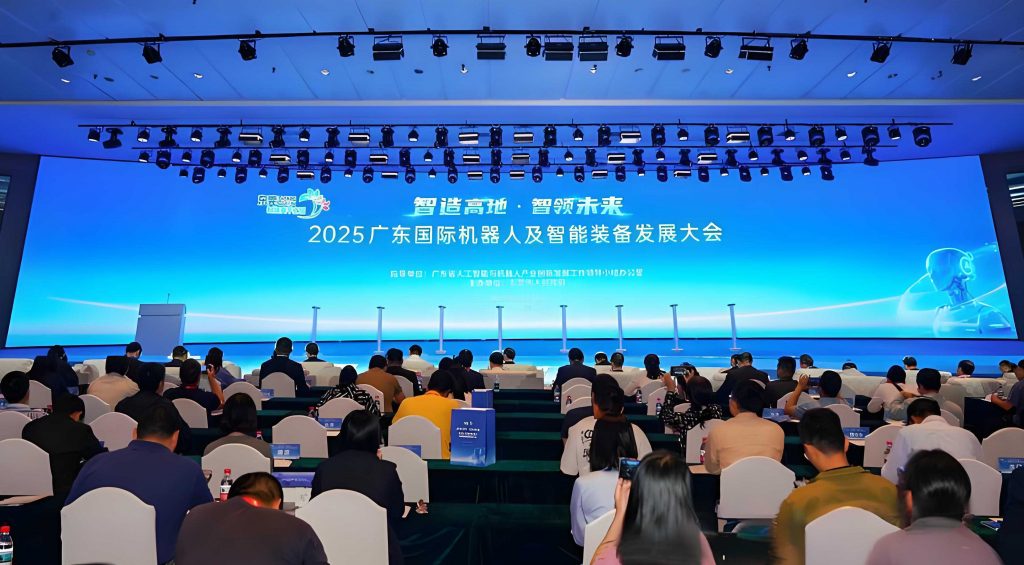
The market reality underscores this analysis. While domestic companies like Siasun have shown impressive growth, the combined market share of the “Big Four” international giants—ABB, FANUC, Yaskawa, and KUKA—along with other foreign brands, consistently exceeds 80% of the Chinese market. This indicates that for high-stakes, high-performance applications, the trust and proven capability still lie largely with established foreign products. The journey for China robots to achieve parity is not merely about building robots but about mastering the entire value chain and building a reputation for unwavering quality and innovation.
Global and Domestic Trends Shaping the Future
Understanding the trajectory of China robots requires situating it within both global and domestic trend lines.
International Trajectories
Globally, the industrial robotics market has experienced exponential growth, particularly since the turn of the century. According to data from the International Federation of Robotics (IFR), annual installation growth rates have averaged around 30% in recent years, with the Asian region, spearheaded by China, often seeing growth exceeding 40%. This surge is driven by the global imperative for increased productivity, consistent quality, and flexibility in manufacturing—a paradigm often termed Industry 4.0 or smart manufacturing. The trend is towards more collaborative, sensitive, and easily integrated robots that can work alongside humans in increasingly complex tasks.
Domestic Trajectories and Strategic Positioning
Within China, the trend is characterized by explosive market growth coupled with strategic national prioritization. The “Made in China 2025” initiative explicitly identifies high-end numerically controlled machinery and robotics as pivotal strategic industries. This policy backing creates a powerful tailwind for the sector. The domestic market for China robots is not only expanding rapidly but also diversifying beyond its traditional anchor in the automotive sector into electronics, logistics, food processing, and metal fabrication.
The growth of the domestic installed base can be modeled using a compound growth formula:
$$ I_t = I_0 \times (1 + r)^t $$
Where \( I_t \) is the installed base in year \( t \), \( I_0 \) is the base installed base, and \( r \) is the compound annual growth rate (CAGR). For China robots, \( r \) has been exceptionally high. For instance, with a cumulative installed base of 74,000 units by the end of 2011, and annual sales growth rates historically around 30-50%, the subsequent growth has been phenomenal, positioning China to become the world’s largest robot market. This growth trajectory presents a dual opportunity: to service a vast domestic demand and to use this scale as a springboard for global competitiveness.
Market Dynamics: Scale, Competition, and Structural Evolution
The Chinese industrial robot market is a study in contrasts: immense scale and potential juxtaposed with intense competition and structural challenges. The following table encapsulates key market dynamics:
| Market Aspect | Current Characterization | Implication for China Robots |
|---|---|---|
| Scale & Growth | World’s largest and fastest-growing market; predicted long-term dominance. | Provides a crucial “home field” advantage for domestic players to scale and iterate. |
| Competitive Landscape | ~80% share held by foreign giants (ABB, FANUC, Yaskawa, KUKA). | Domestic brands compete in a challenging environment, often focusing on niche or cost-sensitive segments initially. |
| Domestic Industry Structure | Fragmented with many SMEs; emerging leaders (e.g., Siasun); rapid regional cluster development. | Needs consolidation and optimization to build scale and R&D muscle to compete globally. |
| Application Diversification | Rapid expansion beyond automotive into general industry, logistics, and new sectors. | Creates opportunities for specialized China robots tailored to local industry needs. |
| Policy Support | Strong national and local government backing through initiatives and funding. | Accelerates R&D in core components and incentivizes adoption, lowering market entry barriers. |
The market’s evolution is not linear. While the demand is undeniable, the ability of domestic manufacturers to capture a larger portion of this value is contingent on overcoming systemic hurdles. The influx of international players establishing local production also raises the competitive bar, forcing domestic companies to accelerate innovation and improve quality. The market for China robots is thus a battleground where technological prowess, supply chain mastery, and strategic agility will determine the winners.
A Balanced View: Challenges and Concurrent Opportunities
The path forward for China robots is lined with both formidable challenges and unprecedented opportunities. A clear-eyed assessment is essential.
Persistent Challenges
- Core Technology and Component Dependency: The most critical bottleneck lies in core components: high-precision reducers, high-performance servo motors and drives, and advanced control software. Heavy reliance on imports (particularly from Japan) constrains profit margins, supply chain security, and the ability to customize robots for optimal performance. The technological gap, \( D_g \), in these areas remains significant.
- Limited Brand Equity and Performance Perception: In high-end applications, domestic China robots often struggle with perceptions regarding long-term reliability, precision consistency, and advanced software integration. Building trust equivalent to that enjoyed by established international brands is a slow process requiring demonstrable, sustained excellence.
- Fragmented Industrial Ecosystem and Talent Shortage: The industry, while growing, lacks the depth and cohesion of mature ecosystems like Germany or Japan. A shortage of high-end R&D talent in robotics-specific fields like advanced control theory, AI integration, and mechatronic system design also hampers rapid innovation.
Significant Opportunities
- Unparalleled Domestic Market Demand: This is the single greatest advantage. The massive and growing domestic market provides a testing ground, allows for economies of scale, and offers immediate revenue streams to fuel reinvestment in R&D for China robots.
- Strong and Sustained Policy Support: National and local governments are actively supporting the industry through R&D grants, tax incentives for adoption, and the development of specialized industrial parks. This de-risks investment and accelerates the innovation cycle.
- Rapid Application Diversification: As automation spreads to small and medium-sized enterprises (SMEs) and non-traditional sectors, new requirements emerge. These often prioritize cost-effectiveness, ease of use, and flexibility over extreme performance. This plays to potential strengths of agile domestic companies developing China robots tailored for these specific markets.
- Integration with Digital Trends: The convergence of robotics with AI, IoT, and 5G presents a new frontier. In these emerging areas, the gap with Western counterparts may be smaller, offering a chance for China robots to leapfrog in areas like cloud robotics, swarm coordination, and AI-driven adaptive control.
The Labor Substitution Equation: Feasibility, Economics, and Socioeconomic Impact
A central driver of demand for China robots is the prospect of substituting for human labor. This is a complex calculus involving technical feasibility, economic rationale, and broader socioeconomic factors.
The Technical and Economic Feasibility Model
The decision to substitute a robot for human labor can be framed as a Return on Investment (ROI) analysis over a time horizon \( T \). The net benefit \( NB \) of deploying a robot can be expressed as:
$$ NB(T) = \sum_{t=1}^{T} \frac{(C_L(t) – C_R(t) + \Delta Q(t) + \Delta S(t))}{(1 + i)^t} – C_{I0} $$
Where:
\( C_L(t) \) = Cost of human labor (wages, benefits, management) in year \( t \), typically rising.
\( C_R(t) \) = Cost of robot operation (energy, maintenance, programming) in year \( t \).
\( \Delta Q(t) \) = Economic value of quality improvement (less rework, higher consistency).
\( \Delta S(t) \) = Economic value of safety, flexibility, and scalability improvements.
\( i \) = Discount rate.
\( C_{I0} \) = Initial investment cost of the robot system (robot, integration, training).
For China robots, the economics are becoming increasingly favorable. \( C_L(t) \) has been rising steadily. While \( C_{I0} \) may be comparable to foreign robots (if using imported components), the total cost of ownership for domestic solutions is decreasing through policy support and scaling. The key for widespread adoption across SMEs is reducing \( C_{I0} \) and simplifying integration to realize the benefits of \( \Delta Q(t) \) and \( \Delta S(t) \). Technically, for repetitive, precise, or hazardous tasks—common in welding, painting, palletizing, and assembly—the feasibility of using China robots is already high.
A Prudent Path Forward
While the economic and technical logic for automation is strong, advocating for a wholesale, rapid replacement of human labor by China robots is misguided. Several factors necessitate a measured approach:
- Employment and Social Stability: Large-scale, abrupt displacement of workers without reskilling pathways could create significant social challenges. The transition must be managed.
- System Readiness: As noted earlier, the current generation of China robots may not yet be ready for all applications. A process of phased adoption, starting with the most suitable and economically justifiable applications, allows for technological maturation and workforce adaptation.
- Integration Complexity: A robot is just one component in an automated system. Success requires compatible peripherals, process redesign, and skilled maintenance—ecosystem elements that need time to develop.
Therefore, the development and deployment of China robots should be strategic and targeted, not a frenzied, “all-in” national campaign. The goal should be to enhance national productivity and move up the global value chain, not merely to replace workers. Investment should focus on innovation in core technology, building a robust supply chain, and developing human capital to design, build, program, and maintain these advanced systems. The narrative should shift from simple labor substitution to labor augmentation and the creation of new, higher-value jobs in the robotics and smart manufacturing sectors themselves.
Synthesis and Forward-Looking Perspectives
In conclusion, the story of China robots is one of remarkable progress from a late start to occupying a central position in the world’s most dynamic automation market. The historical foundation, while not leading globally, has provided a essential platform. The current state is a mixture of demonstrated capability in system integration and volume manufacturing for mid-range applications, juxtaposed with a critical dependency on foreign core technologies that cap performance and profitability.
The future trajectory will be determined by how effectively the sector addresses its core weaknesses while leveraging its unique advantages. The formula for success involves:
- Relentless focus on core component innovation: Breaking the import dependency for reducers, servos, and controllers is non-negotiable for long-term sovereignty and competitiveness in the field of China robots.
- Strategic consolidation and ecosystem building: Fostering stronger collaboration between academia, research institutes, and industry to create a more cohesive and innovative national ecosystem.
- Niche leadership and diversification: Capitalizing on the diversified domestic market to develop specialized, cost-effective robotic solutions that may not be the priority for international giants, thereby building market share and expertise.
- Prudent and socially responsible adoption: Promoting automation as a tool for enhancing national industrial capability and creating better jobs, while managing the transition of the workforce through education and reskilling initiatives.
The opportunity for China robots is historic. The challenge is immense. By avoiding the trap of short-term, subsidy-driven expansion and instead focusing on the hard, sustained work of fundamental innovation and quality excellence, China can transition from being the world’s largest robot market to being a home for world-leading robot technology and companies. The journey is as much about industrial policy and cultural commitment to quality as it is about engineering. The coming decade will be decisive in determining whether China robots become followers, fast-followers, or true pioneers in the global age of automation.