
The global manufacturing sector stands at a pivotal juncture, driven by the imperative for digital transformation. This transition, centered on the deep integration of information technology with industrial processes, is the cornerstone for enhancing competitiveness, achieving sustainable development, and building a modern industrial system. Within this transformative wave, a new generation of intelligent agents is emerging from laboratories onto factory floors: humanoid robots. As the physical embodiment of artificial intelligence (AI), these China robots represent a profound convergence of AI, advanced mechanics, electronics, and sensor technologies. They are not merely automated tools but adaptive partners capable of redefining production paradigms. This analysis delves into how humanoid China robots are overcoming technical barriers and unlocking new potentials in smart manufacturing, fundamentally empowering what is known as “China’s Intelligent Manufacturing.”
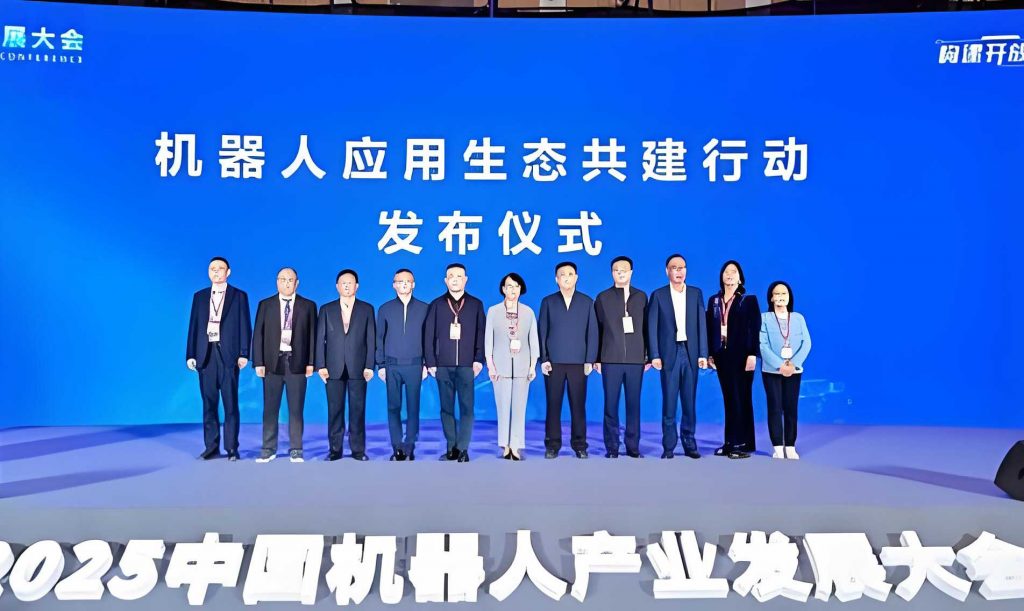
The development of humanoid robotics, particularly in China, has been significantly accelerated by strategic national policies. Frameworks such as the “14th Five-Year Plan for Robot Industry Development” and the “Guiding Opinions on the Innovative Development of Humanoid Robots” have set clear roadmaps. A core objective is to establish a preliminary innovation system by 2025, with breakthroughs in key technologies related to the “brain” (intelligence), “cerebellum” (motion control), and “limbs” (actuation), ensuring secure and effective supply of core components. The progress made by China robots in these domains is foundational to their practical deployment.
Technical Breakthroughs in Humanoid China Robots
The journey from concept to capable factory worker hinges on solving immense technical challenges. Recent advancements in China robots have been marked by significant leaps in three critical areas.
1. Breakthrough in Locomotion and Dexterity
The primary challenge lies in replicating human balance, agility, and adaptability. Early humanoid robots were confined to controlled, flat environments. Today, advanced China robots have demonstrated remarkable progress in complex terrain navigation. For instance, the “Tiangang” robot, developed by a Beijing-based innovation center, can run on sand, snow, and slopes, with its running speed doubling from 6 km/h to 12 km/h. A landmark achievement was its successful outdoor ascent of 134 consecutive stairs, showcasing unprecedented lower-body strength and dynamic balance control. This mobility is governed by complex dynamics. The Zero-Moment Point (ZMP) is a key stability criterion used in bipedal locomotion:
$$ \text{ZMP} = \frac{\sum_{i=1}^{n} m_i ( \ddot{z}_i + g ) x_i – \sum_{i=1}^{n} m_i \ddot{x}_i z_i}{\sum_{i=1}^{n} m_i ( \ddot{z}_i + g )} $$
where \( m_i \) is the mass of link \( i \), \( g \) is gravity, and \( (x_i, z_i) \) are the coordinates of the center of mass of link \( i \). Modern control systems strive to keep the ZMP within the robot’s support polygon for stable walking and running on uneven surfaces.
2. Breakthrough in Intelligent Control (“Brain” and “Cerebellum”)
The intelligence of a humanoid robot is architected in layers, often analogized to a “brain” and a “cerebellum.”
- The “Brain” (High-Level Decision & Perception): This is the AI core, integrating high-performance computing platforms with sophisticated algorithms for multi-sensor data fusion (vision, LiDAR, force/torque, audio). It performs environment perception, task planning, and strategic decision-making. For a China robot on an assembly line, its “brain” might use a convolutional neural network (CNN) for visual inspection:
$$ y = f_{CNN}(I; \theta) = \text{Softmax}\left(\text{Flatten}\left(\text{Pool}\left(\text{ReLU}\left(\text{Conv}(I, W) + b\right)\right)\right)\right) $$
where \( I \) is the input image, \( W \) and \( b \) are learned weights and biases, and \( y \) is the classification output (e.g., “defective” or “intact”).
- The “Cerebellum” (Low-Level Motion Control): This subsystem translates high-level commands into precise, coordinated joint movements. The evolution is shifting from traditional model-based control (e.g., computed torque control) to more adaptive, learning-based methods like reinforcement learning (RL). An RL agent learns an optimal policy \( \pi^* \) that maximizes the expected cumulative reward \( R \):
$$ \pi^* = \arg\max_{\pi} \mathbb{E}_{\pi}\left[ \sum_{t=0}^{T} \gamma^t r(s_t, a_t) \right] $$
where \( s_t \) is the state (e.g., joint angles, body orientation), \( a_t \) is the action (e.g., motor torques), \( r \) is the reward for performing \( a_t \) in \( s_t \), and \( \gamma \) is a discount factor. This allows China robots to learn complex manipulation skills through simulation and practice, improving dexterity over time.
3. Breakthrough in Energy Management
Untethered operation is crucial for flexibility. Advances in battery technology are directly extending the operational window of China robots. While high-performance lithium-ion batteries remain prevalent, next-generation solutions like solid-state batteries are emerging. For example, a third-generation humanoid robot from a major Chinese automaker, equipped with a solid-state battery, achieves up to 6 hours of operation with an reported energy consumption reduction of over 80% compared to peers. The fundamental metric is energy density (\( E_d \)):
$$ E_d = \frac{E}{m} \quad \text{(Wh/kg)} $$
where \( E \) is the energy capacity in watt-hours and \( m \) is the mass of the battery pack. Increasing \( E_d \) is paramount for longer missions. Furthermore, fast-charging technology, which aims to minimize the charging time constant \( \tau \), is becoming a critical focus to reduce downtime and improve overall equipment effectiveness (OEE).
| Breakthrough Area | Key Metric / Capability | Impact on Manufacturing |
|---|---|---|
| Locomotion | Speed (12 km/h), Terrain (stairs, snow), Balance | Enables mobility across unstructured factory environments, dynamic material fetching. |
| Dexterous Manipulation | Multi-DOF arms, Force/Torque sensing, mm-level precision | Allows execution of delicate assembly, polishing, and wiring tasks traditionally done by humans. |
| Intelligent Perception (“Brain”) | Multi-modal sensor fusion, Real-time object & defect recognition | Facilitates autonomous quality inspection, bin-picking, and adaptive task execution. |
| Adaptive Control (“Cerebellum”) | Reinforcement Learning for motion, Impedance control for interaction | Enables robots to learn new skills and perform compliant, safe physical collaboration. |
| Energy & Endurance | Operational duration (6+ hrs), Fast-charging capability | Supports extended shift operations, reduces charging downtime, increases asset utilization. |
Manufacturing’s Demand for Humanoid Solutions
The drive for digital transformation creates specific, pressing needs that humanoid China robots are uniquely positioned to address. These needs align with national strategic goals of fostering “intelligent and green” manufacturing upgrades.
1. Demand for Elevated Productivity and Flexibility
Modern manufacturing requires agility to handle high-mix, low-volume production and rapid product changeovers. Traditional, fixed automation struggles here. Humanoid robots, with their inherent mobility and reprogrammability, can be dynamically redeployed. By integrating with Manufacturing Execution Systems (MES) and Enterprise Resource Planning (ERP) systems, they enable real-time data acquisition and dynamic scheduling. The impact on production cycle time (\( T_{cycle} \)) and work-in-process (WIP) inventory can be modeled. If a robot reduces the processing time per station and improves flow, the overall cycle time decreases:
$$ T_{cycle}^{new} = \frac{T_{total}^{new}}{N} < T_{cycle}^{old} $$
where \( T_{total}^{new} \) is the reduced total processing time after robot deployment and \( N \) is the number of units. Reports suggest potential reductions of over 30% in production cycles and 20-35% in WIP inventory.
2. Demand for Cost Optimization and Resource Efficiency
Rising labor costs and the pursuit of sustainable operations are key drivers. Humanoid robots offer a dual advantage: they can perform high-precision, repetitive tasks with consistent quality (e.g., error ≤ 0.03 mm) for extended periods (24/7 operation), and their intelligent control systems can optimize resource use. The financial rationale is captured in a simplified Return on Investment (ROI) model:
$$ \text{ROI} = \frac{\text{Net Benefits per Year}}{\text{Total Investment}} = \frac{(C_{labor}^{saved} + C_{scrap}^{saved} + C_{downtime}^{saved}) – C_{maintenance}^{robot}}{C_{acquisition}^{robot} + C_{integration}^{robot}} $$
Studies indicate that comprehensive humanoid robot solutions can lower overall production costs by 18-25%, with an ROI period potentially as short as 2-3 years. Furthermore, precise control can increase raw material yield by 15-20% and reduce energy consumption by 8-12%, contributing directly to green manufacturing goals.
3. Demand for Intrinsic Safety and Advanced Human-Robot Collaboration (HRC)
The future factory is collaborative. Unlike caged industrial robots, humanoid China robots are designed for shared workspaces. This requires:
- Natural Interaction: Advanced Natural Language Processing (NLP) allows them to understand and execute complex verbal instructions and engage in contextual dialogue.
- Physical Safety: Integrated force/torque sensing, proximity sensors, and soft robotics principles enable compliant contact and emergency braking. The goal is to minimize the collision force (\( F_{collision} \)) through control:
$$ F_{collision} = K_p \cdot e + K_d \cdot \dot{e} + M \cdot \ddot{x}_{desired} $$
where \( K_p, K_d \) are variable impedance parameters, \( e \) is the position error, and \( M \) is the apparent inertia. By modulating these parameters, the robot can become “soft” upon unexpected contact.
4. Demand for Operating in Hazardous or Ergonomically Challenging Environments
Many manufacturing tasks involve exposure to toxic chemicals, extreme temperatures, heavy loads, or repetitive strain injuries. Humanoid robots can be deployed as direct substitutes in these hazardous or ergonomically unsustainable roles, significantly improving workplace safety and allowing human workers to focus on higher-value, supervisory, or creative tasks.
| Manufacturing Pain Point | Traditional Limitation | Humanoid Robot Solution | Quantifiable Benefit |
|---|---|---|---|
| Rigid Production Lines | High changeover cost/time for new products. | Software-reprogrammable, mobile platform for flexible task assignment. | Faster changeover, enables high-mix production. |
| Labor-Intensive Precision Work | High cost, variability, fatigue-related defects. | High-accuracy, consistent 24/7 operation for assembly, inspection. | Defect rate reduction, labor cost savings (~3-5x efficiency gain). |
| Unstructured Material Handling | Fixed conveyor belts or AGVs require structured environment. | Mobile dexterity to pick parts from bins, carts, or shelves. | Reduces need for expensive line reconfiguration. |
| Complex Quality Inspection | Manual inspection is slow, subjective, and prone to error. | AI-vision “brain” for real-time, multi-angle defect detection. | 100% inspection coverage, objective and traceable quality data. |
| Dangerous Maintenance Tasks | Risk to human workers in harsh environments. | Remote operation or autonomous execution of hazardous procedures. | Improved safety records, enables predictive maintenance in risky areas. |
The Technical Superiority of Humanoid Robots Over Traditional Automation
While traditional industrial robots (e.g., articulated arms, SCARA robots) have driven automation for decades, they exhibit fundamental limitations that humanoid China robots aim to overcome, offering a more holistic and adaptable form of automation.
Traditional Industrial Robots: They are typically single-purpose, fixed-base machines with limited degrees of freedom (DOF), designed for repetitive tasks within a tightly constrained workspace (e.g., welding, painting, pick-and-place). Their strength is speed and precision in structured environments. However, their weakness is a lack of mobility, poor adaptability to task variations, and an inherent design that necessitates separation from human workers for safety, hindering collaboration.
Humanoid China Robots: Their design philosophy is fundamentally different, leading to distinct advantages:
1. Anthropomorphic Form and General-Purpose Flexibility
The human-like morphology, with a torso, two arms, and bipedal/mobile base, is not an aesthetic choice but an engineering one. It allows these China robots to operate in environments built for humans—using the same tools, climbing the same stairs, and working at standard workbenches. Their multi-DOF arms and hands provide a vast configuration space (\( C \)-space) for manipulation:
$$ \mathcal{C} = SE(3) \times \mathbb{T}^n $$
where \( SE(3) \) is the Special Euclidean group representing the base’s position/orientation in 3D space, and \( \mathbb{T}^n \) is the \( n \)-dimensional torus representing the joint angles of the arms and hands. This enables them to perform a wide array of tasks without extensive, task-specific tooling.
2. Integrated Mobility and Situational Awareness
Mobility is integral. A humanoid robot can walk from an assembly station to a quality check area, then to a packaging line. This is coupled with 360-degree situational awareness from cameras, depth sensors, and LiDAR, creating a dense map of the environment for navigation and task execution in dynamic settings.
3. Inherent Suitability for Human-Robot Collaboration (HRC)
The anthropomorphic form and advanced sensing make them intuitively understandable and predictable to human coworkers. They are designed from the ground up for safe physical interaction (via impedance control) and natural communication (via speech and gesture), enabling true teamwork where humans and robots complement each other’s strengths.
Challenges and the Road Ahead for China Robots
Despite the compelling vision, the path to widespread adoption of humanoid China robots in manufacturing is fraught with challenges that must be addressed to realize their full potential.
- High Technical Complexity and Cost: The integration of advanced actuators, sensors, AI chips, and software stacks results in high upfront costs. The bill of materials (BOM) for a capable humanoid robot remains a significant barrier for small and medium-sized enterprises (SMEs).
- Reliability and Durability in Harsh Environments: Industrial environments are demanding, with dust, vibrations, electromagnetic interference, and physical impacts. Ensuring the long-term reliability and robustness of complex humanoid systems under such conditions is a major engineering hurdle.
- AI Safety and Robustness: The “brain” must make safe and predictable decisions in all scenarios. Ensuring the AI’s decisions are robust against edge cases, sensor noise, or adversarial conditions is critical for trust and safety.
- Integration with Legacy Systems: Most existing factories run on legacy machinery and software. Developing seamless, plug-and-play integration protocols for humanoid robots to communicate with older MES, PLCs, and equipment is a non-trivial task.
- Workforce Transformation and Skills Gap: Deploying humanoid robots requires a new breed of technicians, programmers, and supervisors. Addressing this skills gap through education and training is essential for smooth adoption.
However, the trajectory is promising. As R&D continues, economies of scale are achieved in component production (like actuators and sensors), and software platforms mature, costs will decline. The future points towards humanoid China robots not as replacements for human workers, but as tireless “digital colleagues” that augment human capabilities. They will take over the “dull, dirty, and dangerous” tasks, while creating new, higher-skilled jobs in robot supervision, maintenance, and task programming. This symbiotic evolution will be the hallmark of the next industrial revolution, positioning humanoid China robots as a central pillar in the global landscape of intelligent manufacturing.