
In my analysis of global manufacturing trends, the transformative role of industrial automation, particularly the proliferation of China robots, stands as the defining narrative of the early 21st century. As the world’s foremost manufacturing hub, China’s journey with automation encapsulates a microcosm of global industrial evolution—a story of explosive growth, strategic competition, and complex technological challenges. My examination reveals that the trajectory of China robots is not merely about replacing human labor but about fundamentally re-architecting production paradigms to achieve new levels of precision, flexibility, and efficiency. The data paints a picture of a market in hyper-growth, yet one that is simultaneously navigating a critical juncture between scale and sophistication, between adoption and true innovation.
The foundational drivers for the robotics surge in China are multifaceted and powerful. Primarily, the rising cost of labor and a shrinking workforce demographic have created an economic imperative for automation. Furthermore, national and provincial industrial policies, often featuring substantial subsidies for purchasing domestically produced robots, have acted as a powerful accelerant. This policy-driven push aims to upgrade the country’s manufacturing base under initiatives like “Made in China 2025.” From an application standpoint, the demand for China robots is most acute in the automotive, electronics, metal fabrication, and logistics sectors, where tasks are often repetitive, precise, or hazardous. The core value proposition for a manufacturer investing in a China robots solution can be modeled by a simplified Return on Investment (ROI) framework focusing on productivity uplift:
$$ ROI_{robot} = \frac{(P_{robot} – C_{opera}) \times T_{life} – I_{capex}}{I_{capex}} $$
Where:
$P_{robot}$ = Production output value per unit time with the robot,
$C_{opera}$ = Operational cost per unit time (energy, maintenance),
$T_{life}$ = Expected operational lifetime of the robot,
$I_{capex}$ = Initial capital expenditure for the robot system.
The dramatic market expansion is best visualized through key metrics. The following table summarizes the core quantitative landscape that has shaped my understanding of the China robots market’s scale and velocity.
| Metric | Approximate Figure (circa 2016-2017) | Context & Implication |
|---|---|---|
| Annual Robot Installation Growth Rate (2000-2015) | ~17% CAGR | Indicates a sustained, super-linear market expansion over a 15-year period. |
| Robot Density (Robots per 10,000 employees) | 49 | Though rising fast, this was still significantly below advanced economies (e.g., South Korea, Japan, Germany), signaling massive headroom for growth. |
| Number of Domestic Robot Companies | Over 4,300 | Reflects the “gold rush” phenomenon, with a surge in entrants across the value chain, from core manufacturing to system integration. |
| Domestic Brand Market Share (by volume) | ~15% | Highlights the dominant position of foreign giants despite the large number of local players, pointing to a gap in high-end capability. |
| Domestic Brand Output Value Growth (2015) | ~55% | Shows the aggressive scaling and improving commercial traction of homegrown China robots suppliers. |
This explosive growth, however, has given rise to a landscape I characterize as “structured chaos.” The market is vividly segmented. At the pinnacle reside the established international robotics conglomerates—often referred to as the “Big Four”—which established deep roots in China through a phased strategy of distribution, local engineering, and finally, complete local manufacturing. Their value proposition rests on technological prestige, reliability, and global support networks. In fierce competition are the emerging domestic champions, a handful of firms that have achieved notable scale and technical competence in specific applications or robot categories. Beneath these tiers exists a vast sea of small and medium-sized enterprises (SMEs), including numerous system integrators and component suppliers, all vying for a piece of the automation pie. This fragmentation, while a sign of vibrant activity, also leads to redundancy, intense price competition at the low end, and concerns about consistent quality.
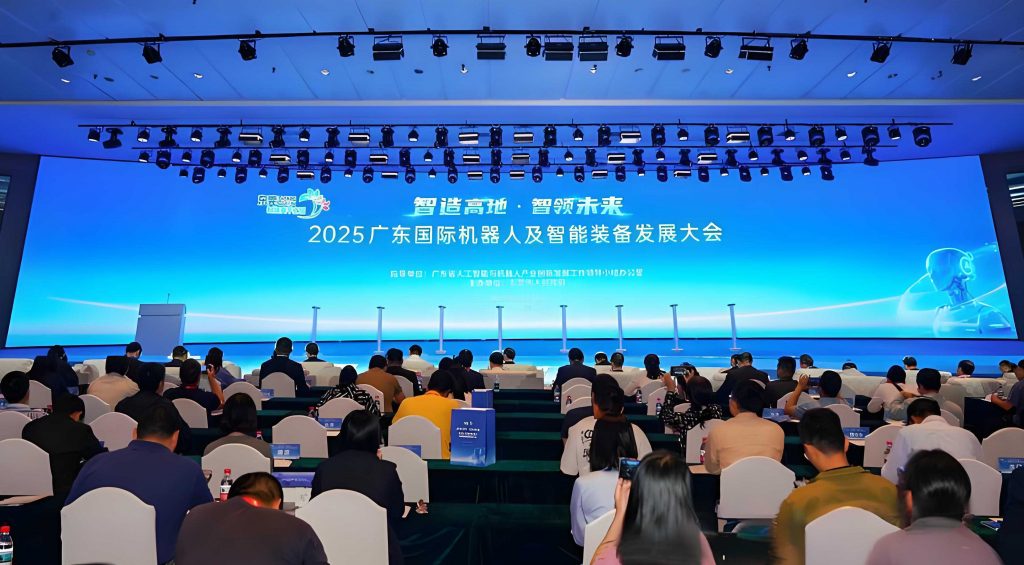
My technical assessment identifies several critical bottlenecks that challenge the long-term competitiveness of the broader China robots ecosystem. The dependency on foreign sources for core high-precision components remains a significant strategic vulnerability. The performance of a robot is fundamentally constrained by its weakest core component. We can express the overall system performance $ \Pi_{sys} $ as a function of its key subsystems:
$$ \Pi_{sys} = f(\eta_{reducer}, \tau_{servo}, \epsilon_{controller}, \alpha_{software}) $$
Where $ \eta_{reducer} $ represents the precision and backlash of the gearbox (e.g., RV reducers), $ \tau_{servo} $ the torque density and response of servo motors and drives, $ \epsilon_{controller} $ the motion control algorithm efficiency, and $ \alpha_{software} $ the sophistication of application programming and AI-enabled adaptability. Currently, for high-end applications, domestic producers of China robots often rely on imports for optimal $ \eta_{reducer} $ and $ \tau_{servo} $, which inflates costs and complicates supply chains.
Secondly, the integration and application software layer presents a substantial hurdle. While a robot arm is a physical asset, its utility is unlocked through software. Many domestic projects focus on the “hardware” sale but lack the deep process knowledge and software tools to create truly optimized, flexible, and easily redeployable workcells. This gap limits the value realization for end-users and keeps domestic integrators often confined to less complex, standardized tasks. The challenge extends into the realm of smart manufacturing, where the next generation of China robots must be inherently connected, data-generating, and capable of collaborative and adaptive work. The transition from automated machines to intelligent agents requires breakthroughs in machine vision, force sensing, and edge AI—areas demanding significant R&D investment.
Looking forward, the path for China robots is bifurcating. One path continues the trajectory of volume expansion in traditional manufacturing roles, leveraging cost advantages and improving basic reliability. The other, more strategic path focuses on leapfrogging into next-generation applications and technologies. Collaborative robots (cobots), mobile robots for logistics (AMRs), and robots for entirely new service sectors (e.g., healthcare, agriculture) represent greenfield opportunities where the legacy advantage of foreign giants may be less pronounced. Success here hinges on software, sensor fusion, and user experience. Furthermore, the concept of Robotics-as-a-Service (RaaS) could disrupt traditional capital expenditure models, making advanced China robots solutions more accessible to SMEs.
The density growth formula, often used in industry analysis, helps frame the future saturation point and required innovation shift:
$$ D(t) = D_{sat} \cdot (1 – e^{-k \cdot t}) + \Delta_{new} $$
Here, $ D(t) $ is the robot density at time $ t $, $ D_{sat} $ is the saturation density for traditional applications, $ k $ is the adoption rate constant, and $ \Delta_{new} $ is the incremental density driven by entirely new applications and robot types. My projection is that as the traditional market segment $ D_{sat} \cdot (1 – e^{-k \cdot t}) $ matures, the future growth engine $ \Delta_{new} $ for China robots will become paramount.
The following table contrasts the prevailing market paradigm with the emerging requirements for future success in the China robots industry, based on my synthesis of current trends.
| Dimension | Current Paradigm (Volume-Driven) | Future Paradigm (Value & Innovation-Driven) |
|---|---|---|
| Core Competency | System assembly, cost-effective manufacturing, basic integration. | Core component innovation (precision reducers, servo systems), advanced AI software, holistic solution design. |
| Market Focus | High-volume, standardized applications (e.g., palletizing, welding, simple assembly). | High-mix, low-volume production, collaborative workcells, non-industrial sectors (services, healthcare). |
| Business Model | Primarily hardware sales (robot arms) with basic commissioning. | Subscription-based software, RaaS (Robotics-as-a-Service), performance-based contracts. |
| Key Differentiator | Price, local service/support network, government subsidy eligibility. | Ease of use (no-code programming), interoperability (IoT/IIoT), data analytics capability, total cost of ownership. |
| Role of China robots | A tool for labor substitution and efficiency gain in established processes. | An intelligent, adaptive platform enabling new manufacturing and service processes previously not possible. |
In my concluding perspective, the narrative of China robots is transitioning from one of quantitative adoption to qualitative transformation. The initial phase, fueled by policy and economic necessity, has successfully seeded the market and built a substantial industrial base. However, the next chapter will be decidedly more difficult. It will be won not by the number of companies in a robotics park, but by the depth of intellectual property in core technologies and the ability to solve real-world industrial problems with elegant, software-centric solutions. The integration of advanced sensing, machine learning, and digital twin technologies will separate the leaders from the followers. The future of China robots, therefore, lies at the intersection of mechanical engineering, computer science, and deep domain expertise. The firms that can master this convergence will not only capture greater value within China but will also be poised to become formidable global competitors, reshaping the worldwide landscape of industrial automation. The journey ahead is as much about technological deepening as it is about market expansion, a dual challenge that will define the coming decade for this dynamic sector.