
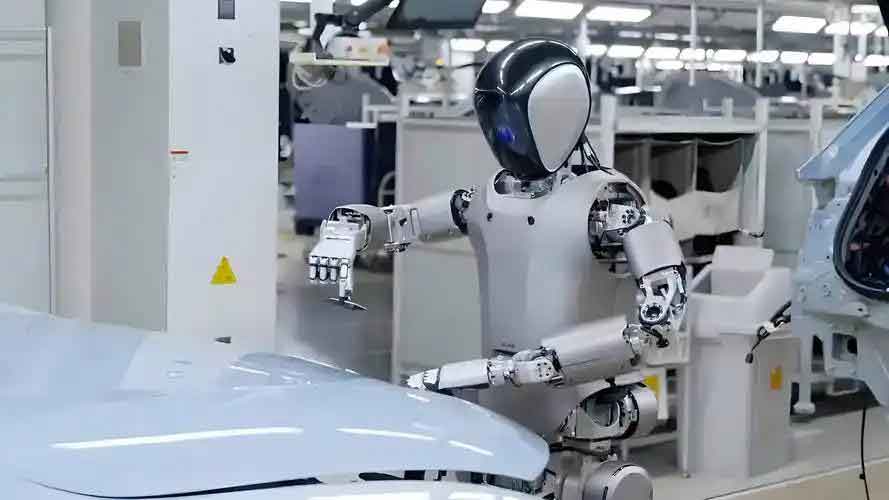
As I look back at 2025, I cannot escape the feeling that this is the year humanoid robots truly broke out of the laboratory. From the lively robot folk dance on the Spring Festival Gala stage to the robots running alongside human athletes on the marathon track in Yizhuang, and then to the world-class robot competition held in Hangzhou, the image of humanoid robots moving through real-world environments has become a familiar sight. In my analysis of this sector, I see an industry being driven forward by a powerful convergence of policy support, capital inflows, and genuine demand. Yet, I also see critical bottlenecks that must be addressed before humanoid robots can move from exciting demonstrations to reliable mass production. In this article, I will share my perspective on the current state of the industry, the challenges that are impeding scale-up, and the strategic actions I believe are essential for sustainable growth.
Market Size and Growth Prospects
From my perspective, the market trajectory for humanoid robots is nothing short of remarkable. According to the global market report I recently reviewed, the world humanoid robot market reached approximately $2.03 billion in 2024. For 2025, industry research predicts that China alone will produce over 10,000 units, with a market size expected to reach 8.239 billion yuan. Looking further ahead, global sales of humanoid robots are projected to approach 340,000 units by 2030, with a market value exceeding 64 billion yuan. By 2035, global sales could surpass 5 million units, and the market could exceed 400 billion yuan. In the long run, some forecasts suggest that by 2045, the market size for in-use humanoid robot complete machines in China could reach around 10 trillion yuan. These figures paint a picture of explosive growth, but I also know that such projections depend heavily on overcoming technical and economic hurdles.
| Year | Global Sales (Units) | Global Market Size (Billion Yuan) | China Production (Units) | China Market Size (Billion Yuan) |
|---|---|---|---|---|
| 2024 | — | — | — | — |
| 2025 | — | — | >10,000 | 82.39 |
| 2030 | ~340,000 | >640 | — | — |
| 2035 | >5,000,000 | >4000 | — | — |
| 2045 | — | — | — | ~10,000,000? |
To better understand this growth, I often use a compound annual growth rate (CAGR) formula. If we denote the market size at the initial year as \(M_0\) and the market size at the final year as \(M_T\), then the CAGR over \(T\) years is given by:
$$ CAGR = \left( \frac{M_T}{M_0} \right)^{\frac{1}{T}} – 1 $$
For example, using the global market from 2024 to 2030, we have \(M_0 = 20.3\) (in billions of USD) and \(M_T = 640/7 \approx 91.4\) (in billions of USD, roughly converting 640 billion yuan to USD). The implied CAGR would be:
$$ CAGR_{2024-2030} = \left( \frac{91.4}{20.3} \right)^{1/6} – 1 \approx 0.28 $$
This indicates a roughly 28% annual growth rate, which is impressive but still below what many optimists claim. I always caution that such aggregate numbers mask significant variability across segments and use cases. The true growth will depend on the pace of technological maturity, cost reduction, and the emergence of profitable applications.
Capital and Ecosystem Dynamics
In my observation, the humanoid robot industry is currently experiencing what I would call a “capital fever.” On one hand, leading enterprises have grown rapidly, leveraging their full-stack technical integration capabilities. Distinct supply chain ecosystems have emerged, often categorized by their anchor companies. These ecosystems have become the backbone of the humanoid robot industry, providing key components, software, and integration services. On the other hand, global technology giants and domestic internet leaders are making heavy investments. Many listed companies are entering the field through cross-industry investment, and the frequency and scale of financing events have increased dramatically. Based on data I have collected from investment databases, in the first half of 2025 alone (January 1 to July 10), there were 141 investment events in the embodied intelligence and humanoid robot sector in China. Of these, 121 were directed at robot complete machine manufacturers and 20 at component suppliers.
| Time Period | Total Investment Events | Robot Complete Machine | Components / Parts |
|---|---|---|---|
| Jan 1 – Jul 10, 2025 | 141 | 121 | 20 |
I have also noticed that some new funding rounds have set records. For instance, a Beijing-based robotics company secured 1.1 billion yuan in a new round in June 2025, which was the largest single-round financing in the domestic humanoid robot industry that year. The company had accumulated 2.4 billion yuan in cumulative funding within two years. Such capital enthusiasm is a double-edged sword: it fuels rapid iteration, but it also creates conditions for overvaluation and resource misallocation.
To analyse the financial sustainability of these ventures, I often look at the ratio of enterprise value to revenue. For many startups in this sector, the valuation-to-revenue ratio is extremely high:
$$ \text{Price-to-Sales (P/S)} = \frac{\text{Valuation}}{\text{Annual Revenue}} $$
In many cases I have seen, startups with revenues below 100 million yuan are valued at over 5 billion yuan, implying a P/S ratio above 50. Such multiples are only justified if the companies can achieve extraordinary revenue growth in the next few years. But given the technical and commercial hurdles, I remain cautious about whether these expectations can be met.
Policy Support and Government Initiatives
Government policy plays an indispensable role in the humanoid robot industry. In 2025, at least 20 provinces in China incorporated embodied intelligence into their key work plans. The policies cover the entire chain from technology R&D to standard-setting, scenario opening, and commercialization. I see a clear pattern of “national strategy + local pilot programs + capital support,” which forms a closed loop of goals, paths, and resources. Let me share a few examples that I find particularly noteworthy:
| Region / Policy | Key Targets and Support |
|---|---|
| Beijing Action Plan (2025-2027) | Break through more than 100 key technologies; produce no fewer than 10 internationally leading software/hardware products; cultivate at least 50 core upstream/downstream enterprises; form no fewer than 50 mass-produced products; first to exceed 10,000 mass-produced units; build a 100-billion-yuan industrial cluster. |
| Shanghai Pudong 16 Policies | Up to 20 million yuan support for core technology breakthroughs; project subsidies for scenario implementation up to 100 million yuan. |
| Guangdong Four-Dimensional Policy | Strategic positioning + funding incentives + scenario opening + technology attack. |
| Zhejiang AI Innovation Policy | Build industry bases; open more than 50 application scenarios. |
These policies are not just symbolic. They provide concrete financial resources, regulatory flexibility, and market access. From my perspective, the policy environment in China is one of the most favorable in the world for humanoid robot development. However, I also believe that policy alone cannot solve the deeper technical and economic challenges. The government can create a fertile ground, but companies must still plant the seeds and grow the crop.
Critical Challenges Facing the Humanoid Robot Industry
Despite the optimistic outlook, I have identified four major challenges that must be addressed for the sustainable development of humanoid robots. These are not trivial issues; they are fundamental bottlenecks that will determine whether humanoid robots become a mass-market product or remain a niche curiosity.
1. Technical Maturity and Key Technology Gaps
The first challenge is technical maturity. In my evaluation, the intelligence level of humanoid robots is still quite limited. Most robots rely on human teleoperation or pre-programmed routines when executing tasks. Their ability to perform complex tasks in unstructured environments is severely constrained. I often use the analogy of autonomous driving levels (L0-L5) to describe the intelligence progression of humanoid robots. From this perspective, humanoid robots are still at the L0-L1 stage, which corresponds to no automation or driver assistance. This is far from the L4/L5 level that would enable fully autonomous operation.
Core hardware reliability is another major concern. Although the localization rate of key components has increased, critical parts such as flexible tactile sensors, RF filters, high-precision reducers, and motors that withstand extreme environments are still largely imported. This dependence not only pushes up costs but also exposes the supply chain to geopolitical risks. Domestic sensors still lag in resolution and anti-interference performance. Intelligent chips urgently need independent development. The insufficient performance of hardware limits the motion precision of robots, thereby restricting their use in fine industrial operations.
Software algorithms also present significant gaps. Motion control, environmental perception, and real-time decision-making are still in the transition from laboratory to industrial application. Dynamic balance algorithms and multi-modal perception fusion (vision, voice, force control) have not yet met the reliability requirements of industrial scenarios. I can express the technical readiness level (TRL) of the overall system as:
$$ TRL_{system} = \min_{i \in \{ \text{hardware, software, algorithm, integration} \}} TRL_i $$
This equation is a simplified representation of the fact that a system is only as ready as its weakest component. Currently, I would place the overall TRL of humanoid robots at around 4 to 5 on a scale of 9, where level 4 means component validated in a laboratory environment and level 5 means technology validated in a relevant environment. To reach mass production, we need to push the TRL to at least 8 or 9, which requires simultaneous advances in multiple disciplines.
2. Commercialization Difficulties and Cost-Scenario Mismatch
The second challenge is the slow pace of commercialization. The unit cost of a humanoid robot often exceeds 100,000 yuan, which is beyond the budget of many small and medium-sized enterprises. The payback period for a typical robot investment is commonly more than three years. I can represent the return on investment (ROI) as:
$$ ROI = \frac{\text{Net annual savings}}{\text{Initial robot system cost}} $$
If a robot costs 150,000 yuan and saves 40,000 yuan per year in labor costs, the simple payback period is:
$$ \text{Payback period} = \frac{150,000}{40,000} = 3.75 \text{ years} $$
Such a long payback period discourages many potential buyers. Moreover, current humanoid robots are often only capable of performing structured tasks such as fixed-position handling. In unstructured environments, such as flexible production lines or parcel sorting, their failure rate is still high. Even in warehousing and logistics, where standardized robots have been used for years, complex package handling still requires human intervention. This mismatch between robot capability and real-world task complexity is a fundamental barrier.
Consumer scenarios are also limited. In contrast to the tens of millions of floor-cleaning robots sold each year, household service robots have much lower sales. Most household robots can only provide basic conversation and simple functions, not the multi-task collaboration that users actually expect. I believe this gap will only be closed through continuous iteration and user-centered design.
3. Capital Short-Termism and Market Bubbles
The third challenge is the risk of capital short-termism. The intense influx of capital has led to valuation bubbles. As I mentioned earlier, many startups have valuations that are more than 50 times their revenue, which creates unrealistic expectations. Some companies rely too heavily on external financing; their funding rounds occur much faster than their technological iterations, leading to a divergence between valuation and actual progress. This is not sustainable in the long run.
I have also observed a lack of “patient capital” in the humanoid robot sector. Technology startups require intensive R&D investment over extended periods, but many investors expect quick exits. The mismatch between the capital exit mechanism and the industrial technology development cycle is a critical bottleneck. Fast-moving venture capital may achieve rapid profit in some cases, but for technology companies that need long-term support, it can interrupt R&D and jeopardize the entire industrialization process.
In addition, the capital structure is often imbalanced. Many state-owned funds focus on hardware investment, adhering to strategies of “invest early, invest small, invest hard.” Market-oriented venture capital tends to follow state-owned funds to reduce risk, which leads to overcrowding in certain hardware segments and excessive expansion of hardware capacity. Meanwhile, software investment remains insufficient. This imbalance makes it more difficult for companies to achieve commercialization, as they lack the software capabilities that are crucial for delivering value.
4. Imperfect Industrial Chain and Data Bottleneck
The fourth challenge is the imperfect industrial chain and the shortage of high-quality data. The upstream and downstream collaboration in the humanoid robot industry is inadequate. The lack of unified industry standards causes compatibility issues in equipment interfaces and communication protocols across different manufacturers. For example, servo drive communication protocols currently have parallel systems such as EtherCAT and Profinet, and there is no cross-platform interface specification. This standardization deficit leads to duplicated development and custom adaptation efforts, compressing profit margins. Based on industry data, the gross margin of the industrial robot industry in 2024 was only about 25%, significantly lower than other high-end equipment sectors.
Furthermore, there is a scarcity of high-quality, diverse datasets for humanoid robots. Unlike language large models that can leverage massive internet text data, embodied intelligence models for robots do not have readily available data. Real-world interaction data is time-consuming and expensive to collect, while simulation data suffers from the sim-to-real gap. Existing open-source robot datasets have inconsistent quality and lack a unified data collection benchmark. This makes it impossible to train general-purpose robots across different scenarios and tasks. I propose the following data efficiency metric:
$$ \eta_{data} = \frac{\text{Task success rate increase}}{\text{Number of training samples used}} $$
Higher \(\eta_{data}\) indicates more efficient data utilization. Currently, \(\eta_{data}\) is very low for humanoid robots because each new task requires a new dataset and re-training. We need to develop more transferable and sample-efficient learning methods.
Finally, patent barriers pose a risk of infringement disputes. As of April 2025, the global number of patent applications in embodied intelligence exceeded 831,300, with China contributing more than 219,900 applications, ranking first in the world. However, Japan, South Korea, and the United States have accumulated a large number of early patents in industrial robots, particularly in drive systems and perception systems. These countries hold advantageous positions in patent rankings. The patent barriers could trigger infringement lawsuits, which would hinder the development of domestic companies. I advocate the establishment of patent early-warning mechanisms and the promotion of core technology independence.
Strategic Recommendations for High-Quality Development
Given these challenges, I believe that a multi-faceted strategy is necessary to push the humanoid robot industry from the laboratory to mass production. I have formulated four recommendations based on my analysis.
1. Accelerate Breakthroughs in Core Key Technologies
First, I recommend accelerating the localization of high-end core components. In the short term, the focus should be on material innovation and the reliability of key components. It is essential to increase support for domestic key component enterprises to reduce dependence on foreign suppliers and lower production costs. The goal is to achieve autonomous and controllable supply chains from basic hardware to system software. In the medium and long term, the focus should shift to full-chain breakthroughs in intelligent systems.
Second, I recommend accelerating algorithm breakthroughs, particularly in artificial intelligence chips. The “brain” of a humanoid robot requires high-computing-power and high-bandwidth AI chips coupled with multi-modal large models. Specialized chips should be developed based on the characteristics of humanoid robots to meet the practical needs of “fast computation” and “fast transmission.” The “cerebellum” of the robot, which controls the smoothness and agility of movements, also needs significant attention in motion control technology to achieve precise control, rapid response, and reliable execution.
| Time Horizon | Focus Areas | Expected Outcomes |
|---|---|---|
| Short-term (1-2 years) | Materials innovation, key component reliability, cost reduction | Domestic supply chain for critical parts; lower unit cost |
| Medium-term (3-5 years) | AI chip development, motion control algorithms, multi-modal perception | L2-L3 autonomy equivalent; reduced failure rates in structured tasks |
| Long-term (5+ years) | Full-stack intelligent systems, self-learning and adaptation | L4+ autonomy; generalizable across diverse scenarios |
In my view, the technical roadmap should be guided by real-world deployment needs rather than by the pursuit of academic novelty. The performance of humanoid robots in complex industrial environments will determine the pace of commercialization. Every component, every algorithm, and every integration step must be validated against field conditions.
2. Foster Commercialization through Scenario Innovation
Second, I strongly believe that the commercialization of humanoid robots depends not only on technology but also on finding the right application scenarios. While industrial manufacturing is an obvious starting point, I see enormous potential in medical care, home services, education, elderly care, and more. We should encourage collaborative exploration between robot developers and end-users to identify high-value, high-need tasks that robots can perform better, faster, or safer than humans.
For industrial scenarios, the key is to demonstrate stability and economic value over long periods. I have seen some successful pilots in structured environments such as palletizing and machine tending. The next step is to expand into semi-structured and unstructured tasks. For commercial and consumer scenarios, user experience is paramount. Robots must meet the expectations of non-expert users in terms of safety, ease of use, and reliability.
| Application Domain | Example Tasks | Key Performance Indicators |
|---|---|---|
| Industrial Manufacturing | Material handling, assembly, quality inspection, machine tending | Cycle time, defect rate, uptime, ROI |
| Logistics & Warehousing | Sorting, loading/unloading, last-mile delivery | Throughput, error rate, cost per parcel |
| Healthcare & Elderly Care | Patient mobility assistance, medication delivery, companionship | Safety, user satisfaction, reduced caregiver burden |
| Education & Entertainment | Interactive teaching, dance performance, museum guiding | Engagement, responsiveness, content richness |
| Homeland & Service | Cleaning, cooking assistance, object retrieval | Task success rate, user rating, noise level |
I advise companies to conduct pilot projects in multiple scenarios simultaneously, collecting data and refining their value proposition. The goal is to build a portfolio of verified applications that can be scaled once the cost and performance criteria are met.
3. Build Large-Scale Training Grounds for Embodied Intelligence
Third, I recommend that local governments and leading enterprises treat the construction of large-scale training grounds as a new form of infrastructure. These training grounds should be designed to collect real, effective, and useful embodied intelligence data. They can provide controlled yet realistic environments where robots can learn new tasks in a safe and repeatable manner. Such facilities would lower the cost of data acquisition and accelerate the transition of humanoid robots from “1 to N” deep applications.
Data is the lifeblood of modern AI. For humanoid robots, the challenge is not just volume but quality and diversity. I propose the development of unified data standards that cover operating systems, communication protocols, data interfaces, and data classification. By standardizing these technical aspects, we can enable cross-system data flow between motion control and perception data, allowing products from different manufacturers to exchange data seamlessly. This will facilitate the creation of larger, more diverse datasets that are essential for training general-purpose robot models.
A simple formula that illustrates the advantage of data sharing is:
$$ D_{total} = \sum_{i=1}^{N} d_i $$
where \(d_i\) is the data contributed by each participant and \(N\) is the number of participants. With standardized formats and interfaces, the total useful dataset \(D_{total}\) is not just the sum, but also includes augmented value from combining data across different scenarios. This synergy effect is critical for overcoming the sim-to-real gap and achieving robust generalization.
I believe that public-private partnerships are the most effective way to establish these training grounds. The government can provide land, infrastructure, and regulatory support, while enterprises bring technology, equipment, and operational expertise. Such initiatives would not only benefit individual companies but also strengthen the entire industry ecosystem.
4. Nurture Patient Capital and Rational Investment Ecology
Fourth, I recommend cultivating a more patient capital environment in the humanoid robot sector. National-level artificial intelligence industry investment funds should play a leading role, guiding social capital to invest across the entire industry chain. Patient capital that provides long-term, stable financial support is crucial for matching the long industrialization cycle of humanoid robots. I have seen too many promising startups suffer from short-term investor pressure, forcing them to prioritize revenue over technology development.
Moreover, the investment structure should be rebalanced. Currently, hardware receives a disproportionately large share of investment compared with software. While hardware is important, software capabilities such as AI algorithms, simulation tools, and cloud services are equally critical. I recommend that policy guidance and financial incentives be used to channel more capital into software and data infrastructure. This rebalancing will lead to a healthier and more complete technology stack.
| Capital Type | Characteristics | Role in Humanoid Robot Industry |
|---|---|---|
| National Strategic Funds | Long-term horizon, policy-oriented | Provide foundational R&D support; de-risk early stage |
| Industrial Capital | Understands manufacturing and supply chains | Support scaling and market access |
| Private Equity / Venture Capital | Seek high returns, often short-term | Fuel innovation, but need alignment with tech cycles |
| Corporate Strategic Investment | Synergies with existing business | Provide application scenarios and distribution channels |
| Patient Capital | Long lock-up, no pressure for quick exit | Ideal for deep-tech ventures with long R&D cycles |
I also urge companies to prepare for potential valuation corrections and capital market fluctuations. By diversifying funding sources, maintaining a healthy cash runway, and focusing on technology milestones rather than valuation metrics, they can weather the inevitable boom-and-bust cycles. The humanoid robot industry is still in its infancy, and those who survive and thrive will be those who combine technological excellence with prudent financial management.
The Road Ahead
In conclusion, I am optimistic about the future of humanoid robots, but I am also realistic about the challenges ahead. The journey from laboratory to mass production is not a straight line; it is a winding road full of engineering challenges, market uncertainties, and financial pitfalls. Yet, the potential rewards are enormous. Humanoid robots can transform industries, address labor shortages, enhance human wellbeing, and open entirely new economic opportunities.
To realize this vision, I believe that all stakeholders—governments, enterprises, investors, researchers, and users—must work together. Governments should continue to provide supportive policies and infrastructure while avoiding over-regulation. Enterprises should focus on solving real problems and delivering value to customers. Investors should maintain a long-term perspective and avoid fueling bubbles. Researchers should push the boundaries of intelligence, perception, and control. And users should provide feedback and be willing to adopt new technologies.
As I re-examine the 2025 landscape, I am reminded that humanoid robots are no longer a distant dream. They are here, walking on the streets, dancing on stages, working in warehouses, and soon—I believe—in our homes. The road to scale is difficult, but with the right strategies, it is achievable. I look forward to the day when humanoid robots are as common as smartphones, tirelessly assisting us in our daily lives. That day may come sooner than we think, but only if we act wisely today.
I have also mentioned many formulas and tables throughout this article. They are not just academic exercises; they are practical tools that guide my understanding of the industry. Whether it is the compound annual growth rate, the return on investment, or the data efficiency measure, each formula helps me quantify the dynamics of humanoid robot adoption. I hope this article provides a useful framework for others who are navigating this exciting yet complex field.
Finally, let me leave you with this thought: the humanoid robot is not just a product; it is a reflection of our collective aspirations to create machines that can truly assist, collaborate, and coexist with humans. By addressing the challenges of technology, commercialization, capital, and data, we can turn this vision into a reality. The time to act is now, and I am confident that the next decade will witness the remarkable rise of humanoid robots from laboratory curiosities to indispensable partners in our society.