
In Hefei’s Yaohai District, at China Net Valley, a small but symbolically important object has changed hands: the first dedicated SIM card for a humanoid robot in China. The card was not handed to a person. It was issued for a humanoid robot, marking a shift in how telecommunications networks classify the devices and machines that depend on them. For three decades, the SIM card has been designed around human behavior. It has carried voice calls, connected social platforms, supported entertainment, and shaped套餐 logic around human communication habits. That logic never seriously included robots. Now, as humanoid robot systems become network users in their own right, the assumptions behind mobile connectivity are being rewritten.
The development took place at the Hefei Embodied Intelligence and 5G-A Large Uplink Fusion Sample Point and China Telecom Anhui Embodied Intelligence Dedicated Product Launch. China Telecom Anhui, together with Huawei and Leju Robotics, introduced the country’s first communication package aimed at embodied intelligence robots, named the “Embodied Wing Link” package. At the same time, the partners launched the industry’s first 5G-A humanoid robot park group inspection application demonstration. The event also marked the unveiling of the 5G-A Embodied Intelligence Application Scenario Incubation Base. More than a product launch, the moment signals that communication networks are beginning to treat humanoid robots as a separate class of network user, with distinct traffic patterns, latency requirements, concurrency challenges, and service priorities.
1. A SIM Card Designed for Humanoid Robots, Not for Human Phone Habits
The value of a dedicated SIM card for a humanoid robot becomes clearer when the network behavior of a humanoid robot is compared with that of a human mobile user. A typical person uses a smartphone in a downlink-heavy pattern. Video streaming, web browsing, social media, and entertainment consumption all depend far more on data flowing to the device than on data flowing from it. Mobile packages, pricing models, and network optimization have therefore been built around that imbalance. A humanoid robot is a different kind of network customer. A humanoid robot conducting inspection work in a park may carry multiple high-definition cameras, a lidar system, and a dense array of joint sensors. It must send real-time video, point cloud data, and high-frequency sensor synchronization upstream. For such a humanoid robot, uplink traffic is not secondary. It is central.
This difference is not merely a matter of volume. It changes the entire service model. A humanoid robot operating in an embodied intelligence scenario often needs the network to participate in real-time coordination, remote intervention, or cloud-based intelligent decision-making. If a humanoid robot receives a delayed command while avoiding an obstacle, the consequence can be a fall or a collision. A human user may tolerate several hundred milliseconds of video buffering. A humanoid robot cannot tolerate a late instruction when physical safety and task continuity are at stake. The dedicated SIM card is therefore not just another connectivity accessory for a humanoid robot. It is a recognition that the humanoid robot has a different relationship with the network.
The first dedicated SIM card for a humanoid robot in China was issued in Hefei, but its significance extends beyond one city or one machine. It establishes a new product category. It says that a humanoid robot should not be treated as an ordinary smartphone with legs or as a generic Internet of Things device. A humanoid robot is a network user with its own demands. Those demands include guaranteed uplink capacity, deterministic latency, priority scheduling, and reliable service even when many humanoid robots and human users share the same network resources.
2. Why Humanoid Robots Need Uplink-Heavy and Low-Latency Connectivity
The network requirements of a humanoid robot are shaped by the way the humanoid robot senses, thinks, and acts. In a park inspection scenario, a humanoid robot must continuously capture visual information, map its surroundings, and synchronize joint-level data. Multiple high-definition camera feeds must be transmitted in real time. Lidar point clouds must be uploaded continuously. Joint sensors must report at high frequency. These streams do not behave like a human downloading a movie. They behave like a real-time industrial system that depends on the network as part of its operational loop. The uplink share of traffic is far higher than that of a traditional mobile user, and the network must preserve that uplink without congestion or interruption.
Latency sensitivity is equally different. For a human user, a few hundred milliseconds of buffering during video playback is an inconvenience. For a humanoid robot that needs network-assisted real-time coordination, remote intervention, or cloud-based decision-making, a late instruction can create immediate physical risk. A humanoid robot avoiding an obstacle cannot wait for a delayed packet. A humanoid robot coordinating with other humanoid robots cannot tolerate inconsistent timing. A humanoid robot receiving a cloud command cannot act safely if the command arrives after the moment has passed. This is why the industry discussion around humanoid robot connectivity focuses not only on speed but on确定性, or determinism, and on end-to-end reliability.
At the Mobile AI Industry Summit held during the 2026 Barcelona World Mobile Congress on March 2, Bi Qi, Chief Scientist of China Telecom and Deputy Director of the Science and Technology Committee, said that embodied intelligence requires an uplink rate of more than 20 Mbps to ensure that data does not stall and commands are not delayed. That figure is a threshold, not a luxury. It represents the baseline needed for a humanoid robot to operate stably. When a single humanoid robot needs more than 20 Mbps of uplink, the challenge grows quickly when multiple humanoid robots operate at the same time. Multi-machine concurrency becomes another test. If many humanoid robots and human users share network resources without priority differentiation, robot commands may be squeezed out during congestion. A humanoid robot fleet cannot be managed safely if its control and sensor traffic compete on equal terms with ordinary consumer traffic.
This is the problem that the Embodied Wing Link package is designed to solve. It is not simply a faster SIM card for a humanoid robot. It is a dedicated service path. It gives the humanoid robot a guaranteed channel with priority, latency control, and uplink capacity designed around the humanoid robot’s operational needs.
3. The Embodied Wing Link Package and the VIP Channel for Humanoid Robots
The Embodied Wing Link package, described as China’s first dedicated package for embodied intelligence robots, is a customized communication product from China Telecom Anhui. It is aimed at robots and other new intelligent connection subjects. The package relies on 5G-A network slicing and edge computing as core technologies. Together, these capabilities form a deterministic intelligent connection service system. For humanoid robot operations, the package provides a peak uplink rate of 500 Mbps, ultra-low latency of 20 ms, and dedicated communication assurance through service priority scheduling. These parameters are not generic marketing numbers. They map directly to the way a humanoid robot consumes and produces data.
Hu Xiaoqiao, Deputy General Manager of the Market Department at China Telecom Anhui, explained that 20 Mbps is the basic threshold for a single humanoid robot to work stably, while 500 Mbps peak uplink is the guaranteed upper limit reserved for multiple high-definition video streams, point cloud回传, and multi-machine concurrency. In other words, the package is designed to support both the minimum viable operation of one humanoid robot and the demanding peak conditions of many humanoid robots working together. A humanoid robot conducting inspection may not always need 500 Mbps, but during high-load moments, when several video streams, point cloud data, and sensor synchronization flows occur at once, the network must be able to absorb the burst without collapsing.
The phrase “VIP guaranteed channel” is useful because it captures the core idea. The Embodied Wing Link package does not merely increase maximum speed. It changes how the network treats humanoid robot traffic. A humanoid robot receives priority scheduling. Its commands and data are not left to compete blindly with consumer traffic during congestion. Its latency is bounded. Its uplink is protected. For a humanoid robot, this is the difference between being a passive connected device and being an operational network user. The package therefore represents a shift from best-effort connectivity to service-level assurance for humanoid robots.
The launch also included the establishment of the 5G-A Embodied Intelligence Application Scenario Incubation Base. This base is described as a core innovation platform created by China Telecom Anhui together with upstream and downstream partners. It focuses on the entire chain of embodied intelligence technology research and development, scenario testing, and commercialization. It provides a real commercial trial environment for frontier technology iteration, innovative product pilots, and industry scenario adaptation. For humanoid robots, such an environment matters because laboratory conditions rarely match the complexity of real operations. A humanoid robot must be tested in spaces where people move, where network conditions vary, where multiple machines interact, and where data must flow continuously.
4. A Real-World Stress Test: Group Patrols by Humanoid Robots in a 5G-A Park
Alongside the package, the partners released the industry’s first 5G-A humanoid robot park group inspection application demonstration. This was not a laboratory demonstration. It was a large-scale verification in a real operational scenario. Multiple “Kuafu” humanoid robots conducted parallel inspections on eight main routes in the demonstration zone. Supported by 5G-A large uplink, low latency, and high reliability, the humanoid robots were expected to see clearly, transmit quickly, and move accurately even in complex environments. The phrase “group inspection” is important because it moves beyond the single-robot showcase. A single humanoid robot can demonstrate mobility and perception. A group of humanoid robots must demonstrate coordination, network sharing, and stable behavior under concurrent load.
Ren Guangjie, Deputy General Manager of Hefei Leju Robotics Technology Co., Ltd., introduced that the humanoid robots conducted inspections four times per day, two times in the morning and two times in the afternoon. After several months of inspection, the team obtained high-quality data from real scenarios. This data was transmitted in real time to the Leju data collection platform. After cleaning and labeling, it was fed back into model iteration. The result is a complete closed loop: inspection operation, real-scene data collection, and data return training. This loop is essential for humanoid robot development. A humanoid robot does not improve only through simulation. It improves when real operational data is captured, structured, and used to refine models.
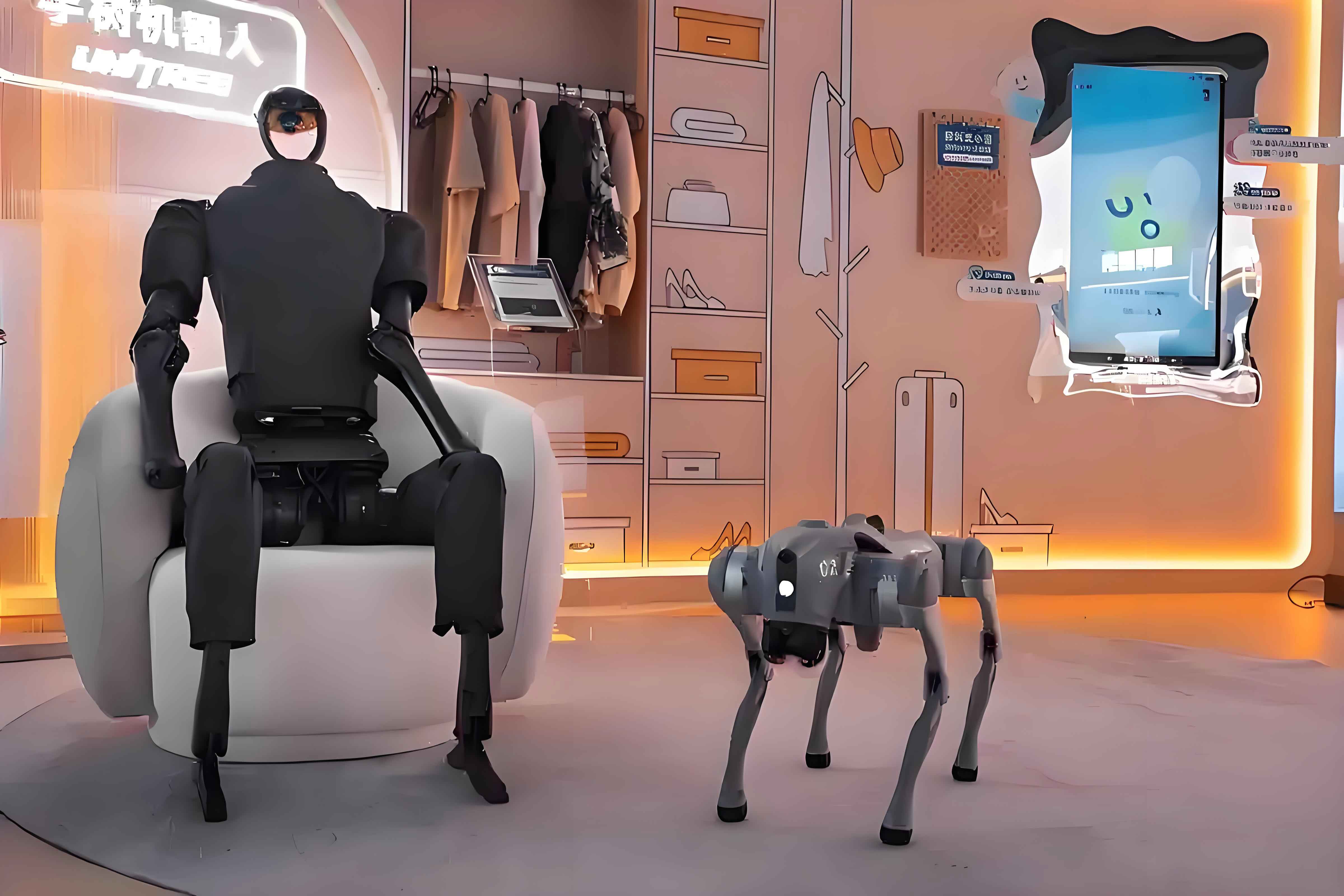
Xu Bo, Chairman of Hefei Yaohai Science and Technology Innovation Group, said that the park’s real inspection application with Leju formed a cycle in which scenario data feeds back into optimization. The goal is to integrate an all-round, all-time humanoid robot inspection solution into the park’s smart operations. This validation is not about whether a humanoid robot can move. It is about whether a humanoid robot cluster can collaborate stably in a real network. That distinction is central to the future of humanoid robot deployment. The hard problem is not a single humanoid robot walking along a path. The hard problem is many humanoid robots operating concurrently, sending large upstream data flows, receiving commands, and maintaining safe behavior while sharing a live network with other users and services.
Zhao Dong, Vice President of Wireless Network Business at Huawei, said that the issuance of China’s first dedicated SIM card for a humanoid robot in Hefei’s Yaohai District has a strong demonstration effect. In his view, it will allow robots to move from laboratories into broader spaces and serve more application scenarios. The humanoid robot is no longer only a research platform. It is becoming a networked worker, inspector, and data producer. The dedicated SIM card is the credential that allows the humanoid robot to enter that role with guaranteed connectivity.
5. From Feasibility to Replicability: Standardization and Scale for Humanoid Robots
The inspection demonstration at China Net Valley proved one important point: humanoid robots can collaborate stably in a 5G-A network. The technology is feasible. But feasibility in one park does not automatically mean replicability across hundreds or thousands of parks. The real threshold is whether the connectivity capability can be standardized, productized, and delivered at scale. A one-time scenario validation may show what is possible. A reusable communication product shows what can be repeated. The Embodied Wing Link package is designed to answer that question. It turns a one-time scenario validation into a reusable communication product. It also marks the formal entry of a telecom operator into the new infrastructure of embodied intelligence.
The cooperation among China Telecom Anhui, Huawei, and Leju Robotics does not start from a single point such as a card. It starts from a systemic approach: network capability, package design, and scenario validation. This three-part structure matters for humanoid robot deployment. Network capability provides the raw performance. Package design translates that performance into service guarantees for a humanoid robot. Scenario validation tests whether the combination works in real operations. Without network capability, the package has no foundation. Without package design, the network capability cannot be sold or managed as a service. Without scenario validation, neither the network nor the package can be trusted in safety-relevant humanoid robot tasks.
Song Bo, Deputy General Manager of China Telecom Anhui, said that the company and Huawei have completed the first batch of 5G-A large uplink network contiguous scale deployment and commercial coverage in Hefei. This has reserved network capability for emerging businesses such as embodied intelligence. At present, China Telecom Anhui has deployed nearly 100 5G-A large uplink base stations in Hefei’s urban area. It has also built the province’s first contiguous demonstration zone in Luogang Park, achieving high-quality coverage across the entire area. During the Spring Festival, relying on the 5G-A large uplink network, major events such as the Luogang Park drone light show and the Spring Festival Gala Hefei sub-venue achieved live broadcast with zero lag. These examples show that the network is not only a testbed. It is already supporting high-demand live events and dense uplink scenarios.
For humanoid robots, this kind of network foundation is essential. A humanoid robot fleet cannot depend on isolated hotspots or temporary coverage. It needs contiguous coverage, predictable uplink performance, and service priority that remains stable as the humanoid robot moves through different areas. The deployment of nearly 100 5G-A large uplink base stations in Hefei’s urban area and the contiguous demonstration zone in Luogang Park provide a practical environment for testing humanoid robot applications at increasing scale. The Spring Festival live broadcast use case also demonstrates that the network can handle demanding uplink traffic from multiple sources. The next step is to apply that capability to humanoid robot operations, where the network is not just carrying video but participating in real-time control and coordination.
6. The Technical Foundation: 5G-A Uplink, Edge Computing, and AI Scheduling
Beyond network deployment, the technical foundation for humanoid robot connectivity has been under development. During the 2025 MWC Shanghai, China Telecom and Huawei released the “Smart Aggregation Uplink” innovation. This technology uses AI models to predict channel quality in real time. It uses AI to achieve five-dimensional coordinated scheduling and multi-band intelligent selection. It can freely schedule uplink resources according to business needs. The reported results include latency reduced by more than 30 percent, uplink rate increased by more than 15 percent, and edge experience improved by more than 15 percent. These improvements form the underlying support for the 5G-A large uplink network capability on which the Embodied Wing Link package relies.
For a humanoid robot, this technical layer matters because humanoid robot traffic is dynamic. A humanoid robot may be stationary while processing a task, then suddenly need high uplink capacity when multiple cameras and sensors detect a complex event. A humanoid robot may move from an area with strong signal to an area with weaker signal. A humanoid robot may share the network with other humanoid robots, human users, video streams, and industrial devices. AI-based channel prediction and intelligent scheduling help the network adapt to those changes. Edge computing reduces the distance that data must travel and supports faster response. Network slicing separates humanoid robot traffic from other traffic and gives it dedicated treatment. Together, these capabilities create a service environment in which a humanoid robot can operate with more predictable connectivity.
The combination of 5G-A large uplink, edge computing, network slicing, and AI scheduling is greater than the sum of its parts. 5G-A large uplink addresses the upstream-heavy nature of humanoid robot traffic. Edge computing addresses latency and local processing. Network slicing addresses isolation and priority. AI scheduling addresses dynamic resource allocation. For a humanoid robot, these are not optional enhancements. They are the conditions that make real-time embodied intelligence possible outside a controlled laboratory. A humanoid robot that depends on cloud intelligence needs low latency. A humanoid robot that sends multiple video and point cloud streams needs uplink capacity. A humanoid robot that works alongside other humanoid robots needs priority and coordination. The technical foundation being built in Hefei is aimed at exactly these requirements.
7. Hefei’s Role: Data, Testing, and the Humanoid Robot Ecosystem
The first dedicated SIM card for a humanoid robot was issued in Hefei, and that is not accidental. Hefei has been building the data, testing, and industrial foundations needed for humanoid robot development. In 2025, the Hefei Embodied Intelligence Robot Data Collection and Training Ground, sometimes described as a “robot school,” was put into use. The building has a total area of approximately 6,461 square meters. It is equipped with 83 robots from different companies. It focuses on four major application fields: industrial manufacturing, commercial services, home life, and smart logistics. It has built 33 types of data collection scenarios. Data collectors teach robots step by step to tighten screws, grab goods, and organize shelves. Every action is fully recorded and gathered into standardized datasets.
In July 2025, the “2025 to 2026 Hefei Intelligent Robot Universal Grasping Dataset” officially obtained a registration certificate. It became Anhui’s first multimodal grasping dataset property rights registration result for embodied intelligence humanoid robots. The dataset covers the full workflow of object grasping, placing, organizing, and storing. It includes robot task text instructions, three-channel camera synchronized video, and real-time pose information from the end gripper. This kind of dataset is important for humanoid robot learning because it connects language instructions, visual perception, and physical action. A humanoid robot must not only see an object. It must understand a task, plan a grasp, execute the motion, and verify the result. The dataset supports that entire chain.
Hefei has also developed a broader industrial ecosystem. The city has gathered nearly 200 enterprises in the robotics and embodied intelligence industry chain. In 2025, it released 17 humanoid robot complete machines. Industrial robot output reached 22,000 sets, accounting for 2.8 percent of the national total. Hefei has initially built a full-chain industrial ecosystem covering the brain, cerebellum, core components, and complete machine. This ecosystem provides the context for the dedicated SIM card and the Embodied Wing Link package. A humanoid robot needs more than a network. It needs components, software, data, testing grounds, and commercial scenarios. Hefei’s combination of data collection, training, component supply, and real-world testing makes it a suitable place for the first dedicated SIM card for a humanoid robot.
The data collection training ground and the multimodal grasping dataset also reinforce why network connectivity is becoming critical. As humanoid robots collect more data in real scenarios, the data must move from the robot to the platform. It must be cleaned, labeled, and fed back into model iteration. The inspection loop at China Net Valley is one example. The training ground is another. In both cases, connectivity is not an afterthought. It is part of the data pipeline. A dedicated SIM card for a humanoid robot helps ensure that the pipeline remains stable, secure, and prioritized.
8. What the First Humanoid Robot SIM Card Means for the Industry
The first dedicated SIM card for a humanoid robot is a small object, but it represents a larger shift. It means that the telecommunications industry is beginning to design for humanoid robots as a distinct category. Human mobile users are primarily downlink consumers. Humanoid robots are often uplink producers. Human mobile users can tolerate some buffering. Humanoid robots involved in real-time coordination, remote intervention, or cloud intelligence cannot tolerate late commands. Human mobile users rarely operate in coordinated fleets. Humanoid robots are increasingly expected to work in groups, sharing network resources and requiring priority differentiation. These differences justify a dedicated product.
For the humanoid robot industry, the dedicated SIM card and the Embodied Wing Link package provide a service framework. A humanoid robot can be given a guaranteed uplink profile. A humanoid robot can be scheduled with priority. A humanoid robot can receive deterministic latency treatment. A humanoid robot can be managed as a first-class network user rather than as an anonymous connected device. This framework will become more important as humanoid robot use cases expand. Inspection is an early application. Other potential scenarios include industrial manufacturing, commercial services, home life, and smart logistics, all of which are already represented in Hefei’s data collection training ground. Each scenario will have its own traffic profile, latency requirement, and concurrency pattern. A flexible dedicated package can help address that diversity.
The involvement of China Telecom Anhui, Huawei, and Leju Robotics also shows that humanoid robot connectivity is a multi-party effort. The telecom operator provides network capability and service design. The equipment and network technology partner provides 5G-A, AI scheduling, and edge computing foundations. The robotics company provides the humanoid robot platform and real operational scenarios. The park provides the test environment and the demand for smart operations. This combination is necessary because humanoid robot deployment is not only a robotics challenge. It is a network challenge, a data challenge, and an operations challenge. The first dedicated SIM card for a humanoid robot in Hefei is the point where those challenges meet.
9. Key Facts and Figures
| Category | Detail |
|---|---|
| First dedicated SIM card for a humanoid robot | Issued in Hefei, Yaohai District, China Net Valley. |
| Product name | Embodied Wing Link communication package, described as the first nationwide package for embodied intelligence robots. |
| Partners | China Telecom Anhui, Huawei, and Leju Robotics. |
| Network technologies | 5G-A network slicing and edge computing, building a deterministic intelligent connection service system. |
| Peak uplink for humanoid robot service | 500 Mbps. |
| Latency target | 20 ms ultra-low latency. |
| Single humanoid robot stable operation threshold | More than 20 Mbps uplink, as stated by Bi Qi, Chief Scientist of China Telecom. |
| Industry-first demonstration | 5G-A humanoid robot park group inspection application demonstration. |
| Humanoid robot model used in demonstration | Kuafu. |
| Patrol routes | Eight main routes in the demonstration zone. |
| Patrol frequency | Four times per day, two times in the morning and two times in the afternoon. |
| Data loop | Inspection operation, real-scene data collection, data return training. |
| 5G-A large uplink deployment in Hefei | Nearly 100 base stations in the urban area. |
| First contiguous demonstration zone | Luogang Park, covering the entire area with high-quality coverage. |
| Spring Festival live broadcast example | Luogang Park drone light show and Spring Festival Gala Hefei sub-venue live broadcast with zero lag. |
| Smart Aggregation Uplink innovation | Released by China Telecom and Huawei during 2025 MWC Shanghai; uses AI for real-time channel quality prediction, five-dimensional coordinated scheduling, and multi-band intelligent selection. |
| Reported performance improvements | Latency reduced by more than 30 percent, uplink rate increased by more than 15 percent, edge experience improved by more than 15 percent. |
| Hefei data collection training ground | Approximately 6,461 square meters, 83 robots from different companies, 33 data collection scenarios, and four application fields: industrial manufacturing, commercial services, home life, and smart logistics. |
| Dataset registration | In July 2025, the 2025 to 2026 Hefei Intelligent Robot Universal Grasping Dataset obtained a registration certificate as Anhui’s first multimodal grasping dataset property rights registration result for embodied intelligence humanoid robots. |
| Dataset coverage | Object grasping, placing, organizing, and storing; robot task text instructions, three-channel camera synchronized video, and real-time end gripper pose information. |
| Hefei ecosystem | Nearly 200 robotics and embodied intelligence industry chain enterprises; 17 humanoid robot complete machines released in 2025; industrial robot output of 22,000 sets, accounting for 2.8 percent of the national total. |
10. Conclusion: A New Network User Category Emerges
The first dedicated SIM card for a humanoid robot in China was issued in Hefei, and the event carries significance beyond the card itself. It shows that telecom networks are beginning to treat humanoid robots as independent network users. A humanoid robot is not a smartphone. It is not a simple sensor. It is a mobile, sensing, acting, data-producing machine that may operate in groups and may depend on the network for real-time coordination, remote intervention, and cloud-based intelligence. The humanoid robot needs uplink capacity, low latency, priority scheduling, and deterministic service. The Embodied Wing Link package provides those guarantees. The 5G-A humanoid robot park group inspection demonstration proves that humanoid robots can collaborate in a real network. The incubation base provides an environment for further testing and commercialization.
Hefei’s broader ecosystem strengthens the foundation. The data collection training ground, the multimodal grasping dataset, the growing number of robotics and embodied intelligence enterprises, and the deployment of 5G-A large uplink coverage all contribute to an environment where humanoid robots can be developed, tested, and deployed. The first dedicated SIM card for a humanoid robot is therefore not an isolated announcement. It is part of a larger system: network capability, product design, scenario validation, data feedback, and industrial supply chain. Each element supports the others.
As humanoid robot fleets scale, dedicated connectivity will become a baseline requirement. A humanoid robot working alone may tolerate best-effort connectivity for some tasks. A humanoid robot working in a group, sharing a network with other humanoid robots and human users, cannot rely on best effort. It needs priority. It needs guaranteed uplink. It needs low latency. It needs a service profile designed around its behavior. The first dedicated SIM card for a humanoid robot in Hefei points toward that future. It is a small card, but it defines a new category of network user. It marks the moment when the network begins to see the humanoid robot not as an accessory, but as a first-class participant in the connected world.