
The humanoid robot industry is expanding at a striking pace, but the family home remains one of its most difficult frontiers. Shipment volumes for the humanoid robot sector have climbed rapidly, yet household penetration remains low. That contrast has placed a spotlight on two barriers: price and space. The price barrier is tied to hardware cost and supply chain scale. The space barrier is tied to the messy, non-standard reality of real homes. As the humanoid robot industry searches for ways to move from showrooms and laboratories into living rooms, home furnishing companies are trying to turn spatial adaptation into a new competitive arena.
Data from IDC shows that global humanoid robot shipments reached about 18,000 units in 2025, an increase of about 508 percent year on year. A report from the Chinese Institute of Electronics says that in the first half of 2026, China’s humanoid robot shipments exceeded 40,000 units, lifting the country’s share of global shipments to 97 percent. Those numbers suggest strong momentum for the humanoid robot supply chain. They do not, however, mean that the humanoid robot has found a comfortable place in the home. According to IDC, among global application scenarios in 2025, entertainment and commercial performances accounted for 36.8 percent, education and research accounted for 24.6 percent, and the remaining share was spread across data collection, guide and shopping assistance, and industrial manufacturing. Family services accounted for a very low proportion. In other words, the humanoid robot is selling, but it is not yet living with families.
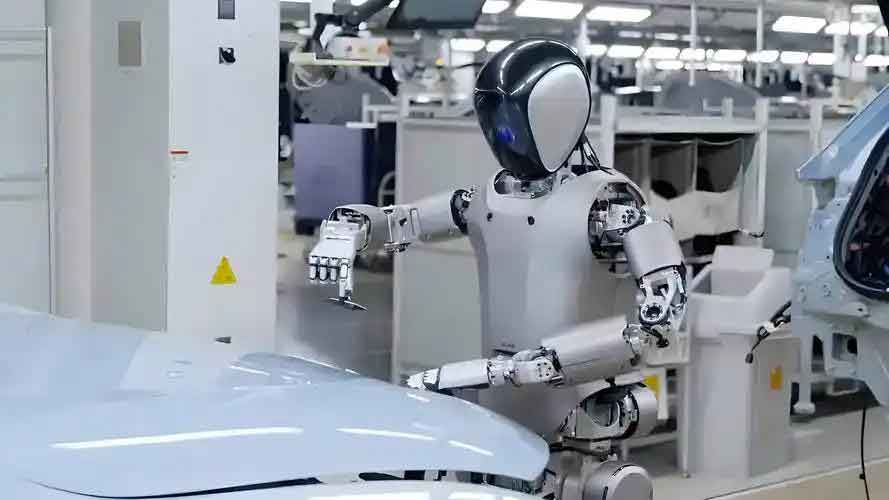
1. The Humanoid Robot Paradox: Strong Shipments, Weak Household Adoption
The gap between shipment growth and household adoption is not a minor market imbalance. It is a structural problem for the humanoid robot industry. A humanoid robot can be marketed as a general-purpose platform, but the home is not a general-purpose environment. It is a collection of unique rooms, furniture arrangements, floor surfaces, lighting conditions, pets, children, and daily habits. The humanoid robot must navigate all of these variables while remaining safe, useful, and trustworthy. That is a far more demanding task than performing a scripted routine on a stage or completing a controlled task in a laboratory.
The first barrier is price. According to the source material, the hardware cost of a high-performance humanoid robot currently ranges from 300,000 to 600,000 yuan. That cost does not automatically translate into a retail price, but it indicates why the humanoid robot remains far from a mass-market household appliance. Price reduction depends on the scale of the supply chain and the progress of domestic substitution. Those forces can improve over time. The second barrier is space. Stanford Institute for Human-Centered Artificial Intelligence, in its AI Index 2026 report, found that humanoid robots achieved an 89.4 percent task completion rate in a simulated environment. When the same or similar tasks moved into a real home, the rate of fully and safely completing tasks fell to about 12 percent. The 77 percentage point gap is what the industry describes as performance evaporation. For the humanoid robot, the home is not simply another setting. It is a stress test.
| Indicator | Figure | Context |
|---|---|---|
| Global humanoid robot shipments in 2025 | About 18,000 units | IDC data, with year-on-year growth of about 508 percent |
| China humanoid robot shipments in the first half of 2026 | More than 40,000 units | Chinese Institute of Electronics report, with China’s global share rising to 97 percent |
| Entertainment and commercial performances | 36.8 percent | IDC 2025 global application scenario share |
| Education and research | 24.6 percent | IDC 2025 global application scenario share |
| Hardware cost of a high-performance humanoid robot | 300,000 to 600,000 yuan | Current cost range cited in the source material |
| Humanoid robot task completion in simulation | 89.4 percent | Stanford Institute for Human-Centered Artificial Intelligence, AI Index 2026 |
| Humanoid robot task completion in a real home | About 12 percent | Stanford Institute for Human-Centered Artificial Intelligence, AI Index 2026 |
| High-quality real-world interactive data gap | More than 20 times | Guosheng Securities research analysis |
2. Price and Space Are Different Problems for the Humanoid Robot
The price problem for the humanoid robot is familiar to many emerging technology sectors. Early hardware is expensive. Components are specialized. Production volumes are low. As the humanoid robot supply chain matures, costs may fall. Domestic substitution can also reduce dependence on imported components and improve pricing flexibility. Those are medium-term trends. The space problem is more complicated because it is not solely a robot problem. It is also a home problem. A factory is usually standardized. A warehouse is usually mapped. A stage is usually prepared. A home is none of those things. Every apartment, house, and room has a different layout. Furniture is placed differently. Lighting changes throughout the day. Floors can be wet. Pets move unpredictably. Children leave toys on the ground. These small uncertainties create major challenges for a humanoid robot.
That is why the humanoid robot can perform well in simulation and still struggle in a real home. The simulation may include a model of a kitchen, but it rarely captures the exact position of a chair, the texture of a rug, the speed of a pet, or the sudden movement of a child. The AI Index 2026 finding of 89.4 percent in simulation versus 12 percent in real homes is a direct warning. The humanoid robot must be able to perceive, plan, and act under conditions that are not fully predictable. It must also do so safely. A humanoid robot that opens the wrong cabinet is an inconvenience. A humanoid robot that collides with a person or drops a heavy object is a serious safety concern. The home is therefore not just an unstructured environment. It is a high-stakes environment.
Industry analysis from Guosheng Securities points to data as a core barrier for embodied intelligence. The home scenario urgently needs real spatial adaptation. The humanoid robot hardware is gradually maturing, but product scale into homes is blocked by a serious shortage of real home scenario data. The performance gap between laboratory simulation and real family life remains large. The shortage of high-quality real-world interactive data is more than 20 times the available supply. That means the humanoid robot cannot simply be trained in a virtual world and then deployed in every home. It needs data from real spaces, real objects, and real interactions. Without that data, the humanoid robot will continue to suffer from performance evaporation when it crosses the threshold of a real home.
3. Home Furnishing Companies Move Into the Humanoid Robot Family Scene
As the humanoid robot industry confronts the space and data problem, home furnishing companies are stepping into the picture. Their interest is not merely in selling cabinets or sofas. They are trying to become the entry point for the humanoid robot in the family scene. The logic is straightforward: if the home itself can be designed to be robot-friendly, then the humanoid robot may face fewer non-standard obstacles. If the home furnishing company controls the design, layout, and interfaces of the home, it can help define how the humanoid robot moves, charges, interacts, and works alongside people.
One of the most visible examples is the collaboration between Shangpin Home Collection and Qiyuan Robotics, which is under Shangwei New Materials. The two companies opened a Robot-Ready Home physical experience store. At the store, a Qiyuan Q1 humanoid robot demonstrated how it could search for a thermos in a living room. With a voice command, the humanoid robot began searching corners of the room. It then used a central control system to open a sideboard drawer and successfully found the thermos. This demonstration may look simple, but it represents a larger idea: the humanoid robot is not operating in an isolated laboratory. It is operating in a furnished home environment that has been prepared for robot interaction.
Shangpin Home Collection and Qiyuan Robotics signed a strategic cooperation agreement in July during the 2026 World Artificial Intelligence Conference. The cooperation focused on building a Robot-Ready Home ecosystem. By September, the partnership had moved from a framework intention to an actual operating entity. The two sides jointly established Shangyuan Zhiqi (Guangzhou) Robotics Technology Co., Ltd. Qiyuan Robotics also developed two consumer-grade embodied intelligent humanoid robot models, the Qiyuan Q1 and the Qiyuan T1. The company opened public pre-orders in late August, with the first batch of products planned for shipment in September. The exact retail price has not been fully announced.
In the physical experience store, the humanoid robot was shown performing several tasks in a real home setting. It could autonomously navigate across spaces to transport items. It could precisely search for objects and provide guided interaction. It could guide children in English learning. It could also perform nighttime medication reminders and sleep guidance. These use cases are still early, but they point to the kind of continuous, low-intensity assistance that a humanoid robot might provide in a home. The humanoid robot is not only a moving machine. It is being positioned as a companion and service platform inside the family environment.
Other home furnishing companies are also moving in this direction. In August, Golden Home reached a strategic cooperation with Tuoyuan (Guangzhou) Smart Technology. The partnership focuses on artificial intelligence applications in family scenarios and aims to jointly promote the deployment of home service robots. Suofeiya, meanwhile, invested 30 million yuan in the first half of the year to establish a digital intelligence technology subsidiary. Industry analysis suggests that this move is an effort to systematically integrate and extend the company’s existing digital capabilities. The paths differ, but the direction is similar. Home furnishing companies are trying to seize the entry point to the family scene.
On September 5, Zhou Weijia, co-general manager of the Shangpin brand and general manager of Shangyuan Zhiqi Robotics, described the vision in broader terms. The statement, translated from the source material, explains that a beautiful home is no longer only a room with complete functions and outstanding design. It is also a home that can perceive, respond, and accompany. The goal is to let the humanoid robot become a warm companion that can enter the living room, bedroom, and kitchen, and become a new partner in family life. That vision places the humanoid robot at the center of the next stage of home furnishing competition.
4. The Robot-Ready Home as a Spatial Adaptation Strategy
The Robot-Ready Home concept is a direct response to the space adaptation problem. Instead of waiting for the humanoid robot to become capable of handling every possible home, the home can be designed to accommodate the humanoid robot from the beginning. This reverses the usual sequence. In many technology adoption stories, the product must adapt to the existing environment. In the Robot-Ready Home model, the environment is prepared for the product. For the humanoid robot, that preparation includes planning robot passage paths, autonomous charging points, and human-robot interaction interfaces.
Shangpin Home Collection says it has accumulated more than 3 million real floor plans and more than 30 million design plans through its work in the home furnishing sector. The company aims to convert these static home decoration drawings into a digital spatial foundation that the humanoid robot can recognize and use for training. This digital foundation can then support planning at the whole-house customization stage. The humanoid robot’s routes, charging locations, and interaction points can be considered before the home is built or renovated. If successful, this approach could reduce the non-standard environment adaptation problem that currently blocks the humanoid robot from entering homes at scale.
The experience store demonstrates why this matters. A humanoid robot in a standard laboratory may not need to worry about whether a drawer handle is at a certain height or whether a cabinet door opens in a certain direction. In a real home, those details matter. The humanoid robot must know where it can pass, what it can open, where it can recharge, and how it should interact with people. If the home is designed with those requirements in mind, the humanoid robot’s task becomes more manageable. The home furnishing company becomes not just a supplier of furniture, but a coordinator of spatial standards for the humanoid robot.
| Company | Partner or Vehicle | Move | Focus |
|---|---|---|---|
| Shangpin Home Collection | Qiyuan Robotics under Shangwei New Materials | Signed strategic cooperation in July during the 2026 World Artificial Intelligence Conference; established Shangyuan Zhiqi (Guangzhou) Robotics Technology Co., Ltd. in September; opened a Robot-Ready Home experience store | Robot-Ready Home ecosystem, design-stage spatial adaptation, humanoid robot home scenarios |
| Golden Home | Tuoyuan (Guangzhou) Smart Technology | Reached strategic cooperation in August | Artificial intelligence applications in family scenarios and home service robot deployment |
| Suofeiya | Digital intelligence technology subsidiary | Invested 30 million yuan in the first half of the year | Integration and extension of existing digital capabilities, with industry analysis pointing to broader intelligent home positioning |
5. Data Scarcity Remains the Core Bottleneck for the Humanoid Robot at Home
Even with a Robot-Ready Home, the humanoid robot still faces a data problem. Guosheng Securities analysis describes data as a core barrier for embodied intelligence industrialization. The home scenario urgently requires real spatial adaptation. The humanoid robot hardware is gradually maturing, but the core contradiction blocking product scale into homes is a severe shortage of real home scenario data. The performance gap between laboratory simulation and real family life remains large. The shortage of high-quality real-world interactive data is more than 20 times the available supply. That figure helps explain why the humanoid robot can appear impressive in a controlled demonstration and then fail in a real home.
The home is a multimodal environment. A humanoid robot must process visual information, spatial relationships, language commands, object properties, human movement, and physical interaction. The source material notes that home multimodal training data supply is scarce. This scarcity is not only about the number of images or videos. It is about the quality, diversity, and causal richness of real interactions. A humanoid robot needs to learn what happens when it opens a drawer, picks up a cup, moves around a chair, or approaches a person. Those interactions are difficult to simulate fully because real homes contain countless small variations. The humanoid robot may encounter a new floor material, a new furniture arrangement, or a new pet behavior that was never part of its training data.
The AI Index 2026 data provides a stark illustration. In a controlled software simulation, the humanoid robot achieved an 89.4 percent operation success rate. In a real home, the rate of fully and safely completing tasks was only about 12 percent. That is not a small gap. It is a fundamental challenge. The humanoid robot must close that gap before it can become a reliable household product. The data shortage means the humanoid robot cannot simply rely on simulation. It needs real-world data from real homes. But collecting that data is difficult because every home is different, and because safety and privacy are important concerns. The industry therefore faces a chicken-and-egg problem: the humanoid robot needs real home data to improve, but it needs to be good enough to enter real homes in the first place.
Home furnishing companies may be able to help with part of this problem. Their floor plans and design plans provide structured spatial data. A digital model of a home can help a humanoid robot understand where walls, doors, furniture, and pathways are located. That can improve navigation and planning. However, spatial data alone is not enough. The humanoid robot also needs interaction data. It needs to know how objects behave, how people respond, and how tasks unfold over time. The Robot-Ready Home can provide a controlled bridge between simulation and reality, but it cannot eliminate the need for real-world learning. The humanoid robot industry will still need extensive testing, data collection, and iteration before home service becomes common.
6. Design-Stage Adaptation May Reduce the Humanoid Robot’s Non-Standard Environment Problem
Shangpin Home Collection’s approach is to bring humanoid robot requirements forward into the design stage. The company says it can use its accumulated floor plans and design plans to create a digital spatial foundation for the humanoid robot. This foundation can help plan robot passage paths, autonomous charging points, and human-robot interaction interfaces from the beginning of a whole-house customization project. The goal is to solve the non-standard environment adaptation problem that the humanoid robot faces when it enters a home. If the home is designed with the humanoid robot in mind, the humanoid robot does not have to solve every spatial problem on its own.
This design-stage adaptation could change the economics of the humanoid robot home market. If a home is built or renovated with robot-friendly features, the humanoid robot may need fewer custom adjustments. It may be able to navigate more reliably. It may be able to recharge without human intervention. It may be able to interact with cabinets, drawers, and appliances through standardized interfaces. The humanoid robot could become part of the home infrastructure rather than a standalone device that must cope with an unprepared environment. That would benefit both the humanoid robot manufacturer and the homeowner, because a more predictable environment can lead to better performance and higher trust.
The experience store offers a small preview of this future. The Qiyuan Q1 humanoid robot was able to search for a thermos and open a sideboard drawer through a central control system. That interaction required coordination between the humanoid robot, the furniture, and the control system. In a fully realized Robot-Ready Home, such coordination could become normal. The humanoid robot could receive commands, navigate through known spaces, interact with connected furniture, and complete tasks with less uncertainty. The home furnishing company would provide the spatial and interface layer. The robotics company would provide the mobility and intelligence layer. The two layers would need to work together.
Still, design-stage adaptation is not a complete solution. The humanoid robot must also be safe and reliable in dynamic situations. A home can be redesigned, but people still move furniture, drop objects, and change routines. The humanoid robot must be able to handle those changes. The data shortage means it may not be prepared for every long-tail scenario. The home furnishing industry can reduce some spatial uncertainty, but it cannot remove all uncertainty. The humanoid robot will still need strong perception, planning, and safety systems. The Robot-Ready Home is therefore a promising direction, not a final answer.
7. Industry Timelines for the Humanoid Robot at Home Remain Cautious
Despite the enthusiasm around the humanoid robot, industry leaders remain cautious about the timeline for home entry. During the 2026 World Robot Conference, Qian Dongqi, chairman of Ecovacs Group, said that the humanoid robot entering the family could take an optimistic three years or a pessimistic five years. That estimate suggests that home adoption is not immediate. It also suggests that the industry expects meaningful progress within the next several years, but not overnight. The humanoid robot must overcome price, capability, safety, and data challenges before it can become a common household presence.
Research analysis from Puyin International offers a longer view. It notes that home service scenarios have characteristics such as unstructured environments and many long-tail scenarios. They also place extremely high demands on safety and intelligence. In the long term, the family scenario is expected to become an important growth pole for the humanoid robot market. However, large-scale adoption is expected only after 2030. That timeline reflects the difficulty of the problem. The humanoid robot may first prove itself in commercial, industrial, and educational settings before it becomes ready for the average home. The family environment is not simply a smaller version of a factory. It is a different kind of challenge.
The current data support this cautious view. The humanoid robot has achieved strong shipment growth, but family service represents a very low share of applications. The hardware cost remains high. The performance gap between simulation and real homes is large. The supply of high-quality real-world interactive data is far below the need. These are not problems that can be solved by a single product launch. They require coordination across robotics, home furnishing, artificial intelligence, standards, and supply chains. The humanoid robot home market will likely develop in stages. Early Robot-Ready Homes may serve as testbeds. Consumer-grade humanoid robot models such as the Qiyuan Q1 and Qiyuan T1 may test demand. But mass adoption will depend on whether the humanoid robot can become consistently useful and safe in real family life.
8. What the Humanoid Robot Home Market Is Watching
The market is watching several indicators as the humanoid robot moves toward the family scene. The first is cost. If the hardware cost of a high-performance humanoid robot remains between 300,000 and 600,000 yuan, household adoption will be limited. The second is data. If the shortage of high-quality real-world interactive data remains more than 20 times the available supply, the humanoid robot will continue to struggle in real homes. The third is space. If homes remain completely non-standard, the humanoid robot will face an endless variety of layouts and obstacles. The Robot-Ready Home approach is an attempt to address this third indicator by making the home more predictable for the humanoid robot.
The fourth indicator is safety. Home service scenarios have many long-tail scenarios and require extremely high safety and intelligence. A humanoid robot in a home must avoid harming people, damaging property, or creating new hazards. That is a higher bar than many commercial deployments. The fifth indicator is integration. The humanoid robot must work with furniture, appliances, control systems, and digital home platforms. The collaboration between Shangpin Home Collection and Qiyuan Robotics shows how a home furnishing company and a robotics company can combine spatial design with robot capabilities. The collaboration between Golden Home and Tuoyuan Smart Technology points in a similar direction. Suofeiya’s investment in a digital intelligence subsidiary suggests that large home companies see intelligent systems as part of their future.
The sixth indicator is consumer demand. The Qiyuan Q1 and Qiyuan T1 opened public pre-orders in late August, with the first batch planned for shipment in September. The exact retail price has not been fully announced. The market will watch whether consumers are willing to pay for a humanoid robot that can perform tasks such as cross-space item transport, precise object finding, guided interaction, children’s English learning, nighttime medication reminders, and sleep guidance. Those use cases are attractive, but they must be reliable enough to justify the cost. The humanoid robot must also fit into the emotional life of the family, as Zhou Weijia suggested when describing a home that can perceive, respond, and accompany. The humanoid robot is being presented not only as a tool, but also as a companion.
9. The Humanoid Robot Needs More Than a Doorway Into the Home
The humanoid robot has already proven that it can attract attention, investment, and shipments. The harder question is whether it can stay in the home after it enters. A humanoid robot that works well in a demonstration may still fail when faced with a real living room, a real kitchen, and a real family schedule. The 89.4 percent simulation success rate and the 12 percent real-home success rate show how much work remains. The humanoid robot must learn from real spaces and real interactions. It must handle non-standard layouts, changing lighting, moving pets, and unexpected obstacles. It must do so safely and consistently. Those requirements explain why the home is one of the last major frontiers for the humanoid robot.
Home furnishing companies are trying to make that frontier more accessible. By designing Robot-Ready Homes, they can pre-plan passage paths, autonomous charging points, and human-robot interaction interfaces. By converting millions of real floor plans and design plans into digital spatial foundations, they can give the humanoid robot a structured understanding of the home. These efforts may reduce the non-standard environment adaptation problem. They may also create a new category of home products and services. The humanoid robot could become part of the home’s infrastructure, not just a guest in it. That would require close cooperation between robotics companies, home furnishing companies, technology providers, and standards organizations.
Yet spatial adaptation alone will not solve the humanoid robot’s data problem. The industry still needs high-quality real-world interactive data. It still needs to close the performance gap between simulation and reality. It still needs to reduce hardware costs and improve safety. The timelines offered by industry leaders reflect these challenges. An optimistic three years and a pessimistic five years for the humanoid robot to enter the family, with large-scale adoption expected after 2030, suggest that progress will be gradual. The humanoid robot may first become common in Robot-Ready Homes, where the environment is designed to support it. It may then expand as data accumulates and capabilities improve.
10. Conclusion: The Race for the Humanoid Robot Family Entry Point
The humanoid robot industry is in a period of rapid shipment growth and cautious home adoption. IDC data shows strong global shipment increases, and the Chinese Institute of Electronics reports a dominant Chinese share in the first half of 2026. Yet family services remain a very small part of the application mix. The price of a high-performance humanoid robot remains high, and the real-home performance gap remains severe. Stanford’s AI Index 2026 finding of 89.4 percent success in simulation versus 12 percent in real homes explains why the humanoid robot cannot simply walk into any house and become useful. The home is unstructured, unpredictable, and full of long-tail scenarios. The data shortage makes it difficult for the humanoid robot to learn fast enough.
Home furnishing companies are responding by trying to control the spatial layer of the humanoid robot experience. Shangpin Home Collection and Qiyuan Robotics have opened a Robot-Ready Home experience store and formed a joint venture. Golden Home and Tuoyuan Smart Technology have formed a strategic partnership. Suofeiya has invested in digital intelligence capabilities. These moves show that the home furnishing industry sees the humanoid robot as a potential new resident of the home, and it wants to be the one that prepares the home for that resident. The competition is not only about who builds the best humanoid robot. It is also about who designs the most robot-friendly home and who owns the family scene entry point.
The humanoid robot will not enter every home soon. The industry timeline suggests three to five years for meaningful family entry, and mass adoption after 2030. In the meantime, the market will watch cost reduction, data collection, safety improvements, and the growth of Robot-Ready Homes. If home furnishing companies can convert their spatial resources into practical standards for the humanoid robot, and if robotics companies can use those standards to improve real-world performance, then the humanoid robot may gradually move from demonstration to daily life. The doorway into the home is opening. The harder task is making the humanoid robot feel at home once it steps inside.