
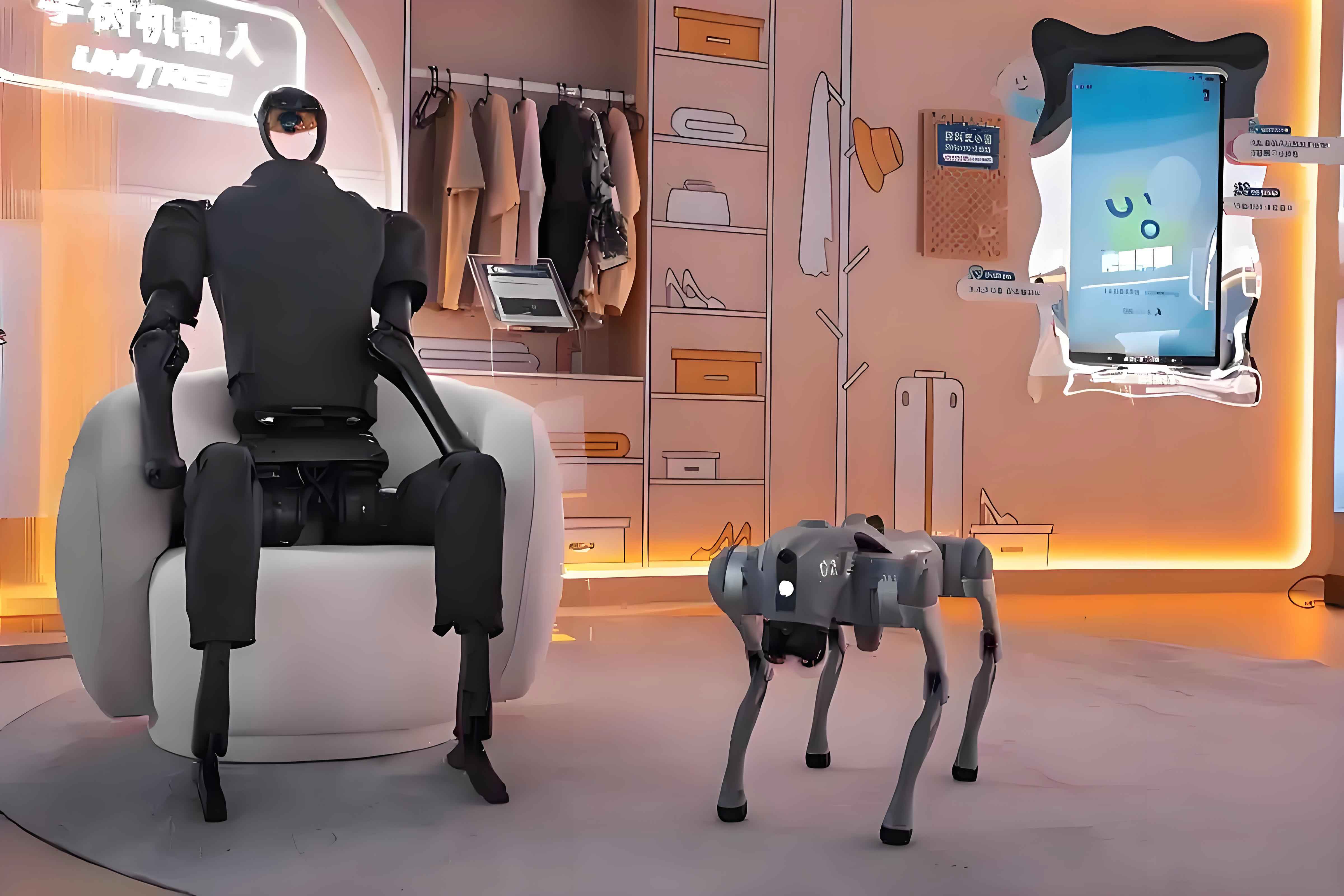
The 2026 World Robot Conference opened with a vivid portrait of daily life in motion. Living rooms, pharmacies, convenience stores, and kitchens were recreated as working environments, and robots of different shapes and sizes took up duties inside them. They folded clothes, collected waste, retrieved goods, and cooked meals. Among the most closely watched platforms were the humanoid robot systems that increasingly appeared not as distant laboratory prototypes but as practical helpers in realistic settings.
This year marked the twelfth edition of the World Robot Conference. The event has become a global stage for observing how robotics is changing. The central actors, especially the humanoid robot, are undergoing a visible transformation. They are moving from executing simple motions to completing complex instructions. They are shifting from high-end equipment confined to production lines toward practical assistants integrated into everyday life. The conference raised two questions that now define the next phase of the industry: what new possibilities will robots create, and what principles must remain unchanged as the technology accelerates?
At the main forum, Xu Xiaolan, president of the Chinese Institute of Electronics, said in a keynote report that embodied intelligence has entered a critical window for large-scale application. According to Xu, embodied intelligence products are at a turning point from small-batch trials to large-scale deployment. That assessment framed much of the discussion around the humanoid robot, because the humanoid robot is one of the most visible expressions of embodied intelligence and one of the most demanding tests of its readiness.
-
Applications Move Across Public Services, Industry, Special Operations, and Agriculture
The question of where robotic applications can expand is no longer theoretical. At the conference, several robotic traffic assistants drew attention. These machines moved on wheeled steering bases, monitored road conditions, and made hand gestures in response to changing traffic lights. They guided pedestrians and vehicles through intersections and worked as visible members of the traffic management environment.
A company representative explained that the intelligent traffic robot does not need remote control. It can navigate autonomously from a police station to its working site. It is designed to support four to five hours of duty. The company has already cooperated with traffic management departments in multiple locations. The robot has been put into operation in cities including Beijing, Ordos, Hefei, and Wuhu. The humanoid robot may not yet dominate every public-service role, but the same movement toward autonomous, task-oriented deployment is shaping the humanoid robot sector as well.
The reasons for introducing intelligent robots into traffic management are practical. Many regions still face shortages of police personnel, and the shortage is especially serious in remote areas. Traffic police work under special conditions. Even in severe cold or intense heat, they must remain outdoors on duty. When a robotic system can take over part of that burden, it can help address both labor gaps and the physical demands of the job. The humanoid robot and other autonomous platforms are therefore being evaluated not simply for novelty, but for their ability to fill persistent operational needs.
Another striking exhibit was a machine horse. A visitor could sit on its back, hold the grips, and ride it across the conference floor. The machine moved with a commanding presence and attracted crowds of onlookers. This platform is an all-terrain quadruped machine horse. Its dynamic load capacity can reach 300 kilograms. Supported by advanced algorithms and strong mobility, it can walk freely on sand and gravel roads and across other complex terrain.
The machine horse has already demonstrated high reliability in extreme environments. It can carry out all-weather inspection tasks. It has participated in practical drills for firefighting and rescue in super high-rise buildings. It can perform tasks such as locating fire sources and searching for people. In high-temperature and corrosive environments, it can identify equipment damage and safety hazards such as toxic gas leaks. While this platform is not a humanoid robot, it illustrates the same broader trend: embodied systems are moving into hazardous, remote, and high-stakes settings where continuous human presence is difficult or dangerous.
Xu Xiaolan said that the deployment of embodied intelligence products shows four characteristics. Livelihood service applications are leading the way. Industrial manufacturing offers broad application scenarios. Special operations have urgent application needs. Agricultural operations have enormous application potential. These four areas together provide a map for the next stage of growth, and the humanoid robot is expected to appear across all of them as capabilities mature.
The best proof that humanoid robot applications are expanding is data. In the first half of 2026, China’s humanoid robot shipments exceeded 40,000 units. The country’s share of global humanoid robot shipments further increased to 97 percent. These figures reflect both the scale of manufacturing capacity and the speed at which the humanoid robot is moving from demonstration to deployment.
Reported Indicator Figure World Robot Conference edition 12th China humanoid robot shipments in the first half of 2026 More than 40,000 units China share of global humanoid robot shipments 97 percent International institutions and companies supporting the initiative 268 Intelligent traffic robot duty capability 4 to 5 hours All-terrain quadruped machine horse dynamic load 300 kilograms -
Why It Remains Difficult for a Humanoid Robot to Work Well
During interviews, many company representatives pointed to a common problem. A robot often performs excellently in the laboratory. Yet when it enters a real scenario, the results are often not satisfactory. This problem was visible inside the conference venue as well. A domestic-service robot that could fold clothes quickly and neatly in a controlled demonstration became stuck when visitors provided different types of clothing. It appeared to freeze in place, uncertain how to proceed.
Why is it so difficult to make a humanoid robot work better in the real world? At the conference’s application-driven main forum, Wang Xingxing, founder and chairman of Unitree Robotics, said that the biggest bottleneck in moving robots from exhibits to products remains efficiency, generalization ability, and precise alignment between models and the real world. Each of these challenges is especially acute for the humanoid robot, because a humanoid robot must operate in environments built for human bodies, human habits, and human unpredictability.
At one company booth, a robot was continuously grasping goods. Behind it, a display screen showed numbers ticking upward, recording the robot’s working hours and the number of items it had retrieved. A company representative said that this robot had already taken a job inside a factory and had received positive feedback from its employer. Yet the representative also acknowledged that there is still a large distance between achieving 99 percent in the laboratory and achieving 99 percent in a factory.
In a real factory, lighting, temperature, and the environment change continuously. A humanoid robot must also deal with the influence of large equipment and the engineering challenges of connecting with factory systems. These issues are critical for embodied intelligence as it tries to complete the final mile of deployment. The final mile is not a single technical problem. It is a combination of perception, control, integration, reliability, and maintenance. For the humanoid robot, it also includes the need to work safely alongside people and to adapt to tasks that may not be fully specified in advance.
The company representative said that many adaptation tasks must be performed on the robot’s cerebellum and brain, including algorithm and engineering optimization. The goal is to make the robot’s brain more intelligent and its cerebellum more stable. In general, the brain of a robot is responsible for decision-making. It uses large models to understand and analyze tasks. The cerebellum is responsible for motion. It responds to tasks, controls actions, and avoids obstacles. For a humanoid robot, this division is particularly important, because stable motion and intelligent decision-making must operate together in dynamic environments.
-
Long-Horizon Work and the Rise of the General Brain
Many companies at this year’s conference focused on demonstrating the long-horizon working ability of robots. A short instruction can be given, and the robot then analyzes the logic on its own, breaks the task into steps, and carries them out. Even when situations arise that were not preset, the robot’s judgment and execution ability are not necessarily disrupted. This capability is essential if a humanoid robot is to move beyond scripted demonstrations and into real workplaces.
At the same time, “one brain, multiple machines” has become an industry trend. Under this approach, one set of large models can adapt to robots of different brands and multiple forms, allowing them to complete tasks in different scenarios. A general brain can effectively reduce the cost of deployment across multiple scenarios and improve a company’s competitiveness. For the humanoid robot, this trend could accelerate adoption because it reduces the need to build a separate intelligence stack for every model or every task.
Wang Xingxing suggested that the industry needs massive amounts of high-quality human data and real-machine data. It also needs to establish a self-evolving closed loop composed of large-model programming, simulation training, real-machine testing, and human-machine evaluation. Such a loop would allow the humanoid robot to learn from both simulated and real-world experience, while human evaluation would help ensure that the robot’s behavior remains aligned with practical needs and social expectations.
Xu Xiaolan addressed the gap between embodied intelligence technology and its ability to adapt to the real world. She said that applications should be used as the driving force to promote iterative product optimization. The goal is to push deep integration between production and demand, enable two-way empowerment, accelerate the deployment of applications across fields, help embodied intelligence cross the threshold of real-scene operation, and speed up the empowerment of thousands of industries. In this process, the humanoid robot is both a symbol and a test case.
-
Technology Must Move Upward While Remaining Directed Toward Good
While robots demonstrated their skills throughout the exhibition halls and worked busily, a deeper issue was repeatedly raised. As embodied intelligence evolves rapidly, can it remain controllable? Can it always move in a direction that benefits human civilization? These questions are no longer confined to science fiction. They are becoming part of the practical agenda for companies, researchers, regulators, and international organizations.
At the conference, the Chinese Institute of Electronics and the World Robot Cooperation Organization, together with 268 international institutions and enterprises, jointly released an initiative for the upward and benevolent development of intelligent robots. The initiative gives a clear answer. It calls for taking the improvement of people’s livelihood as the goal, ensuring social safety and respecting individual rights as preconditions, relying on multi-party participation and internationally recognized mechanisms, and promoting the formulation of ethical guidelines and safety standards. The aim is to ensure that intelligent robots, including the humanoid robot, always develop in a direction beneficial to the progress of human civilization.
As one of the star products of the robot conference, bionic robots produced by various companies have long been a focus of public attention. A company representative said that compared with a steel exterior, a bionic robot with a human face appears warmer, and users are more likely to accept it. At the same time, the representative said that when training the model, the company actively avoided deep emotional links or “lover-oriented” functions. This is a concrete expression of the idea that technology should be directed toward good. For the humanoid robot, the line between useful human-like interaction and inappropriate emotional substitution must be considered carefully.
In addition, many companies have invested considerable effort in making robots more human-like. The skin and hair of some robots are finely produced, with pores and textures clearly visible. When discussing boundaries and safety awareness, a company representative said that bionic robots must be designed, produced, and used within the framework of appropriate laws, regulations, and standards. The humanoid robot, precisely because it can resemble a person, requires clear boundaries that go beyond engineering capability alone.
-
Experts Call for Social Consensus, Embedded Ethics, and Safety by Design
At the main forum of the World Robot Conference, multiple experts offered recommendations. Liang Zheng, professor at the School of Public Policy and Management at Tsinghua University and vice dean of the Institute for AI International Governance at Tsinghua University, said that technical red lines should not be determined only by engineering indicators. They should also come from social consensus. Such red lines should be implemented through standards, evaluation, law, policy, and corporate responsibility. This view places the humanoid robot within a broader governance framework, where technical choices and social values must be aligned.
Zhang Jianwei, foreign academician of the Chinese Academy of Engineering and academician of the German National Academy of Engineering, suggested that safety and ethics should be embedded from the stages of institution, perception, interaction, and model training. For example, robots should learn the harm boundaries of tool use, force control rules, and responsible operation. Before entering homes, they should receive moral safety training similar to school and qualification certification. For the humanoid robot, such training would need to cover physical safety, privacy, emotional expectations, and the long-term consequences of everyday human-robot interaction.
These recommendations reflect a growing recognition that the humanoid robot cannot be governed only after deployment. Safety and ethics must be designed into the system from the beginning. They must be present in the data used for training, in the objectives set for models, in the constraints placed on motion control, and in the evaluation methods used before a robot is allowed to work near people. The humanoid robot is not simply a machine with a human shape. It is a platform that brings together artificial intelligence, mechanical engineering, sensor systems, human factors, and social trust.
-
From Exhibition Halls to Real Workplaces
The movement from exhibition halls to real workplaces is already underway. A humanoid robot can now be shown folding clothes, retrieving goods, or following a short instruction through multiple steps. A humanoid robot can also be presented as a platform for general-purpose intelligence, with one brain adapting to different bodies and different tasks. Yet the conference made clear that the distance between a compelling demonstration and dependable daily work remains significant.
Factories demand consistency. Hospitals and pharmacies demand safety and accuracy. Homes demand adaptability and patience. Public spaces demand reliability under changing conditions. Agriculture demands robustness in unstructured environments. Special operations demand performance in extreme heat, cold, corrosion, smoke, and danger. Each setting places different requirements on the humanoid robot and on the broader family of embodied intelligence systems.
The data presented at the conference shows that scale is arriving quickly. More than 40,000 humanoid robot units were shipped in China in the first half of 2026. A 97 percent share of global humanoid robot shipments indicates the strength of the supply chain and the pace of commercialization. At the same time, the discussions around efficiency, generalization, real-world alignment, data, evaluation, and ethics show that scale alone is not enough. The humanoid robot must become more capable, more reliable, and more trustworthy at the same time.
-
A Shared Road Toward Human-Machine Symbiosis
The conference did not present a single answer to every challenge. Instead, it showed a shared road. Application scenarios are expanding across services, manufacturing, special operations, and agriculture. Companies are pushing the humanoid robot toward longer tasks, greater autonomy, and more general intelligence. Researchers are calling for better data, stronger simulation, real-machine testing, and human-machine evaluation. Experts are urging that safety and ethics be embedded from the earliest stages. International organizations and companies are promoting ethical guidelines and safety standards through multi-party participation.
When technology moves upward and is directed toward good, the vision of human-machine symbiosis and deep integration between production and demand can become more than a slogan. It can become a practical future that benefits everyone. The humanoid robot will be one of the most visible signs of that future. Whether it is folding clothes in a home, retrieving goods in a pharmacy, assisting in traffic management, supporting rescue work, or performing inspections in hazardous environments, the humanoid robot will be judged by how well it serves human needs while respecting human values.
The next phase will require patience as well as speed. It will require engineering excellence as well as social consensus. It will require global cooperation as well as local adaptation. The humanoid robot is not simply a new product category. It is a test of how society chooses to develop and deploy embodied intelligence. The 2026 World Robot Conference showed that the humanoid robot is moving into more application scenarios. It also showed that the principles guiding that movement must remain clear: improve livelihoods, protect safety, respect rights, build trust, and keep the human being at the center of technological progress.