
2026 has been widely recognized by industry observers as the first mass-production year for humanoid robots. From the World Artificial Intelligence Conference (WAIC) in Shanghai to the World Robot Conference (WRC) in Beijing, one clear signal has emerged: humanoid robots are no longer limited to dancing and flipping. They are beginning to sell goods in retail areas, tighten screws in factories, and assist in hospitals. The shift is visible, but the distance between spectacle and sustained commercial work remains the central question for the humanoid robots sector.
The numbers are indeed striking. According to Counterpoint Research, global humanoid robots shipments exceeded 22,000 units in the first half of 2026, an increase of nearly 300 percent year over year. The Ministry of Industry and Information Technology expects China’s full-year complete machine output to exceed 100,000 units. These figures have encouraged investors, suppliers, and developers who have spent years waiting for humanoid robots to move beyond demonstration projects.
Yet the true quality of this mass-production year is not determined by shipment totals alone. A more serious question is now emerging outside the crowded exhibition halls: from being built to being well used, what remains in between? The answer involves delivery discipline, stable operations, commercial repeat purchases, measurable returns, and the ability to replicate deployments across sites. For humanoid robots, the first mass-production year is therefore not simply a celebration of volume. It is a stress test of whether the industry can convert enthusiasm into durable value.
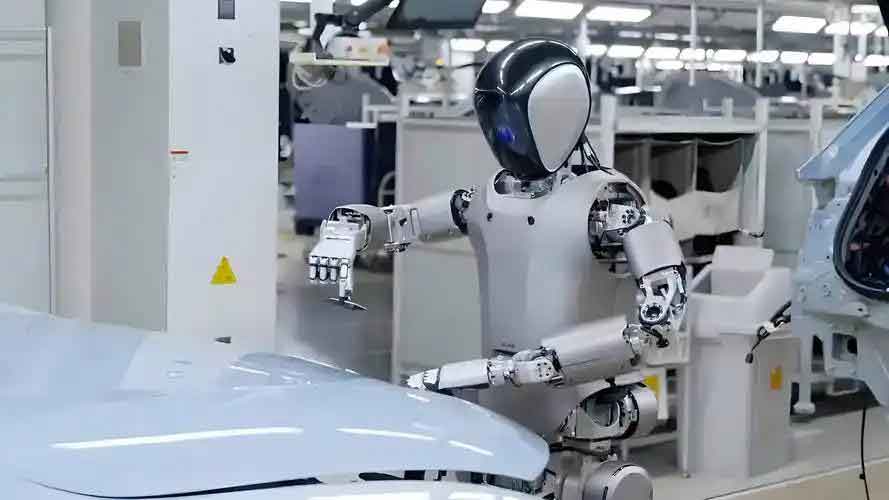
1. A Surge in Shipments, but a Gap in Real Work
During WRC 2026, several companies released commercialization figures that were difficult to ignore. AgiBot shipped about 9,700 humanoid robots in the first half of the year. Unitree Robotics shipped about 7,000 humanoid robots as of August 21. Galbot accumulated more than 1,100 humanoid robots shipments in the first half of 2026. These numbers suggest that humanoid robots are moving from laboratory prototypes to early industrial production.
Order figures were even more attention-grabbing. At its June 30 event, UBTech announced that full-channel orders for its full-size ultra-biomimetic U1 series humanoid robots had exceeded 13,361 units, and the company aims to deliver them this year. However, UBTech founder Zhou Jian also acknowledged the difficulty. He said the difficulty of this kind of mass production is rare in the history of human manufacturing. The U1 alone has 2,000 to 3,000 head components, and capacity ramp-up, yield control, and delivery consistency are all severe tests for humanoid robots.
Industry participants at WRC repeatedly expressed a similar view: signed orders do not equal delivery, delivery does not equal stable operation, and stable operation does not equal customer repurchase. That chain of conversion is the real commercial test for humanoid robots. A company may announce a large order book, but the value of that order depends on whether the humanoid robots can be produced on time, installed correctly, maintained reliably, and used productively by customers.
The gap between shipment headlines and real work is visible in the shipment structure. Counterpoint Research data show that in the first half of 2026, entertainment performances, science education, and data collection together accounted for more than 60 percent of global humanoid robots shipments, even though their combined share had declined somewhat. Intelligent manufacturing accounted for only 13 percent, and warehousing and logistics accounted for only 5 percent. In other words, fewer than 20 percent of humanoid robots shipments were going into factories and warehouses to perform real work.
Unitree Robotics’ prospectus offers another useful signal. In the first nine months of 2025, more than 70 percent of its humanoid robot-related revenue came from research and education, while true industry applications accounted for only about 9 percent. The research and education category is broad. It includes universities and research institutions, but also many technology companies and developers that buy humanoid robots for secondary development. These customers are often purchasing a research platform rather than a tool that can be directly put into production. This indicates that a large share of current humanoid robots shipments still remains at the stage of developers buying systems to study, rather than enterprises buying systems to work.
That distinction matters for the entire humanoid robots ecosystem. A research platform can tolerate limited reliability, incomplete task libraries, and custom integration. A production tool cannot. Factories and warehouses demand repeatable cycles, predictable maintenance, safety compliance, and clear economic returns. The transition from research demand to productive demand is therefore not a small step. It requires humanoid robots to become reliable, supportable, and financially justified assets.
| Application Category | Share of Global Humanoid Robots Shipments in the First Half of 2026 | Notes |
|---|---|---|
| Entertainment performances, science education, and data collection combined | More than 60 percent | The combined share declined but remained the largest category for humanoid robots shipments. |
| Intelligent manufacturing | 13 percent | A small but strategically important share for humanoid robots in factory environments. |
| Warehousing and logistics | 5 percent | An emerging application area for humanoid robots, with clear efficiency metrics. |
| Real factory and warehouse work combined | Less than 20 percent | This combines intelligent manufacturing and warehousing logistics categories. |
| Company or Initiative | Reported Humanoid Robots Shipment, Order, or Deployment Figure | Context |
|---|---|---|
| AgiBot | About 9,700 units shipped in the first half of 2026 | Commercialization figure released during WRC 2026. |
| Unitree Robotics | About 7,000 units shipped as of August 21 | Humanoid robots shipment figure reported during WRC 2026. |
| Galbot | More than 1,100 units shipped in the first half of 2026 | Cumulative shipment figure for humanoid robots. |
| UBTech U1 series | Full-channel orders exceeded 13,361 units | The company aims to deliver within the year; mass production remains difficult. |
| Zhishen Technology | More than 15,000 embodied intelligent robots cumulatively mass-produced as of June 2026; monthly capacity exceeded 5,000 units | The company described mass production as a different capability from laboratory prototyping. |
| Unbounded Dynamics | Nearly 700 million yuan in global orders; first batch delivered to Envision Technology’s battery gigafactory in France | The company defines 2026 as the mass-production year of operation intelligence for humanoid robots. |
| Mojia Robotics | Smart police robot completed thousand-unit contracts and hundred-unit deliveries | Live demonstrations showed humanoid robots working in different cities. |
| X Square Robot | Logistics sorting efficiency of 1,816 items per hour; 45 percent above US peers; 98 percent accuracy | The solution was deployed with a leading logistics enterprise in real production. |
2. Real Deployments Show Humanoid Robots Can Work in Narrow Scenarios
Despite the gap between shipments and real work, a small but important group of humanoid robots has already entered real operational environments. Robot Era became the first embodied intelligence company in the industry to announce completion of product-market fit validation. Its logistics solution has partnered with SF Express and China Post and has achieved regular operations in more than 10 logistics centers across five provinces and cities. This is a meaningful step because it moves humanoid robots from one-off demonstrations toward repeatable deployment.
Xi Yue, co-founder of Robot Era, explained why the company chose logistics as its first规模化 breakthrough. The logistics environment is harsh. Much of the work happens after midnight. There is no air conditioning, no air purifiers, and a great deal of noise. Summers are extremely hot, and winters are extremely cold. Freeing people from such difficult environments was the first consideration. More importantly, logistics has a clear efficiency yardstick: defined cycle times, accuracy requirements, and working hours. These factors give humanoid robots a quantifiable value anchor.
For Robot Era, the product-market fit standard is not simply whether a customer is willing to try humanoid robots. Xi Yue identified three signals. The first is whether the solution addresses a real need, something that is truly urgent rather than a nice-to-have. The second is repurchase rate and batch deployment. The third is whether the economic model is healthy enough to run. Whether the solution achieves batch deployment in that scenario is itself a signal, he said. These criteria are important because they shift the conversation from technical novelty to commercial durability.
X Square Robot presented a logistics sorting solution at WRC with measured efficiency of 1,816 items per hour, exceeding US peers by 45 percent, with 98 percent accuracy. The solution has been deployed with a leading logistics enterprise in a real production environment. This is another example of humanoid robots being evaluated not by how human-like they appear, but by how many items they can sort, how accurately they can sort them, and how consistently they can operate over time.
Mojia Robotics offered a particularly distinctive exhibition. More than 30 large screens broadcast live scenes of humanoid robots working in different cities. At an intersection in Jiangyin, a smart police robot was directing morning rush-hour traffic. In a 4S dealership in Malaysia, a Moyin robot was receiving customers in the local language. Zhang Guibing, general manager of Mojia Robotics, said the company’s smart police robot has completed thousand-unit contracts and hundred-unit deliveries. These deployments show that humanoid robots can provide value in public service and customer-facing roles when the task is clearly defined.
AI Squared Robotics has deployed coffee robots in more than 10 provinces and cities for regular operations. The demonstration at its booth was not a temporary arrangement created for the exhibition. The same robot had a long-term operating record in real commercial spaces. This detail matters because it distinguishes a staged demonstration from a deployed service. A coffee robot that operates daily must handle repeated customer interactions, maintain service quality, and manage downtime in a commercial environment.
The common features of these real deployments are clear. The task boundary is relatively narrow. Efficiency is measurable. Return on investment can be calculated. These cases prove that humanoid robots can work. They do not yet prove that humanoid robots can do all kinds of work. That distinction is essential for understanding the true state of the mass-production year. The industry has crossed an important threshold by showing that humanoid robots can perform useful tasks in specific settings. It has not yet crossed the threshold of broad, low-cost, replicable labor across many industries.
3. Mass Production Has Three Barriers, and Delivery Is Only Step One
Liu Yulong, co-founder of Zhishen Technology, described the mass-production challenge for humanoid robots as three barriers. The first is the technology barrier: moving from being able to do something once to being able to reproduce it stably. The second is the scenario barrier: moving from being able to walk to a location to being able to complete the task there. The third is the continuous delivery barrier: moving from completing a single project to forming reusable product capability. This framework captures why humanoid robots mass production is not only a manufacturing problem.
As of June 2026, Zhishen Technology had cumulatively mass-produced more than 15,000 embodied intelligent robots, with monthly capacity exceeding 5,000 units. Even with those figures, Liu Yulong said that moving from a laboratory prototype to 10,000-unit mass production requires two completely different capabilities. The first capability is invention. The second is industrial discipline. Humanoid robots must be designed for manufacturability, tested for reliability, supported in the field, and improved through data from real operations.
After mass production begins, the real challenges start. Product maturity, supply chain resilience, and quality systems must reach commercial standards. These factors determine whether built can become well used. A humanoid robot that leaves the factory is not yet a productive asset. It becomes one only when it operates reliably in a customer environment, with acceptable maintenance costs and measurable output. That process requires not only hardware but also software updates, service networks, spare parts, operator training, and safety validation.
Zhishen Technology has worked with more than 300 ecosystem partners and has deployed humanoid robots in security, emergency response, and power industries. Its service coverage reaches more than 100 cities and provinces. Yet Liu Yulong also pointed out that the embodied intelligence field still lacks a very mature standard system, including performance indicators, functional indicators, evaluation systems, and certification standards. Without common standards, customers face uncertainty when comparing humanoid robots, and vendors face difficulty proving reliability across deployments.
Zhang Guibing of Mojia Robotics offered a pragmatic timeline for when humanoid robots might enter automotive final assembly lines. He said logistics will see many scenarios deployed next year, but final assembly will take longer because of the huge number of components and mixed-line production. This view is important because automotive manufacturing is often used as a symbol of advanced automation. The fact that logistics is moving faster than final assembly shows that task complexity and environmental structure strongly influence the pace of humanoid robots adoption.
Unbounded Dynamics founder Zhang Yufeng defined 2026 as the mass-production year of operation intelligence, which is different from the earlier mass production of humanoid robot bodies. Operation intelligence mass production means humanoid robots truly begin to work. The implication is that body mass production is only a precondition. Making humanoid robots capable of work is the real mass production. According to Zhang Yufeng, Unbounded Dynamics was founded only one year ago and has already secured nearly 700 million yuan in global orders. Its first batch of humanoid robots has been delivered to Envision Technology’s battery gigafactory in France. This example shows that overseas industrial customers are beginning to test humanoid robots in demanding production environments.
Delivery is therefore only the first step. Stable operation is the real test. A humanoid robot that is delivered but not used is an inventory item. A humanoid robot that is used but breaks down frequently is a maintenance burden. A humanoid robot that operates reliably but cannot be replicated across sites is a custom project. The companies that succeed will be those that convert delivery into stable operation and stable operation into repeatable commercial value. For humanoid robots, the mass-production year is not the end of the beginning. It is the beginning of operational accountability.
4. The Market Is Shifting from Capability Demonstrations to Value Verification
During WRC, BOCOM International released a research report stating that the industry is shifting from displaying capability to verifying value. Commercialization evaluation is beginning to focus on efficiency, stability, and return on investment. The report argued that the industry’s valuation logic is gradually moving from technology Beta to delivery Alpha. Market pricing focus will gradually shift toward order fulfillment, scale delivery, and scenario replication capability. This shift is directly relevant to humanoid robots because the sector has spent years being valued for future potential rather than current execution.
The shift from technology Beta to delivery Alpha means that investors and customers are asking harder questions. Can the humanoid robots be produced at scale? Can they be delivered on schedule? Can they operate for enough hours without failure? Can the same solution be copied from one warehouse to another, from one factory to another, or from one city to another? These questions are less exciting than a new humanoid robot demonstration, but they determine whether the industry can build a sustainable market.
Xu Xiaolan, chairman of the Chinese Institute of Electronics, said at the WRC main forum that humanoid robots are accelerating from moving on stage and running on field to being used in the home and working in factories. The statement captures the direction of the industry. Humanoid robots are indeed beginning to work in exhibition halls and in selected commercial sites. However, the distance to large-scale, low-cost, replicable work remains considerable. The gap is not only technical. It is also economic, operational, and institutional.
From a numerical perspective, 2026 has achieved a leap from the thousand-unit level to the ten-thousand-unit level for humanoid robots. From a scenario perspective, logistics sorting, retail service, and security inspection are among the limited scenarios that have begun to run through a commercial closed loop. From a capital market perspective, Unitree Robotics’ listing has injected confidence and resources into the industry. These are meaningful developments for humanoid robots and their supply chains.
But the true meaning of the mass-production year may not lie in how many tens of thousands of units were shipped. It may lie in the fact that the industry is beginning to confront a more difficult question: from built to well used, how far is the remaining distance? That question forces companies to focus on reliability, service, integration, and return on investment. It also forces investors to distinguish between order announcements and actual deployment, between demonstrations and daily operations, and between one-off projects and reusable products.
For humanoid robots, the next phase will likely be defined by execution. The companies that can deliver humanoid robots at scale, support them in the field, and prove measurable value will set the standard. The companies that rely only on impressive videos or large order figures may find that the market has moved on. The first mass-production year has created momentum. The second phase must create trust.
5. Efficiency, Stability, and Replication Will Define the Next Stage
The real deployments discussed at WRC point to a common pattern. Humanoid robots are being adopted first in tasks with clear boundaries and measurable outcomes. Logistics sorting has defined cycle times. Retail service has defined interaction scripts. Security inspection has defined patrol routes and reporting requirements. Coffee service has defined preparation steps and customer wait times. These are not open-ended human tasks. They are structured tasks that can be measured, optimized, and replicated.
Efficiency is the first filter. A humanoid robot that cannot match the required cycle time will not be deployed for long. Accuracy is the second filter. A humanoid robot that makes too many mistakes will create more work for human staff. Stability is the third filter. A humanoid robot that requires frequent intervention will not achieve a positive return on investment. Replication is the fourth filter. A solution that works in one site but cannot be deployed in another will remain a custom project rather than a scalable product.
These filters explain why logistics has become an early breakthrough for humanoid robots. Logistics centers often operate at night, in harsh conditions, with clear performance metrics. The work is repetitive but variable enough to require perception and adaptation. The value of automation is easy to calculate because labor shortages, turnover, and safety concerns are well understood. When a humanoid robot can sort 1,816 items per hour with 98 percent accuracy, the operational conversation changes from whether the robot can work to whether the economics justify deployment at scale.
These filters also explain why automotive final assembly remains more difficult. Final assembly involves a huge number of components, mixed-line production, and complex coordination with existing systems. A humanoid robot must adapt to many different parts, tools, and process variations. The margin for error is narrow. The safety requirements are strict. As a result, logistics is likely to scale earlier than final assembly, even though both are industrial environments. The difference is not the robot’s appearance. The difference is the structure of the task.
Standards will become increasingly important as humanoid robots move from pilot projects to fleet operations. Customers need common performance indicators, functional indicators, evaluation systems, and certification standards. Without them, procurement decisions become slow and expensive. With them, humanoid robots can be compared on reliability, safety, and productivity. Standards also help vendors design reusable platforms instead of one-off solutions. The absence of mature standards is therefore not a technical detail. It is a commercial bottleneck.
Replication will separate project companies from product companies. A project company delivers a custom humanoid robot solution for a single customer. A product company delivers a repeatable solution that can be installed, configured, and supported across many customers. The humanoid robots industry needs more product companies to achieve scale. That requires standardized hardware interfaces, modular software, remote diagnostics, and a service network capable of supporting deployments across regions. The companies that build these capabilities will be better positioned when customer demand expands.
6. What the Mass-Production Year Really Means for Humanoid Robots
The first mass-production year for humanoid robots is not a finish line. It is a transition point. Humanoid robots have moved from the stage to the warehouse, from the laboratory to the factory floor, and from research platforms to early commercial tools. That transition is real and important. It has been supported by rapid growth in shipments, large order announcements, and high-profile public demonstrations. It has also exposed the distance between being built and being well used.
The industry now has credible examples of humanoid robots working in logistics, retail, security, and service. These examples show that the technology can create value in narrow domains. They also show that value depends on task selection. The best early applications are those with clear boundaries, measurable efficiency, and calculable returns. Humanoid robots are most likely to succeed first where they can be compared directly with existing automation or labor on cost, speed, accuracy, and reliability.
The next challenge is to turn early deployments into repeatable products. That requires progress in manufacturing quality, supply chain management, field service, software updates, safety certification, and standards. It also requires a shift in how the market evaluates humanoid robots. Order announcements are not enough. Demonstrations are not enough. The market will increasingly reward companies that can deliver, operate, and replicate. The shift from technology Beta to delivery Alpha is already visible in research and investment commentary.
For customers, the question is no longer whether humanoid robots can perform a task once. The question is whether they can perform it reliably, safely, and economically over thousands of hours. For manufacturers, the question is no longer whether they can build a prototype. The question is whether they can build thousands of units with consistent quality. For investors, the question is no longer whether the technology is exciting. The question is whether the business model can generate repeat revenue. These are the questions that will define the next phase of humanoid robots.
The first mass-production year has demonstrated that humanoid robots can be more than entertainment. They can sort packages, serve coffee, patrol intersections, receive customers, and assist in industrial settings. They can operate in environments that are uncomfortable or dangerous for people. They can provide a quantifiable value anchor when the task is well chosen. These are meaningful achievements for humanoid robots and for the broader robotics industry.
At the same time, the distance to large-scale, low-cost, replicable work remains substantial. Humanoid robots still face limits in dexterity, reliability, autonomy, cost, and integration. The industry has begun to address these limits, but it has not solved them. The mass-production year has created a foundation. The work of turning that foundation into a durable market has only just begun. From built to well used, humanoid robots must now prove not only that they can move, but that they can deliver value day after day.
The real quality of the first mass-production year for humanoid robots will therefore be judged less by the total number of units shipped and more by the number of units that remain in productive use. It will be judged by repeat orders, by expanding deployments, and by customers who treat humanoid robots as reliable tools rather than experimental platforms. If the industry can meet that standard, the mass-production year will be remembered as the moment humanoid robots began to earn their place in the economy. If it cannot, the year will be remembered as a burst of enthusiasm that did not yet translate into durable work.
For now, the evidence points to a sector in transition. Humanoid robots are shipping in larger numbers. Humanoid robots are entering selected commercial sites. Humanoid robots are being evaluated on efficiency, stability, and return on investment. But humanoid robots are not yet deployed at the scale, cost, or reliability required for broad industrial and domestic use. The first mass-production year has opened the door. The next stage will determine how wide that door becomes.