
Humanoid robots are still at the beginning of a long commercial cycle, but the first signs of real market value are already appearing, according to Zheng Yanbin, an investor at C Capital. In a recent interview, Zheng said shipments by companies such as Zhiyuan Robotics and Unitree have exceeded ten thousand units, a milestone that suggests humanoid robots are moving from laboratory prototypes and demonstration performances toward early commercial deployment.
Yet Zheng cautioned that performance-oriented and display-oriented use cases are not the same as large-scale adoption. The true scale of the humanoid robots industry will depend on whether these machines can enter production environments such as industry, logistics, and warehousing, while continuing to improve their intelligence. China, with its complete manufacturing system, may become one of the first major markets for humanoid robots, while overseas demand may emerge later.
The interview also touched on the broader investment landscape around humanoid robots, including the coordination among complete-machine manufacturers, key component suppliers, and software model developers. According to Zheng, that coordination will determine how quickly the humanoid robots industry matures. Leading humanoid robots companies are likely to benefit first from deployment, while critical segments such as robot brains and robotic hands may gain opportunities as use cases deepen.
1. Humanoid Robots at an Early Stage but with Emerging Commercial Value
Zheng described the humanoid robots sector as still being in its early stage, even as market attention continues to rise. C Capital invested in Zhiyuan Robotics more than three years ago. Looking back, Zheng said the humanoid robots track is similar to the electric vehicle sector that C Capital invested in eight or nine years earlier. At that time, several strong startups had already appeared, but true large-scale commercialization still required three to five years. The humanoid robots industry is now at a comparable stage, he said.
The emergence of artificial intelligence large models has further improved the intelligence level of robots. Early humanoid robots prototypes had already appeared, but entering actual application scenarios still required time. As large models mature, humanoid robots have begun to enter different application scenarios, including industrial supply chains, performances, cafes, and retail.
“The humanoid robots track has only just begun,” Zheng said.
That view does not mean the humanoid robots market is about to explode overnight. Instead, it suggests that the foundation is being laid. Shipments exceeding ten thousand units for companies such as Zhiyuan Robotics and Unitree indicate that commercial value is beginning to show. For investors, the important question is not whether humanoid robots can perform in controlled demonstrations, but whether they can work reliably in environments where productivity, safety, and cost matter.
Zheng’s assessment places humanoid robots in a transitional phase. The technology is no longer purely experimental, but it is not yet a mass-market product. The industry is moving from prototypes to early deployment, and the next phase will determine which companies, components, and software platforms become essential to the humanoid robots supply chain.
This early stage is also characterized by rapid experimentation. Different humanoid robots companies are testing different form factors, control systems, and business models. Some are focusing on full-body humanoid robots, while others are developing specialized components or software. The lack of a single dominant standard means that investors must evaluate a wide range of technical paths and commercial strategies. For C Capital, that has meant building a portfolio that covers multiple layers of the humanoid robots ecosystem rather than betting on only one company or one component.
2. From Performances to Productive Work: The Real Test for Humanoid Robots
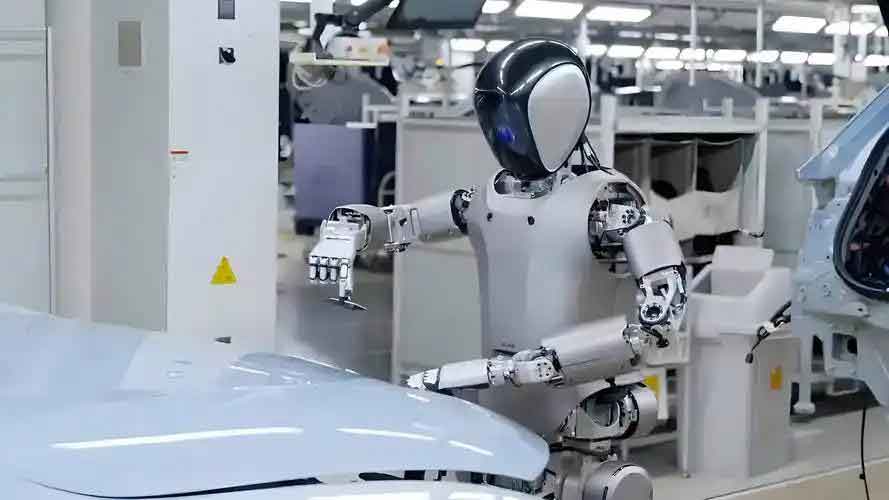
Zheng emphasized that performance and display scenarios are not equivalent to large-scale adoption. While humanoid robots may attract attention through performances, exhibitions, cafes, and retail settings, the real market space will be determined by whether they can enter industrial, logistics, and warehousing production processes and continuously improve their intelligence.
This distinction is critical for the humanoid robots industry. Demonstrations can prove that a robot can walk, balance, gesture, or interact in a controlled environment. Productive work requires something more demanding: repeatability, durability, safety, integration with existing workflows, and a clear return on investment. The humanoid robots companies that can meet those requirements will be better positioned to scale.
Industrial and logistics environments are especially important because they are structured, measurable, and often labor-intensive. If humanoid robots can perform tasks in those settings, they can generate data that improves their models. That data, in turn, can make humanoid robots more capable in other environments. The feedback loop between deployment and intelligence is likely to shape the pace of commercialization.
China may have an advantage in this phase because of its complete manufacturing system. The country is a major center for manufacturing, and many industries rely on component and raw material supply chains that are closely linked to China. For humanoid robots, that means access to suppliers, engineering talent, and potential customers. Zheng said this is one reason C Capital has focused on the humanoid robots opportunity.
However, moving from demonstrations to productive work is not automatic. Humanoid robots must be able to operate for long periods, handle variation in tasks, and interact safely with people and other machines. These requirements create difficult engineering challenges. They also create opportunities for companies that can solve them, whether in complete humanoid robots, robotic hands, robot brains, or software integration.
3. Complete Machines, Components, and Software Models Must Advance Together
The maturity of the humanoid robots industry will depend on coordination among complete-machine manufacturers, key component suppliers, and software model developers. A humanoid robots system is not simply a mechanical body. It combines hardware, perception, motion control, artificial intelligence, and software integration. If any part of that chain lags, the overall system may fail to meet commercial requirements.
Zheng said leading humanoid robots companies will benefit first from application deployment. As use cases deepen, robot brains and robotic hands are among the key segments that may gain opportunities. Robot brains are central to embodied intelligence, allowing humanoid robots to understand environments, plan actions, and adapt to tasks. Robotic hands are equally important because they connect the robot to the physical world.
The humanoid robots supply chain is not yet standardized. Different companies are pursuing different designs and architectures. Some complete-machine manufacturers are developing key components and brain models in-house. Others may rely on specialized suppliers. Over time, the relationship between complete-machine manufacturers and component companies may become similar to the relationship in the electric vehicle supply chain, where automakers and specialized suppliers coexist and compete.
For investors, this creates both opportunity and uncertainty. The opportunity lies in backing companies that solve difficult problems and become essential to many humanoid robots platforms. The uncertainty lies in predicting which technical approaches will prevail. Zheng’s view suggests that the humanoid robots market will reward companies that can demonstrate leadership, technical barriers, and sustainable advantages.
Coordination is also a challenge because humanoid robots require integration across mechanical engineering, electronics, artificial intelligence, and software. A breakthrough in one area may not translate into a commercial product unless other areas are ready. This is why the humanoid robots industry may develop in stages, with component breakthroughs and software improvements enabling new applications over time.
4. The Electric Vehicle Analogy and the Humanoid Robots Supply Chain
Zheng compared the humanoid robots sector to the electric vehicle industry that C Capital invested in eight or nine years earlier. At that time, several strong startups had appeared, but large-scale commercialization still took three to five years. The humanoid robots industry is at a similar point. The analogy is useful because it highlights how new industries often require an ecosystem to mature before they can scale.
In electric vehicles, success depended not only on vehicle manufacturers but also on battery suppliers, charging infrastructure, software, and government policy. In humanoid robots, success may depend on complete-machine manufacturers, robotic hands, robot brains, sensors, actuators, energy systems, and software platforms. The electric vehicle analogy also suggests that early leaders may not remain leaders forever. New entrants, including traditional manufacturers, can change the competitive landscape.
Zheng said the competitive landscape of embodied intelligence humanoid robots complete-machine manufacturers has initially formed. Companies such as Zhiyuan Robotics and Unitree are already in relatively leading positions. However, in the next stage, more traditional manufacturing companies may enter the humanoid robots field and purchase products such as robot brains and robotic hands. That could expand the market for component and software suppliers.
The electric vehicle analogy also points to the importance of cost and manufacturing scale. In electric vehicles, China’s manufacturing base and supply chain depth helped companies reduce costs and improve quality. In humanoid robots, similar advantages may help Chinese companies scale production and deploy humanoid robots in industrial settings. That is one reason China may become an early major market for humanoid robots.
5. C Capital’s Portfolio and Investment Focus in Humanoid Robots
C Capital is a private investment platform focused on the Asia-Pacific region and listed on the Swiss Stock Exchange. The firm has participated in the Series A financing of Zhiyuan Robotics, the Series A financing of AGILINK, and has invested in Boundaryless Dynamics. Zhiyuan Robotics focuses on complete humanoid robots and embodied intelligence. AGILINK develops robotic hands. Boundaryless Dynamics focuses on embodied intelligence brains and general robot systems.
C Capital’s disclosed portfolio also includes companies such as XPeng, Xiaohongshu, and Biren Technology. These investments show a broader interest in technology, mobility, digital platforms, and advanced computing. Within the humanoid robots ecosystem, C Capital’s portfolio covers complete machines, robotic hands, and robot brains, reflecting the view that value will be distributed across multiple layers of the humanoid robots stack.
| Company | Focus | Disclosed status |
|---|---|---|
| Zhiyuan Robotics | Complete humanoid robots and embodied intelligence | Series A investor |
| AGILINK | Robotic hands | Series A investor |
| Boundaryless Dynamics | Embodied intelligence brain and general robot systems | Investor |
| XPeng | Not specified in the interview | Disclosed portfolio company |
| Xiaohongshu | Not specified in the interview | Disclosed portfolio company |
| Biren Technology | Not specified in the interview | Disclosed portfolio company |
The table above is not a ranking of expected returns. It simply shows the areas that C Capital has identified in the humanoid robots supply chain and in its broader technology portfolio. The combination of complete machines, robotic hands, and robot brains suggests that the firm expects humanoid robots to require an integrated ecosystem rather than a single breakthrough.
C Capital’s role is also international. It positions itself as a bridge that introduces outstanding Chinese companies to global investors while bringing global capital to invest in Chinese companies. In the humanoid robots sector, that role could help Chinese companies access long-term capital and strategic partners outside China. It could also help global investors understand the technical and commercial progress of Chinese humanoid robots companies.
6. Robotic Hands May Be an Early Breakthrough for Humanoid Robots
Zheng said one of the hardest components in humanoid robots is the robotic hand. From a hardware and components perspective, robotic hands may become one of the first sub-segments to achieve technological breakthroughs and scaled applications. This makes robotic hands a particularly important area to watch in the humanoid robots industry.
A robotic hand must recognize and control material, force, and movement with precision. That task involves both hardware capability and coordination between perception and models. A humanoid robots system may have a powerful brain, but if its hands cannot handle objects safely and efficiently, it will struggle in real-world tasks. Conversely, a well-designed robotic hand can expand the range of tasks that humanoid robots can perform.
The challenge is not only mechanical. It is also computational and sensory. The hand needs to know how much force to apply, whether an object is fragile or rigid, and how to adjust its grip. These requirements link robotic hands to embodied intelligence and robot brains. As humanoid robots move into industrial, logistics, and warehousing environments, the demand for capable robotic hands may increase.
Zheng’s comments suggest that robotic hands could become an earlier source of demand than some investors expect. While complete humanoid robots attract attention, component suppliers may be the first to generate revenue at scale. In that sense, the humanoid robots opportunity may be broader than the most visible complete-machine brands.
Robotic hands also illustrate why humanoid robots are difficult to build. The hand is a compact system that combines motors, sensors, materials, and control algorithms. It must be durable enough for daily use and precise enough for delicate tasks. Achieving that combination at a reasonable cost is a major engineering challenge. Companies that solve it may find demand from many humanoid robots manufacturers.
7. Robot Brains and Embodied Intelligence in Humanoid Robots
C Capital’s publicly disclosable key areas include robot brains, robotic hands, artificial intelligence applications, and energy. The firm recently invested in several robot brain companies and has followed a company focused on robotic hands. This reflects the view that humanoid robots will need advanced intelligence to operate in complex environments.
Robot brains are central to embodied intelligence. They allow humanoid robots to perceive their surroundings, understand instructions, plan actions, and learn from experience. As artificial intelligence large models mature, robot brains may become more capable. That could make humanoid robots more useful in industrial, logistics, warehousing, and service settings.
Zheng said the competitive landscape of embodied intelligence humanoid robots complete-machine manufacturers has initially formed. Companies such as Zhiyuan Robotics and Unitree are already in relatively leading positions. In the next stage, more traditional manufacturing companies may enter the humanoid robots field and purchase robot brains, robotic hands, and related products. That could create opportunities for specialized brain and component suppliers.
For investors, robot brains are attractive because software and intelligence can scale across many hardware platforms. A successful robot brain could be used by multiple humanoid robots manufacturers, not just one. That potential for broad adoption makes robot brains a strategic segment in the humanoid robots value chain.
8. China May Scale Humanoid Robots First, with Overseas Markets Following
C Capital focuses on Asia-Pacific investments, and many of its portfolio companies are headquartered in China. When the firm invested in humanoid robots more than three years ago, one important judgment was that China is an important center of global manufacturing. Many industries have component and raw material supply chains closely tied to China. As a result, China’s industrial intelligence market is expected to have significant space, which supports the case for humanoid robots.
Based on that view, Zheng said the domestic market is more likely to achieve scaled application first, followed by overseas markets with higher labor costs. This sequence does not mean overseas demand is unimportant. It means the first wave of humanoid robots deployment may be concentrated in China, where manufacturing density, supply chain access, and industrial upgrading needs are strong.
| Phase | Market | Key drivers | Examples or conditions |
|---|---|---|---|
| Early commercialization | China | Complete manufacturing system, industrial intelligence demand, supply chain concentration | Industrial supply chains, performances, cafes, retail |
| Later expansion | Overseas markets | Higher labor costs | Demand release after domestic scale application |
The table reflects the interview’s qualitative view rather than a fixed timeline. It shows that humanoid robots adoption may follow a staged pattern. In the early phase, humanoid robots may appear in both display and industrial settings in China. In a later phase, overseas markets may adopt humanoid robots more broadly as labor costs and operational needs drive demand.
For humanoid robots companies, this sequence has strategic implications. A strong position in China’s manufacturing ecosystem may provide a base for scaling production, testing applications, and reducing costs. Those advantages could later support expansion into overseas markets. At the same time, overseas markets may require different product designs, service models, and compliance approaches.
9. Global Family Offices Are Reassessing Chinese Assets
The changes in the humanoid robots industry are also reshaping global capital’s perception of Chinese assets. Zheng observed that some family offices in Europe and the Middle East have moved from a wait-and-see attitude to allocating China-related assets. Some are even seeking to bring Chinese artificial intelligence, robotics, and electric vehicle technologies into local industries.
Chinese companies’ product quality, cost-performance, and technical capabilities are becoming the basis for overseas investors to reassess the Chinese market. This is significant for humanoid robots and other advanced manufacturing sectors. When global investors see that Chinese companies can compete on technology and cost, their willingness to allocate capital may increase.
C Capital is positioned as a bridge between Chinese companies and global investors. Its role is to introduce outstanding Chinese companies to global investors while bringing global capital to invest in Chinese companies. According to Zheng, this may be just the starting point. A UBS research report cited by Zheng found that some global family offices allocate less than 10 percent of their assets to the Asia-Pacific region. Over the next four to five years, that proportion may rise further.
If global family offices increase their allocations to China and the Asia-Pacific region, the scale of capital involved could be substantial. Zheng said new-generation investors should seize this opportunity while showing global investors the competitiveness of Chinese companies. For humanoid robots companies, that could mean broader access to long-term capital and strategic partners.
10. European Investors Show Interest in AI, Robotics, and Electric Vehicles
European traditional industries are concentrated in areas such as industry and automobiles. Zheng noted that one C Capital shareholder from the Italian Ferrari family pays attention to leading Chinese automobile companies. This interest reflects a broader trend: European investors are looking at Chinese artificial intelligence, robotics, and electric vehicles.
In artificial intelligence, competition is mainly concentrated between China and the United States. C Capital’s task is to introduce competitive Chinese artificial intelligence companies to global investors. The same logic applies to humanoid robots. As Chinese humanoid robots companies demonstrate technical progress and commercial potential, they may attract more attention from European and Middle Eastern investors.
The interest is not limited to financial returns. Some family offices are exploring ways to bring Chinese artificial intelligence, robotics, and electric vehicle technologies into their local industries. That could create partnerships, joint ventures, and technology transfer opportunities. For humanoid robots companies, such partnerships could help with market entry, localization, and customer development.
European investors may also bring industrial expertise and long-term capital. Family offices often have multi-generational horizons, which can be suitable for deep technology investments such as humanoid robots. If they increase their allocations to Asia-Pacific, they could become important investors in the humanoid robots ecosystem.
11. Investment Criteria: Market Size, Leadership, and Technical Barriers
C Capital conducts internal reviews on a regular basis, assessing industries that may form large-scale markets and strong growth potential over the next three to five years. Before selecting an investment target, the firm first judges the global total addressable market, or TAM, of the target’s sector. Typically, C Capital hopes the industry will have at least a hundred-billion-level global market space, with currency and statistical scope to be further clarified.
Second, C Capital judges whether the target company is in a leading position in that market, such as whether it can enter the first tier or become the first or second player in the industry. The firm then evaluates whether the company’s technical barriers are sufficiently high and sustainable. A company may currently be first in the industry, but investors must also judge whether another company could rise from fifth place to first in the future. These questions require deep discussion and regular evaluation of which industries deserve early positioning.
In the current market environment, C Capital’s publicly disclosable key areas include robot brains, robotic hands, artificial intelligence applications, and energy. The firm recently invested in several robot brain companies and has followed a company focused on robotic hands. One reason is that the competitive landscape of embodied intelligence humanoid robots complete-machine manufacturers has initially formed. Companies such as Zhiyuan Robotics and Unitree are already in relatively leading positions.
In the next stage, more traditional manufacturing companies may enter the humanoid robots field and purchase products such as robot brains and robotic hands. That could expand the market for component and software suppliers. C Capital is also watching artificial intelligence applications and other needs created by artificial intelligence development, such as energy demand. The firm is evaluating whether nuclear energy and other energy forms can provide electricity support for artificial intelligence infrastructure and what investment opportunities may exist. It is also looking for opportunities in the artificial intelligence application layer.
12. The Valuation Gap Between Chinese and U.S. Companies
Zheng observed that even in the same sector, Chinese companies and U.S. companies may face significantly different valuation levels. U.S. companies may have higher valuations. As China catches up or even takes the lead in areas such as large models and humanoid robots, the overall valuation logic may change.
The valuation gap is partly related to global capital allocation. Using Anthropic and DeepSeek as examples, Zheng said market expectations for Anthropic’s latest financing round may reach 900 billion to 980 billion U.S. dollars, and future post-IPO valuation expectations may reach 2 trillion U.S. dollars. In comparison, market expectations for DeepSeek’s latest round may be about 70 billion to 80 billion U.S. dollars.
| Company | Latest round valuation expectation | Future post-IPO valuation expectation |
|---|---|---|
| Anthropic | 900 billion to 980 billion U.S. dollars | 2 trillion U.S. dollars |
| DeepSeek | 70 billion to 80 billion U.S. dollars | Not provided in the interview |
Global capital allocation is still mainly concentrated in mature markets such as the United States and Europe. The Asia-Pacific region’s allocation share in some global family office portfolios remains below 10 percent. Because some funds lack sufficient understanding of the Asia-Pacific market, they tend to invest in leading companies in the United States and Europe. That may further push up valuations for U.S. and European companies.
Zheng said the sustainability of this valuation divergence remains to be seen. Some family offices willing to take risks and with forward-looking views have already begun to reduce single-market exposure to the United States and Europe and gradually increase allocations to Asia. Over the next few years, especially over the next five years, more capital may flow to Asia. If that happens, the valuation gap for humanoid robots companies and other technology companies could narrow.
13. Customer Payment Habits and the Outlook for Asia-Pacific Technology Valuations
Another factor behind the valuation gap is customer purchasing and payment habits. European and American enterprises are more inclined to purchase artificial intelligence products through paid subscriptions or SaaS models. In contrast, some Asian enterprises may prefer to use products for free for several months and then make a one-time purchase after the product matures or the company reaches a certain scale.
Monthly subscriptions and SaaS models are still relatively limited in domestic penetration, according to Zheng. However, the situation has begun to change. Younger consumers and enterprise clients are becoming more willing to pay. As enterprise payment habits change, capital markets may become more receptive to artificial intelligence large model and SaaS companies in the Asia-Pacific region. Therefore, over the next three to five years, the valuation gap between Chinese and U.S. companies may gradually narrow.
This shift matters for humanoid robots because software, artificial intelligence models, and ongoing services are likely to be central to the humanoid robots business model. If customers become more accustomed to paying for software and services, humanoid robots companies may be able to generate recurring revenue and demonstrate more predictable growth. That could support higher valuations over time.
14. Energy Demand and Artificial Intelligence Infrastructure
C Capital is also watching energy demand created by artificial intelligence development. The firm is evaluating whether nuclear energy and other energy forms can provide electricity support for artificial intelligence infrastructure. This matters because artificial intelligence models require significant computing power, and computing power requires reliable energy. If artificial intelligence continues to grow, energy may become a constraint and an investment opportunity.
Humanoid robots are connected to this trend because they depend on artificial intelligence models and computing infrastructure. As humanoid robots become more capable, they may require more onboard intelligence and more cloud-based training. That could increase demand for energy and computing resources. Investors who understand the link between artificial intelligence, energy, and robotics may find opportunities across multiple sectors.
C Capital is looking for opportunities in the artificial intelligence application layer as well. Humanoid robots are one application of artificial intelligence, but there are many others. By investing across robot brains, robotic hands, artificial intelligence applications, and energy, C Capital is positioning itself for a broad technology cycle rather than a single product category.
15. Risks and Uncertainties in the Humanoid Robots Market
The humanoid robots market faces several risks and uncertainties. One is technical. Humanoid robots must operate reliably in unpredictable environments. Achieving that reliability may take longer than expected. Another risk is commercial. Even if humanoid robots can perform tasks, customers may not adopt them if the cost is too high or the return on investment is unclear.
A third risk is competitive. The humanoid robots supply chain is still forming, and it is not clear which companies will become leaders. Early leaders may be challenged by new entrants, including traditional manufacturers. Component suppliers may face pressure on prices and margins. Software and robot brain companies may need to prove that their models can scale across different hardware platforms.
There are also capital market risks. Valuations for humanoid robots companies may be volatile. If global capital allocation shifts or if interest rates change, financing conditions could tighten. That could affect companies that require significant capital to develop hardware and scale production. Zheng’s view that the humanoid robots track has just begun implies that investors should take a long-term perspective and expect a multi-year journey.
16. What to Watch in the Humanoid Robots Market
The interview points to several developments that investors and industry observers should watch in the humanoid robots market. The first is whether humanoid robots can move beyond performances and demonstrations into industrial, logistics, and warehousing work. The second is whether robotic hands achieve technical breakthroughs and scaled applications. The third is whether robot brains become a competitive battleground as more traditional manufacturers enter the humanoid robots field.
Another important factor is the coordination among complete-machine manufacturers, component suppliers, and software model developers. If these groups can work together effectively, the humanoid robots industry may mature faster. If they remain fragmented, progress may be slower. The relationship between complete-machine manufacturers and component companies may evolve in a way similar to the electric vehicle supply chain, with both competition and collaboration.
China’s manufacturing base and supply chain density may give it an early advantage in humanoid robots deployment. However, overseas markets with higher labor costs may eventually become important demand centers. The sequence of adoption may be China first, overseas later, but the ultimate market opportunity for humanoid robots is global.
- Watch whether humanoid robots shipments continue to grow beyond early commercial levels.
- Watch whether robotic hands become a scaled component category.
- Watch whether robot brains attract investment and adoption from traditional manufacturers.
- Watch whether family offices increase Asia-Pacific allocations.
- Watch whether customer payment habits for artificial intelligence and SaaS continue to improve.
17. Humanoid Robots and the Reassessment of Chinese Assets
The humanoid robots story is part of a broader reassessment of Chinese assets by global investors. European and Middle Eastern family offices are showing greater interest in Chinese artificial intelligence, robotics, and electric vehicles. Chinese product quality, cost-performance, and technical capability are becoming key considerations. As global family offices consider increasing their Asia-Pacific allocations from below 10 percent, capital flows could become a powerful force in the coming years.
For humanoid robots companies, this could mean more than financing. It could mean access to strategic partners, international markets, and long-term capital. For global investors, it could mean exposure to a sector that is still in its early stage but with emerging commercial value. The humanoid robots market is not yet mature, but the direction of travel is becoming clearer.
Zheng’s view is that the humanoid robots track has just begun. Shipments exceeding ten thousand units by companies such as Zhiyuan Robotics and Unitree show that commercial value is starting to appear. The next phase will test whether humanoid robots can work productively, whether robotic hands can handle real-world tasks, and whether robot brains can coordinate perception, planning, and action at scale.
18. The Path to Commercialization for Humanoid Robots
The path to commercialization for humanoid robots is likely to be gradual. Early applications may include performances, cafes, and retail, where humanoid robots can interact with people and demonstrate capabilities. These settings can help companies test technology and gather data. However, the larger opportunities are in industry, logistics, and warehousing, where humanoid robots can perform repetitive or physically demanding tasks.
To reach those opportunities, humanoid robots must improve in several areas. They need better perception, more capable robotic hands, stronger robot brains, and more reliable hardware. They also need to be integrated with existing systems and workflows. The companies that can deliver complete solutions, rather than isolated components, may have an advantage.
China may be an early testing ground because of its manufacturing density and supply chain access. If humanoid robots can prove their value in Chinese factories and warehouses, that experience could support expansion into other markets. Overseas markets with higher labor costs may follow as the technology matures and costs decline.
19. Why Humanoid Robots Matter for Industrial Intelligence
Humanoid robots matter because they sit at the intersection of artificial intelligence, robotics, and industrial intelligence. They can potentially bring flexibility to automation. Traditional industrial robots are often designed for specific tasks and fixed environments. Humanoid robots, by contrast, are intended to operate in human-designed spaces and use human-like hands and bodies to perform a wider range of tasks.
That flexibility could be valuable in factories, warehouses, and logistics centers where tasks change frequently. It could also help address labor shortages and improve productivity. However, flexibility also creates technical challenges. Humanoid robots must understand their environment, adapt to variations, and interact safely with people and objects.
China’s industrial intelligence market is expected to have significant space, and humanoid robots could be one part of that trend. As artificial intelligence large models improve, humanoid robots may become more capable and more useful. The combination of manufacturing depth, supply chain access, and artificial intelligence development may give China an advantage in the early deployment of humanoid robots.
20. Conclusion: A Long Cycle with Significant Potential
The humanoid robots industry is entering a critical period. It is no longer only about prototypes and performances. It is about whether humanoid robots can become productive tools in factories, warehouses, logistics networks, and other environments. China may lead the first wave of scaled application because of its manufacturing ecosystem and industrial intelligence demand. Overseas markets may follow as labor costs and operational needs drive adoption.
Investors are watching multiple layers of the humanoid robots stack. Complete-machine manufacturers such as Zhiyuan Robotics and Unitree are in relatively leading positions. Component and software suppliers in robotic hands and robot brains may also capture value. C Capital’s portfolio reflects this multi-layer approach, with investments across complete humanoid robots, robotic hands, and embodied intelligence brains.
Global capital is also changing. Family offices in Europe and the Middle East are reassessing Chinese assets, and some are seeking to bring Chinese artificial intelligence, robotics, and electric vehicle technologies into their local industries. A UBS report cited by Zheng suggests that Asia-Pacific allocations by some global family offices may rise from below 10 percent over the next four to five years. If that happens, humanoid robots companies and other Chinese technology leaders could benefit from stronger capital flows.
Valuation gaps between Chinese and U.S. companies remain wide. Market expectations for Anthropic and DeepSeek illustrate the difference. But as customer payment habits change and global capital allocations shift, the gap may narrow over the next three to five years. For humanoid robots, the opportunity is not a short-term trade. It is a long-cycle investment theme that depends on technical progress, commercial deployment, and the coordination of an entire ecosystem.
Zheng’s central message is that humanoid robots are still at the beginning. The companies that can move from demonstration to productive work, the suppliers that can solve difficult component problems, and the investors that can identify leaders early may be best positioned. China may be the first major market for humanoid robots, but the impact of the humanoid robots industry is likely to be global.