
The 2026 World Manufacturing Conference is scheduled to open on September 20 at the Hefei Binhu International Convention and Exhibition Center, bringing together advanced manufacturing, robotics, and embodied intelligence in one of the year’s most closely watched industry gatherings. The conference theme is Intelligent Manufacturing World: Creating a Better Life. Organizers said the robot and embodied intelligence industry exhibition will continue from the previous edition and will serve as one of the conference’s central attractions. In Hall 2, the Comprehensive Hall, the exhibition will occupy nearly 2,000 square meters and will feature nearly 200 robot exhibits. Among the most anticipated participants are humanoid robots, which will appear in work, service, performance, and interactive settings.
According to the Executive Committee Office of the 2026 World Manufacturing Conference, the event will not merely place machines on static display. Instead, it will organize robots and embodied intelligence products around real application cases. Humanoid robots will be shown entering factories, communities, and shopping areas. The conference is expected to demonstrate how humanoid robots, robotic arms, mobile platforms, key components, and embodied intelligence systems are moving from isolated technical demonstrations toward integrated commercial and social environments. Visitors will be able to observe humanoid robots in dynamic scenarios, including logistics sorting, retail sales, household services, and sanitation cleaning.
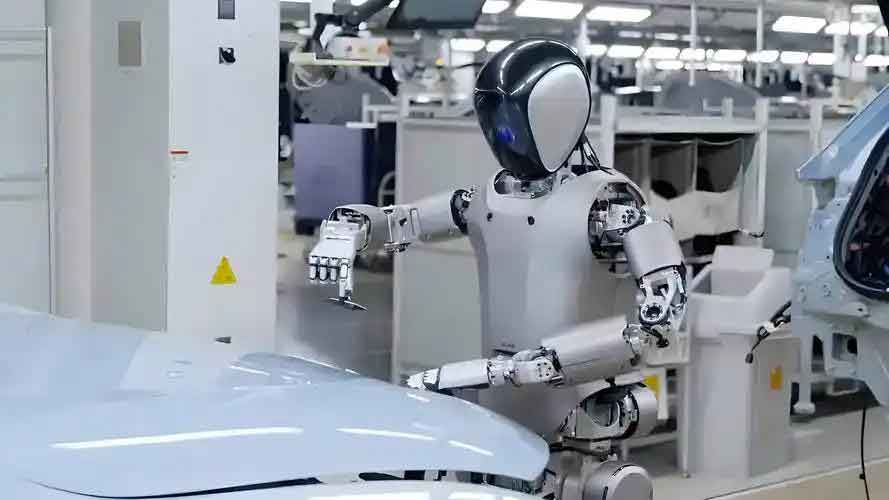
The exhibition is designed to show that humanoid robots are no longer only laboratory prototypes or stage props. They are being presented as participants in manufacturing, community service, commercial operations, and public interaction. The conference’s robot and embodied intelligence section will use scenario-based arrangements, product matrices, interactive stages, and supply chain displays to create a comprehensive picture of the industry. Humanoid robots will be central to that picture, appearing alongside other robotic systems and the components that make them possible.
- Conference Overview and Core Theme
The 2026 World Manufacturing Conference will take place in Hefei, Anhui, with its main venue at the Hefei Binhu International Convention and Exhibition Center. The event is scheduled to begin on September 20. Its theme, Intelligent Manufacturing World: Creating a Better Life, places intelligent manufacturing and quality-of-life improvements at the center of the agenda. The robot and embodied intelligence industry exhibition will be held again after its previous edition and will be treated as one of the conference’s most important segments. The exhibition will be located in Hall 2, known as the Comprehensive Hall, and will cover nearly 2,000 square meters. Nearly 200 robot exhibits will be presented. Humanoid robots will be a major part of the display, with several models expected to draw attention for their movement, interaction, and application capabilities.
The Executive Committee Office of the conference said the robot and embodied intelligence exhibition will highlight four main features: scenario-based arrangement, flagship products, interactive presentation, and ecological display. These features are intended to give visitors a complete view of how humanoid robots and embodied intelligence products are developing. The exhibition is not limited to a single category of robots. It includes industrial robots, service robots, specialized robots, and humanoid robots. The presence of humanoid robots reflects a broader industry trend: the integration of artificial intelligence, mechanical design, sensors, control systems, and application software into machines that can operate in human-centered environments.
The theme of the conference also connects manufacturing with daily life. Humanoid robots are presented not only as factory tools but also as potential service providers in communities, stores, hotels, and homes. The conference’s focus on application cases suggests that the value of humanoid robots will be measured by their ability to perform useful tasks in real settings. The exhibition’s scale, with nearly 200 robot exhibits and nearly 2,000 square meters of display space, provides a broad platform for companies to show how humanoid robots and embodied intelligence can be deployed. The event will also allow enterprises, research institutions, and visitors to exchange views on the future of humanoid robots and related technologies.
Key item Details Event 2026 World Manufacturing Conference Opening date September 20 Venue Hefei Binhu International Convention and Exhibition Center Theme Intelligent Manufacturing World: Creating a Better Life Exhibition Robot and Embodied Intelligence Industry Exhibition Location Hall 2, Comprehensive Hall Exhibition area Nearly 2,000 square meters Robot exhibits Nearly 200 items Humanoid robot team 16 models Main sections Smart Manufacturing Factory, Smart Creation Community, Smart Street, Embodied Intelligence Full-Stack Technology Chain Interactive venues Robot stage, robot boxing ring Industrial cluster participants Wuhu, Xuancheng, Huainan, Bengbu Application scenarios Logistics sorting, store sales, home services, sanitation cleaning Performance examples Huangmei opera, robot fighting, smart dialogue - Scenario-Based Layout Brings Humanoid Robots into Real Workplaces
The robot and embodied intelligence exhibition will feature two robot avenues. These avenues will be divided into four major sections: Smart Manufacturing Factory, Smart Creation Community, Smart Street, and Embodied Intelligence Full-Stack Technology Chain. The layout is intended to show humanoid robots and other robotic products in contexts that resemble real operations. Rather than standing still behind barriers, humanoid robots will be integrated into dynamic scenario demonstrations. Logistics sorting, store sales, home services, and sanitation cleaning will be used to illustrate how robots and embodied intelligence products can enter factories, communities, and shopping areas.
For humanoid robots, this scenario-based layout is significant. A humanoid robot designed for factory work may need to handle materials, move between stations, and coordinate with other machines. A humanoid robot assigned to community service may need to interact with people, navigate shared spaces, and respond to verbal or visual instructions. A humanoid robot working in a retail environment may need to identify products, communicate with customers, and complete transactions. A humanoid robot providing home services may need to manage household objects, adapt to irregular environments, and perform tasks safely around people. The exhibition’s scenarios are designed to present these possibilities in a visible and understandable way.
Visitors will be able to immerse themselves in the application cases. The conference organizers describe the experience as an opportunity to see the real scenarios in which humanoid robots and embodied intelligence products operate. This approach helps bridge the gap between technical specifications and public understanding. When humanoid robots are shown sorting packages, serving customers, cleaning public areas, or assisting in home settings, their capabilities become easier to evaluate. The scenario-based layout also allows companies to demonstrate how humanoid robots can be connected to larger systems, including sensors, cloud platforms, control centers, and data analysis tools.
The two robot avenues will guide visitors through different stages of robotic application. In the Smart Manufacturing Factory section, humanoid robots and industrial robots may be presented as partners in production and logistics. In the Smart Creation Community, humanoid robots may appear in service roles that support daily life. In the Smart Street, humanoid robots and other service robots may interact with commercial and public environments. In the Embodied Intelligence Full-Stack Technology Chain section, the focus will shift to the technologies that enable humanoid robots to perceive, decide, and act. This structure gives visitors a path from components to complete humanoid robots and from laboratory technology to real-world application.
- Humanoid Robot Product Matrix Takes Center Stage
At the center of the exhibition, organizers will build a humanoid robot product matrix area. This area will bring together 16 models described as a humanoid robot team. The group will include robots that won gold and silver medals at the Second World Humanoid Robot Games, general technology base robots, and traffic police robots. The product matrix is intended to demonstrate more flexible limbs, an agile cerebellum, and a smart brain, as well as real-scene application solutions. The term cerebellum refers to the control and balance systems that help humanoid robots move smoothly, while the brain refers to the artificial intelligence and decision-making systems that allow humanoid robots to understand tasks and interact with their surroundings.
The humanoid robot product matrix will serve as a flagship display within the robot and embodied intelligence exhibition. It will show that humanoid robots are developing along multiple paths. Some are designed for athletic performance and balance, as suggested by the medals from the Second World Humanoid Robot Games. Some are built on general technology bases that can be adapted to different tasks. Others are designed for specialized public service roles, such as traffic police robots. Together, these humanoid robots illustrate the diversity of the field. They also show how humanoid robots can be customized for different industries while sharing common technological foundations.
The presence of 16 humanoid robot models in one matrix area is expected to create a strong visual and interactive impact. Visitors will be able to compare different designs, movement styles, and application concepts. The exhibition will highlight how humanoid robots use sensors, actuators, control algorithms, and artificial intelligence to perform tasks. It will also present solutions for real-scene applications, meaning that the humanoid robots are not displayed only as concepts. They are connected to practical uses in manufacturing, community service, retail, security, and other fields. The matrix area is therefore both a showcase and a statement about the direction of the humanoid robots industry.
The humanoid robots in the product matrix will demonstrate flexibility, agility, and intelligence. Their limbs are designed to move in ways that resemble human motion, allowing them to operate in environments built for people. Their control systems help them maintain balance and complete coordinated actions. Their artificial intelligence systems support perception, planning, and interaction. By presenting these capabilities together, the exhibition will help visitors understand why humanoid robots are considered a major frontier in robotics and embodied intelligence. The humanoid robots on display will also suggest how future models may become more capable, more adaptable, and more integrated into everyday operations.
- Interactive Presentations Turn Humanoid Robots into Accessible Experiences
The conference will establish a robot stage and a robot boxing ring as performance and interaction venues. Daily robot performances will be organized. Visitors will be invited to participate in interactions, creating an exhibition experience that is observable, tangible, and engaging. Humanoid robots will be among the performers and competitors. They are expected to appear in activities such as Huangmei opera performances, robot fighting, and intelligent dialogue. These activities are designed to show humanoid robots in a more accessible and entertaining light while still demonstrating advanced technical capabilities.
Humanoid robots performing Huangmei opera represent a fusion of cultural performance and robotics. Such a demonstration requires precise motion control, coordination, and timing. Humanoid robots engaging in robot fighting require balance, rapid response, and robust mechanical design. Humanoid robots holding intelligent conversations require speech recognition, language understanding, and natural interaction. By placing humanoid robots in these varied roles, the exhibition shows that the same underlying technologies can support artistic performance, competitive activity, and service interaction. The robot stage and robot boxing ring will therefore be more than entertainment areas. They will be live demonstrations of humanoid robots’ movement, perception, and intelligence.
The interactive format also allows visitors to experience humanoid robots directly. Instead of only reading about humanoid robots or watching recorded videos, visitors can see them move, respond, and perform in real time. This direct contact can help demystify humanoid robots and generate public interest. It can also provide companies with feedback on how people react to humanoid robots in public spaces. The daily performances are expected to draw crowds and create a lively atmosphere within the exhibition. The combination of stage performances, boxing matches, and dialogue sessions will present humanoid robots as both technological achievements and engaging participants.
For industry observers, the interactive presentations offer a way to assess humanoid robots beyond static specifications. Movement quality, balance recovery, response speed, and conversational ability are difficult to judge from a brochure. When humanoid robots perform on stage or enter a boxing ring, their strengths and limitations become visible. The exhibition’s interactive approach therefore supports both public education and technical evaluation. It also reinforces the conference’s broader goal of showing how humanoid robots and embodied intelligence can be experienced, not merely imagined.
- Ecosystem Display Connects Humanoid Robots with Supply Chains
The robot and embodied intelligence exhibition will include both complete robot products and key components. This ecosystem display is intended to show the full industrial chain behind humanoid robots and other robotic systems. The exhibition will invite industrial cluster areas from Wuhu, Xuancheng, Huainan, and Bengbu to participate in a centralized display. Enterprises will also organize roadshows, product promotions, and matchmaking activities. These activities are designed to connect upstream and downstream partners and support the implementation of robot and embodied intelligence projects.
For humanoid robots, supply chain development is essential. A humanoid robot depends on motors, reducers, sensors, controllers, batteries, communication modules, artificial intelligence chips, software platforms, and many other components. The performance of a humanoid robot is shaped not only by its overall design but also by the quality and integration of its parts. By displaying key components alongside complete humanoid robots, the exhibition will help visitors understand the depth of the industry. It will also give component suppliers opportunities to meet robot manufacturers, system integrators, and application providers.
The participation of industrial clusters from Wuhu, Xuancheng, Huainan, and Bengbu reflects a regional approach to robot and embodied intelligence development. These areas can contribute specialized capabilities, manufacturing capacity, and supply chain support. When humanoid robots move from prototypes to production, the ability to source reliable components at scale becomes critical. Roadshows and product promotions can help companies present their technologies to potential partners. Matchmaking activities can help close gaps between research, manufacturing, and market application. The ecosystem display therefore supports the commercial path of humanoid robots and embodied intelligence products.
The exhibition’s ecological approach also recognizes that humanoid robots cannot succeed alone. They must work with other robots, software systems, data platforms, and human operators. The Embodied Intelligence Full-Stack Technology Chain section is expected to show how perception, decision-making, control, and execution are connected. For humanoid robots, this full-stack view is important because it explains how a machine can sense its environment, plan an action, and carry it out. By bringing together complete humanoid robots, components, and technology chain providers, the conference aims to create a comprehensive industry exchange.
- Local Enterprises Build Application Scenarios for Humanoid Robots
Multiple local robot enterprises from Anhui will create rich application scenarios for robots entering industrial, retail, and home service environments. Humanoid robots will be part of this effort. Visitors will be able to see humanoid robots and derivative products in settings that reflect real tasks. The exhibition will include humanoid robots singing Huangmei opera, engaging in robot fighting, and holding intelligent conversations. These demonstrations are designed to show how intelligent technology can be integrated into daily life. The participation of local enterprises also highlights the regional industrial base supporting humanoid robots and embodied intelligence.
In industrial settings, humanoid robots and other robotic systems can support logistics, material handling, sorting, and inspection. In retail settings, humanoid robots can assist with product display, customer service, and sales. In home service settings, humanoid robots can support cleaning, organization, and interactive assistance. The exhibition will use these examples to show that humanoid robots are not limited to a single function. They can be adapted to different environments through changes in software, sensors, end effectors, and task planning. The presence of local companies suggests that the humanoid robots ecosystem is not only global but also regional, with firms contributing to hardware, software, and applications.
The conference will allow visitors to experience the fascinating world of robots and their derivative products. They can see how intelligent technology is integrated into daily life. Humanoid robots will be central to this experience. Whether performing on stage, interacting with visitors, or demonstrating service tasks, humanoid robots will show how machines can participate in human-centered environments. The event is expected to inspire greater public awareness of humanoid robots and their potential applications.
Local enterprises will also use the conference to promote their products and seek partnerships. By demonstrating humanoid robots in industrial, retail, and home service scenarios, they can show practical value to potential customers. The conference’s roadshows and product promotions provide a platform for these companies to reach a wider audience. For the humanoid robots sector, such events can accelerate adoption by clarifying use cases and building confidence. The 2026 World Manufacturing Conference therefore serves both as a showcase and as a market-building platform for humanoid robots and embodied intelligence.
- What Visitors Can Expect from the Humanoid Robots Display
Visitors to the 2026 World Manufacturing Conference can expect a wide range of humanoid robots and embodied intelligence demonstrations. The exhibition will include nearly 200 robot exhibits and nearly 2,000 square meters of display space in Hall 2. The humanoid robot team of 16 models will be a major attraction. Humanoid robots will appear in scenario-based displays, product matrix areas, stage performances, and interactive sessions. They will demonstrate material handling, room service, retail sales, sanitation cleaning, and other tasks. They will also perform Huangmei opera, compete in robot fighting, and engage in intelligent dialogue.
The experience will be organized around two robot avenues and four major sections. Visitors can move through the Smart Manufacturing Factory, Smart Creation Community, Smart Street, and Embodied Intelligence Full-Stack Technology Chain. Along the way, they will see how humanoid robots and other robots are integrated into factories, communities, and shopping areas. The interactive stage and robot boxing ring will provide opportunities for direct engagement. The ecosystem display will show the key components and industrial clusters that support humanoid robots. Together, these elements create a comprehensive view of the robot and embodied intelligence industry.
Application scenario Demonstration focus Logistics sorting Humanoid robots and robotic systems handling, moving, and sorting materials in factory and logistics settings. Store sales Humanoid robots and service robots interacting with customers and supporting retail operations. Home services Humanoid robots and service robots assisting with household tasks and daily support. Sanitation cleaning Robotic systems demonstrating cleaning and maintenance work in public or community environments. Stage performance Humanoid robots performing Huangmei opera and other entertainment routines. Robot fighting Humanoid robots competing in a robot boxing ring, demonstrating balance and control. Smart dialogue Humanoid robots using speech and interaction systems to communicate with visitors. The humanoid robots display is expected to appeal to industry professionals, researchers, students, and the general public. For professionals, it offers a chance to see new products, components, and solutions. For researchers, it provides insight into current capabilities and application directions. For the public, it offers an accessible introduction to humanoid robots and embodied intelligence. The conference’s combination of display, performance, and interaction is designed to make the technology understandable and memorable.
- Significance for Intelligent Manufacturing and Society
The 2026 World Manufacturing Conference places intelligent manufacturing at the center of its theme. Humanoid robots are a visible expression of that theme. They combine mechanical engineering, artificial intelligence, sensing, control, and software into a single platform. When humanoid robots are shown in manufacturing, community, and retail scenarios, they illustrate how intelligent manufacturing can extend beyond factories. The conference’s robot and embodied intelligence exhibition therefore has both industrial and social significance. It shows how humanoid robots may support productivity, service quality, and daily convenience.
The event also reflects a shift in how robots are presented. In the past, robots were often displayed as isolated machines performing repetitive tasks. At the 2026 World Manufacturing Conference, humanoid robots will be presented as adaptable participants in complex environments. They will be shown working with people, responding to instructions, and performing tasks that require perception and decision-making. This shift is important because it points toward a future in which humanoid robots and embodied intelligence systems are integrated into broader economic and social systems. The conference will allow visitors to see that future in a tangible form.
For the humanoid robots industry, events such as this can help align expectations. Humanoid robots are advancing quickly, but their adoption depends on reliability, cost, safety, and usefulness. By presenting real application scenarios, the exhibition can highlight where humanoid robots are ready and where challenges remain. The participation of component suppliers, industrial clusters, and local enterprises supports a realistic view of the ecosystem. The roadshows and product promotions can help turn interest into partnerships. The interactive demonstrations can help the public understand what humanoid robots can and cannot yet do.
The conference is also expected to strengthen the position of Hefei and Anhui in the robotics and embodied intelligence landscape. With the event taking place at the Hefei Binhu International Convention and Exhibition Center, the region will host a major gathering of robot and embodied intelligence stakeholders. Humanoid robots will be among the most visible symbols of the event. Their presence in Hall 2, across two robot avenues, in the humanoid robot product matrix, on the robot stage, and in the robot boxing ring will create multiple opportunities for engagement. The conference will thus serve as a platform for technology, business, and public communication.
- Key Takeaways for the Humanoid Robots Sector
The 2026 World Manufacturing Conference will demonstrate that humanoid robots are moving into a phase of broader application exploration. The exhibition will feature nearly 200 robot exhibits and nearly 2,000 square meters of display space. It will organize robots and embodied intelligence products around real scenarios. Humanoid robots will be presented in a product matrix of 16 models, including gold and silver medalists from the Second World Humanoid Robot Games, general technology base robots, and traffic police robots. They will show flexible limbs, agile control, and intelligent decision-making. They will also appear in interactive performances and competitions.
The conference’s four highlights, scenario-based arrangement, flagship products, interactive presentation, and ecological display, provide a structured way to understand the humanoid robots ecosystem. Scenario-based arrangement shows where humanoid robots can work. Flagship products show what humanoid robots can do. Interactive presentation shows how humanoid robots can engage people. Ecological display shows what supports humanoid robots behind the scenes. Together, these elements present a complete picture of the industry’s current direction. They also show why humanoid robots are attracting attention from manufacturers, service providers, technology companies, and the public.
As the opening date of September 20 approaches, the 2026 World Manufacturing Conference is expected to draw significant interest. The robot and embodied intelligence exhibition will be one of its main attractions. Humanoid robots will be at the center of that attraction. Visitors will be able to see humanoid robots handling materials, serving in retail and home settings, cleaning public areas, performing Huangmei opera, competing in a boxing ring, and holding intelligent conversations. These experiences will illustrate how humanoid robots and embodied intelligence are becoming part of real-world applications. The conference will provide a detailed and dynamic view of the growing humanoid robots sector.
The 2026 World Manufacturing Conference will open on September 20 at the Hefei Binhu International Convention and Exhibition Center. Its theme, Intelligent Manufacturing World: Creating a Better Life, will be expressed through a robot and embodied intelligence exhibition that includes nearly 200 robot exhibits and nearly 2,000 square meters of display space in Hall 2. Humanoid robots will be among the most prominent participants, appearing in scenario-based demonstrations, a 16-model humanoid robot product matrix, interactive stage performances, robot fighting, and smart dialogue. The event will also connect complete robots with key components and industrial clusters from Wuhu, Xuancheng, Huainan, and Bengbu. For anyone following humanoid robots, embodied intelligence, and intelligent manufacturing, the conference will offer a comprehensive view of how these technologies are being presented for industrial, commercial, community, and everyday applications.