
On August 20, 2026, as the 2026 World Robot Conference was being held in Beijing Yizhuang, a parallel event titled “Bionic Empowerment, Intelligent Creation of the Future — Breakthroughs in Bionic Embodied Intelligence Robot Technology and Co-construction of Industrial Ecology” took place as a major effort by Changchun to connect its regional innovation ecosystem with the global robotics community. The event was jointly organized by the International Society of Bionic Engineering, the Changchun Council for the Promotion of International Trade, the Changchun Municipal Bureau of Industry and Information Technology, and the Jilin Province Bionic Robot Manufacturing Innovation Center. The gathering brought together Chinese and international academicians, representatives from universities, research institutes, industry-leading enterprises, and investment institutions. Their discussions centered on technological innovation and industrial ecosystem development in bionic embodied intelligence robotics. During the event, multiple technological achievements were released, and two rounds of industrial ecosystem co-construction signings were completed, involving a total of 22 institutions.
The event served as a focused platform for advancing embodied intelligence from laboratory research into real-world industrial deployment. It also demonstrated how Changchun is positioning itself within the broader national and international landscape of bionic robotics, embodied intelligence, and intelligent manufacturing. By linking academic discovery, core component development, full-machine integration, application scenarios, and international cooperation, the event highlighted a coordinated approach to building an industrial ecology around embodied intelligence. The participation of academicians, university researchers, corporate leaders, and investors underscored the cross-sector nature of bionic embodied intelligence and its potential to reshape manufacturing, inspection, logistics, and service robotics.
1. A Strategic Parallel Event Focused on Bionic Embodied Intelligence
The parallel event was designed as a dedicated window during the 2026 World Robot Conference, one of the most influential robotics gatherings in the world. By holding its own thematic sessions during this international event, Changchun sought to present its bionic robotics capabilities, industrial foundation, and innovation environment to a national and global audience. The theme itself, “Bionic Empowerment, Intelligent Creation of the Future,” captured the essential direction of the event: the fusion of bionic principles with embodied intelligence to produce robots that can perceive, adapt, and act in complex environments.
Embodied intelligence is emerging as a critical pathway in robotics because it moves beyond purely computational intelligence and emphasizes the tight coupling of a robot’s body, control system, and environment. In the context of bionic embodied intelligence, biological structures and functions inspire the design of robotic bodies, sensors, actuators, and control architectures. This approach enables robots to interact with the physical world in more natural, efficient, and robust ways. The Changchun event placed bionic embodied intelligence at the center of its agenda, making it clear that the city views this field as a strategic priority for future industrial development.
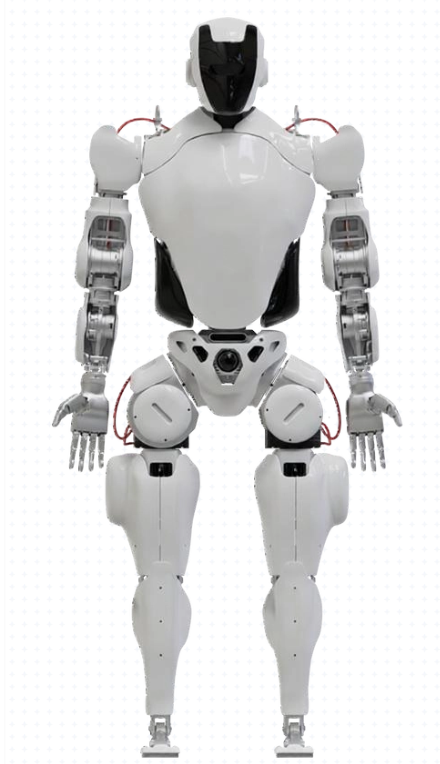
The event also reflected a broader trend in the global robotics sector: the shift from isolated robot capabilities to integrated systems that combine artificial intelligence, advanced materials, precision manufacturing, and real-time control. Bionic embodied intelligence sits at the intersection of these trends. It requires not only breakthroughs in algorithms and large models but also innovations in mechanical design, actuation, sensing, and energy efficiency. The discussions in Changchun therefore covered a wide spectrum, from foundational theory to application scenarios and international market cooperation.
In addition to technology presentations and keynote reports, the event included industrial ecosystem building, technology transfer signings, and going-global cooperation agreements. These elements demonstrated that embodied intelligence is not only a research topic but also an emerging industrial sector that requires collaboration among universities, research institutes, enterprises, investors, and international partners. The participation of 22 signing institutions across two rounds showed a concrete commitment to building a shared ecosystem for bionic embodied intelligence.
| Event Element | Details |
|---|---|
| Event name | Bionic Empowerment, Intelligent Creation of the Future — Breakthroughs in Bionic Embodied Intelligence Robot Technology and Co-construction of Industrial Ecology |
| Date | August 20, 2026 |
| Location context | Held during the 2026 World Robot Conference in Beijing Yizhuang |
| Joint organizers | International Society of Bionic Engineering, Changchun Council for the Promotion of International Trade, Changchun Municipal Bureau of Industry and Information Technology, Jilin Province Bionic Robot Manufacturing Innovation Center |
| Participants | Chinese and international academicians, universities, research institutes, industry-leading enterprises, investment institutions |
| Key outcomes | Release of technological achievements, two rounds of industrial ecosystem co-construction signings, 22 institutions involved |
2. International First Bionic Tension-Compression Body Robot Theory Elevates Embodied Intelligence
During the technology presentation and achievement release session, Ren Lei, a tenured professor at the University of Manchester and executive committee director of the Jilin Province Bionic Robot Innovation Center, released the latest results from the internationally first-of-its-kind bionic tension-compression body robot theory and its technological applications. This achievement represents a full-stack self-developed chain that runs from basic theory to core components and complete machine systems. It realizes a brain-body-environment integrated form of bionic embodied intelligence. According to the event presentation, this marks a new breakthrough in China’s foundational technologies for bionic robots.
The bionic tension-compression body robot theory is significant because it addresses a fundamental challenge in embodied intelligence: how to design a robotic body that can both support intelligent behavior and interact safely and efficiently with unstructured environments. Traditional rigid robots often struggle with adaptability, while purely soft robots may face limitations in force output and precision. The tension-compression body approach seeks to combine structural stability with compliant, biologically inspired movement. By integrating brain-body-environment interaction, the system aims to produce embodied intelligence that is not merely computed in a central processor but distributed across the robot’s structure, sensing, and control systems.
This full-stack self-developed capability is especially important for industrial ecosystem development. When basic theory, core components, and complete systems are developed within a coordinated chain, it becomes easier to transfer laboratory results into commercial products and application scenarios. It also reduces dependence on external technology providers and strengthens the resilience of the domestic robotics supply chain. For Changchun and Jilin Province, this capability can serve as a foundation for attracting talent, investment, and industrial partners in bionic embodied intelligence.
The release of this achievement also reinforces the role of international academic collaboration. Ren Lei’s position at the University of Manchester and his leadership role in the Jilin Province Bionic Robot Innovation Center illustrate how global academic networks can connect with regional innovation platforms. Such connections are essential for embodied intelligence because the field requires expertise across mechanical engineering, materials science, artificial intelligence, neuroscience, control theory, and manufacturing. No single institution or country can advance embodied intelligence in isolation.
| Technology Focus | Description |
|---|---|
| Bionic tension-compression body robot theory | An internationally first-of-its-kind theoretical and technological framework for bionic robots |
| Full-stack self-developed chain | Coverage from basic theory to core components and complete machine systems |
| Brain-body-environment integration | Achieves bionic embodied intelligence through integrated interaction among brain, body, and environment |
| Significance | Marks a new breakthrough in foundational technologies for bionic robots in China |
3. Academician Keynotes Map the Future of Embodied Intelligence
The keynote report session brought together frontier industry perspectives, with three authoritative experts delivering specialized presentations. Guo Lei, academician of the Chinese Academy of Sciences, focused on avian-inspired artificial intelligence technology and interpreted the frontier exploration of bionic intelligent unmanned aerial vehicles. His presentation highlighted how biological flight principles can inform the design of intelligent aerial systems, linking embodied intelligence with aerodynamic efficiency, perception, and autonomous decision-making.
Gu Peihua, academician of the Canadian Academy of Engineering, reviewed the current development status and core technologies of the bionic intelligent robot industry. He also clarified the path for building a talent cultivation system for the industry. This emphasis on talent is crucial because embodied intelligence requires interdisciplinary skills that are not always available through traditional engineering education. Building a pipeline of researchers, engineers, and application specialists is necessary for sustaining long-term innovation in bionic robotics and embodied intelligence.
Dai Jiansheng, academician of the Royal Academy of Engineering, looked ahead to new development directions for the intelligent integration of large models and robotic structures. His perspective connected the rapid progress in large-scale artificial intelligence models with the physical and structural aspects of robots. In the context of embodied intelligence, large models can provide high-level reasoning, task planning, and multimodal understanding, while robotic structures provide the physical affordances needed to act in the real world. The integration of these two dimensions is one of the most promising directions for embodied intelligence research and application.
Together, the three keynote reports covered aerial bionic systems, industrial development and talent, and large-model-structure integration. They reflected the multi-layered nature of embodied intelligence: it is at once a scientific challenge, an engineering challenge, an educational challenge, and an industrial challenge. The presence of academicians from China, Canada, and the United Kingdom also underscored the international character of the field and the importance of cross-border dialogue.
| Speaker | Affiliation | Focus |
|---|---|---|
| Guo Lei | Chinese Academy of Sciences | Avian-inspired artificial intelligence technology and bionic intelligent unmanned aerial vehicles |
| Gu Peihua | Canadian Academy of Engineering | Development status and core technologies of the bionic intelligent robot industry; talent cultivation system |
| Dai Jiansheng | Royal Academy of Engineering | Intelligent integration of large models and robotic structures |
4. Changchun’s Strategic Layout for Embodied Intelligence and New Quality Productive Forces
During the event, Changchun’s strategic planning and development layout for the bionic embodied intelligence industry and the cultivation of new quality productive forces were introduced in detail. The city extended an invitation to science and innovation teams, leading enterprises, and professional talent from across the country to settle in Changchun. This invitation was not merely a promotional gesture; it was tied to a broader vision of building an industrial ecosystem around embodied intelligence, bionic robotics, and intelligent equipment manufacturing.
Changchun’s industrial heritage includes strengths in automotive manufacturing, advanced equipment, optics, and research institutions. These existing capabilities provide a natural foundation for bionic embodied intelligence. The automotive sector, in particular, offers complex assembly, logistics, and inspection scenarios where embodied intelligence can be tested and deployed. Research institutes and universities provide the talent and fundamental research needed for long-term innovation. When these assets are combined with targeted policies, investment, and international cooperation, they can create a virtuous cycle of technology development, application, and industrial growth.
The strategic layout also emphasizes new quality productive forces, a concept that highlights innovation-driven, high-technology, and high-value industrial development. Bionic embodied intelligence fits this concept because it combines artificial intelligence with advanced manufacturing, creating new products, new processes, and new markets. It can improve productivity in existing industries while also creating new industries around bionic components, intelligent sensors, robotic systems, and embodied intelligence software. For Changchun, this represents an opportunity to upgrade its industrial base and participate in a globally significant technology wave.
The event’s call for national science and innovation teams, leading enterprises, and professional talent reflects an understanding that embodied intelligence cannot be developed by isolated actors. It requires collaboration among researchers who understand biological principles, engineers who can design and manufacture components, software experts who can build large models and control systems, and application partners who can provide real-world scenarios. By issuing an open invitation, Changchun is signaling its willingness to serve as a host city and platform for this kind of multi-stakeholder collaboration.
| Strategic Dimension | Focus Area |
|---|---|
| Industrial layout | Bionic embodied intelligence industry and future industry planning |
| Productive forces | Cultivation of new quality productive forces through innovation-driven development |
| Talent invitation | Open call to national science and innovation teams, leading enterprises, and professional talent |
| Regional advantages | Existing strengths in automotive manufacturing, advanced equipment, research, and education |
5. Enterprise-Led Embodied Intelligence Landings in Specialized Scenarios
Relying on local technology and platform advantages, Changchun technology enterprises continue to deepen their work in special-scenario intelligent equipment. China FAW’s independently developed picking and delivery scenario in an automobile final assembly workshop was selected as one of the top ten high-value application scenarios for central enterprise robots released at the 2026 World Robot Conference. This recognition demonstrates how embodied intelligence and robotic automation can be applied to complex manufacturing logistics. In a final assembly workshop, picking and delivery tasks require accuracy, adaptability, and coordination with human workers and other machines. A successful deployment in this scenario can serve as a reference for other manufacturing sectors.
Fenghuolun Technology focuses on special intelligent inspection equipment. The company has developed multiple explosion-proof inspection robots and wall-climbing inspection robots. These systems are designed for environments that may be dangerous or difficult for humans to access. By continuously promoting the large-scale application of embodied intelligence technology, Fenghuolun Technology illustrates how bionic and embodied intelligence principles can be translated into practical industrial products. Explosion-proof inspection robots can operate in hazardous areas, while wall-climbing robots can inspect vertical surfaces, tanks, and large structures. These applications show that embodied intelligence is not limited to humanoid robots or laboratory demonstrations; it can also deliver value in specialized, high-risk, and high-precision tasks.
The selection of China FAW’s scenario and the work of Fenghuolun Technology together demonstrate the breadth of Changchun’s embodied intelligence ecosystem. One represents a large state-owned enterprise integrating robotics into automotive manufacturing. The other represents a specialized technology company developing niche robotic solutions. Both are essential for a healthy industrial ecosystem. Large enterprises can drive scale, standards, and supply chain development. Specialized companies can explore high-value niches and develop unique technologies. When these actors collaborate with universities and research institutes, they can accelerate the transition from embodied intelligence research to commercial deployment.
| Enterprise or Scenario | Embodied Intelligence Application |
|---|---|
| China FAW | Picking and delivery scenario in an automobile final assembly workshop; selected as a top ten high-value application scenario for central enterprise robots |
| Fenghuolun Technology | Special intelligent inspection equipment, including explosion-proof inspection robots and wall-climbing inspection robots |
6. Signings Connect Laboratory Advances to Real-World Embodied Intelligence Applications
At the end of the event, universities, research institutes, and enterprises completed signings for achievement transformation and scenario application. These agreements are intended to accelerate the movement of frontier bionic intelligent technology from the laboratory to real-world application. This step is critical for embodied intelligence because the field often faces a gap between research prototypes and reliable, scalable products. Technology transfer agreements, joint development projects, and scenario-based partnerships can help bridge that gap by aligning research goals with industrial requirements.
In addition, the Changchun International Chamber of Commerce joined with multiple technology enterprises to reach industrial going-global cooperation agreements. The aim is to build a global development ecosystem for bionic robots and to help domestic intelligent equipment and technical services enter the international market. This international dimension is important because embodied intelligence is a global field. Standards, markets, talent, and supply chains are increasingly connected across borders. By forming going-global partnerships, Changchun enterprises can access international customers, partners, and knowledge networks while also contributing to global innovation in embodied intelligence.
The two rounds of industrial ecosystem co-construction signings involved 22 institutions. While the specific contents of each agreement are not detailed in the event announcement, the scale of participation indicates broad engagement across the ecosystem. Such signings can cover joint research, component development, system integration, application demonstration, investment, and market cooperation. The involvement of 22 institutions also suggests that the event was not a standalone conference but a platform for concrete partnership formation. For embodied intelligence to succeed commercially, these partnerships must translate into products, services, and solutions that meet real needs.
| Signing Category | Purpose |
|---|---|
| Achievement transformation and scenario application | Accelerate frontier bionic intelligent technology from laboratory to real-world application |
| Industrial going-global cooperation | Build a global development ecosystem for bionic robots and help domestic intelligent equipment and technical services enter international markets |
| Industrial ecosystem co-construction | Two rounds of signings involving 22 institutions |
7. Global Cooperation and the Internationalization of Embodied Intelligence
The Changchun event placed strong emphasis on internationalization. The presence of the International Society of Bionic Engineering as a joint organizer, along with academicians from the United Kingdom and Canada, signaled that bionic embodied intelligence is an international endeavor. The participation of domestic and international universities, research institutes, industry-leading enterprises, and investment institutions further reinforced the cross-border nature of the field. In embodied intelligence, no country or region can rely solely on its own knowledge base. Advances in artificial intelligence, materials, control, and biology are distributed around the world, and international cooperation is necessary to accelerate progress.
The going-global cooperation agreements reached by the Changchun International Chamber of Commerce and multiple technology enterprises represent a practical step toward international market engagement. Domestic intelligent equipment and technical services can find new applications and customers abroad, while international partners can benefit from Chinese advances in bionic robotics and embodied intelligence. This two-way exchange can take the form of joint ventures, technology licensing, export of robotic systems, participation in international standards, and collaborative research. For Changchun, internationalization is not only about selling products; it is also about learning from global best practices and integrating into worldwide innovation networks.
The event also highlighted the role of international academic platforms. The International Society of Bionic Engineering provides a forum for researchers to share findings, discuss challenges, and build collaborations. By co-organizing the Changchun parallel event, the society helped connect regional innovation with global scientific dialogue. This kind of partnership can raise the visibility of Changchun’s bionic embodied intelligence ecosystem and attract international talent and investment. It also allows local researchers and enterprises to benchmark their work against international standards and identify opportunities for collaboration.
In the broader context, embodied intelligence is becoming a focal point for global competition and cooperation. Countries and regions are investing in robotics, artificial intelligence, and advanced manufacturing because these technologies are expected to drive productivity, security, and economic growth. Bionic embodied intelligence adds a unique dimension by drawing inspiration from biological systems. This biological inspiration can lead to robots that are more energy-efficient, adaptable, and resilient. International cooperation in this field can help ensure that advances are shared and applied to global challenges such as manufacturing, healthcare, disaster response, and environmental monitoring.
8. Why Bionic Embodied Intelligence Matters for the Next Industrial Wave
Bionic embodied intelligence matters because it addresses some of the fundamental limitations of conventional robotics and artificial intelligence. Conventional industrial robots are often designed for repetitive tasks in structured environments. They can be highly precise and efficient, but they may struggle when the environment changes, when objects are irregular, or when tasks require adaptation. Artificial intelligence, especially large models, has made great progress in perception, language, and reasoning. However, intelligence that is not embodied may lack the ability to act effectively in the physical world. Embodied intelligence seeks to combine high-level intelligence with physical interaction, allowing robots to perceive, decide, and act in real time.
Bionic embodied intelligence takes this a step further by using biological principles to guide robot design. Biological organisms provide existence proofs of embodied intelligence. Animals move through complex environments, manipulate objects, avoid dangers, and adapt to changing conditions. Their bodies, senses, and nervous systems are tightly integrated. By studying and mimicking these principles, engineers can create robots with improved mobility, manipulation, sensing, and energy efficiency. The bionic tension-compression body robot theory released at the Changchun event is an example of this approach. It seeks to integrate brain, body, and environment into a unified system of embodied intelligence.
For industry, bionic embodied intelligence can enable new applications in manufacturing, logistics, inspection, maintenance, healthcare, agriculture, and service sectors. In manufacturing, embodied intelligence can support flexible production lines that adapt to different products and tasks. In logistics, it can improve picking, packing, and delivery. In inspection, it can allow robots to operate in hazardous or hard-to-reach environments. In healthcare, it can assist with rehabilitation, surgery, and care. In agriculture, it can support precise planting, harvesting, and monitoring. These are not speculative fantasies; they are natural extensions of the technologies discussed at the Changchun event.
For regions like Changchun, bionic embodied intelligence offers a chance to build on existing industrial strengths and create new high-value industries. The combination of automotive manufacturing, research institutions, and government support can provide a foundation for embodied intelligence clusters. By attracting talent, enterprises, and investment, Changchun can develop a self-reinforcing ecosystem. Success in this field can also enhance the region’s international reputation and connect it to global markets and innovation networks. The parallel event at the 2026 World Robot Conference was an important step in this direction.
| Industrial Sector | Potential Embodied Intelligence Contribution |
|---|---|
| Manufacturing | Flexible production, adaptive assembly, intelligent logistics |
| Inspection and maintenance | Explosion-proof inspection, wall-climbing inspection, hazardous environment operations |
| Automotive | Picking and delivery in final assembly workshops, collaborative robots |
| International cooperation | Global ecosystem building, technology export, joint research, standards participation |
9. Conclusion: From Changchun to the World
The Changchun parallel event at the 2026 World Robot Conference demonstrated that bionic embodied intelligence is moving from a promising research direction toward a practical industrial reality. The release of the internationally first-of-its-kind bionic tension-compression body robot theory and its applications, the keynote reports by academicians, the strategic layout for new quality productive forces, the enterprise applications in automotive and inspection scenarios, and the two rounds of signings involving 22 institutions all point to a coordinated effort to build an ecosystem around embodied intelligence.
Changchun’s ambition is clear: to use its local technology and platform advantages, its industrial base, and its international partnerships to push bionic embodied intelligence onto the world stage. The city is inviting science and innovation teams, leading enterprises, and professional talent to join this effort. It is also building global cooperation through the Changchun International Chamber of Commerce and other partners. By linking research, application, investment, and international markets, Changchun hopes to accelerate the development of embodied intelligence and contribute to the global robotics community.
The event also showed that embodied intelligence is not only about technology. It is about building relationships among universities, research institutes, companies, investors, and international organizations. It is about creating pathways for technology transfer and market entry. It is about developing talent and fostering an innovation culture. And it is about applying bionic principles to solve real problems in manufacturing, inspection, logistics, and beyond. As the world moves toward more intelligent, adaptive, and connected machines, bionic embodied intelligence will play an increasingly important role. Changchun’s parallel event was a significant milestone in that journey, and it signals the city’s determination to be a contributor and partner in the global development of embodied intelligence.
From foundational theory to full-stack self-developed systems, from academician keynotes to enterprise applications, from local industrial upgrading to international going-global cooperation, the event reflected a comprehensive approach to bionic embodied intelligence. It was a platform for releasing achievements, forming partnerships, and communicating a vision. That vision places embodied intelligence at the center of future industry and positions Changchun as an active participant in the worldwide effort to advance bionic robotics. As the agreements signed at the event are implemented and as the invited teams and enterprises begin to engage, the impact of this parallel event may extend well beyond the conference itself, shaping the next phase of embodied intelligence development in China and internationally.