
The 2026 World Robot Conference and the Second World Humanoid Robot Games have recently concluded, leaving the embodied intelligence industry with a sharper set of questions than before. The conference introduced a Procurement Day for the first time. The games drew 666 teams from 16 countries and 2,056 robots. During the event, the 2026 Humanoid Robot Industry Development Report stated that China’s humanoid robot shipments in the first half of 2026 exceeded 40,000 units, accounting for 97 percent of the global total. These figures underline the scale of attention now surrounding embodied intelligence.
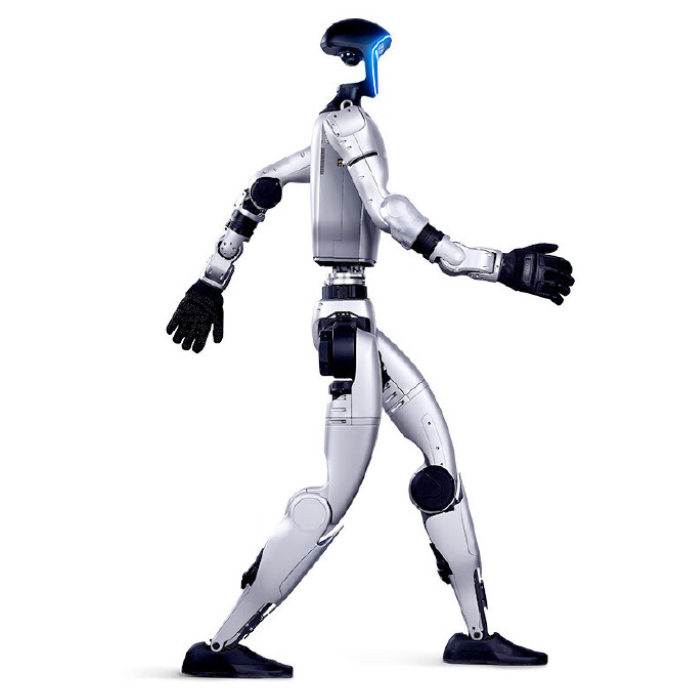
Yet the excitement around shipments, events, and demonstrations has not resolved the central uncertainty facing embodied intelligence. Market chatter about the pace of initial public offerings has shifted the discussion toward a new layer of thinking. Across the industry, three debates now dominate: the timeline debate, the scenario debate, and the capital camp debate. Each debate affects how investors, operators, and technology developers judge the arrival of what many call the super moment for embodied intelligence.
According to information gathered during the conference, financial reports, prospectuses, and primary-market financing data, the differences among leading companies are not merely rhetorical. They reflect distinct assumptions about when embodied intelligence can close a commercial loop. Some companies expect the breakthrough in two or three years. Others expect five to ten years. Some focus on factories, some on stages, some on stores, and some on living rooms. The capital behind these companies has also divided into clear camps. The result is an industry with high shipment growth, divergent statements, and摇摆 valuations. The key question is how far embodied intelligence remains from a genuine commercial closed loop.
1. The Timeline Debate: Two to Three Years Versus Five to Ten Years
The first debate concerns timing. When will embodied intelligence reach a commercial closed loop? Industry leaders do not agree. The answers range from a fast two to three years to a slow five to ten years. The timeline debate matters because it determines how investors value current revenue, future shipments, and the possibility of repeat orders. It also shapes how companies allocate resources among research, deployment, and customer acquisition.
- Unitree’s founder Wang Xingxing offered a dual timeline: fast in two to three years, slow in five to ten years. He defined the ChatGPT moment for embodied intelligence in a verifiable way. A robot should be taken into any unfamiliar environment and be able to complete about 80 percent of tasks based on voice or text instructions. In an August 20 speech, he said that current AI models can approach 100 percent task success after sufficient training in fixed scenarios. However, when objects or environments change slightly, success rates fall sharply. The bottleneck is concentrated in the final few centimeters of motion. During the listing address, he compared the industry to the early stage of personal computers. During the IPO roadshow, he told investors that the company hoped investors would buy its shares because they认同 the company’s value, not because they wanted to speculate.
- Galaxy General’s founder Wang He offered a more specific timeline. In an interview during the conference, he said the current embodied intelligence foundation model is roughly equivalent to the GPT-2 stage in the digital world. By 2028, it could reach the GPT-3.5 to GPT-4 level. He expects the industry’s ChatGPT moment to arrive in 2028. By the end of the 15th Five-Year Plan period, Galaxy General aims to deploy hundreds of thousands of robots across various fields. He listed three conditions for completing the last mile: foundation model capability, post-training commercialization capability, and reliable hardware.
- AgiBot’s founder Deng Taihua measures the timeline by revenue. In April, at a partner conference, he announced that AgiBot had revenue of 1.05 billion yuan in 2025. The 2026 target is several-fold growth, corresponding to shipments of 20,000 to 30,000 units and revenue of 4 billion to 6 billion yuan. In 2027, revenue is expected to cross 10 billion yuan. A report cited by investors and company sources said AgiBot’s revenue in the first quarter of 2026 again exceeded 1 billion yuan. Deng defined 2026 as the year the company moves from a development state to a deployment state. Co-founder Peng Zhihui put it more directly: AgiBot is already far ahead, and it does not lack money but lacks data.
- UBTech represents the capacity-oriented camp. The company delivered more than 500 industrial humanoid robots in 2025. Full-year humanoid robot orders were nearly 1.4 billion yuan. UBTech also announced a 2026 capacity target of 10,000 units. In December 2025, founder Zhou Jian made a second commitment not to reduce his shareholding within 12 months. Management confidence must be read alongside the financial statements. UBTech’s prior-year revenue was 2.001 billion yuan, up 53.3 percent, with a net loss attributable to shareholders of 703 million yuan. The company has not yet turned profitable.
- Tesla has an equally aggressive timeline overseas. The third-generation Optimus began mass production at the Fremont factory at the end of July. The 2026 production target is 50,000 to 100,000 units, initially for internal factory use, with external sales planned for 2027. This timetable has been delayed multiple times. The goals of having production conditions in 2023 and deploying thousands of units in factories in 2025 were not met on schedule. In early 2025, Elon Musk acknowledged that the hundreds of Optimus robots deployed at the time were not performing useful work in the factory.
More cautious capital has already withdrawn from some targets. GSR Ventures’ Zhu Xiaohu, who is not optimistic about the short-term commercialization of humanoid robots, has exited several embodied intelligence companies. At the World Artificial Intelligence Conference in July, researchers from several leading robot companies admitted that humanoid robots still struggle to truly work in factories and other scenarios. The training cost for adapting to real environments is too high. In an August 19 report, TrendForce reminded the market to observe which products already have clear customers, have begun batch delivery, and whether first customers can convert into repeat orders. These warnings do not deny the long-term potential of embodied intelligence, but they do challenge the speed of the commercial timeline.
1.1 The Definitions Behind the Timeline
The timeline debate is also a debate about definitions. If the benchmark is model capability, the turning point is around 2028. If the benchmark is shipment volume, 2026 has already passed the ten-thousand-unit mark. If the benchmark is repeat purchases, the industry has not yet submitted its answer. These three definitions may be fulfilled sequentially, not simultaneously. The definition an investor uses for pricing determines what kind of asset that investor is buying. In embodied intelligence, a model-capability timeline may justify long-term option value. A shipment-based timeline may justify near-term revenue multiples. A repeat-purchase timeline may be the only true test of a commercial closed loop.
| Timeline Camp | Representative View | Key Metric | Named Target or Milestone |
|---|---|---|---|
| Fast timeline | Wang Xingxing of Unitree | Robot completes about 80 percent of tasks in an unfamiliar environment after voice or text instruction | Fast in two to three years, slow in five to ten years |
| Specific model timeline | Wang He of Galaxy General | Foundation model moves from GPT-2 level to GPT-3.5 to GPT-4 level | ChatGPT moment in 2028; hundreds of thousands of robots by the end of the 15th Five-Year Plan period |
| Revenue and shipment timeline | Deng Taihua and Peng Zhihui of AgiBot | Revenue growth and deployment scale | 2025 revenue of 1.05 billion yuan; 2026 target of 20,000 to 30,000 units and 4 billion to 6 billion yuan; 2027 revenue above 10 billion yuan |
| Capacity timeline | UBTech and Zhou Jian | Industrial robot deliveries and orders | More than 500 industrial humanoid robots delivered in 2025; nearly 1.4 billion yuan in orders; 10,000-unit capacity target for 2026 |
| Overseas aggressive timeline | Tesla and Optimus | Mass production and internal deployment | Third-generation Optimus production started at Fremont; 2026 target of 50,000 to 100,000 units; external sales in 2027 |
2. The Scenario Debate: Factory Orders, Stage Attention, Living Room Promise, and Commercial Services
The second debate is more practical than the timeline debate. Where will embodied intelligence first generate sustainable revenue? The industry has divided into four broad camps: the factory camp, the stage camp, the living room camp, and the commercial service camp. Each camp has a different payment model and a different level of maturity. The factory camp receives project-based payments. The stage camp receives event-based payments. The living room camp hopes for annual repurchases. The commercial service camp earns daily operating revenue. The scenario debate is therefore not about which use case is philosophically superior. It is about which customer pays, when the payment occurs, and whether the payment repeats.
2.1 The Factory Camp: The Most Certain Orders Today
The factory camp has the highest current certainty in terms of orders. UBTech’s full-size humanoid robot revenue reached 820 million yuan in the prior year, with sales of 1,079 units and an average price of about 760,000 yuan. Its customers cover automobile manufacturing, smart manufacturing, and smart logistics. Its products have been introduced at Airbus. AgiBot had cumulatively produced and rolled out 15,000 robots by the end of June 2026. It continues to advance in 3C manufacturing scenarios and has introduced a leasing model based on service cycles to lower the threshold for factory trials. Galaxy General cooperated with CATL and won a 236 million yuan embodied intelligence equipment procurement project. Its robots have entered battery factories for operations. It also reached a thousand-unit cooperation plan with Baida Precision. The same wheeled robot is also running in Meituan’s supermarket sorting scenario.
Tesla and Figure have chosen a self-use-first approach. The first batch of Optimus capacity is reserved for Tesla’s own factories. Figure’s robots have been sent into BMW factories. During a visit to Xiaomi’s robot team, the same logic was evident: robots should first work in the company’s own factories before discussing external sales. According to public information, Xingdong Jiyuan focuses on warehousing and logistics and has already delivered thousand-level orders in batches. The risks of this path are also visible. Wang Xingxing said directly that robot efficiency is still lower than human efficiency. Most factory orders remain in pilot and training stages. There are many framework procurement agreements but few batch acceptances. Dobot, which entered humanoid robots from collaborative robot arms, reported prior-year revenue of 492 million yuan. Its embodied intelligence robot revenue was 20.042 million yuan, a small share of the total.
2.2 The Stage Camp: Attention and Cash Flow
The stage camp has gained visibility and cash flow. Unitree shipped more than 5,500 humanoid robots in the prior year. Scientific research, education, developers, and commercial performances form its basic customer base. Humanoid robot revenue reached 800 million to 900 million yuan, surpassing quadruped robots for the first time as the largest revenue source. The company expects first-half revenue of 1.052 billion to 1.128 billion yuan, up 35.62 percent to 45.41 percent. For embodied intelligence, the stage camp provides an important bridge. It generates revenue while the technology is not yet ready for complex industrial work. It also builds brand recognition and data collection opportunities. However, stage and performance demand may not scale in the same way as factory or household demand. The stage camp can support early embodied intelligence companies, but it may not by itself justify the largest valuations.
2.3 The Living Room Camp: The Highest Market Expectation and the Fewest Deliveries
The living room camp has the highest market expectation but the fewest actual deliveries. The games’ scenario competition brought a simulated home space into the venue. Robots had to take clothes out of a washing machine and independently complete drying and folding. That task is precisely at the upper limit of current capabilities. The United States company 1X offers NEO at a price of $20,000 for purchase or $499 per month by subscription. More than 10,000 consumers have paid deposits. The company plans to deliver in the United States this year. As of June 2026, NEO had not actually been delivered, and handling complex tasks still required remote human assistance.
Domestic manufacturers are entering through lower-priced companion models. Songyan Dynamics’ Little Bumi is priced at about 9,500 yuan. It opened pre-sales on JD in October 2025 and sold 200 units in three hours. Unitree’s R1 Air is priced at 29,999 yuan on JD. AgiBot’s Lingxi X2 is priced at 97,500 yuan. UBTech released its full-size bionic humanoid robot U1 series on June 30. The company said all-channel orders exceeded 13,400 units and planned to start delivery in September. The U1 Pro is quoted at 169,800 yuan. It can make various facial expressions and speak, but the part below the neck cannot move autonomously. The listed company SwitchBot makes home robot systems. Its prior-year revenue was 901 million yuan, with more than 95 percent coming from Japan, Europe, and North America. Its product form is not humanoid. These examples show that the living room camp remains the most distant for embodied intelligence, even as consumer curiosity is high.
2.4 The Commercial Service Camp: Already Collecting Revenue
The commercial service camp is already collecting money in restaurants, hotels, and pharmacies. Yunji Technology listed on the Hong Kong stock exchange under the 18C rules in October 2025. Its hotel delivery robots have operated for years. Before listing, the company carried 1.925 billion yuan in redemption liabilities related to bet agreements. The listing proceeds eased the redemption pressure. Galaxy General’s Galaxy Space Capsule unmanned retail capsule has landed in more than 20 cities with over 100 units. It operates with a license in Haiwang Xingchen pharmacies. For embodied intelligence, the commercial service camp demonstrates that robots can generate daily operating revenue in constrained environments. The tasks may be narrower than factory work or household chores, but the commercial loop is more visible. The four camps do not have a clear hierarchy. Their settlement methods differ: factories pay by project acceptance, performances pay by session, households pay by annual repurchase, and retail pays by daily operation.
| Scenario Camp | Representative Examples | Revenue or Delivery Evidence | Payment Model |
|---|---|---|---|
| Factory | UBTech, AgiBot, Galaxy General, Tesla, Figure, Xiaomi, Xingdong Jiyuan, Dobot | UBTech full-size humanoid revenue of 820 million yuan, 1,079 units, average price about 760,000 yuan; AgiBot 15,000 units by end of June 2026; Galaxy General 236 million yuan procurement project with CATL; thousand-unit plan with Baida Precision | Project acceptance, leasing, framework procurement |
| Stage and research | Unitree | More than 5,500 humanoid robots shipped; humanoid revenue of 800 million to 900 million yuan; expected first-half revenue of 1.052 billion to 1.128 billion yuan | Session fees, developer purchases, education purchases |
| Living room | 1X, Songyan Dynamics, Unitree, AgiBot, UBTech, SwitchBot | 1X NEO at $20,000 or $499 per month, more than 10,000 deposits, no actual delivery by June 2026; Little Bumi at about 9,500 yuan, 200 units in three hours; UBTech U1 orders above 13,400 units, U1 Pro at 169,800 yuan | Purchase, subscription, annual repurchase |
| Commercial services | Yunji Technology, Galaxy General | Yunji listed under 18C in October 2025 with 1.925 billion yuan in pre-listing redemption liabilities; Galaxy Space Capsule in more than 20 cities and over 100 units | Daily operating revenue, licensing, retail margin |
3. The Capital Camp Debate: 93.5 Billion Yuan in Six Months and a Concentrated Bet
The third debate is about capital. Primary-market investors are placing密集 bets on different paths. According to IT Juzi, domestic embodied intelligence financing in the first half of 2026 totaled 93.5 billion yuan, five times the year-earlier level. There were 322 financing events. The half-year scale already exceeded the full year of 2025. According to Gaogong Robot Industry Research Institute, the financing amount including overseas deals was 132.5 billion yuan. Capital is highly concentrated. The top 20 companies took 55 billion yuan, or 59 percent of the total. Zibianliang Robotics, Zhipingfang, and Qianxun Intelligence ranked in the top three with 6.3 billion yuan, 6.02 billion yuan, and 4.5 billion yuan respectively.
| Capital Metric | First Half 2026 Data | Comparison or Detail |
|---|---|---|
| Domestic embodied intelligence financing | 93.5 billion yuan | Five times year-on-year; 322 financing events; exceeds full-year 2025 |
| Financing including overseas | 132.5 billion yuan | Gaogong Robot Industry Research Institute estimate |
| Top 20 share | 55 billion yuan | 59 percent of total financing |
| Top three companies | Zibianliang Robotics 6.3 billion yuan; Zhipingfang 6.02 billion yuan; Qianxun Intelligence 4.5 billion yuan | Ranked first, second, and third by financing amount |
The inflow of capital has pushed up valuation levels and triggered controversy. One investor who has long followed the embodied intelligence sector said that many embodied robot companies claim a valuation of 10 billion yuan, but very few have truly reached it. Some 10 billion yuan valuation financings are still in progress and have not been fully completed. The speed of valuation inflation is notable. In early March, according to incomplete statistics, there were 8 unicorns with a valuation of 10 billion yuan in embodied intelligence. By mid-July, according to incomplete statistics from the Shenzhen Qianhai Authority, the national number of companies with a valuation of 10 billion yuan had increased to 20. Members of this club fall into two broad categories. Most focus on the embodied brain, such as Galaxy General, Zibianliang, Galaxea, and Qianxun Intelligence. A smaller number are known for robot body performance, such as Unitree.
3.1 The First Camp: Internet Platform and Industrial Capital
The first camp is internet platform and industrial capital. Meituan has been the heaviest investor. It has participated in at least 16 embodied intelligence companies, 10 of which have become unicorns. Its investments include Galaxy General in the angel round, Zibianliang in three consecutive rounds, Galaxea in the A round, and Tashi Zhihang in the angel-plus round. Meituan is also the largest external shareholder of Unitree. After issuance, it held 8.68 percent, with cumulative investment of about 421 million yuan. On Unitree’s first trading day, that stake corresponded to a market value of 29.679 billion yuan. JD made intensive moves from May to August 2025, investing in AgiBot, Qianxun Intelligence, LimX Dynamics, EngineAI, PaXini, and others within three months. Tencent led AgiBot’s new financing round in March 2025. Alibaba, Ant, ByteDance, and Xiaomi all hold Unitree shares. Zibianliang is the only embodied intelligence company that has received separate lead investments from Meituan, the Xiaomi ecosystem, Alibaba, and ByteDance.
3.2 The Second Camp: Manufacturing Industrial Capital
The second camp is manufacturing industrial capital. CATL led Galaxy General’s 1.1 billion yuan A round in June 2025. SAIC increased its investment in AgiBot multiple times. BAIC’s vehicle production line introduced Galaxy General robots. XPeng announced in August that it would introduce $900 million in financing for its robot business, with a post-money valuation of $6.3 billion. Its humanoid robot IRON is planned for mass production by the end of 2026, first entering its own stores and parks, and delivered externally in 2027. Automakers in this round are both buyers and shareholders. Their involvement gives embodied intelligence companies access to factories, testing grounds, and real-world scenarios. It also creates a strategic dependence that may shape customer concentration and commercialization path.
3.3 The Third Camp: State Capital
The third camp is state capital. The National Artificial Intelligence Industry Investment Fund made its first investment in Galaxy General. The Beijing Robot Industry Development Fund holds 3.83 percent of Unitree. The Shanghai Embodied Intelligence Fund invested in AgiBot. Shenzhen Capital Group and the China Internet Investment Fund are among Unitree’s shareholders. In Unitree’s strategic placement list, the National Social Security Fund, CNPC Kunlun Capital, China Southern Power Grid Industrial Finance, Tianyi Capital, and other institutions together subscribed 1.22 billion yuan. DeepSeek was allocated shares with a 36-month lock-up. State capital provides credibility, policy alignment, and long-term patience. At the same time, it may influence which embodied intelligence companies are seen as national champions and which are seen as commercial experiments.
3.4 The Fourth Camp: Financial Investors
The fourth camp is financial investors. Sequoia China made 20 investments in the embodied intelligence sector in the first half of the year, exceeding 3 billion yuan. It was the earliest institutional investor in Unitree in 2019, with a first check of 15 million yuan. After issuance, it held 6.4 percent. On Unitree’s first trading day, that stake corresponded to a market value of 21.885 billion yuan. Matrix Partners China holds 4.49 percent of Unitree. Hillhouse Venture Capital made 19 investments in the first half of the year. Some institutions have exited and then returned. GSR Ventures, which had questioned the humanoid form, led the seed round of Xingjue Robotics in 2026. Its investment logic shifted from questioning the humanoid form to emphasizing commercialization capability. This shift illustrates that the capital debate within embodied intelligence has not disappeared. It has moved from whether to believe to how much to believe.
4. The Exit Window and the IPO Race
The exit window opened集中 in 2026. Unitree took 104 days from IPO acceptance to registration effectiveness, the fastest record since the mechanism was implemented. AgiBot confirmed on July 24 that it had started the Hong Kong listing process. It had previously acquired 63.62 percent of Shangwei New Material, a STAR Market company. Deng Taihua became the actual controller. Peng Zhihui became chairman of Shangwei New Material in May 2026. AgiBot’s Hong Kong target valuation is HK$40 billion to HK$50 billion. UBTech acquired 43 percent of Fenglong for 1.665 billion yuan in December 2025. Leju Robotics’ ChiNext IPO has been accepted. DEEP Robotics and Fourier are on the STAR Market path. Xingdong Jiyuan completed a 2.5 billion yuan Pre-IPO financing. Zibianliang confidentially filed with the Hong Kong Stock Exchange in August. As early as March, the judgment was made that 2026 could become a major listing year for robot companies. At that time, the signals were only that Unitree had completed listing counseling and that Galaxea and EngineAI had completed share reform.
The concentration of exits has several implications for embodied intelligence. First, public markets will provide a new pricing benchmark. Second, the supply of investable targets may increase rapidly, reducing scarcity. Third, companies that list early may gain access to capital for capacity expansion and customer acquisition. Fourth, investors will be able to compare disclosed financials across embodied intelligence companies rather than relying on private-market narratives. The exit window does not mean that every company will succeed. It means that the market will soon have more data to test the claims made during the private phase.
5. The Valuation Debate: Hardware Company or Platform Company?
The third debate has just begun. Its core question is the logic of pricing. Should an embodied intelligence company be priced as a hardware company or as a platform company? If priced as a hardware company, FANUC, which ranks first in global industrial robot cumulative installations, has a maximum price-to-sales ratio of about 10 times. If priced as a platform company, Unitree’s IPO valuation corresponds to about 24.7 times price-to-sales and an IPO price-to-earnings ratio of 219.23 times. Based on the August 27 closing price and the prior-year net profit of 278 million yuan, the static price-to-earnings ratio is about 895 times. The average for A-share general equipment manufacturing in the same period was 38.56 times. The Hong Kong market gave UBTech a valuation of about 22 times price-to-sales. Unitree’s unrestricted float is only 7.44 percent of total shares. Concentrated chips amplified first-week volatility. The extra portion is the humanoid robot track premium. If shipment growth falls short of expectations, that premium will be compressed.
| Pricing Benchmark | Multiple or Ratio | Context |
|---|---|---|
| FANUC as hardware company | Maximum price-to-sales ratio of about 10 times | Global industrial robot cumulative installations leader |
| Unitree IPO as platform company | About 24.7 times price-to-sales; IPO price-to-earnings ratio of 219.23 times | Unitree IPO issuance valuation |
| Unitree static price-to-earnings ratio | About 895 times | Based on August 27 closing price and prior-year net profit of 278 million yuan |
| A-share general equipment manufacturing average | 38.56 times | Same-period average |
| UBTech Hong Kong valuation | About 22 times price-to-sales | Hong Kong market pricing |
| Unitree unrestricted float | 7.44 percent of total shares | Concentrated chips amplified first-week volatility |
As of August, six embodied intelligence companies had reached a valuation of 20 billion yuan. The case of institutions exiting and then returning shows that capital’s internal disagreement over commercialization has not disappeared. It has only changed from whether to believe to how much to believe. For embodied intelligence, valuation is not just a financial question. It is a question about the credibility of the commercial loop. If revenue comes mainly from related parties, if orders are framework agreements rather than accepted deliveries, and if first-time buyers do not become repeat customers, then the platform valuation may be premature. If embodied intelligence companies can demonstrate repeat orders from independent customers, the platform valuation may find stronger support.
6. Two Additional Variables: Big Tech Entry and Institutional Dividend
Two additional variables will shape the future of embodied intelligence. The first is the entry of large technology companies. Honor, Xiaomi, and other phone manufacturers, as well as XPeng, Li Auto, and other automakers, have already deployed robot businesses. They hold capital, factories, and existing scenarios. The first-mover window for unicorn companies is limited. When a large manufacturer can integrate embodied intelligence into its own production lines and sales channels, it may scale faster than a standalone robotics company. This does not mean unicorns will lose. It means they must prove advantages in model capability, hardware reliability, and customer relationships before large companies close the gap.
The second variable is the institutional dividend from issuance channels. The STAR Market pre-review mechanism and Hong Kong’s 18C rules have opened the exit window at the same time. Companies in the queue will concentrate supply during the window period. The scarcity premium faces dilution. An open window does not mean a lower threshold. In late August, the market briefly rumor that IPO applications by unprofitable companies would be comprehensively tightened. A person familiar with the matter responded that both A-shares and Hong Kong would continue to open their doors to high-quality unprofitable companies. However, the review would place greater emphasis on a clear commercialization path and expectations for earnings improvement. For companies with losses that have not narrowed, difficult commercialization, and a non-leading position in a niche, the standards will be stricter. For embodied intelligence, this means that listing is not the end of scrutiny. It is the beginning of public verification.
7. What to Watch in the Next Two Years
The first debate will have a standard answer. The timeline disagreement is a definition disagreement. By model capability, the turning point is around 2028. By shipment volume, 2026 has already passed the ten-thousand-unit mark. By repeat purchases, the industry has not yet submitted its answer. The three definitions will be realized sequentially, not simultaneously. The definition an investor uses for pricing determines what that investor is buying. In embodied intelligence, the timeline debate is therefore not only about technology. It is about which financial metric deserves trust at which stage.
The second debate is already half answered. The endgame judgment is actually consistent across camps. Robots must ultimately perform real work. The disagreement is only about who receives money first and at what price. The stage and research markets support cash flow. Factories support orders and data. The living room supports the final vision. The current mismatch is that capital prices embodied intelligence according to the living room market space, while revenue mainly comes from stages, research, and factory pilots. Beyond the difficulty of movements demonstrated at the games, the next two years deserve attention for three ratios: the ratio of framework agreements to accepted and paid deliveries in orders, the ratio of related parties to independent third parties among buyers, and the ratio of first purchases to repeat purchases among customers. AgiBot’s revenue includes purchases by shareholders and ecosystem partners. Galaxy General’s large order comes from shareholder CATL. Unitree wrote in its prospectus that it does not fully掌握 the specific usage scenarios of customers. These are normal features of an early industry. They are also discounts that valuation should apply.
The third debate has just begun, and its core is the logic of pricing. If a robot company is priced as a hardware company, FANUC’s maximum price-to-sales ratio of about 10 times provides one anchor. If it is priced as a platform company, Unitree’s IPO valuation of about 24.7 times price-to-sales, an IPO price-to-earnings ratio of 219.23 times, and a static price-to-earnings ratio of about 895 times provide another anchor. The Hong Kong market’s roughly 22 times price-to-sales for UBTech provides a third. The extra portion is the humanoid robot track premium. If shipment growth does not meet expectations, that premium will be compressed. In embodied intelligence, the premium reflects hope for a platform future. The revenue reflects the current hardware and project reality.
According to statistics, as of August, six embodied intelligence companies had reached a valuation of 20 billion yuan. The case of institutions exiting and then returning shows that capital’s internal disagreement over commercialization has not disappeared. It has only changed from whether to believe to how much to believe. Two additional variables remain. First, big technology companies are entering. Honor, Xiaomi, and other phone manufacturers, as well as XPeng, Li Auto, and other automakers, have already deployed robot businesses. They hold capital, factories, and existing scenarios. The first-mover window for unicorn companies is limited. Second, the institutional dividend from issuance channels is opening. The STAR Market pre-review mechanism and Hong Kong’s 18C rules have opened the exit window at the same time. Companies in the queue will concentrate supply during the window period. The scarcity premium faces dilution. An open window does not mean a lower threshold. In late August, the market briefly rumor that IPO applications by unprofitable companies would be comprehensively tightened. A person familiar with the matter responded that both A-shares and Hong Kong would continue to open their doors to high-quality unprofitable companies. However, the review would place greater emphasis on a clear commercialization path and expectations for earnings improvement. For companies with losses that have not narrowed, difficult commercialization, and a non-leading position in a niche, the standards will be stricter.
Embodied intelligence does not lack a stage. The conferences, games, demonstrations, and financing announcements have given the sector extraordinary visibility. What embodied intelligence still lacks is a durable commercial loop. In the next two years, the companies that can continuously sell robots and persuade the same customers to place more orders will be the ones qualified to talk about a closed loop. The super moment for embodied intelligence may not arrive as a single event. It may arrive as a sequence of verified orders, repeat purchases, and independent customer payments. The timeline debate, the scenario debate, and the capital camp debate will all be tested by that sequence. Until then, the market will continue to price embodied intelligence with a mixture of hardware logic, platform hope, and track premium. The companies that convert that hope into repeat revenue will define the next phase of embodied intelligence.