
As the deep integration of the digital economy and the real economy continues to accelerate, data is steadily releasing its value as a new type of production factor, profoundly reshaping the trajectory of technological evolution and the form of industrial transformation. A newly published analytical study argues that embodied intelligence — the key carrier through which artificial intelligence extends from digital space into the physical world — has become an important indicator of a country’s scientific and technological innovation capacity and industrial competitiveness, and that its development depends heavily on the empowering support of data elements and the foundational guarantee of high-quality datasets.
The study takes the core characteristics of data elements as its starting point and combines them with the general construction framework of embodied intelligence to systematically explain the internal mechanisms and implementation paths through which data elements empower the development of embodied intelligence. Its central finding is that data elements can comprehensively enable the whole-process construction and capability upgrading of embodied intelligence across four dimensions: morphological optimization, perception enhancement, behavioral refinement, and learning evolution. On that basis, the study proposes that deeper integration and coordinated development between data elements and embodied intelligence should be promoted by strengthening top-level design, focusing on key fields, advancing scenario empowerment, and improving the guarantee system.
1. Policy Momentum Builds Around Data as a Core Production Factor
Since data was formally incorporated into the production factor system at the fourth plenary session of the 19th Central Committee of the Communist Party of China, the central government has continuously reinforced the institutional construction of data elements. A series of policy documents, including the 14th Five-Year Plan for Digital Economy Development and the Opinions on Building Basic Data Systems to Better Play the Role of Data Elements, have provided fundamental guidance and an action framework for promoting the efficient circulation and standardized utilization of data elements. Entering the period of the 15th Five-Year Plan, deepening the market-oriented reform of data element allocation and accelerating the construction of a nationally integrated data market remain important strategic tasks for advancing the building of a digital China and empowering high-quality development.
Against this backdrop, embodied intelligence is emerging as an important direction for future industrial layout and is playing a key role in the artificial intelligence plus initiative and in the cultivation of new quality productive forces. The study notes, however, that embodied intelligence still faces structural constraints in real-world applications due to insufficient support from data elements. On the one hand, the supply of high-quality, multimodal, and interactive data remains fragmented, making it difficult to support cross-scenario generalization capability. On the other hand, the transmission mechanism of data elements among perception, decision-making, and action has not yet been fully connected, leaving an obvious gap between model capability and physical execution.
Addressing these constraints, the study extends its analytical perspective to embodied intelligence as a physical interactive intelligent system, revealing the cross-level transmission mechanism of data elements within the closed loop of perception, decision-making, and execution. It examines how data elements support morphological optimization, perception enhancement, behavioral refinement, and learning evolution in embodied intelligence, with the aim of providing a theoretical explanation for the deep integration of data elements and embodied intelligence and a reference for the high-quality development of the embodied intelligence industry.
2. Why Embodied Intelligence Depends on Data: The Research Context
Data refers to any electronic or other form of record of information. Compared with traditional production factors such as labor and capital, data possesses non-material characteristics, and its value realization does not depend directly on the production process. Instead, it requires systematic and standardized full-lifecycle management — including data collection, storage, cleaning, and annotation — combined with deep processing and analysis using machine learning and artificial intelligence technologies, before data resources can be transformed into data elements. On this basis, the study defines data elements as data resources that, after development, processing, and refinement in social production and business activities, can generate economic value and participate in value creation.
Existing research has explored the value creation mechanisms of data elements from multiple dimensions, including the macro economy, enterprise innovation, and artificial intelligence development. At the macro level, related studies generally hold that data elements can raise total factor productivity, drive the transformation of economic growth models, and become an important variable driving high-quality development. At the micro level, data elements are widely applied in the digital transformation of enterprises, playing a positive role in improving production efficiency, optimizing organizational management structures, and strengthening innovation capacity. With the rapid development of artificial intelligence technology, high-quality data has gradually become an important foundation for model training and capability improvement, continuously enhancing perception, reasoning, and decision-making capabilities by providing training corpora and structured inputs for large models.
Embodied intelligence is an important direction in which artificial intelligence extends toward the physical world. Its core lies in building an agent system capable of perceiving, deciding, acting, and learning in real environments, and achieving autonomous evolution through continuous interaction with the environment. Unlike traditional artificial intelligence, which mainly relies on static data training, embodied intelligence depends more heavily on dynamic interaction data from the real world. Its capability formation process is essentially one of continuous data accumulation, ongoing model iteration, and sustained scenario expansion. In recent years, with the development of multimodal perception, large models, reinforcement learning, and world models, the integration of data elements and embodied intelligence has gradually become an important direction of attention for both academia and industry.
Existing research generally recognizes that high-quality, multimodal datasets are an important infrastructure supporting technological breakthroughs and industrial deployment in embodied intelligence. On the one hand, multimodal data such as vision, speech, touch, and force provides foundational support for embodied intelligence to build environmental cognitive capabilities. On the other hand, large-scale scenario data can improve the generalization ability and complex-environment adaptability of models, creating conditions for intelligent agents to achieve autonomous decision-making and continuous learning. At the same time, new types of infrastructure such as robot training grounds, data factories, and simulation platforms continue to emerge, providing important support for the development of the embodied intelligence industry by expanding the scale of data supply, enriching training scenario resources, and optimizing model training processes. Some studies have begun to explore the capability formation mechanism of embodied intelligence from a data-driven perspective, arguing that data collection, data annotation, model training, scenario validation, and capability iteration are forming a new innovation closed loop, and that data has gradually evolved from a supporting resource into a key production factor affecting capability improvement and industrial development in embodied intelligence.
3. The Six Defining Characteristics of Data Elements
As the digital economy develops, data has gradually become an important foundational resource driving economic growth and industrial transformation. Compared with traditional production factors, data elements show marked differences in their generation methods, usage patterns, and value realization mechanisms, and these unique attributes determine the complexity of their empowerment paths. The study identifies six core characteristics of data elements that are particularly relevant to embodied intelligence.
| Characteristic | Explanation | Relevance to embodied intelligence |
|---|---|---|
| Partial excludability | Data generation often involves multiple participants, including data producers, platform operators, and network service providers, making it naturally difficult for a single entity to control data completely. Data circulates and replicates over networks at extremely low marginal cost, yet can still be subject to limited control through technical means and institutional arrangements such as encryption, access permission control, and data rights confirmation. | Enables shared training corpora and reusable experience across multiple intelligent agents while preserving value protection for contributors. |
| Increasing returns to scale | As data scale expands and data types diversify, the improvement effect on production efficiency and model performance strengthens significantly. The process is not unlimited, however; after data accumulation reaches a certain scale, marginal effects gradually diminish, so value realization depends not only on scale expansion but also on the coordination between quality improvement and structural optimization. | Directly supports perception enhancement and learning evolution, where richer and more varied data improves multimodal fusion and environmental robustness. |
| Value heterogeneity | The same data can produce differentiated value for different entities and application scenarios. Data is reusable and does not depreciate with the number of uses, and its value release depends heavily on analytical methods and application scenarios. Through different algorithms and multi-source fusion, the same data can generate multiple kinds of application value, making data analysis capability a key competitive capacity. | Requires morphology design and behavior strategies to be precisely matched with specific scenarios rather than designed generically. |
| Dynamic precision | Data elements possess significant dynamic updating and real-time feedback capabilities, continuously capturing changes in the external environment and rapidly updating information states. This characteristic supports real-time decision-making and dynamic optimization and is highly valuable in complex system regulation and sudden environmental response. | Underpins the real-time closed loop of perception, decision-making, and execution required for behavioral refinement. |
| Multimodality | Data elements can exist in multiple forms, including text, images, speech, video, and sensor signals, and can form a complete information expression system through cross-modal fusion. Multimodal data can characterize complex systems from different dimensions, improving the completeness of information expression and decision support capability. | Provides the natural carrier for perception enhancement in embodied intelligence, whose sensing systems combine vision, hearing, touch, and other modalities. |
| Virtual substitutability | Through digital modeling and simulation, data elements can map and substitute for change processes in the real world, reducing dependence on physical space and physical experimentation. In industrial production and system design, for example, data modeling can replace part of the physical experimental process, lowering trial-and-error costs and improving research and development efficiency. | Serves as an important bridge connecting the physical world and virtual space for morphology screening and behavior rehearsal. |
4. The Four-Layer Construction Framework of Embodied Intelligence
As the core form connecting virtual intelligence and the physical world, the construction of embodied intelligence is based on the integration of multiple disciplines and must balance the real-time nature of environmental interaction, the precision of decision-making, and the continuity of learning. The general architectural framework of embodied intelligence can be summarized as a coordinated system of morphology, perception, behavior, and learning.
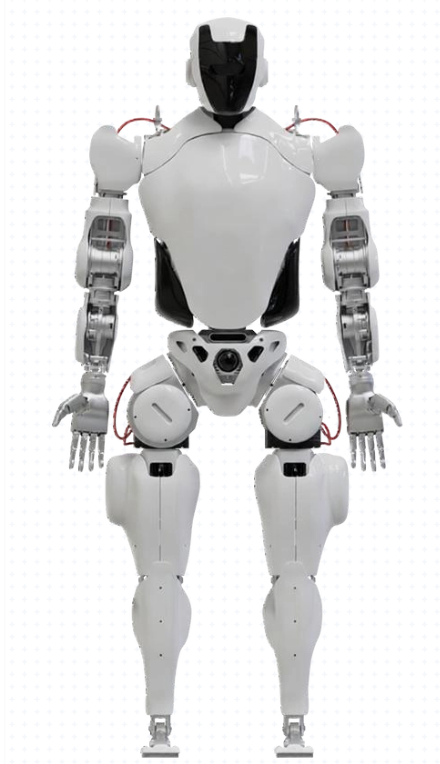
Morphology is the physical carrier of embodied intelligence and directly determines its basic motion capability and physical interaction boundary. Through the scientific design of mass distribution, driving capability, and sensor layout, morphology sets the dynamic constraints for embodied intelligence and defines the scope and possibilities of its interaction with the physical world. Morphology design in embodied intelligence is consistently aligned with task scenario requirements: quadruped forms suit complex terrain inspection, wheeled forms suit flat-road transportation, humanoid forms suit interaction within human living and working environments, and robotic arm forms suit precision operations at fixed workstations. It should be made clear that morphology is not merely an external combination of hardware but the structural foundation on which intelligence is generated. Its physical configuration determines how the agent makes contact, receives forces, and moves in physical interaction with the environment, and the raw information generated by that interaction is captured by sensors deployed on the morphology and transmitted to the cognitive system. Similarly, when the decision-making system outputs action instructions, it must rely on the physical morphology to complete interaction with the physical world and ultimately accomplish the task. Reasonable morphology design can therefore improve the efficiency of the entire operational process of the intelligent system and provide physical-level support for intelligent iteration.
Perception is the core information entry point for interaction between embodied intelligence and the external environment. It receives the physical support of the morphology carrier and is responsible for collecting multimodal raw sensor data, providing the basic input for subsequent decision-making and behavior execution. Depending on task requirements, the perception system relies on multimodal sensors such as vision, hearing, force, and touch to collect scene environment data, target feature information, its own position and posture, and interaction feedback signals. Through multidimensional information complementarity, it improves the robustness of perception, scenario understanding capability, and decision reliability. Unlike the passive perception mode of traditional robots, one of the core advantages of embodied intelligence is its capacity for active perception: when established perceptual information is insufficient, the agent can proactively explore unknown environments and supplement key information through autonomous movement and coordinated multi-sensor collection, building a complete scenario model and thereby completing tasks precisely and efficiently. This process also accumulates rich raw data for the subsequent learning stage.
Behavior is the output channel through which embodied intelligence acts on the physical world. Taking the information provided by the perception module as its core basis, it generates stable and precise action sequences driven by the decision model, achieving effective physical interaction with the environment. The effect of behavior execution directly reflects the practical level of embodied intelligence. Its core difference from traditional robots is that behavior is not a mechanical execution of preset programs but can dynamically adjust and optimize behavior patterns in real time according to changes in the scenario, improving adaptability and task completion quality in complex settings. At the same time, interaction feedback data generated during behavior execution — such as action precision, environmental response, and task completion effect — is transmitted back to the perception and learning modules, providing reference for the optimization of the perception system and core material for the iteration of the learning module.
Learning is the core driving mechanism for the continuous evolution of embodied intelligence. It receives information input and feedback from the perception and behavior modules and enables the agent to upgrade iteratively from experience accumulation to capability improvement. Through reinforcement learning, imitation learning, offline training, and other methods, the agent can continuously optimize behavior precision and decision rationality. For embodied intelligence, however, what matters more is its long-term closed-loop learning capability: in real-scenario deployment, the agent generates practical data through behavior execution, data drives model iteration and updating, and the updated model can generate higher-quality behavior and data, continuously collecting information, optimizing strategies, and improving generalization capability through ongoing interaction with the environment, gradually adapting to unknown scenarios and complex tasks.
| Layer | Core function | Primary data dependency |
|---|---|---|
| Morphology | Physical carrier determining motion capability and physical interaction boundary | Simulation scenario data, joint load data, fault frequency data, real-world feedback from deployed prototypes |
| Perception | Multimodal information input and environmental understanding mechanism | Vision, hearing, force, and touch data; complex environment and edge case data; actively collected exploratory data |
| Behavior | Execution and interaction mechanism oriented toward the physical world | Real-time sensor streams, state deviation data, interaction feedback, successful and failed behavior records |
| Learning | Closed-loop feedback-driven capability evolution mechanism | Aggregated cross-agent operational data, shared edge case data, incrementally collected task data |
In summary, morphology lays the physical foundation, perception provides information input, behavior realizes practical output, and learning drives continuous evolution. The four dimensions are coordinated and interconnected, jointly constituting the system construction framework of embodied intelligence from physical existence to intelligent emergence. This framework not only clearly defines the core capability dimensions of embodied intelligence but also provides a clear theoretical structure for the full-chain, multi-level empowerment of data elements across each module.
5. From Experience-Led to Data-Guided: Optimizing Morphology
It is difficult for embodied intelligence to determine at the design stage which morphology will perfectly fit a target application scenario and maximize application efficiency; its optimal morphology usually emerges gradually through repeated testing and continuous iteration. Traditional morphology design patterns rely heavily on engineer experience and physical experiments and lack systematic, data-based optimization support, which easily produces two types of problems. The first is design redundancy, in which unnecessary structural and functional configurations are added to adapt to multiple potential scenarios, raising manufacturing costs and reducing operational efficiency. The second is scenario mismatch, in which a deviation exists between morphology design and actual application requirements, making it difficult to fully exploit the performance advantages of the embodied intelligence agent. At the same time, morphology design involves a large number of parameter combinations such as joint structures, degrees of freedom configurations, driving methods, and sensor layouts. The design space is extremely complex, while the cost of manufacturing, testing, and iterating physical prototypes is high, objectively limiting large-scale scheme validation and optimization. The core challenge of morphology design in embodied intelligence is therefore how to achieve efficient screening and continuous optimization of morphology schemes under limited cost constraints.
The virtual substitutability and value heterogeneity of data elements jointly build a closed-loop mechanism for morphology optimization in embodied intelligence, driving morphology design to transform from experience-led to data-guided. Virtual substitutability breaks the limitations of traditional physical trial and error, allowing high-fidelity simulation environments to be constructed from scenario data before physical manufacturing, and enabling the screening of morphology schemes with better task pass rates, energy consumption, and stability through simulated testing, greatly reducing trial-and-error costs. Value heterogeneity, in turn, requires morphology design to be precisely matched to specific scenarios; only deep integration of scenario data can provide scientific support. On this basis, data-driven optimization forms a two-stage closed loop. First, before a prototype is born, simulation data comprehensively covers complex working conditions to explore and lock in optimal parameter combinations at low cost. Second, after the physical prototype is deployed, real feedback data such as joint loads and fault frequencies are continuously collected to precisely identify weak links in the design. This iterative mechanism of virtual exploration, physical validation, and data feedback not only guides the parameter focus of the next generation of morphology but also achieves continuous optimization of embodied intelligence morphology and the ongoing improvement of scenario adaptation capability.
6. From Single Modality to Multi-Source Fusion: Enhancing Perception
The perception capability of embodied intelligence determines the efficiency and quality with which it collects and integrates information from the physical world and is the core prerequisite for achieving autonomous interaction and precise decision-making. Its perception system is usually composed of multimodal sensors such as vision, hearing, and touch working in coordination. This construction pattern is highly consistent with the multimodal characteristics of data elements, providing a natural carrier for data elements to empower perception enhancement. The perception system cannot stop at recognition, however; it needs to build spatial intelligence through a world model. Spatial intelligence is an intelligent system capable of understanding, simulating, and predicting the dynamic laws of the physical world. With this capability, an agent can not only detect obstacles ahead and identify object categories but also precisely perceive the three-dimensional position and posture of objects, clarify their spatial relationships with surrounding objects, predict their potential motion patterns, and even deduce the various results that may arise from its own interaction with those objects, thereby maintaining stable and reliable operation in uncontrolled real physical environments.
At present, further improvement of perception capability in embodied intelligence is mainly constrained by insufficient data fusion capability and limited scenario generalization. On the one hand, data collected by multimodal sensors shows significant heterogeneity in format, scale, and semantics, making it difficult to achieve efficient alignment, fusion, and coordinated understanding within a unified framework. On the other hand, the coverage capability of perception models for complex real environments remains limited. Especially in low-frequency scenarios such as extreme weather, sudden illumination changes, and target occlusion, perception failure or performance degradation is prone to occur. How to achieve deep fusion of heterogeneous data and continuously improve the robustness of models in complex scenarios has become a key breakthrough direction for enhancing perception capability in embodied intelligence.
To address these problems, the increasing returns to scale of data elements becomes an important support for improving perception capability in embodied intelligence. As data scale continues to expand and data types become increasingly rich, the perception system can obtain more sufficient training material, thereby continuously strengthening multimodal fusion capability and complex environment adaptability and improving overall robustness. On the one hand, perception enhancement depends on deep fusion of multimodal data such as vision, hearing, and touch, requiring precise alignment and coordinated representation of heterogeneous data within a unified spatiotemporal framework, and the construction of high-quality multimodal training datasets so that features from different modalities complement and reinforce one another and provide more comprehensive information input for environmental understanding and decision analysis. On the other hand, the improvement of perception system performance depends heavily on the degree to which training data covers real scenarios, especially the continuous accumulation of complex environment and edge case data. During real-scenario deployment, embodied intelligence continuously generates new perception data. By identifying complex scenarios and low-frequency cases, high-value data is incorporated into the training system, and incremental learning and online fine-tuning mechanisms drive continuous model iteration. After redeployment, the updated model generates new high-quality data, forming a positive cycle of data accumulation, model optimization, scenario expansion, and further data accumulation. This achieves continuous enhancement of perception capability and gradually resolves key difficulties such as multimodal fusion and insufficient coverage of complex scenarios.
7. From Preset Programs to Flexible Adjustment: Refining Behavior
Compared with traditional robots, embodied intelligence possesses more flexible behavior patterns and can make intelligent decisions according to dynamic changes in actual scenarios, adjusting behavior output in real time. This includes both the precise choice of whether to take action and what specific action to take, and fine-grained micro-adjustments during the action process. The core feature of the behavior pattern in embodied intelligence lies in reconciling the inherent contradiction between established preset programs and a highly uncertain actual working environment. The behavior of traditional robots depends entirely on preset programs written by engineers, executing operations and completing tasks in a fixed order. But the real-world environment is always changing dynamically. When preset programs face sudden scenario changes, tasks may fail or require manual intervention and readjustment. How to free embodied intelligence from dependence on fixed programs and give it real-time adaptive capability in the face of environmental change has therefore become the core point of behavioral refinement.
The dynamic precision and virtual substitutability of data elements jointly drive the behavior pattern of embodied intelligence to evolve toward greater precision, flexibility, and efficiency, thereby improving the efficiency and accuracy of task execution. Behavior control in embodied intelligence needs to complete a rapid closed loop of perception, decision-making, and execution within an extremely short time, and this process cannot be separated from continuous and precise data support. Sensor data must flow continuously and be connected to the controller in real time to achieve adaptive regulation in dynamic environments — for example, avoiding obstacles in time when encountering them, or adjusting gait promptly on slippery ground. Dynamic precision can guarantee the real-time acquisition and precise transmission of key data such as environment, posture, and interaction, maximizing the value of timeliness and providing a reliable basis for behavioral decision-making. Virtual substitutability mainly acts on the iterative refinement of behavior patterns in embodied intelligence: when an agent completes a successful behavior in the physical or virtual world, the corresponding behavior data can be shared with all agents for virtual testing, achieving experience reuse through repeated reproduction and imitation learning. Data generated by a failed attempt can serve as a negative sample for reinforcement learning, helping other agents avoid the same mistakes and take fewer detours. This virtual substitutability enables behavior data to break through the limitation of single use and be repeatedly reused in virtual testing, becoming a core resource for refining behavior patterns and promoting iterative upgrading.
Relying on dynamic precision and virtual substitutability, a dual mechanism through which data elements empower behavioral refinement in embodied intelligence can be formed, achieving continuous optimization of behavioral capability. The first mechanism is closed-loop control driven by real-time data streams. Relying on the continuous perception capability of embodied intelligence, sensors generate real-time data streams at extremely high frequency before behavior starts, building a scenario model. During behavior implementation, multi-source multimodal data is fused in real time to precisely estimate the deviation between the current state and the target state, and optimal control instructions are calculated and generated based on the deviation, adjusting behavior details in a timely manner. After behavior execution ends, the execution result is used as new data input and fed back to the perception and decision-making modules, forming a continuous closed loop of perception, action, evaluation, and adjustment that ensures the agent’s behavior can adapt in real time to dynamic environmental changes. The second mechanism is data-driven evolution of overall behavior patterns: high-value data accumulated during real-scenario operation of embodied intelligence, especially edge case data in complex scenarios, is returned to the simulation training environment for iterative optimization of the next generation of behavior strategies. At the same time, researchers can rely on this data to precisely identify weak links in behavior strategies in real environments and carry out targeted fine-tuning and optimization, promoting the overall behavior pattern of embodied intelligence to transform from passive adaptation to active optimization and achieving continuous refinement of behavioral capability.
8. From Fixed Algorithms to Continuous Evolution: Learning
The continuous learning capability of embodied intelligence is an important capability distinguishing it from other robots, and efficient learning capability can ensure efficient iteration of the agent and rapid improvement of all-round capabilities. However, learning evolution in embodied intelligence must first confront the limitation of individual experience: each embodied intelligence agent can only learn from its own limited experience. Skills acquired by one agent through long-term training in a specific scenario are difficult to reuse directly by other agents of the same model, and rare edge cases encountered by one agent cannot be shared and utilized by other agents. This pattern leads to extremely low learning efficiency across the entire system. In addition, under ideal conditions the learning process of an agent can form a closed loop in which deployment produces data, data trains models, and the updated model is deployed and produces higher-quality data. In reality, however, due to high data collection costs, high annotation costs, long model update cycles, and high deployment validation costs, the closed-loop process fails to run continuously, which in turn affects the continuous operation of the learning loop.
The partial excludability and increasing returns to scale of data elements provide key support for solving the problems related to learning evolution in embodied intelligence. Partial excludability is one of the most fundamental characteristics distinguishing data elements from material resources, meaning that the same data can be used simultaneously by countless entities without being consumed and can be repeatedly used by different tasks, different algorithms, and different teams. Massive training data generated in simulation can be used to pretrain foundation models and then adapted through fine-tuning in different tasks; real-scenario data collected once can be used to train multiple modules including perception, decision-making, and control. Edge case data generated by a single embodied intelligence agent can be shared and used for training similar agents; operational data from agents of different morphologies can also be aggregated to form general foundation models. The characteristic of increasing returns to scale means that data, unlike material resources, does not depreciate and损耗 — instead, the more it is used and accumulated, the more valuable it becomes. New data generated by each embodied intelligence agent during operation can be used to train the next generation of models, and the better models produced by training generate higher-quality data, allowing data to accumulate continuously without dissipation and enabling intelligence trained on data to iterate continuously, resolving the key problem of a broken learning loop.
The primary mechanism through which data elements empower learning evolution in embodied intelligence is the promotion of swarm intelligence sharing. Operational data from multiple embodied intelligence agents can be aggregated into a unified platform to resolve problems such as heterogeneous data formats, inconsistent annotation, and uneven quality, forming usable training datasets. Based on the aggregated data, general foundation models are trained to learn common knowledge across scenarios, tasks, and morphologies, making a single case a shared experience of all embodied intelligence agents; skills acquired in one scenario can be transferred to other scenarios, effectively resolving the core problem of individual experience limitation. The second mechanism can be summarized as a data-driven continuous learning loop. On the basis of the general knowledge provided by the swarm intelligence model, when an embodied intelligence agent faces a new task or a new scenario, it needs only a small amount of new data for incremental learning rather than training from scratch, greatly reducing data collection and model training costs. At the same time, different agents can carry out adaptive fine-tuning in combination with their own operational data and scenarios, forming a capability structure of common foundation plus individual adaptation. The updated model is redeployed, enabling it to take on more complex tasks and enter more diverse scenarios, thereby generating higher-quality data that feeds back into the model and drives continuous evolution of intelligent capability, realizing a virtuous cycle of the learning loop.
| Empowerment dimension | Key data characteristics involved | Core mechanism | Resulting capability upgrade |
|---|---|---|---|
| Morphological optimization | Virtual substitutability, value heterogeneity | Simulation screening before prototyping, real feedback collection after deployment, iterative loop of virtual exploration, physical validation, and data feedback | Reduced design redundancy and scenario mismatch, lower trial-and-error cost, improved scenario fit |
| Perception enhancement | Multimodality, increasing returns to scale | Unified spatiotemporal alignment of heterogeneous multimodal data, accumulation of complex and edge case data, incremental learning and online fine-tuning | Stronger multimodal fusion, improved robustness in extreme and low-frequency scenarios, broader generalization |
| Behavioral refinement | Dynamic precision, virtual substitutability | Real-time data stream closed-loop control, sharing of successful behavior data and reuse of failure data as negative samples, return of high-value data to simulation | Real-time adaptation to dynamic environments, transition from passive adaptation to active optimization |
| Learning evolution | Partial excludability, increasing returns to scale | Swarm intelligence sharing through unified data aggregation platforms, data-driven continuous learning loops with incremental learning and adaptive fine-tuning | Breakthrough of individual experience limits, lower collection and training costs, continuous capability evolution |
9. Policy Recommendations for Deepening Integration
Combining the core paths and practical points of data elements empowering the four modules of morphology, perception, behavior, and learning in embodied intelligence, and centering on the two major goals of efficient utilization of data elements and high-quality development of the embodied intelligence industry, the study offers four sets of policy recommendations.
The first recommendation is to strengthen top-level design and improve the policy system for the integrated development of data elements and embodied intelligence. Relevant departments should take the lead in establishing a industry-university-research coordination mechanism, tracking and assessing global trends in embodied intelligence technology and industry, drawing technology roadmaps, and avoiding duplicated investment and dispersed resources. Focusing on the full lifecycle management of data elements, supporting policies for data rights confirmation, pricing, and trading should be accelerated. On the premise of protecting intellectual property rights, data silos should be broken down and data sharing promoted. At the same time, existing policies such as the Guiding Opinions on the Innovation and Development of Humanoid Robots should be effectively connected, and targeted support policies should be introduced to clarify the development goals, key tasks, and implementation paths of data elements empowering embodied intelligence, coordinating the deep integration of digital industrialization and industrial digitalization.
The second recommendation is to focus on core priorities and strengthen technological breakthroughs and infrastructure support. In response to the key points in the process of data elements empowering embodied intelligence, investment in scientific research should be increased, special research and development funds should be established, and key technologies such as high-fidelity simulation data generation, multimodal data alignment and fusion, and data quality control should be prioritized. One-stop toolchains covering data collection, cleaning, annotation, and management should be developed to lower the threshold for small and medium-sized enterprises to participate. The construction of intelligent comprehensive digital information infrastructure should be accelerated, the large-scale application of 5G networks should be promoted, 6G technology reserves should be planned in advance, and embodied intelligence data collection and testing validation grounds and public computing power platforms should be established to provide hardware support for efficient data circulation and iterative model training. At the same time, the systematic construction of data standards should be promoted, and industry alliances should be encouraged to take the lead in formulating unified standards for data types, annotation semantics, and interface formats to improve data reuse efficiency.
The third recommendation is to guide scenario empowerment and promote large-scale industrial deployment and application demonstration. Based on China’s advantages in scenario resources, the opening of key scenarios such as industrial manufacturing, medical care and rehabilitation, domestic services, and logistics assembly should be promoted in stages and at multiple levels. Support should be given to building national-level industry demonstration datasets covering typical scenarios, using scenario applications to drive data accumulation and technological iteration. Support for innovative integrated demonstration projects in embodied intelligence should be increased, enterprises should be guided to integrate data elements into the entire embodied intelligence industry chain, and intelligent products should be promoted from the laboratory to large-scale application. At the same time, specialized data service market entities should be cultivated, the data-as-a-service model should be innovated, and a sustainable investment and return mechanism should be improved.
The fourth recommendation is to improve the guarantee system and strengthen talent cultivation and security supervision. A multi-level talent cultivation system should be built, with universities, research institutions, and enterprises working together to cultivate interdisciplinary talents with capabilities in data processing, artificial intelligence, and robotics engineering, providing talent support for industrial development. The data security supervision system should be improved, a classified and graded data management mechanism should be established, and full-process security control over data collection, storage, circulation, and application should be strengthened to prevent risks such as data leakage and misuse and to ensure the secure and orderly utilization of data elements.
10. Outlook: Toward a Virtuous Cycle Between Data and Embodied Intelligence
Looking ahead, as the 15th Five-Year Plan is implemented in depth, the core characteristics of data elements — multimodality, dynamic precision, and increasing returns to scale — will continue to empower capability upgrading across the four modules of embodied intelligence, driving its wide penetration into industry, livelihood, and public services and bringing the release of data element value into a new stage. With the continuous improvement of the policy system, sustained breakthroughs in core technologies, and the ongoing expansion of application scenarios, the integration of data elements and embodied intelligence will become deeper and gradually form a virtuous cycle.
On the one hand, the efficient utilization of data elements will meet the needs of embodied intelligence for swarm learning and scenario adaptation, driving embodied intelligence to achieve more efficient iterative upgrading and to possess stronger autonomous adaptation and collaborative interaction capabilities. On the other hand, the large-scale application of embodied intelligence will generate massive amounts of high-quality data, further activating the value of data elements and providing strong support for the building of a digital China. For the embodied intelligence industry, the decisive question is no longer simply whether more data can be collected, but whether that data can be transformed into morphology, perception, behavior, and learning capabilities through well-designed mechanisms and supporting institutions. The answer to that question will shape not only the competitiveness of individual firms but also the position of national intelligent industrial systems in the coming decade.