
On September 2, the Beijing Humanoid Robot Innovation Center announced that RoboMIND, its open-source dataset, had surpassed 20 million global downloads. The figure nearly doubled within one month. Since the dataset was open-sourced in December 2025, it has released more than 300,000 dual-arm manipulation trajectories, covering more than 700 practical tasks, and has been made fully available to developers around the world. The announcement offered a vivid measure of how quickly embodied intelligence has moved from laboratory curiosity to an industrial race centered on data.
The momentum around RoboMIND also reflects a broader policy signal. Li Chao, deputy director and spokesperson of the Policy Research Office of the National Development and Reform Commission, said at a news conference that embodied intelligence training grounds and application pilot bases will be used as key levers to build high-quality real-machine data collection systems. The goal is to solve the “data hunger” problem that constrains embodied intelligence training. In other words, the same physical-world data bottleneck that has slowed progress in robotics is now being treated as a strategic infrastructure challenge.
Industry observers describe 2026 as the first year of embodied intelligence data. High-quality embodied intelligence data has become a critical resource, not a byproduct. Companies that can collect, curate, label, and reuse physical interaction data may gain an advantage that is as important as hardware design, model architecture, or manufacturing scale. The competition is no longer only about building a robot that can walk, grasp, or avoid obstacles. It is about building the data engine that allows embodied intelligence to improve across many tasks, environments, and robot bodies.
The urgency is easy to understand. Digital intelligence grew on a vast foundation of internet text, images, and video. Embodied intelligence cannot rely on that foundation alone. A robot needs to know how to grip an object, how much force to apply, how to step over uneven ground, how to recover from a slip, and how to move safely around people. Much of that knowledge is not written down in text. It is embedded in physical action. The race to capture that action is now one of the defining contests in embodied intelligence.
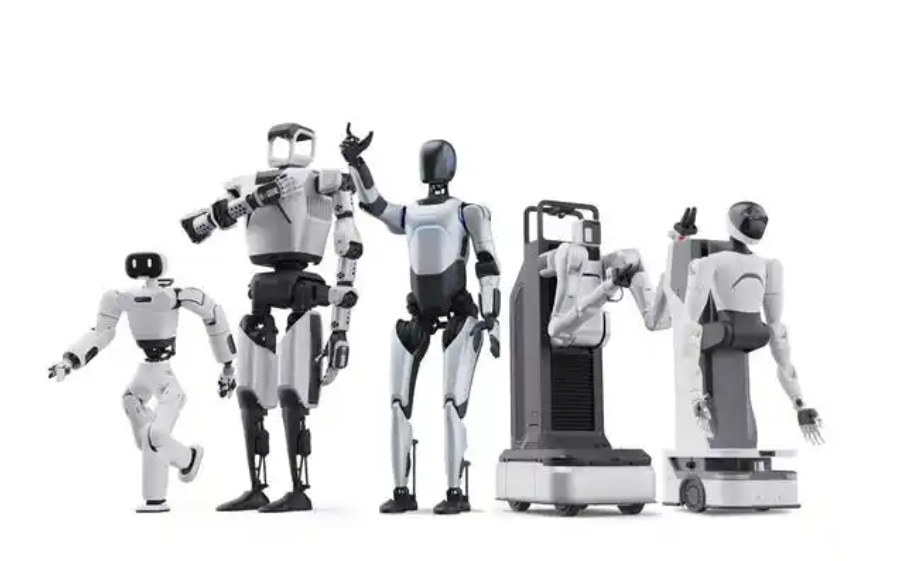
1. Data Becomes Hard Currency for Embodied Intelligence
Zhou Wei, founding managing partner of Creation Partners Venture Capital, framed the shift in stark terms. The internet has developed for two or three decades, and data is already available. Large models can be trained on existing text, images, and video from the internet. But robots need physical-world data. How a robot grasps, walks, and avoids obstacles is rarely found in ready-made digital form. For embodied intelligence, the missing ingredient is not simply more computing power or more parameters. It is experience.
Zhou pointed to the market enthusiasm around robotics as evidence of the stakes. Unitree Technology’s market value once reached more than 200 billion yuan after listing, and many companies with only demonstrations have been valued at tens of billions of yuan. In that environment, the ability to secure high-quality data becomes an entry ticket to the next stage. The logic is straightforward: embodied intelligence systems learn from interaction, and interaction must be captured, structured, and reused. Whoever controls the most useful data may control the pace of improvement.
The sources of embodied intelligence data are more varied than many people assume. Zhou gave the example of dexterous hand companies. A robotic hand can achieve flexibility across 20 to 30 dimensions, and when combined with tactile sensing and electronic skin, the volume of data collected during operation may be no less than that of a walking robot. This suggests that embodied intelligence data is not limited to navigation or locomotion. It also includes fine manipulation, contact-rich tasks, force control, and sensory feedback. The data race is therefore multidimensional.
The infrastructure buildout is already visible. According to a report by Interact Analysis, at least 90 humanoid robot data collection and training centers in China are either in use or planned. Zhou noted that building a data collection center requires space, equipment, operators, and technical staff, with investment often reaching tens of millions of yuan. The rapid emergence of these centers indicates that the “ChatGPT moment” for embodied intelligence has not yet arrived, but the data competition has already begun. The implication is clear: embodied intelligence is entering a phase in which data capacity may precede model breakthroughs.
Pudu Robotics offers a commercial example of how operational data can accumulate at scale. Guo Cong, co-founder and chief technology officer of Pudu Robotics, said the company has deployed about 130,000 devices globally. Each year, it accumulates 36.5 million hours of navigation data and 15.8 million hours of operation data. Guo suggested that the value of this data may be higher than the value of the robots the company sells. That statement captures a central truth of embodied intelligence: once machines are deployed in the real world, they become data collection platforms as much as they are service robots.
For embodied intelligence, data is not merely a record of what happened. It is a training signal. It tells a model which actions succeeded, which failed, how objects behaved, how people moved, and how the environment changed. In traditional automation, a machine can be programmed for a narrow task. In embodied intelligence, the system is expected to generalize. Generalization requires diversity: different objects, different lighting, different surfaces, different human behaviors, and different failure modes. The more varied the data, the more robust the embodied intelligence system can become.
The value of data also changes the economics of robotics. A robot fleet can generate data continuously, but raw data is not automatically useful. It must be cleaned, labeled, synchronized, and organized. Some data may be redundant. Some may be noisy. Some may be difficult to transfer from one robot design to another. The companies that build strong data pipelines may therefore enjoy compounding advantages. In embodied intelligence, the flywheel is not just more robots; it is more robots producing more usable data that improves more robots.
This is why the phrase “data is the new hard currency” has gained traction in embodied intelligence circles. It is not a metaphor about digital advertising or consumer behavior. It refers to physical experience: the accumulated record of machines interacting with the material world. That record is scarce, expensive, and increasingly decisive.
| Signal | Reported Detail | Why It Matters for Embodied Intelligence |
|---|---|---|
| RoboMIND open-source dataset | Global downloads surpassed 20 million; nearly doubled in one month; more than 300,000 dual-arm manipulation trajectories covering more than 700 practical tasks; fully open to global developers; open-sourced in December 2025 | Demonstrates strong demand for standardized embodied intelligence data and cross-border collaboration |
| Policy direction | Li Chao said embodied intelligence training grounds and application pilot bases will be used to build high-quality real-machine data collection systems and address the “data hunger” problem | Signals that embodied intelligence data is being treated as strategic infrastructure |
| Data collection and training centers | At least 90 humanoid robot data collection and training centers in China are in use or planned, according to Interact Analysis | Indicates rapid buildout of physical infrastructure for embodied intelligence data |
| Pudu Robotics fleet | About 130,000 devices deployed globally; 36.5 million hours of navigation data and 15.8 million hours of operation data accumulated annually | Shows how deployed robots can become large-scale sources of embodied intelligence data |
| AgiBot World | Open-source dataset containing 1 million trajectories | Highlights the role of large trajectory datasets in embodied intelligence research |
| NVIDIA GROOT N1 | 80% of real-machine data came from a dataset | Shows how embodied intelligence model development depends on curated real-world data |
2. Real-Machine Data: The Most Authentic and the Most Expensive
Real-machine data collection is often described as the most authentic path for embodied intelligence. It involves letting robots work in real environments and recording what happens. The advantage is fidelity. A real robot experiences friction, weight, deformation, unexpected contact, and environmental variation. These factors are difficult to reproduce perfectly in simulation. For embodied intelligence, real-machine data captures the physical world as it is, not as a model assumes it to be.
The cost, however, is high. An industry source said that in the collection process, perhaps half of the effective data can be used directly, while the remaining data still needs cleaning, labeling, and optimization. That means the usable yield from collection is not one hundred percent. It also means data collection is not a simple matter of recording video. It requires structured annotation, quality control, and engineering effort. The hidden labor behind embodied intelligence data is substantial.
A data collection factory needs hundreds of people, a large amount of equipment, and long-term operating costs. The expense is not only financial. It also includes time. Real-world tasks unfold at real-world speed. A robot may need many attempts to learn a single manipulation skill. Each attempt must be instrumented, recorded, and evaluated. The result is a slow, expensive process that struggles to keep up with the appetite of embodied intelligence models.
The scale of open-source efforts shows how valuable these datasets have become. AgiBot has open-sourced AgiBot World, a dataset containing 1 million trajectories. NVIDIA’s GROOT N1 model drew 80% of its real-machine data from a dataset. These examples show that even advanced embodied intelligence development depends heavily on curated physical-world data. They also show that open datasets can accelerate the entire field by reducing duplicated collection efforts.
Yet real-machine data alone cannot satisfy the demand. It is too slow and too expensive to cover every possible environment, object, and task. Embodied intelligence needs long-tail scenarios: rare events, edge cases, and unusual interactions. Real-world collection may never capture enough of these rare cases in a timely manner. That limitation has pushed attention toward simulation, where scenes can be generated, repeated, and varied at much lower cost.
The challenge is not simply to collect more real-machine data. It is to collect the right data. A dataset with millions of similar grasps may be less valuable than a smaller dataset with diverse objects, surfaces, and failure modes. For embodied intelligence, distribution matters as much as scale. If the data is narrow, the model may overfit to a limited set of conditions. If the data is diverse, the model has a better chance of transferring to new situations.
This is why real-machine collection centers are becoming industrial assets. They are not just rooms filled with robots. They are controlled environments where tasks can be standardized, sensors can be calibrated, and data can be compared across sessions. The more consistent the collection process, the more useful the resulting embodied intelligence dataset can be. But consistency also raises the question of standards, because data collected under one protocol may not be compatible with another robot or another team.
Real-machine data also raises operational questions. Who owns the data generated by a deployed robot? How is privacy protected when robots operate around people? How can sensitive commercial data be shared without losing competitive advantage? These questions are not fully answered, but they are becoming more urgent as embodied intelligence moves from demonstrations to deployments. The value of data is high enough that ownership and access rules will shape the industry.
3. Simulation-Generated Data: Lower Cost, Expanding Role
Simulation-generated data offers a different path for embodied intelligence. Instead of collecting every interaction in the physical world, developers can create virtual environments where robots learn through repeated trials. Cui Hanqing, founder and chief executive officer of Mouxianfei, argued that real-machine data is too slow and too limited. The question he posed was whether data can be produced by burning compute and electricity. His company developed a proprietary physics engine so that robots can “go to school” in a simulated environment. The approach offers low cost, high efficiency, and scenes that can be expanded indefinitely.
The advantage of simulation is obvious. A virtual robot can practice a task thousands of times without consuming physical materials or risking damage. Rare events can be inserted deliberately. Lighting, textures, friction, and object placement can be varied systematically. For embodied intelligence, simulation provides a way to explore possibilities that would be impractical to reproduce in the real world at scale.
Cui acknowledged the limitation. Simulation training is a virtual school for robots, and it can never be exactly the same as real data. Reaching 90% or 95% similarity is already a strong outcome. That gap matters because embodied intelligence depends on contact, force, and unpredictable physical dynamics. A model trained only in simulation may encounter a reality gap when deployed. The goal is not to replace real-machine data completely, but to combine simulation with real-world data in a way that reduces cost while preserving transferability.
Market consensus appears to be shifting. Cui observed that last year some people in the industry said simulation-generated data was useless. This year, robots trained in simulated environments have achieved impressive results, and companies such as NVIDIA continue to increase investment in simulation-generated data. The change suggests that simulation is no longer seen as a niche tool. It is becoming a core component of the embodied intelligence data pipeline.
Cui also emphasized that data must have both scale and distribution. For embodied intelligence, a large dataset with narrow variation may not teach a model much. Real data must be diverse to provide essential information. Simulation can help create diversity, but it must be designed carefully. If the simulated world is too simple or too repetitive, the resulting model may learn shortcuts that do not work in reality.
The relationship between simulation and real-machine data is therefore complementary. Real-machine data provides authenticity. Simulation provides volume, variation, and controlled experimentation. Together, they can create a training loop in which simulation pre-trains a model and real-world data fine-tunes it. For embodied intelligence, this loop may be more practical than relying on either source alone.
Simulation also makes it possible to test scenarios that are dangerous or expensive in reality. A robot can learn to recover from a fall in simulation without damaging hardware. It can practice interacting with fragile objects without breaking them. It can encounter rare obstacles that would be difficult to arrange in a physical collection center. These capabilities are valuable for embodied intelligence because robustness often comes from exposure to failure.
Still, simulation requires its own expertise. Building a high-fidelity physics engine is difficult. Modeling contact, deformation, and friction accurately remains a major technical challenge. The quality of simulation data depends on the quality of the simulator. For embodied intelligence, simulation is not a shortcut around hard engineering. It is another form of engineering, with its own trade-offs and limitations.
4. Echo Data and the Translation of Human Experience
Echo data is often described as first-person data. Cui compared it to a gold mine because it represents a collection of real human experience: picking up objects, walking, working, and interacting with the physical world. Humans have accumulated enormous physical intelligence through daily life. If that experience can be captured and translated for robots, it could become a powerful resource for embodied intelligence.
The challenge is that human hands and robot hands are different. A human can pick up a cup with intuitive adjustments in grip and force. A robot may have a different number of fingers, different joint ranges, and different tactile sensors. The motion that works for a human may not directly work for a robot. Cui explained that action retargeting is used to map human hand data onto a robot hand. This translation step is essential if human experience is to become usable data for embodied intelligence.
Cui described the combination of simulation and Echo data as a match made in heaven. Echo data provides the real-world human experience. Simulation provides the environment for retargeting and large-scale practice. Together, they can help bridge the gap between human physical skill and robotic control. For embodied intelligence, this is a promising direction because it uses the most abundant source of physical intelligence available: people.
However, Echo data also raises questions about standardization. Human motion data may be captured with different devices, coordinate systems, and annotation schemes. To be useful for embodied intelligence, it must be converted into formats that robot learning systems can consume. The translation from human action to robot action is not trivial. It requires understanding both human biomechanics and robot kinematics.
The value of Echo data lies in its diversity. Human experience covers countless objects, environments, and tasks. If even a fraction of that experience can be structured for embodied intelligence, it could expand the range of skills that robots can learn. The challenge is to capture it ethically, accurately, and at scale, while ensuring that the data can be reused across different robot platforms.
5. The Standardization Problem in Embodied Intelligence
Even as data collection expands, a fundamental problem remains: robots are not standardized. Li Kehong, co-founder and chief operating officer of Kuwa Technology, offered a comparison with Tesla FSD. Full self-driving is often viewed as two-dimensional intelligence. Millions of vehicles have been driving on roads for years, yet the system has still not reached L4, and data collection remains a core bottleneck. Embodied intelligence robots are viewed as three-dimensional intelligence, which makes data collection even harder.
The difficulty is not only the physical world. It is also the diversity of robot bodies. The market includes bipedal humanoid robots, wheeled robots, quadruped robots, and fixed-base robotic arms. Each type has different data formats, sensor configurations, and action logic. Data collected by one collection center may be unusable by another model of robot. For embodied intelligence, this fragmentation is a major obstacle.
Wang He, founder of Galaxy General, described the industry condition plainly. Robot configurations vary widely. Hardware interfaces are not mutually compatible. Motion control protocols differ. Data collection and storage formats follow separate paths. These differences are now common across the humanoid robot industry. Data is difficult to reuse between different robots, and one dataset cannot easily deliver ten times the value. This is an important factor behind the shortage of embodied intelligence data.
Wang argued that when data cannot flow across different bodies, “data scale” becomes only an accounting asset rather than a real capability. A large dataset stored on a server does not improve a robot if the robot cannot use it. The value of data depends on its transferability. For embodied intelligence, cross-body learning is not a luxury. It is a requirement for scaling.
From this perspective, RoboMIND’s decision to fully open more than 300,000 dual-arm manipulation trajectories to the global community is significant. The dataset provides a comparable and verifiable “standard answer” for the industry. It allows researchers and developers to test methods against a common reference. It also creates a shared language for evaluating progress in embodied intelligence.
Feng Tianlin, head of the Industrial Automation Business Unit at JD Industrial, offered a supply-chain perspective. Current robot and component technology routes are complex and diverse. Whoever can help the industry establish standards may occupy a leading position in the industrial chain. When data from different bodies and different scenarios can be translated and reused under unified standards, the robot industry will truly move from “teaching one robot to work” to “teaching the entire industry to work.”
That shift would be profound for embodied intelligence. Instead of every company collecting its own isolated data, the industry could build shared pools of reusable experience. Instead of every robot design requiring a separate learning process, models could transfer skills across platforms. Instead of data being trapped in proprietary silos, it could circulate under common protocols. The result would be faster improvement and lower costs for embodied intelligence.
Standardization, however, is difficult. It requires agreement on sensor formats, coordinate frames, action representations, metadata, and evaluation metrics. It also requires trust. Companies may hesitate to share data if they fear losing competitive advantage. Open-source datasets such as RoboMIND and AgiBot World show that sharing is possible, but they do not solve every governance question. For embodied intelligence, standards must be technical and commercial at the same time.
6. Building a High-Quality Data Flywheel for Embodied Intelligence
The reported examples point to a clear conclusion: embodied intelligence needs a data flywheel. Real-machine collection provides authenticity. Simulation provides scale and diversity. Echo data provides human physical experience. Standards make the data reusable across robots. When these elements work together, each new deployment can generate data that improves future models, which in turn improves future deployments.
The first requirement is collection quality. A robot fleet may generate millions of hours of data, but raw logs are not enough. Data must be synchronized across sensors, annotated with task outcomes, and stored in formats that learning systems can use. For embodied intelligence, the difference between raw data and usable data is large. The industry source’s comment that only part of collected data may be used directly highlights the importance of cleaning, labeling, and optimization.
The second requirement is diversity. Embodied intelligence cannot be trained only on repetitive tasks in controlled environments. It must encounter different objects, surfaces, lighting conditions, human behaviors, and failure modes. Simulation can help generate this diversity, but it must be calibrated against reality. Real-machine data can validate whether simulated skills transfer. Echo data can add human-like variation. Together, these sources can reduce the risk of overfitting.
The third requirement is cross-body translation. Data collected by a humanoid robot may need to be adapted for a robotic arm. Data collected by a quadruped may inform navigation for a wheeled robot. Data collected by a dexterous hand may help another gripper. This translation is not automatic. It requires common representations and mapping methods. For embodied intelligence, cross-body learning is one of the most promising ways to multiply the value of data.
The fourth requirement is governance. Data ownership, privacy, security, and access rules will shape how much data can be shared. Open-source datasets have shown the benefits of collaboration, but commercial data may remain proprietary. The industry may need a mix of open, shared, and private data pools. For embodied intelligence, the challenge is to encourage sharing while protecting legitimate interests.
The fifth requirement is evaluation. If different teams use different metrics, it is difficult to compare progress. Standardized benchmarks can help. RoboMIND’s role as a comparable and verifiable reference is an example. But embodied intelligence is broad. It includes navigation, manipulation, locomotion, human-robot interaction, and more. Evaluation must cover multiple tasks and conditions without becoming so complex that it slows adoption.
The sixth requirement is patience. The ChatGPT moment for embodied intelligence has not yet arrived. Data collection centers are being built, datasets are being released, and simulation tools are improving. But the field is still in an early phase. The data race is not a sprint. It is an infrastructure buildout that will take years. The companies and institutions that invest consistently may be the ones that shape the next stage of embodied intelligence.
7. What to Watch Next in the Embodied Intelligence Data Economy
- Growth of open datasets: RoboMIND’s 20 million downloads and AgiBot World’s 1 million trajectories show that open data can attract global attention. The next question is whether these datasets will be updated continuously and whether they will cover more robot bodies and task types.
- Expansion of collection centers: With at least 90 humanoid robot data collection and training centers in use or planned in China, according to Interact Analysis, the infrastructure for embodied intelligence is expanding quickly. The focus will shift from building centers to improving data quality and interoperability.
- Simulation fidelity: Simulation-generated data is becoming more accepted, but the reality gap remains. Advances in physics engines and sim-to-real transfer will determine how much embodied intelligence training can rely on virtual environments.
- Cross-body standards: The industry still lacks unified formats for data, sensors, and motion control. Progress on standards will determine whether data can flow across humanoid robots, quadrupeds, wheeled robots, and robotic arms. For embodied intelligence, this is a critical bottleneck.
- Commercial data value: Pudu Robotics’ deployed fleet and its accumulated navigation and operation data illustrate how service robots can become data assets. More companies may begin to treat embodied intelligence data as a product, a service, or a strategic reserve.
- Policy support: Li Chao’s remarks on training grounds and pilot bases indicate that policy will play a role in building real-machine data systems. Future announcements may shape investment, standards, and collaboration in embodied intelligence.
These watch points are interconnected. Open datasets depend on standards. Standards depend on trust and governance. Simulation depends on validation from real-machine data. Real-machine data depends on affordable collection systems. Echo data depends on translation methods. No single solution can solve the data problem for embodied intelligence. The field needs a combined approach.
The competitive landscape will also evolve. Companies with large robot fleets may have an advantage in real-world data. Companies with strong simulation capabilities may have an advantage in generating diverse training scenarios. Companies with robotics hardware expertise may have an advantage in cross-body translation. Companies with open-source communities may have an advantage in standard-setting. The winners in embodied intelligence may be those that combine several of these strengths.
8. From Teaching One Robot to Teaching an Industry
The most important shift described by industry leaders is not technological but organizational. The old model was to teach one robot to perform one task. The emerging model is to teach an entire industry to learn. That requires data to move across robots, teams, and applications. It requires shared standards, open benchmarks, and reusable representations. It requires embodied intelligence to become a collective enterprise rather than a collection of isolated projects.
RoboMIND’s rapid download growth shows that demand for shared embodied intelligence data is real. The policy focus on real-machine data collection shows that the bottleneck is recognized at a high level. The growth of data collection centers shows that infrastructure is being built. The debate over simulation shows that the field is testing different paths. The standardization problem shows that the hardest work may still lie ahead.
For embodied intelligence, data is not just fuel. It is memory, experience, and skill. It is the bridge between a model and the physical world. Without enough high-quality data, embodied intelligence remains fragile and narrow. With the right data systems, it can become adaptable, scalable, and useful across many domains. The data race is therefore not a side story in robotics. It is the main story.
The next phase will be defined by whether the industry can turn data scarcity into data abundance, and data abundance into data quality. Real-machine collection, simulation, Echo data, and standardization all point in the same direction: embodied intelligence needs a shared, reusable, and trustworthy data foundation. If that foundation is built, the robot economy will move from demonstrations to durable capability. If it is not, the field will remain stuck in isolated pilots and impressive but limited demonstrations.
The race for embodied intelligence data is already underway. The question now is not whether data matters. The question is who will build the systems that make data useful, and how quickly the entire embodied intelligence ecosystem can learn from itself.