
At the Second World Humanoid Robot Games in Beijing, the public saw two very different pictures of robotics. On one side, humanoid machines described as steel flying men refreshed human records in the 100-meter, 400-meter, and high-jump events, drawing loud applause from spectators. On the other side, in the dexterous hand special competition next door, the mood changed sharply. Faced with tasks such as block building, picking up beans with tweezers, and weighing powder, robots fell into a slow and clumsy struggle. The contrast raised an unavoidable question: can humanoid robots truly replace human labor?
The confusion among audiences is not a sideshow. It is an accurate reflection of the current state of embodied intelligence. The industry is at a critical turning point, moving from the laboratory toward real-world scenarios. Improvements in dexterous manipulation and generalization are far more difficult than breakthroughs in locomotion, yet they are a Mount Everest that must be conquered. This is the central message that the event delivered, and it is the message that public discussion must absorb if the development of embodied intelligence is to proceed with both confidence and realism.
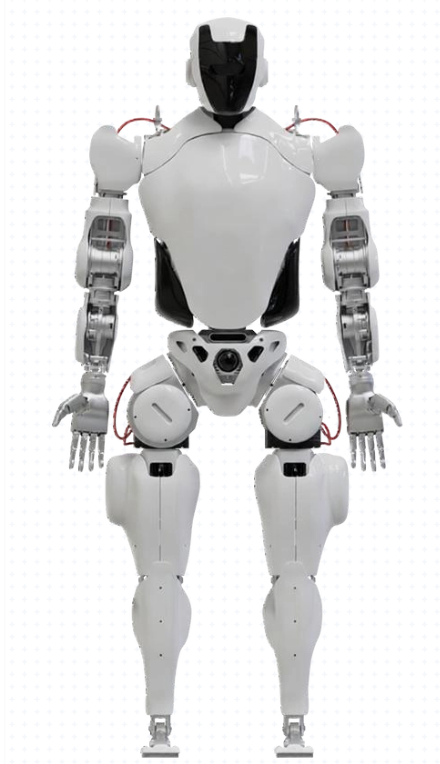
- One Stage, Two Realities
The first reality is worthy of pride. The continuous breaking of records does not merely mean that performance parameters are being iterated. It is also evidence of hard strength in hardware research and development, motion control algorithms, and system integration. When humanoid robots run faster, jump higher, and move with greater stability, they are demonstrating that the boundary of embodied intelligence capability is expanding. These achievements are not trivial. They show that China’s humanoid robotics sector has built real capabilities in areas that require precision engineering, dynamic balance, actuator performance, and real-time control.
The second reality must also be faced directly. The generalization ability of embodied intelligence is still severely insufficient. An AI model can achieve near 100 percent success in a fixed scenario after specialized training, but once the environment or the object of operation changes, success rates can fall sharply. This is not a small engineering inconvenience. It is a fundamental gap between laboratory performance and real-world application. It explains why a robot that can sprint across a stage may still struggle to pick up a bean, place a block, or measure powder in an unfamiliar setting. The gap is the defining challenge for embodied intelligence.
The event therefore offered a useful diagnostic. It showed that movement and manipulation are not the same kind of problem. Movement in a controlled competition can be optimized through repeated trials, specialized controllers, and a relatively stable environment. Manipulation in the real world is open-ended. It requires perception, planning, force control, tactile feedback, object recognition, and adaptation to variation. The robot must not only act; it must understand what it is acting upon and adjust when the world does not cooperate. That is why the dexterous hand competition, though less visually dramatic than a record-breaking sprint, may be more revealing about the future of embodied intelligence.
| Area | Demonstration | Signal | Bottleneck |
|---|---|---|---|
| Locomotion | 100-meter, 400-meter, and high-jump records were refreshed | Hardware research and motion control algorithms have advanced; capability boundaries are expanding | Performance in structured events does not guarantee general usefulness in daily labor |
| Dexterous manipulation | Block building, picking beans with tweezers, and powder weighing | Fingertip tasks expose slow and clumsy operation | Weak generalization; performance becomes brittle when environments or objects change |
| Real-world deployment | General robots have not fully entered homes or livelihood scenarios | Embodied intelligence remains short of broad adoption | Generalization is the core technical bottleneck for the entire industry |
This table does not diminish the achievements of the event. It places them in context. A record in a 100-meter race is a meaningful engineering milestone. It shows that the body of a robot is becoming more capable. But the body is only part of embodied intelligence. The intelligence must also connect perception to action in messy, unpredictable environments. That connection is where the hardest work remains.
- Why Motion and Manipulation Are Different Problems
Running, jumping, and maintaining balance are difficult, but they are often bounded problems. The track is known. The goal is clear. The rules are fixed. Engineers can train and tune a system to perform under those conditions. In contrast, dexterous manipulation is an unbounded problem. A human hand can pick up a cup, a coin, a piece of cloth, or a fragile object without consciously recalculating every movement. A robot must be taught, or must learn, how to handle variation in shape, weight, friction, softness, and position. It must recover from slips and mistakes. It must understand the difference between pressing hard enough to hold an object and pressing so hard that the object breaks.
This is why the phrase embodied intelligence matters. Embodied intelligence is not simply artificial intelligence placed inside a metal frame. It is intelligence that must operate through a body, in contact with a physical world. It must close the loop between sensing and acting. It must turn perception into motion and motion into useful work. When the environment changes, embodied intelligence must generalize. If it cannot generalize, it remains a demonstration rather than a tool.
The dexterous hand events at the Second World Humanoid Robot Games placed this challenge on public display. Building blocks, picking up beans with tweezers, and weighing powder are not exotic tasks. They are simple versions of the kinds of micro-operations that humans perform constantly. Yet they exposed the distance between a robot that can perform a rehearsed routine and a robot that can work reliably in a real setting. That distance is the gap that embodied intelligence must close.
For the public, the lesson is not that humanoid robots are useless. The lesson is that the path from impressive movement to useful labor is longer and more complicated than a single competition can show. The same event can produce both pride and caution. A mature view of embodied intelligence must hold both truths at once.
- Two Unhelpful Reactions to a Complex Transition
In public discussion, two harmful tendencies have emerged. The first is blind optimism. It exaggerates the significance of existing technology and creates unrealistic expectations for the pace of industrialization. It treats every new demonstration as proof that general-purpose robots are about to enter every home and workplace. It ignores the difference between a controlled stage and a chaotic real environment. It confuses a successful trial with a scalable product. This tendency can inflate a bubble, attract capital for the wrong reasons, and set the public up for disappointment.
The second tendency is total denial. It sees short-term difficulties and concludes that technological progress has no value. It dismisses existing achievements as mere performance or toys. It treats every clumsy robot hand as evidence that the entire field is a fraud. This reaction is equally harmful. It can severely damage innovation morale. It can discourage talented researchers, engineers, and investors who understand that deep technology requires years of patient work. It can also lead to policy and business decisions that starve the field of the support it needs.
Both reactions are unhelpful because they miss the nature of a transition. China’s embodied intelligence industry is at a key inflection point. It is moving from laboratory demonstrations toward real scenarios. At such a moment, progress is uneven. Some capabilities advance quickly. Others lag. Records can be broken while basic manipulation remains difficult. That is not a contradiction. It is what a complex technological transition looks like. The task is not to choose between celebration and dismissal. The task is to understand the bottleneck and work on it.
Embodied intelligence will not be built by slogans. It will be built by research, engineering, data, benchmarking, supply chain development, and patient iteration. The public can play a role by maintaining reasonable expectations. Investors can play a role by funding the unglamorous layers of the stack. Companies can play a role by cooperating rather than crowding into the same narrow segment. Policymakers can play a role by supporting long-term capability building. All of these efforts require a clear-eyed view of both strengths and weaknesses.
- China’s Industrial Thickness Is Real
It is important to see China’s technical advantages and leading position in embodied intelligence. The achievements of China’s embodied intelligence sector are built on deep technological progress and a strong industrial chain. They are not a castle in the air. The Second World Humanoid Robot Games offered evidence of this depth. Hundreds of teams and more than 2,000 robots participated. Humanoid robots from China occupied an absolute main role. This shows the depth of talent accumulation and the scale of resource inflow into the field.
The example of Unitree is also instructive. As a leading enterprise, its core component self-research rate exceeds 90 percent. That figure indicates strong research and development capability and a high degree of vertical integration. It suggests that the company is not merely assembling imported parts. It is building key capabilities in-house. This kind of industrial thickness can continuously correct the direction of the industry and accelerate its pace of development. It also gives the sector a foundation for solving the bottlenecks in embodied intelligence.
This foundation matters because embodied intelligence is not a single invention. It is a system of technologies. It includes actuators, sensors, control systems, chips, materials, batteries, communication, data platforms, simulation environments, large models, and application integration. A strong industrial chain allows faster experimentation and lower costs. It allows failures to be diagnosed and corrected more quickly. It allows different companies to specialize. The depth of China’s ecosystem is therefore a source of confidence, not a reason for complacency.
For technological breakthroughs, patience is necessary. The history of deep technology shows that progress is rarely linear. There are long periods of incremental improvement, followed by sudden leaps. The day of breakthrough may not be predictable, but it is more likely to arrive when a broad ecosystem is already in place. China’s embodied intelligence sector has that ecosystem. It has talent, manufacturing capacity, capital, and application scenarios. What it needs now is sustained focus on the hardest problems.
| Fact | Significance |
|---|---|
| The Second World Humanoid Robot Games was held in Beijing | Provided a public stage for humanoid robot capabilities and limits |
| 100-meter, 400-meter, and high-jump records were refreshed | Demonstrated advances in hardware and motion control algorithms |
| Dexterous hand events included block building, tweezers-based bean picking, and powder weighing | Exposed slow and clumsy fingertip manipulation |
| Hundreds of teams and more than 2,000 robots participated | Indicated depth of talent accumulation and resource inflow |
| Chinese humanoid robots occupied an absolute main role | Showed the scale and centrality of China’s embodied intelligence ecosystem |
| Unitree’s core component self-research rate exceeds 90 percent | Reflected strong research and development capability and supply chain strength |
| Wang Xingxing predicted a robot embodied intelligence ChatGPT moment in as fast as two to three years or as slow as five to ten years | Expressed optimism while acknowledging uncertainty |
| A robot completing 80 percent of tasks in an unfamiliar environment through voice or text instructions | Offered a possible critical point for industry explosion |
- The Bottleneck Identified by Industry Leaders
The difficulty is not a secret inside the industry. Wang Xingxing, founder of Unitree, addressed the anxiety directly at the World Robot Conference. He said that general-purpose robots around the world have not yet fully entered homes or livelihood scenarios. The core reason is that embodied intelligence lacks sufficient generalization. This is the biggest technical bottleneck for the entire industry.
That diagnosis is important because it shifts attention away from appearance and toward capability. A humanoid shape may be attractive. A dramatic jump may go viral. But the value of a robot in daily life depends on whether it can perform useful tasks in varied conditions. It must handle objects it has not seen before. It must understand instructions that are not scripted. It must adapt when a room is rearranged, when a tool is missing, or when a person behaves unexpectedly. Generalization is the bridge between a robot that performs and a robot that works.
Wang Xingxing also pointed to a structural response. Technology companies need to abandon zero-sum thinking and form division and cooperation across the industrial chain. They should not all crowd into terminal products. Instead, they should invest more capital into every link of the chain. This is a mature view of innovation. Embodied intelligence will not be solved by one company alone. It requires advances in models, sensors, actuators, chips, data, simulation, safety, and applications. Each layer can create value. Each layer can become a bottleneck if neglected.
Unitree’s own actions reflect this approach. It has directed funds raised through its listing toward the development of large models. It has also cooperated with DeepSeek. These moves are aimed at seeking a breakthrough in the brain of the robot. The body must be strong, but the brain must also become more capable. A robot with excellent motors but weak perception and reasoning will remain limited. A robot with a powerful model but unreliable hardware will also fail. Embodied intelligence requires both.
- What the ChatGPT Moment Would Mean
Wang Xingxing predicted that the ChatGPT moment for robot embodied intelligence will arrive. In the fast scenario, it could come in two to three years. In the slow scenario, it could take five to ten years. The fact that he placed the lower bound at two to three years shows personal optimism. But the range also shows uncertainty. This is a reasonable way to speak about a frontier technology. It is neither a guarantee nor a dismissal.
The comparison with ChatGPT is useful because it describes a threshold rather than a single product. Wang Xingxing said that when a robot enters an unfamiliar environment and can complete 80 percent of tasks through voice or text instructions, the critical point for an industry explosion will have arrived. That is a demanding standard. It does not require perfection. It requires general competence. It requires a robot to understand a broad range of commands and to act on them in a world it has not been specifically trained for.
If that threshold is reached, the implications for embodied intelligence would be profound. Robots would move from scripted automation to flexible assistance. They could be deployed in more varied settings without complete reprogramming. They could learn from interaction. They could support human workers rather than merely imitate them in staged events. The economics of robotics would change because the cost of adapting a robot to a new task would fall. The social conversation would also change because robots would become more useful in everyday life.
Until that threshold is reached, the gap remains. The Second World Humanoid Robot Games showed both the promise and the distance. It showed that embodied intelligence can produce remarkable physical feats. It also showed that embodied intelligence still struggles with the fine-grained, adaptive manipulation that humans take for granted. This is not a reason to abandon the field. It is a reason to focus on the right problems.
- From Spectacle to Application
One encouraging sign is that the focus of public attention is shifting from whether a robot can run to whether a robot can work. This shift is positive. It means that the center of gravity in the industry is moving from spectacle to application. A running robot can inspire wonder. A working robot can create value. The dexterous hand competition may not have produced the same applause as a record-breaking sprint, but it asked a more important question: can the robot do something useful?
That question will define the next phase of embodied intelligence. The industry must develop benchmarks that reward generalization, not just demonstrations. It must test robots in environments that are messy, dynamic, and unpredictable. It must measure success across a wide range of objects and tasks. It must evaluate safety, reliability, and recovery from failure. These are harder tests than a straight track, but they are the tests that matter for real-world adoption.
The shift toward application also has implications for investment and industrial policy. Capital should not only chase flashy humanoid prototypes. It should also support the less visible components of embodied intelligence: tactile sensors, dexterous hands, force-controlled actuators, simulation platforms, data collection tools, and model evaluation systems. These are the layers that determine whether a robot can generalize. They are also the layers where many companies can cooperate and specialize.
For the public, the shift means that patience is not the same as passivity. Patience means understanding that deep technology takes time. It means supporting sustained research even when immediate results are modest. It means resisting both hype and cynicism. It means recognizing that the clumsy robot hand of today may be the necessary step toward the capable robot hand of tomorrow. The high point of embodied intelligence is still on its way, and the work being done now is part of that journey.
- Confidence With Patience
The right attitude toward embodied intelligence is confidence with patience. Confidence is justified by real progress. China’s humanoid robots are central to a major international event. Hundreds of teams and thousands of robots are engaged in the field. Core component self-research rates at leading companies are high. The industrial chain is deep. These are not minor achievements. They provide a platform for future breakthroughs.
Patience is justified by the nature of the remaining challenges. Generalization in embodied intelligence is difficult. Dexterous manipulation is difficult. Real-world deployment is difficult. These difficulties cannot be wished away by optimistic slogans. They cannot be solved by dismissing the field as a toy. They require methodical work. They require cooperation across the supply chain. They require investment in models, data, hardware, and evaluation. They require time.
The contrast at the Second World Humanoid Robot Games should not be seen as an embarrassment. It should be seen as a map. It shows where the industry is strong and where it is weak. It shows that the body of the robot is advancing rapidly, while the brain and the hand still need deeper development. It shows that embodied intelligence is not a single breakthrough but a system of breakthroughs. It shows that the path from laboratory to real scenarios runs through generalization.
As Wang Xingxing suggested, the critical point will come when robots can enter unfamiliar environments and complete most tasks through voice or text instructions. That is a clear and demanding goal. It is not a fantasy, but it is also not imminent in every respect. The industry must continue to improve large models, sensor fusion, dexterous manipulation, and safe control. It must build data ecosystems that allow robots to learn from diverse situations. It must create standards that make performance comparable and reliable.
Society should neither be intoxicated by achievements nor discouraged by temporary clumsiness. The record-breaking runs and jumps are real. The slow and clumsy manipulation is also real. Both belong to the current state of embodied intelligence. The task is to respect both, learn from both, and keep building. The future of embodied intelligence will not arrive all at once. It will arrive through many incremental steps, some of them unglamorous, some of them difficult, and some of them surprising.
Time does not speak, but it rewards persistent effort. The high point of embodied intelligence is on its way. Confidence and patience are not contradictory. They are the two necessary qualities for a field that has already achieved much and still has a Mount Everest to climb. The world saw the sprint. The world also saw the struggle with beans, blocks, and powder. The next stage will be determined by how seriously the industry treats that struggle, and how effectively it turns today’s bottlenecks into tomorrow’s capabilities.