
As the automotive industry completes its transformation from traditional transportation machines into mobile intelligent terminals, embodied intelligence, the technological wave that gives artificial intelligence a physical body, is entering a phase of deep coupling with the automotive sector. Research by China EV 100 shows that the core technology stacks of intelligent vehicles and embodied robots overlap by more than 70 percent. Behind this critical figure lies the shared origin and mutual development of three major technical systems: perception, decision-making and execution. The two tracks are shifting from separate evolution toward integrated symbiosis.
This trend is being accelerated and verified by industrial practice. At the Aggregated Intelligent Industry Development Conference, jointly hosted by the Aggregated Intelligent Industry Innovation Center and Hubei Science and Technology Investment, Zhang Yongwei, chairman of the China EV 100 research institute, said that the movement from automobiles toward embodied intelligence, from theoretical understanding to industrial practice, proves that the integration of the two is an important trend. For the automotive industry, he said, the sector has already done a solid job on four wheels, and the next key task is to do a good job on machines without wheels.
From shared technology to supply chain interoperability, and from open scenarios to global layout, automakers crossing into embodied intelligence have moved beyond the exploratory moves of a few individual companies and become a strategic wave across the entire industry. The convergence is not a simple extension of one industry into another. It is a reorganization of technology, supply chains, data, manufacturing capacity and global market strategy around embodied intelligence as a common platform.
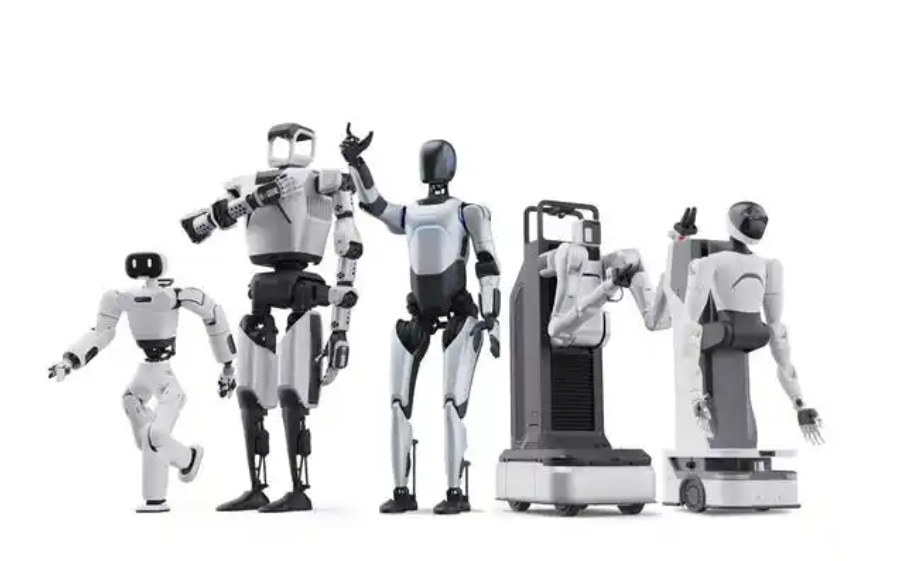
1. Shared Technology Foundation Turns Vehicles and Robots Into One Innovation Family
An intelligent vehicle is essentially a wheeled embodied intelligence agent. Its technical architecture and that of an embodied intelligence robot come from the same family. At the perception layer, both rely on lidar, millimeter-wave radar and cameras. At the decision layer, both use end-to-end large models and behavior planning. At the execution layer, both depend on steer-by-wire chassis, thermal management and related control systems. The two industrial systems differ in hardware form, but their underlying technical logic is highly unified.
Zhu Guibo, a researcher at the Wuhan Institute of Artificial Intelligence, said that today’s car has become a mobile intelligent agent that faces the physical world and continuously iterates and evolves. After large models are deployed in vehicles, the car completes its transformation from a transportation tool into an intelligent agent. Embodied intelligence is precisely the extension of this trend.
This shared foundation means that advances in one field can often be transferred to the other. Perception algorithms developed for complex road environments can be adapted for robots operating in factories, warehouses and service spaces. Decision-making models trained to handle traffic uncertainty can be repurposed for task planning in unstructured physical environments. Execution systems refined for vehicle safety and reliability can inform the design of robotic joints, actuators and thermal systems.
XPeng Motors is one of the Chinese automakers that entered embodied intelligence relatively early. Its humanoid robot IRON shares AI infrastructure, chip platforms and some model capabilities with the company’s automotive business. The physical AI foundation model can be reused across different forms. He Xiaopeng, chairman of XPeng, said when announcing that the robot business had completed its first financing round of more than US$900 million that the company has already stood at a historic turning point, and that XPeng’s robot has officially entered the eve of mass production and commercialization.
Beyond mature algorithm systems, automakers also possess a gold mine of massive real-world scenario data. Zhang Zhenlin, chief chief engineer of intelligent technology at Dongfeng Motor Corporation R&D Institute, added a key perspective from the data angle. One saying is that the greatest advantage of automakers in building robots is that they are lying on a data gold mine. The embodied intelligence industry emphasizes real scenarios, while automakers own many factories, parks and 4S stores, and therefore have very rich application scenarios and potential data sources.
Zhao Zhelun, co-founder and product president of Vita Dynamics (Beijing) Technology Co., Ltd., expressed a similar judgment. The automotive industry is the mother ecosystem of the embodied intelligence industry. From algorithms to data closed loops and then to OTA remote upgrades and iteration, this kind of industrial migration is expanding toward more complex scenarios and more open task spaces.
Technology sharing solves the question of whether the industry can do it. Continuous profit pressure answers the question of why it must do it. Cui Dongshu, responsible person of the Passenger Car Market Information Joint Committee of the China Automobile Dealers Association, analyzed that the domestic auto market has entered stock competition. The price war in new energy vehicles continues to compress vehicle profits, and automakers urgently need to open a second growth curve. Humanoid robots are a blue ocean track that Goldman Sachs predicts will exceed US$100 billion in global market size by 2035. Automakers are entering intensively, and cross-border development has become normal.
| Technology Layer | Intelligent Vehicle Application | Embodied Intelligence Application | Convergence Effect |
|---|---|---|---|
| Perception | Lidar, millimeter-wave radar, cameras for road and traffic understanding | Sensors for object recognition, spatial awareness and physical interaction | Shared sensing hardware and perception algorithms support cross-domain reuse |
| Decision-Making | End-to-end large models, behavior planning, path and motion decisions | Task planning, manipulation decisions, human-robot interaction | Model architectures and training methods migrate between vehicles and robots |
| Execution | Steer-by-wire chassis, thermal management, vehicle control | Joints, actuators, thermal systems and motion control | Control logic and reliability engineering can be adapted across forms |
| Data Loop | Real-road data, factory data, park data, OTA iteration | Real-work data, failure data, scenario-driven iteration | Automakers convert real scenarios into continuous data production capacity |
The overlap is not limited to laboratory research. It is visible in product architecture, engineering teams, software platforms and validation systems. Automakers already manage complex safety requirements, long development cycles, large-scale manufacturing and after-sales service. These capabilities are directly relevant to embodied intelligence, especially as robots move from demonstration stages into commercial deployment. The automotive industry’s experience in functional safety, system integration and cost control provides a practical foundation for embodied intelligence to scale.
At the same time, embodied intelligence brings new requirements back to the automotive industry. Robots must operate in more open environments, interact with objects and humans, and handle tasks that are less structured than driving. These demands push automakers and their suppliers to improve perception, reasoning, manipulation and data efficiency. In this sense, the relationship between intelligent vehicles and embodied intelligence is not one-way technology transfer. It is a two-way process of validation and upgrading.
2. Supply Chain Interoperability Builds a Scale Advantage for Embodied Intelligence
Not only are the technologies shared, but the complete intelligent vehicle supply chain also lays a solid foundation for the large-scale landing of embodied intelligence. Zhang Yongwei told reporters that the supply chains of intelligent vehicles and embodied intelligence are moving from independent operation toward cross-reuse. The integration trend is most obvious in four major fields: motors, thermal management, chips and materials.
In the motor field, automotive motors and embodied joint motors share the same origin. Production lines can be directly reused, with differences mainly in power density and response speed requirements across scenarios. In thermal management, the heat dissipation challenges of robots under high-load operation are closely linked to electric vehicle thermal management technologies. In chips, semiconductor giants such as Infineon have already listed automotive-grade and embodied intelligence-grade chips as two core product lines. In materials, the trend is a two-way movement. New materials from the intelligent vehicle field, after improvement, enter the embodied intelligence field in large quantities, while the extreme pursuit of lightweight design and durability in embodied intelligence also provides reverse validation for intelligent vehicle material innovation.
| Supply Chain Domain | Automotive Capability | Embodied Intelligence Need | Cross-Reuse Path |
|---|---|---|---|
| Motors | Electric drive motors, precision manufacturing, mass production | Joint motors with different power density and response requirements | Shared origin and reusable production lines support rapid scale-up |
| Thermal Management | Electric vehicle battery and powertrain cooling | Heat dissipation under high-load robot operation | Similar thermal engineering logic and components can be adapted |
| Chips | Automotive-grade semiconductors for safety and reliability | Embodied intelligence-grade chips for perception and control | Semiconductor firms treat both as core product lines |
| Materials | Lightweight, durable materials for vehicles | Materials for robot bodies requiring lightweight and durability | Two-way improvement and reverse validation between fields |
The role of intelligent vehicle supply chain companies is also undergoing profound change. Ningbo Xusheng Group Co., Ltd. disclosed a clear strategic layout at its earnings briefing: intelligent vehicle parts are the basic plate, energy storage is the second growth curve, and embodied intelligence is a key cultivation direction. More intelligent vehicle parts companies are positioning themselves in similar ways. They do not need to build production lines and process systems from zero. They only need to take one more step based on their existing technical capabilities.
Zhang Yongwei said that enterprises keep one eye on automobiles and one eye on embodied intelligence, while technology continuously transforms between the two. China’s automotive production capacity ranks first globally, and the spillover effect of this industrial chain is continuously being released in the embodied intelligence field. This spillover is not only about components. It also includes manufacturing management, quality control, cost engineering, supplier coordination and large-scale delivery experience. These capabilities are essential for embodied intelligence to move from prototypes to products.
Scale advantages have already formed, but shortcomings cannot be avoided. Jin Bing, a member of the expert committee of the National Low-Altitude Economy Industry-Education Integration Community, told reporters that China’s embodied intelligence industry has obvious advantages in complete machine mass production and scenario application, but still needs effort in high-end components, simulation ecosystems and extreme environment validation. The way to break through is to exchange scenarios for technology and use mass production to reduce costs.
He further said that the supply chains of the two tracks, intelligent vehicles and embodied intelligence, are moving toward integration. Cross-border research and development by automakers has become normal, and factories and 4S stores are also opening as test fields for embodied robots. The automotive industry’s huge supply chain system, rich application scenarios and continuous research and development investment are becoming important support for closing these gaps.
Specifically, on one hand, the real scenarios and large-scale demand of automotive factories force upstream component companies to accelerate technological iteration, using market demand to pull core components toward independent controllability. On the other hand, supply chain companies actively extend into embodied intelligence. Through technology migration and production line reuse, and relying on the scale effect of the intelligent vehicle industry’s ten-million-level annual output, they can quickly amortize the cost of core components and move high-end components from usable to affordable.
3. Real Scenarios Become the Most Valuable Data Engine for Embodied Intelligence
It is precisely by relying on a huge supply chain base and continuous efforts to close shortcomings that China’s scale advantage in embodied intelligence continues to expand. According to an industry report released at the 2026 World Robot Conference, in the first half of this year, China’s humanoid robot shipments exceeded 40,000 units, accounting for 97 percent of the global total.
Zhang Yongwei said that the automotive industry developed first domestically and then internationally, but embodied intelligence should be born international. If the industry first rolls domestically for three to five years and then goes overseas, it may miss global pricing power and standard voice. Only by directly facing the global market and forcing technological upgrading through fiercer international competition can it truly close shortcomings and move from a manufacturing giant to a manufacturing power.
The confidence behind this judgment comes from the rich application scenarios provided by the automotive industry. No matter how complete the supply chain is, it must ultimately return to scenarios for testing. Zhang Zhenlin said that what is truly important is not having scenarios, but being able to convert scenarios into continuous data production capacity. Many robot companies are still building scenarios in laboratories and collecting data through remote control. This is costly, small in scale and not real. Their approach is to let robots directly enter workshops to work, naturally generate data during operations, and especially record why failures occur. This kind of high-quality data is the most scarce thing for training a general brain.
Industrial landing must be down-to-earth and gradual. Robots must start from specific scenarios, first sorting, handling and inspection, and then gradually expand the boundary of capabilities. Use scenarios to define form, and use real operations to drive iteration. This path reflects a practical understanding of embodied intelligence. Rather than pursuing a single universal robot from the beginning, the industry is building capability through repeated deployment in real tasks.
Fu Ao, co-founder and business vice president of Mech-Mind Robotics (Xiongan) Co., Ltd., provided a case that is a vivid footnote to this path. The company combines eye-brain-hand components with different forms of robots and completes real operations in multiple automotive industry chain workshops, including die-casting, stamping, welding and battery workshops. These operations range from feeding and framing, repair welding positioning, cell assembly to quality inspection. Among them, the innovative robot application in the welding workshop repair welding positioning link solves practical problems in flexible production.
| Scenario Type | Automotive Industry Setting | Embodied Intelligence Task | Data Value |
|---|---|---|---|
| Factory Operations | Die-casting, stamping, welding, battery workshops | Feeding, framing, repair welding positioning, cell assembly, quality inspection | Real work data replaces laboratory data collection |
| Logistics and Handling | Factories, parks, warehouses, 4S stores | Sorting, moving, inspection and internal logistics | Continuous task data supports model iteration |
| Failure Learning | Flexible production and complex workshop tasks | Recording why a task fails | Failure data is scarce and valuable for general brain training |
| Commercial Validation | Automotive supply chain and service network | Robots tested and deployed in real commercial environments | Scenario feedback drives product maturity and cost reduction |
The automotive industry’s data advantage is not simply about volume. It is about structure, continuity and realism. Vehicles and factories generate data under strict safety, quality and efficiency requirements. When embodied intelligence enters these environments, it faces tasks with clear success criteria, repeatable processes and measurable outcomes. This makes the data more useful for training and validation than data collected in artificial laboratory settings.
At the same time, the automotive industry provides a natural bridge from controlled environments to more open environments. A factory robot may first perform fixed tasks in a structured cell. As its perception and decision-making capabilities improve, it can move to more flexible tasks, then to logistics, inspection and service roles. Each step expands the capability boundary while keeping the deployment grounded in real value.
4. Commercial Pressure and the Search for a Second Growth Curve
The urgency of embodied intelligence for automakers is closely tied to the changing economics of the auto industry. The domestic vehicle market has entered a phase of stock competition. Price wars in new energy vehicles continue to compress profits across the chain. Automakers need new growth engines that can leverage their existing investments in AI, chips, sensors, software, manufacturing and supply chains.
Humanoid robots and embodied intelligence offer one such direction. Goldman Sachs has predicted that the global market for humanoid robots will exceed US$100 billion by 2035. This forecast has encouraged automakers and suppliers to treat embodied intelligence as a strategic extension rather than a side project. The logic is straightforward: if the core technology stack overlap is more than 70 percent, and if supply chains can be cross-reused, then the incremental investment required to enter embodied intelligence may be lower than the investment required to build a new industry from scratch.
Automakers are not only seeking new revenue. They are also seeking new valuation narratives, new talent pools and new areas of technology leadership. The automotive industry has already invested heavily in electric platforms, intelligent cockpits, autonomous driving and over-the-air updates. Embodied intelligence allows these investments to be applied to a broader set of physical machines. The result is a more diversified portfolio of intelligent products and services.
| Driver | Pressure in Automotive Industry | Embodied Intelligence Response | Strategic Outcome |
|---|---|---|---|
| Profit Pressure | Stock competition and new energy vehicle price wars compress margins | Opens a second growth curve beyond vehicle sales | Diversifies revenue and reduces dependence on one market cycle |
| Technology Reuse | Large investments in AI, sensors, chips and software | Core stack overlap of more than 70 percent supports transfer | Improves return on research and development investment |
| Supply Chain Leverage | Mature motor, thermal, chip and material supply chains | Cross-reuse lowers entry barriers and accelerates scale | Builds cost and delivery advantages in embodied intelligence |
| Market Opportunity | Need for long-term growth beyond conventional vehicles | Humanoid robot market forecast to exceed US$100 billion by 2035 | Positions automakers in a high-potential global track |
The commercial logic also affects suppliers. For companies that already produce intelligent vehicle components, entering embodied intelligence can be a natural extension of their capabilities. They can adapt motors, sensors, thermal systems, lightweight materials and control modules for robots. They can also use their existing quality systems and customer relationships to enter new markets. This reduces the risk of diversification and increases the speed of product development.
However, commercial success in embodied intelligence will not be automatic. The industry must still prove reliability, safety, productivity and return on investment in real applications. Automakers and suppliers that treat embodied intelligence as a pure branding exercise may struggle. Those that focus on concrete tasks, measurable value and continuous iteration are more likely to build sustainable businesses.
5. From Domestic First to Born International: Embodied Intelligence and Global Competition
Zhang Yongwei said that the automotive industry followed a path of first developing domestically and then going international, but embodied intelligence should be born international. If the industry first competes domestically for three to five years and then goes overseas, it may miss global pricing power and standard voice. Only by directly facing the global market and forcing technological upgrading through fiercer international competition can it truly close shortcomings and move from a manufacturing giant to a manufacturing power.
This judgment reflects a shift in the global competitive landscape. The automotive industry took decades to build global brands, distribution networks and supply chains. Embodied intelligence is emerging in a more connected and more competitive environment. Standards, platforms, developer ecosystems and application scenarios are still being defined. Early participation in global markets can shape these definitions and create advantages that are difficult to replicate later.
The confidence for this global approach comes from the rich application scenarios provided by the automotive industry. China’s automotive sector has large factories, extensive parks, dense service networks and complex supply chains. These environments can serve as test beds for embodied intelligence. When robots are deployed in these settings, they generate data, reveal weaknesses and drive improvement. The resulting products can then be offered to global customers with practical validation behind them.
At the same time, global competition imposes discipline. It requires companies to meet international safety standards, respect intellectual property, adapt to different regulatory environments and compete on quality rather than only on cost. For embodied intelligence, this discipline is essential. It pushes companies beyond low-cost demonstrations and toward reliable, scalable and globally acceptable products.
| Approach | Automotive Industry Experience | Embodied Intelligence Imperative | Expected Effect |
|---|---|---|---|
| Domestic First | Build scale at home, then expand overseas | May delay global standard and pricing influence | Useful for some segments but risky for emerging platforms |
| Born International | Compete globally from the start | Direct exposure to global customers, standards and rivals | Accelerates technology upgrading and standard participation |
| Scenario Validation | Factories, parks and 4S stores provide real environments | Robots are tested in real work rather than only laboratories | Builds credible product performance and data advantages |
| Supply Chain Scale | Ten-million-level annual output supports cost reduction | Core components become more affordable and reliable | Strengthens global competitiveness of embodied intelligence |
Jin Bing described a broader future from a more macro perspective. Robots, unmanned vehicles, drones and unmanned ships could be dispatched by one large model, with shared communication and positioning, and reused software and hardware modules. A land-sea-air integrated unmanned system is accelerating into shape. Embodied intelligence is not only a technological moat for automakers. It is also a strategic construction of an all-domain unmanned equipment fusion ecosystem.
This vision connects embodied intelligence with the broader intelligent machinery industry. Automobiles are one form of embodied intelligence, but they are not the only form. Robots, drones and unmanned ships each have different mobility and interaction requirements. If they can share models, chips, sensors, communication systems and software modules, the cost of developing and deploying each form can be reduced. The automotive supply chain, with its scale and reliability requirements, can serve as a central pillar of this ecosystem.
6. Bottlenecks Remain in High-End Components, Simulation and Extreme Environment Validation
Despite the scale advantage, the industry still faces clear bottlenecks. Jin Bing said that China’s embodied intelligence industry has obvious advantages in complete machine mass production and scenario application, but still needs effort in high-end components, simulation ecosystems and extreme environment validation. The way to break through is to exchange scenarios for technology and use mass production to reduce costs.
High-end components remain a critical area. Robots require precise actuators, joint motors, reducers, sensors, controllers and power systems. Many of these components must meet stringent requirements for precision, durability, weight, efficiency and cost. The automotive supply chain can help, but adaptation is still needed. Automotive motors and embodied joint motors share the same origin, but robot joints may require different power density and response speed. Thermal management systems must handle high-load robot operation. Chips must meet different safety and performance requirements.
Simulation ecosystems are another bottleneck. Before robots are deployed in large numbers, they must be trained and validated in virtual environments. A strong simulation ecosystem can reduce development costs, improve safety and accelerate iteration. The automotive industry has experience in simulation for autonomous driving, vehicle dynamics and manufacturing. This experience can be transferred to embodied intelligence, but robot simulation introduces new challenges such as contact physics, manipulation, human-robot interaction and unstructured environments.
Extreme environment validation is also important. Robots may need to operate in high temperatures, low temperatures, dust, humidity, vibration and other challenging conditions. Automotive companies have extensive experience in environmental testing for vehicles and components. This can be leveraged to validate embodied intelligence products more quickly and reliably.
| Bottleneck | Why It Matters | Automotive Industry Support | Path Forward |
|---|---|---|---|
| High-End Components | Precision, durability and cost determine robot performance | Motor, thermal, chip and material supply chains can be adapted | Exchange scenarios for technology and scale up production |
| Simulation Ecosystem | Virtual training and validation reduce cost and risk | Autonomous driving and manufacturing simulation experience | Develop robot-specific physics, interaction and task simulation |
| Extreme Environment Validation | Robots must operate reliably in varied real conditions | Automotive environmental testing and quality systems | Apply vehicle-grade validation methods to embodied intelligence |
| Cost Reduction | High-end components must become affordable for mass adoption | Ten-million-level annual output and supply chain scale | Use mass production to amortize core component costs |
The response to these bottlenecks is already visible. Automotive factories provide real scenarios and large-scale demand, forcing upstream component companies to accelerate technological iteration. Market demand pulls core components toward independent controllability. Supply chain companies extend into embodied intelligence through technology migration and production line reuse. The scale effect of the intelligent vehicle industry helps reduce costs and improve reliability.
This process is not only about replacing imports. It is about building a complete capability system that includes design, materials, manufacturing, testing, software and service. The automotive industry’s experience in building such systems can shorten the learning curve for embodied intelligence. At the same time, embodied intelligence brings new requirements that can stimulate further innovation in the automotive supply chain.
7. Factories, Parks and Service Networks Become Open Test Fields for Embodied Intelligence
Automakers and suppliers are opening factories, parks and 4S stores as test fields for embodied intelligence. These environments are rich in tasks that robots can perform, such as sorting, handling, inspection, quality control, repair welding positioning, cell assembly and logistics. They also provide continuous data that can be used to train and improve models.
Zhang Zhenlin said that the important thing is not having scenarios, but converting scenarios into continuous data production capacity. Many robot companies still build scenarios in laboratories and collect data through remote control. This approach is costly, small in scale and not real. Dongfeng’s approach is to let robots directly enter workshops to work, naturally generate data during operations, and especially record why failures occur. This high-quality data is the most scarce resource for training a general brain.
This approach has several advantages. First, it ensures that data comes from real tasks with real constraints. Second, it creates a direct link between data collection and business value, because the robot is performing useful work while generating data. Third, it allows failures to be captured and analyzed in context, which is essential for improving reliability. Fourth, it enables continuous iteration because the robot can be updated and redeployed in the same environment.
Mech-Mind Robotics provides an example of how this can work in practice. The company combines eye-brain-hand components with different forms of robots and completes real operations in die-casting, stamping, welding and battery workshops. These operations include feeding and framing, repair welding positioning, cell assembly and quality inspection. The innovative application in welding workshop repair welding positioning solves practical problems in flexible production. This demonstrates that embodied intelligence can deliver value in specific industrial tasks even before it reaches general-purpose capability.
| Environment | Example Tasks | Data Generated | Iteration Benefit |
|---|---|---|---|
| Automotive Factory | Die-casting, stamping, welding, battery assembly, quality inspection | Task outcomes, failure reasons, cycle times, quality results | Improves reliability, speed and task success rate |
| Park and Logistics | Sorting, handling, inspection, internal movement | Navigation data, object interaction data, exception data | Expands capability from fixed cells to dynamic spaces |
| 4S Store and Service Network | Inspection, maintenance support, customer service assistance | Human-robot interaction data, service workflow data | Tests robots in commercial and human-facing environments |
| Supply Chain Workshop | Component handling, assembly support, testing | Process data, precision data, failure data | Drives component and system-level improvement |
The opening of these environments is a significant shift. In the past, robots were often developed in isolation and then introduced into factories. Now, the factory itself becomes part of the development process. The boundary between deployment and research and development becomes blurred. This accelerates learning and reduces the gap between laboratory performance and real-world performance.
For automakers, this also creates an opportunity to improve their own operations. Embodied intelligence can help address labor shortages, improve safety, increase flexibility and reduce costs. The data and experience gained can then be used to develop products for other industries. In this way, internal deployment becomes both a cost-saving measure and a product development engine.
8. Global Market Strategy and the Mass Production First Year of Embodied Intelligence
Standing at the first year of embodied intelligence mass production, the leap from four wheels to humanoid form has just begun. The window for change is open. Seizing the window and occupying the high ground of global competition is not only a choice for automakers. It is also a strategic opportunity for China’s manufacturing sector in a new round of global industrial competition.
The global market strategy for embodied intelligence is closely linked to supply chain scale, scenario validation and technology iteration. China’s humanoid robot shipments exceeded 40,000 units in the first half of this year, accounting for 97 percent of the global total, according to an industry report released at the 2026 World Robot Conference. This scale provides a foundation for cost reduction, data accumulation and product improvement. It also attracts global attention and competition.
Zhang Yongwei’s argument that embodied intelligence should be born international is a call to compete globally from the beginning. If companies wait until the domestic market is fully saturated before going overseas, they may find that global standards, customer relationships and pricing power have already been claimed by others. Direct global participation forces companies to meet higher requirements and to learn from the world’s most demanding customers and competitors.
The automotive industry’s global experience can support this approach. Automakers have built international supply chains, manufacturing bases, sales networks and after-sales systems. They understand how to adapt products to different regulations, climates and customer preferences. They also understand the importance of brand, quality and service. These capabilities can be transferred to embodied intelligence, giving automakers an advantage over startups that lack global operational experience.
| Global Strategy Element | Automotive Industry Capability | Embodied Intelligence Application | Strategic Impact |
|---|---|---|---|
| Supply Chain | Global sourcing, manufacturing and logistics | Robot components, chips, motors, thermal systems and materials | Enables cost-effective global delivery |
| Standards and Compliance | Experience with vehicle safety, emissions and certification | Robot safety, reliability and environmental standards | Builds trust in global markets |
| Customer Relationships | Dealer networks, fleet customers and industrial partners | Factories, parks, service networks and commercial customers | Provides early deployment and feedback channels |
| Brand and Service | Global brand management and after-sales systems | Robot maintenance, upgrades and support | Supports long-term customer retention |
At the same time, the global market is not a single market. Different regions have different labor costs, safety regulations, industrial structures and customer needs. Embodied intelligence companies must adapt their products and business models accordingly. The automotive industry’s experience in localization and platform development can help. A shared technology platform can be adapted to different markets, while supply chain scale can reduce the cost of customization.
The convergence of intelligent vehicles and embodied intelligence is therefore not a temporary trend. It is a structural shift. It brings together software, hardware, data, manufacturing and global market strategy. It creates new opportunities for automakers, suppliers, technology companies and research institutions. It also creates new challenges in standards, safety, ethics, employment and international competition.
For automakers, the decision to enter embodied intelligence is strategic. It is about extending core capabilities into a new physical form. For suppliers, it is about finding new applications for existing components and manufacturing capacity. For the broader economy, it is about building a new generation of intelligent machines that can work alongside humans in factories, warehouses, service environments and beyond.
The road ahead will require sustained investment, patient iteration and close collaboration across industries. Technology sharing must be matched by product focus. Supply chain scale must be matched by quality and reliability. Scenario data must be matched by privacy, security and safety. Global ambition must be matched by local execution. If these conditions are met, embodied intelligence can become a powerful engine for the next stage of industrial development.
The automotive industry has already demonstrated that it can transform itself from mechanical manufacturing to intelligent manufacturing. It has built electric platforms, autonomous driving systems, connected services and software-defined vehicles. Embodied intelligence is the next extension of that journey. It takes the intelligence developed for vehicles and gives it new bodies, new tasks and new markets. The two tracks are no longer separate. They are becoming one shared run toward a future in which intelligent machines move, perceive, decide and act in the physical world.