
On August 19, 2026, Unitree Technology listed on the STAR Market of the Shanghai Stock Exchange. Its opening price was 1,100 yuan per share, an increase of 629.44% from its issue price of 150.80 yuan per share. Based on the opening price and the approximately 404 million shares outstanding after the offering, its intraday market capitalization reached approximately 444.9 billion yuan. The listing immediately became a landmark event for the embodied intelligence sector, and it also intensified a broader question across the capital markets and the robotics industry: which embodied intelligence company will become the next Unitree?
Beyond Unitree, several other domestic embodied intelligence enterprises have been linked to listing plans. Capital-market moves by these companies have quickly fermented, triggering widespread discussion among investors and industry participants. Responses from companies show that the path to public markets is not uniform. AgiBot said it was not convenient to respond to market questions about a Hong Kong listing and business progress. DEEP Robotics said it is currently in a quiet period and cannot accept interviews regarding a ChiNext IPO. Robot Era said relevant market rumors were not released by the company and that it does not want to gain attention through capital-market news, adding that it will actively share positive progress in product research and business development. Chery Mojia Robot, a humanoid robot company under Chery Automobile, has a listing plan and intends to raise funds through a public offering for future business expansion and research and development investment.
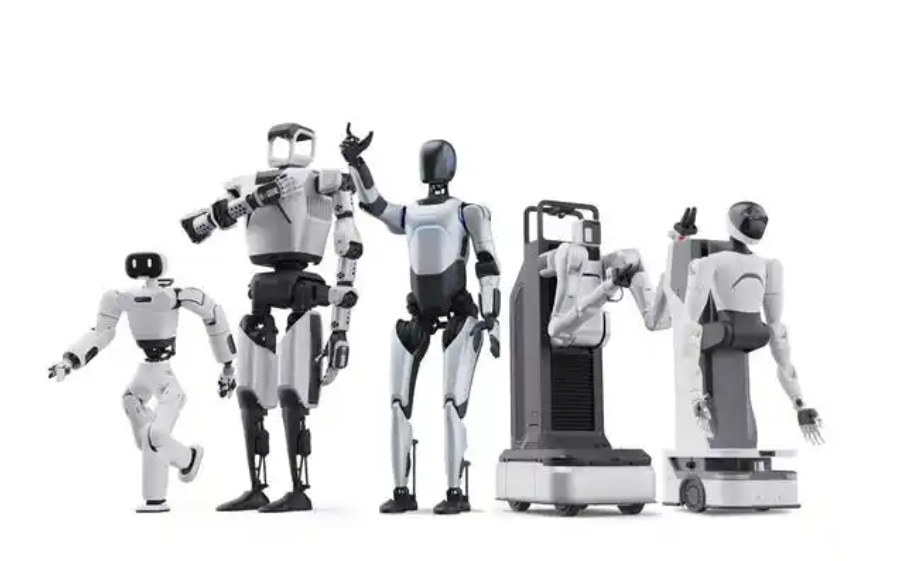
The policy environment has also shifted. The 15th Five-Year Plan includes embodied intelligence as a future industry, opening a policy window. At the same time, ChiNext reform and the HKEX Chapter 18C channel have broadened listing channels for unprofitable hard-technology companies. However, the investment logic has changed. Order fulfillment and commercialization cash-generating capacity have become core yardsticks. With one side of the market filled with the noise of IPO queues and the other side testing commercialization, many embodied intelligence companies now stand at the IPO threshold. Who can replicate Unitree’s story is the question that matters most to the market.
1. Embodied Intelligence Enterprises Compete for the Listing Window
The Chapter 18C regime allows unprofitable, high-R&D hard-technology companies to list in Hong Kong. This rule fits the characteristics of the robotics industry, which requires heavy investment and has a long return cycle. It has also attracted a large number of embodied intelligence hardware makers and component suppliers to accelerate filings.
Regarding the current IPO wave among robot companies and external attention on Mojia Robot’s capital-market pace, Zhang Guibing, Chery Automobile executive vice president, general manager of the International Business Division and general manager of Mojia Robot, previously said that from both an industrial and other perspectives, combining enterprises with capital is a major trend, and Mojia has been advancing related work. However, he noted that Mojia differs from many other robot companies because it is backed by the Chery Group and has a strong industrial foundation. As a result, it does not face the same survival pressure as some dedicated robot companies that may struggle to survive without continuous financing. Their financing pressure is more urgent. For Mojia, the current focus is more on capability building, system improvement and overall layout.
After setting the core strategic tone of first strengthening internal capabilities, Zhang also explained Mojia Robot’s real considerations and specific actions at the capital level. He added that the company welcomes capital and has been actively advancing preparation for capital operations. At present, it is studying how to accelerate the process and has already carried out some work, though it is not convenient to disclose too much at this stage. In general, the company is on the road to embracing capital, but its urgency differs from that of others. It places greater emphasis on first building solid application scenarios and an industrial ecosystem, which is its most core current task.
Against the backdrop of differentiated capital rhythms, capital-market channels are rewriting listing paths. The HKEX Chapter 18C special technology channel has become a priority target for many embodied intelligence companies. The regime permits unprofitable, high-R&D hard-technology companies to list in Hong Kong, matching the heavy-investment, long-return characteristics of the robotics industry and attracting many hardware manufacturers and component companies to race toward filings.
Zheng Yun, Roland Berger global senior partner and head of automotive business in Asia, discussed the practical constraints brought by Chapter 18C. He said Chapter 18C is specifically designed for special technology companies that have not yet achieved profitability but have high R&D investment. It sets two thresholds: a minimum market capitalization of HK$4 billion for commercialized companies and HK$8 billion for non-commercialized companies. It also includes mandatory R&D ratio requirements and strict information disclosure obligations. August 2027 is the expiry point for the current relaxed threshold, which has intensified the race among companies to file in time.
Regarding the value of the window, Zheng said the regime accommodates the reality of losses and fits the attributes of the industry. Humanoid robots generally require heavy R&D and have long return cycles. Many leading companies have high revenue growth but are not yet profitable. A-share review rules impose higher constraints on loss-making companies. Chapter 18C provides a compliant capital-market path. Companies can list to raise funds and continue investing in R&D and expansion without waiting until they become profitable before entering the public market. The confidential filing mechanism reduces the risk of information leakage during the application stage. Companies can complete preliminary review with a lower profile, reducing the risk that competitors and customers obtain sensitive financial data in advance, which is very friendly to the highly competitive robot track. It also targets global investors, making it easier to attract overseas industrial capital and cornerstone investors, which is conducive to subsequent overseas business expansion.
Beyond institutional dividends and the window effect, there is also a real foundation: the industry has already achieved large-scale mass production. The maturity of the industry itself is the root of the IPO wave. Zheng analyzed that technology has completed the zero-to-one breakthrough and entered a stage of 10,000-unit mass production. Core components such as quadruped robots, humanoid bodies, servos and reducers have completed engineering implementation. Leading domestic companies have achieved 10,000-unit roll-off. They are no longer only laboratory prototypes or demonstration videos; they have begun to generate scale revenue and possess the fundamental basis to tell a public-market story. Downstream demand has initially opened. Industrial production lines, power inspection, warehouse logistics and business-to-business commercial scenarios have seen batch pilot procurement. At the policy level, humanoid robots have been included as a key hard-technology direction, giving the industry a certain expectation. The heavy-R&D model needs public-market funding. Humanoid robot R&D, production line construction and supply chain cultivation consume huge amounts of capital. First-level market financing alone can hardly satisfy expansion and iteration. An IPO is a necessary means to obtain long-term capital, amplify capacity and bind the supply chain.
| Item | Figure |
|---|---|
| Listing venue | STAR Market, Shanghai Stock Exchange |
| Listing date | August 19, 2026 |
| Issue price | 150.80 yuan per share |
| Opening price | 1,100 yuan per share |
| Opening gain versus issue price | 629.44% |
| Shares outstanding after offering | Approximately 404 million shares |
| Intraday market capitalization at opening price | Approximately 444.9 billion yuan |
| Item | Requirement or timing |
|---|---|
| Commercialized company minimum market capitalization | HK$4 billion |
| Non-commercialized company minimum market capitalization | HK$8 billion |
| Additional conditions | Mandatory R&D ratio requirements and strict information disclosure obligations |
| Expiry of current relaxed threshold | August 2027 |
| Company or entity | Position or reported plan | Response or emphasis |
|---|---|---|
| Unitree Technology | Listed on the STAR Market on August 19, 2026 | Opening price and market capitalization drew intense market attention |
| AgiBot | Market attention on a Hong Kong listing and business progress | Company representative said it was not convenient to respond at present |
| DEEP Robotics | Market attention on a ChiNext IPO | Company representative said it is in a quiet period and cannot accept interviews |
| Robot Era | Market rumors about capital-market moves | Company said rumors were not released by it, it does not seek attention through capital-market news, and it will share progress in product research and business when appropriate |
| Chery Mojia Robot | Has a listing plan and intends to raise funds for business expansion and R&D investment | Backed by Chery Group; prioritizes capability building, system improvement, application scenarios and industrial ecosystem; welcomes capital while pursuing its own pace |
2. From Capital Shadow War to Industrial Positioning Competition
An IPO is not only a capital event. It is also an important brand strategy event. Observers often simplify the current IPO wave as first-level market institutions seeking exits. However, as embodied intelligence commercialization accelerates, leading companies pushing into capital markets is both an objective result of industrial evolution and a new round of industrial positioning competition.
Luo Xianliang, China vice president of Ries Strategic Consulting, analyzed the trend. He said that on the surface, this listing wave is about financing. Behind it, the robot industry has entered a key window period for seizing an industrial position. Technology is moving from the laboratory to large-scale application. Companies need more capital for R&D, capacity and commercialization. At the same time, early capital is entering an exit cycle. These are real driving forces. From the perspective of brand innovation, there is another important factor: when a new category begins to form, the company that first becomes a public company has a greater chance to represent that category. There are many robot companies and many technology routes in the market today. What is truly scarce is not another robot company with decent technology, but a company that can make customers, capital and global markets form a clear understanding: what new category do you represent, and why are you the leader of that category? Unitree received high attention after listing largely because it already has strong public recognition and category representativeness.
Therefore, an IPO is not only a capital event, but also an important brand strategic event. It can bring funds, but it can also bring credit endorsement, talent attraction and global influence. In the future, robot companies will compete not only over who lists first, but over who can use a listing to transform technology leadership into category leadership cognition.
However, behind heated listing expectations, challenges cannot be ignored. Entering the capital market places a company under the magnifying glass of society. The secondary market will not continuously pay for romantic technology imagination. The evaluation yardstick will fundamentally switch.
Luo pointed out that after listing, the biggest change is that a company cannot mainly rely on a technology story for valuation. It must answer a more complete question: what market position has your technology ultimately formed, and what operating results has it created? From the perspective of brand innovation, the future capital market will look at three levels. The first is technology leadership, which determines whether a company is qualified to participate in competition. The second is category leadership, which examines whether a company has transformed technology into a clear market position. When customers think of a certain type of robot, do they first think of you? Have you defined standards, gained preference and formed a premium? The third is operating validation, which examines whether this leadership can continuously convert into orders, repeat purchases, revenue and profit. These three are not parallel. They form a value transformation chain: technology innovation, category innovation, brand cognition and operating results. Unitree’s stock price surged on the first day and then corrected sharply. This shows that the secondary market will ultimately calibrate industrial imagination with commercial reality.
Under the trend in which capital markets gradually abandon pure technology narratives and place greater emphasis on implementation results, Luo said that future robot companies that truly obtain high valuations may not necessarily be those with the strongest technical parameters. They are more likely to be companies that first define technology advantages into a new category, make the new category into the first brand, and ultimately cash brand advantages into operating data. What the capital market ultimately buys is not technology itself, but whether technology can form sustained market dominance.
| Stage | Question for the company | Market test |
|---|---|---|
| Technology innovation | Does the company have differentiated and reliable technology? | Qualification to compete |
| Category innovation | Does the company define a clear new category and standard? | Customer preference and premium potential |
| Brand cognition | When customers think of the category, do they think of the company first? | Category leadership and public recognition |
| Operating results | Can leadership convert into orders, repeat purchases, revenue and profit? | Sustained market dominance |
3. Valuation Reset and the Commercialization Test
Once an embodied intelligence company enters the secondary market, the entire valuation system undergoes a systematic reset. Zheng explained that in the primary market stage, embodied intelligence valuation relies largely on technology vision, team, prototype capability and future space imagination. After entering the secondary market, the valuation system resets systematically. The technology dream premium rapidly decays, forming a tiered pricing logic.
This reset matters because embodied intelligence has moved from laboratory breakthroughs to early industrialization, but profitability remains uneven. Many embodied intelligence enterprises are still investing heavily in R&D, production lines and supply chains. The public market will not value them solely on long-term vision. It will demand evidence that orders can convert into revenue, that deployments can be repeated, and that operating results can support sustained investment.
The policy window and industrial foundation explain why the IPO queue is growing. The 15th Five-Year Plan places embodied intelligence in future industries. ChiNext reform and Chapter 18C have broadened financing paths. Mass production of core components has advanced. Downstream pilots in industrial lines, power inspection, warehouse logistics and business-to-business commercial scenarios have emerged. Yet these positive factors do not remove the test. They raise the bar. Embodied intelligence companies must show that capital raised in public markets will accelerate product iteration, capacity expansion and supply chain binding, not merely extend a narrative.
For companies with strong parent groups, such as Chery Mojia Robot, the urgency may differ. Zhang said Mojia is not like some dedicated robot companies that may find it hard to survive without continuous financing. Its focus is on capability building, system improvement and overall layout. At the same time, it welcomes capital and is advancing capital operations preparation. This dual approach illustrates a broader pattern: some embodied intelligence enterprises treat an IPO as a survival necessity, while others treat it as a strategic option to be timed with industrial maturity.
AgiBot, DEEP Robotics and Robot Era represent different stages and public postures. AgiBot said it was not convenient to respond to questions about a Hong Kong listing and business progress. DEEP Robotics said it is in a quiet period regarding a ChiNext IPO. Robot Era said market rumors were not released by the company and that it does not want to gain attention through capital-market news. Each response reflects a different capital-market strategy and communication discipline. In the embodied intelligence sector, where technology, customers and talent are all highly competitive, information disclosure itself can become a competitive variable.
The HKEX Chapter 18C channel has become a priority for many embodied intelligence companies because it accommodates unprofitable hard-technology firms. The two market-capitalization thresholds, HK$4 billion for commercialized companies and HK$8 billion for non-commercialized companies, mean that only companies with sufficient scale, R&D intensity and investor appeal can use the path. The August 2027 expiry of the current relaxed threshold adds time pressure. Companies that want to use the window must prepare filings, prove R&D commitment and meet strict disclosure obligations.
At the same time, A-share markets remain important. Unitree’s STAR Market debut demonstrates that an embodied intelligence company with strong public recognition can attract intense investor interest. But subsequent volatility also shows that public markets will test valuation. The first-day surge was extraordinary, but the later sharp correction indicates that the market will continue to compare industry imagination with commercial reality. For other embodied intelligence companies, Unitree’s experience is both an invitation and a warning.
The central question is not whether embodied intelligence companies can list. Many may succeed in filing and listing. The central question is what kind of company they become after listing. Can they convert technology leadership into category leadership? Can they turn category leadership into pricing power, customer preference and repeat orders? Can they convert brand recognition into revenue and profit? These are the tests that will determine whether an embodied intelligence company is merely part of an IPO wave or becomes the next category leader.
4. Capital Market Pathways and Strategic Choices
The capital-market pathways available to embodied intelligence companies are not identical. The HKEX Chapter 18C channel is designed for unprofitable, high-R&D special technology companies. It offers a route for embodied intelligence firms that have strong technology and growth potential but have not yet reached profitability. The minimum market-capitalization thresholds create a size filter. The R&D ratio requirements and disclosure obligations create a governance and transparency filter. The August 2027 expiry of the current relaxed threshold creates a timing filter.
For companies that can meet these conditions, Chapter 18C offers several advantages. It provides a compliant capital-market path without waiting for profitability. It permits confidential filing, which can reduce the risk of sensitive financial and competitive information leaking during the application stage. It also targets global investors, which can help embodied intelligence companies attract overseas industrial capital and cornerstone investors. For companies with global ambitions, this can be especially relevant as they expand sales, partnerships and supply chains outside their home market.
A-share markets, including the STAR Market and ChiNext, remain important for embodied intelligence companies with different financial profiles and shareholder structures. Unitree’s listing on the STAR Market shows that a leading embodied intelligence company with strong public recognition can achieve extraordinary market attention. However, A-share rules can impose higher constraints on loss-making companies. This means that the choice between Hong Kong and mainland listing venues is not merely technical. It reflects a company’s profitability timeline, revenue scale, investor base, customer markets and global strategy.
Chery Mojia Robot’s position illustrates how industrial backing can shape capital strategy. Zhang said the company is backed by Chery Group and has a strong industrial foundation. It does not face the same survival pressure as some dedicated robot companies that may struggle without continuous financing. As a result, its urgency differs. It welcomes capital and is advancing preparation for capital operations, but it places greater emphasis on building application scenarios and an industrial ecosystem first. This approach suggests that some embodied intelligence companies may prioritize industrial deployment and capability building before pursuing an IPO at full speed.
AgiBot, DEEP Robotics and Robot Era show different public postures. AgiBot declined to respond to market questions about a Hong Kong listing and business progress. DEEP Robotics said it is in a quiet period regarding a ChiNext IPO. Robot Era said market rumors were not released by the company and that it does not want to gain attention through capital-market news. These responses do not resolve the question of which company will list next, but they reveal that embodied intelligence companies are managing capital-market expectations carefully. In a sector where technology, customers and talent are all competitive, premature or excessive disclosure can create risks.
The broader lesson is that the IPO race is not only about filing speed. It is about strategic timing. A company must be ready to meet public-market disclosure standards, explain its path to commercialization and withstand quarterly scrutiny. It must also be ready to use the proceeds productively. For embodied intelligence companies, public capital can fund R&D, production capacity, supply chain development and market expansion. But public capital also creates pressure to show returns. The companies that manage this balance will be better positioned than those that treat listing as an end in itself.
5. Industrial Ecosystem and Commercial Deployment
The industrial ecosystem for embodied intelligence is becoming more concrete. Technology has moved from the laboratory into engineering implementation. Core components such as quadruped robots, humanoid bodies, servos and reducers have advanced. Leading domestic companies have achieved 10,000-unit roll-off. This is a significant shift. It means that embodied intelligence is no longer only a collection of prototypes and demonstration videos. It is beginning to generate scale revenue and support a public-market narrative.
Downstream demand has also begun to open. Industrial production lines, power inspection, warehouse logistics and business-to-business commercial scenarios have seen batch pilot procurement. These are early but important signals. They show that embodied intelligence is moving into real operating environments where reliability, cost, maintenance and return on investment matter. At the same time, policy support has given the industry a degree of certainty. The 15th Five-Year Plan includes embodied intelligence as a future industry. Humanoid robots have been included as a key hard-technology direction. This policy backing does not guarantee commercial success, but it reduces some long-term uncertainty.
The heavy-R&D model of embodied intelligence requires substantial capital. R&D, production line construction and supply chain cultivation consume huge resources. First-level market financing alone can hardly satisfy expansion and iteration. An IPO is therefore seen as a necessary means to obtain long-term capital, amplify capacity and bind the supply chain. This is one reason why so many embodied intelligence companies are queuing for IPOs. They need capital not only to survive, but to scale.
However, scaling is not the same as commercial success. The investment logic has shifted. Order fulfillment and commercialization cash-generating capacity have become core yardsticks. Investors are no longer satisfied with technology stories alone. They want to see orders, repeat purchases, revenue and profit. They want to understand which embodied intelligence applications can generate sustainable returns. They want to know whether a company’s technology can create a defensible market position.
This is why the value transformation chain matters. Technology innovation gives a company the right to compete. Category innovation gives it a clear market position. Brand cognition gives it customer preference and premium potential. Operating results prove that the position is durable. An embodied intelligence company that can move through this chain is more likely to earn a high valuation than one that remains strong only in technology parameters.
6. The Brand Dimension of the Embodied Intelligence IPO Wave
The IPO wave in embodied intelligence is also a brand competition. When a new category forms, the first public company can shape how customers, investors and global markets understand the category. Unitree’s listing attracted intense attention because it already had strong public recognition and category representativeness. For other embodied intelligence companies, the question is whether they can achieve similar recognition. Can they define a clear category? Can they become the first brand that customers think of when they consider a certain type of robot? Can they turn that recognition into pricing power and customer loyalty?
An IPO can help. It brings funds, but it also brings credit endorsement, talent attraction and global influence. Public companies are often viewed as more stable, more transparent and more capable of serving large customers. For embodied intelligence companies selling to industrial clients, logistics operators or commercial partners, public status can be a meaningful signal. It can also help attract engineers, researchers and executives who may prefer the stability and visibility of a listed company.
But public status also brings scrutiny. The secondary market will evaluate not only technology, but also governance, disclosure, financial performance and strategic execution. A company that lists with a compelling technology narrative but fails to convert it into orders and revenue may see its valuation decline. A company that lists with a clear category position and a credible commercialization path may be better able to withstand market volatility.
This is why the brand dimension and the commercial dimension are linked. A strong brand cannot be built on marketing alone. It must be supported by product performance, customer adoption and operating results. In embodied intelligence, where technology is complex and applications are diverse, customers need confidence that a company can deliver reliable products at scale. An IPO can provide that confidence, but only if the company can back it up with execution.
7. Who Will Become the Next Unitree?
The next Unitree will not be determined by listing order alone. It will be determined by a combination of technology leadership, category definition, commercialization capability and capital-market discipline. The embodied intelligence sector has moved beyond the stage where a demonstration video or a laboratory prototype could sustain valuation. It is entering a stage where mass production, deployment, orders and operating results matter.
This does not mean technology is less important. Technology leadership remains the threshold for participation. Without it, an embodied intelligence company cannot compete. But technology alone is not enough. The company must define a clear category. It must make customers, investors and global markets understand what it represents. It must become the first brand that comes to mind in that category. It must then validate that position through orders, repeat purchases, revenue and profit.
The value transformation chain described by Luo offers a useful framework for judging embodied intelligence companies. A company may be strong at one stage but weak at another. A company may have advanced technology but no category clarity. Another may have category clarity but no operating validation. The most valuable embodied intelligence companies will be those that can move through the entire chain.
For investors, the shift means that the technology dream premium will decline. For companies, it means that public-market capital comes with public-market scrutiny. For the embodied intelligence industry, it means that the IPO wave is not the end of the story. It is the beginning of a more demanding phase. The companies that succeed will be those that use capital to deepen R&D, expand production, build supply chains and commercialize applications. They will not simply use capital to tell a larger story.
Policy support remains a powerful tailwind. The 15th Five-Year Plan’s inclusion of embodied intelligence as a future industry provides certainty. ChiNext reform and HKEX Chapter 18C create financing channels. The engineering of core components and the emergence of 10,000-unit production lines provide an industrial base. Downstream pilot procurement in industrial, inspection, logistics and commercial scenarios provides early demand. Yet none of these factors guarantees success. They create opportunity, but they also intensify competition.
Chery Mojia Robot’s approach shows that industrial backing can change the urgency of an IPO. AgiBot, DEEP Robotics and Robot Era show that different embodied intelligence companies are choosing different communication and capital-market strategies. Unitree’s listing shows both the scale of investor interest and the speed with which the market can recalibrate. Together, these cases suggest that the next Unitree will be a company that can combine capital, technology, category leadership and commercial execution.
The IPO queue for embodied intelligence is likely to remain active. More companies may seek listings in Hong Kong, on the STAR Market, on ChiNext or elsewhere. The window created by policy, technology and capital will continue to attract entrants. But the market’s core question will become sharper: which embodied intelligence company can turn advanced technology into a lasting market position? Which can turn orders into repeat business? Which can turn revenue into profit? Which can turn brand recognition into global influence?
The answer will not be known on the first day of trading. It will be revealed over time through product deployment, customer adoption, financial performance and category leadership. Unitree has set a high-profile benchmark. The next Unitree, if one emerges, will not simply copy its listing. It will have to prove that embodied intelligence is not only a compelling technology narrative, but a durable business.