
The 2026 World Manufacturing Convention, scheduled to open on September 20, will place robotics and embodied intelligence at the center of its showcase, with nearly 200 robot exhibits set to appear in a nearly 2,000-square-meter exhibition area in Hall 2, the comprehensive hall, the event’s executive committee office said on September 2.
The robot and embodied intelligence industry exhibition is one of the convention’s major highlights. It will use a format that combines large-scale operation demonstrations, a multi-scenario community, dynamic performances and full-ecosystem displays. The exhibition will present typical scenarios such as industrial manufacturing and supermarket services, along with full-stack technology chain products, innovation platforms and aftermarket development, according to the organizer.
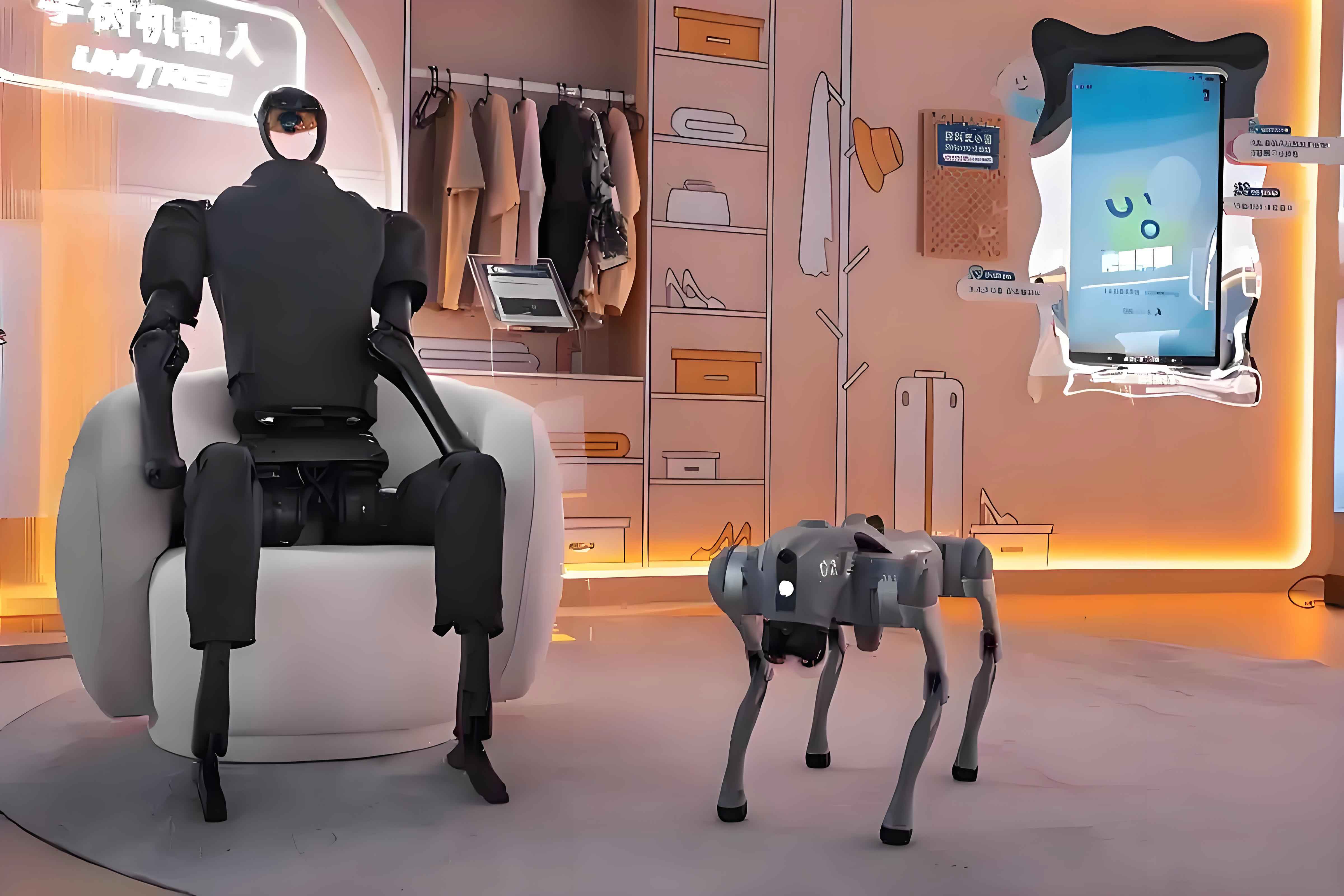
Among the expected attractions are humanoid robot performances of Huangmei Opera, robot combat, and intelligent conversations with realistic robots. Anhui-based robot companies will create application scenarios spanning industrial operations, retail and home services, allowing visitors to experience the growing role of humanoid robot technology and related products in everyday life.
1. A Nearly 2,000-Square-Meter Stage for Humanoid Robot and Embodied Intelligence Innovation
The exhibition area in Hall 2 will cover nearly 2,000 square meters and will bring together nearly 200 robot exhibits. The scale and structure of the display reflect the convention’s intention to show not only individual machines but also the broader systems that support robotics and embodied intelligence, including components, platforms, applications and services.
The organizer said the exhibition will be organized around four connected forms of presentation. The first is large-scale operation demonstrations, which show robots carrying out practical tasks in coordinated and visible ways. The second is a multi-scenario community, which places robots in settings that resemble factories, retail spaces and service environments. The third is dynamic performance, which gives visitors a direct view of movement, interaction and entertainment capabilities. The fourth is a full-ecosystem display, which presents the technology chain and the supporting industrial network behind the products.
This combination is important for the humanoid robot sector because it moves beyond static exhibits. A humanoid robot is most compelling when its perception, motion control, interaction and task execution can be seen in context. The convention’s format is designed to create that context, allowing visitors to observe how robots behave in industrial manufacturing, supermarket services and other environments.
The exhibition will also present full-stack technology chain products, innovation platforms and aftermarket development. These elements are part of the broader robotics ecosystem and help explain how robots move from research and development into real applications. For the humanoid robot industry, such a full-chain view is especially relevant because humanoid robot development depends on the integration of mechanical design, sensors, control systems, artificial intelligence, software and service networks.
2. Humanoid Robot Performances Turn Technology into a Public Experience
The convention will use performance and interaction to make robotics more accessible to the public. A humanoid robot is expected to perform Huangmei Opera, while robot combat will offer a more physical and competitive form of demonstration. Visitors will also be able to take part in intelligent conversations with realistic robots.
These activities are not separate from industrial development. They show different dimensions of the same technological progress. A humanoid robot singing on stage requires coordinated motion, timing and control. A humanoid robot holding a conversation requires speech recognition, language processing and responsive interaction. Robot combat requires balance, durability and rapid control. Together, these demonstrations give visitors a practical sense of how humanoid robot capabilities are advancing.
For companies, the performances and interactions provide a public-facing way to show product maturity. For visitors, they create an entry point into more complex questions about how robots will work in factories, stores and homes. The convention’s use of dynamic performance therefore supports a wider goal: helping the public understand that the humanoid robot is moving from a laboratory concept toward a visible part of the technology landscape.
The organizer said Anhui-based robot companies will build application scenarios for industrial, retail and home-service use. Visitors will be able to experience the world of robots and related products in an immersive way and see how intelligent technology is being integrated into daily life. The humanoid robot will be one of the most visible symbols of that integration.
3. Four Presentation Pillars and a Full-Chain View
The robot and embodied intelligence exhibition will combine several presentation methods to create a complete view of the industry. The organizer described the approach as a combination of large-scale operation demonstrations, a multi-scenario community, dynamic performances and full-ecosystem displays. Each pillar serves a different purpose.
- Large-scale operation demonstrations show robots performing tasks at a visible scale and in coordinated settings.
- A multi-scenario community places robots in environments that resemble industrial manufacturing, retail, home services and other application spaces.
- Dynamic performances present humanoid robot movement, interaction and entertainment capabilities to a public audience.
- A full-ecosystem display presents the technology chain, key components, innovation platforms and aftermarket development that support the robotics industry.
This structure gives the exhibition a wider scope than a conventional product show. A humanoid robot cannot be understood only through a single product display. Its development depends on the entire chain behind it, from core components to software platforms and from manufacturing processes to service systems. By presenting these elements together, the convention aims to show how the robotics industry is developing as a connected ecosystem.
The full-ecosystem display is especially important for the humanoid robot sector. Humanoid robot products require close coordination among hardware, software, sensing, control and application development. The exhibition’s focus on the full technology chain and innovation platforms provides a framework for understanding these relationships and for seeing how different companies contribute to the broader humanoid robot and embodied intelligence landscape.
4. Exhibition Zones by Company and Product Counts
The exhibition will be divided into several zones, each with a defined group of companies and products. The organizer provided the following counts for the main zones. These figures show how the display is distributed across manufacturing, street-level services, community scenarios and the embodied intelligence technology chain.
| Exhibition zone | Companies | Products |
|---|---|---|
| Smart Manufacturing Factory | 6 | 22 |
| Smart Street | 4 | 22 |
| Smart Innovation Community | 4 | 33 |
| Embodied Intelligence Full-Stack Technology Chain | 4 | 10 |
The Smart Manufacturing Factory zone will bring together 6 companies and 22 products. The Smart Street zone will feature 4 companies and 22 products. The Smart Innovation Community zone will present 4 companies and 33 products. The Embodied Intelligence Full-Stack Technology Chain zone will include 4 companies and 10 products. The exhibition will also include a humanoid robot delegation as part of the broader showcase.
In addition to these zones, the exhibition area will present key robot components, innovation platforms and related achievements. Together, these displays form a rich exhibition system that covers the entire industrial chain. The structure allows visitors to move from components and platforms to products and applications, gaining a more complete understanding of how the humanoid robot and embodied intelligence sectors are developing.
Compared with the previous convention, the number of robot exhibits has increased to nearly 200. This growth is reflected in the breadth of the exhibition zones and in the range of companies participating. The humanoid robot delegation and the embodied intelligence full-stack technology chain are important parts of this expanded showcase.
5. Local Enterprises Put Humanoid Robot and Robotics Applications on Display
Several Anhui-based robot enterprises will bring their latest exhibits to the convention. The Jianghuai Frontier Technology Collaborative Innovation Center will present a series of products that won gold and silver awards at the second World Humanoid Robot Games. The center will also present its latest research results and the momentum of industrial development in related fields.
The participation of the Jianghuai Frontier Technology Collaborative Innovation Center highlights the role of research and innovation platforms in the humanoid robot sector. Award-winning humanoid robot products demonstrate advances in performance and application potential, while the center’s broader display shows how research results can connect with industrial development. This connection is central to the convention’s aim of presenting a full-chain view of robotics and embodied intelligence.
Hefei-based Renjie Intelligent and Youibot, along with Wuhu-based EFORT and Kuwa Technology, are among the robot manufacturers that will bring their latest exhibits. Their participation reflects the geographic spread of robotics activity in Anhui and the range of companies contributing to the sector. The exhibition will allow these companies to show their products in a setting that combines industrial scenarios, service scenarios and public interaction.
For the humanoid robot industry, the presence of multiple local enterprises and innovation platforms is significant. Humanoid robot development requires cooperation across research institutions, component suppliers, software developers and application providers. The convention provides a meeting point for these different participants and creates opportunities to see how their work fits together within the broader robotics and embodied intelligence ecosystem.
6. From Factory Floor to Retail and Home Services
The convention’s application scenarios will cover industrial manufacturing, supermarket services, retail, home services and other settings. Robots will be shown carrying materials, organizing rooms, selling goods, performing on stage and interacting with people. These examples illustrate how robotics is spreading across different areas of work and daily life.
In industrial settings, robots can support material handling and manufacturing tasks. In retail and supermarket environments, they can provide services and interact with customers. In home-service scenarios, they can assist with household tasks and room organization. On stage, a humanoid robot can demonstrate movement and performance capabilities. In interactive settings, realistic robots can hold conversations with visitors.
The multi-scenario community format allows these applications to be presented in relation to one another. Rather than treating each robot as an isolated product, the exhibition shows how different robots and systems can operate within connected environments. This approach is particularly relevant to embodied intelligence, where perception, decision-making and action are combined to support real-world tasks.
The humanoid robot is a central part of this story because it combines mobility, manipulation and interaction in a single platform. As humanoid robot technology develops, its potential applications extend across factories, stores, homes and public spaces. The convention’s scenarios are designed to let visitors see these possibilities in a direct and accessible way.
7. Anhui’s Industrial Momentum in Robotics and Humanoid Robot Development
Robotics is a key industry that Anhui has laid out for the 15th Five-Year Plan period. The convention’s robot and embodied intelligence exhibition reflects that priority and provides a platform for companies, research institutions and visitors to engage with the latest developments.
Data presented in the report show that in the first seven months of this year, Anhui’s industrial robot output increased by 17.1 percent year on year. Service robot output increased by 89 percent year on year. Humanoid robot output achieved more than tenfold growth. These figures indicate strong momentum across several parts of the robotics sector.
The growth in humanoid robot output is particularly notable because it comes alongside expansion in industrial robots and service robots. The three categories are connected. Industrial robots support manufacturing and automation. Service robots support retail, hospitality and other service environments. Humanoid robots combine elements of both and add advanced interaction and mobility. The development of the humanoid robot sector therefore depends on and contributes to the wider robotics ecosystem.
The convention will present these developments through exhibits, demonstrations and scenario-based displays. Visitors will be able to see how robots are being applied in industrial manufacturing, supermarket services and other areas, while also learning about the components, platforms and innovation systems that support the industry. The humanoid robot will serve as a visible reference point for the broader progress described by the output data.
8. The Humanoid Robot Supply Chain and the Rise of Embodied Intelligence
The exhibition’s full-stack technology chain zone will present products and achievements related to the embodied intelligence ecosystem. This zone will include 4 companies and 10 products, according to the organizer. Its presence within the exhibition reflects the importance of the supply chain in turning robotics concepts into practical products.
A humanoid robot depends on many interconnected technologies. These include mechanical structures, actuators, sensors, control systems, computing platforms, artificial intelligence software and application-level services. The full-stack technology chain display will show how these elements are being developed and integrated. For visitors, this provides a deeper view of what lies behind a humanoid robot demonstration.
The exhibition will also present key robot components, innovation platforms and aftermarket development. These areas are essential for the long-term growth of the robotics industry. Components determine performance and reliability. Innovation platforms support research and development. Aftermarket development helps products remain useful and serviceable over time. Together, they form the support system that allows robots to move from prototypes to products and from products to sustained applications.
Embodied intelligence is closely tied to the humanoid robot sector because it involves the integration of perception, reasoning and action in physical systems. The convention’s focus on full-chain displays and multi-scenario communities provides a way to show how embodied intelligence is being applied. Visitors can see not only what a robot looks like but also how it senses its environment, makes decisions and carries out tasks.
9. Why the Exhibition Matters for Industry and the Public
The 2026 World Manufacturing Convention’s robot and embodied intelligence exhibition is designed to serve both industry and the public. For industry participants, the event provides a platform to present products, exchange ideas and examine the state of the technology chain. For the public, it offers a direct encounter with robots and a chance to understand how intelligent technology is entering everyday life.
The humanoid robot is an effective bridge between these two audiences. Its human-like form makes it immediately understandable to the public, while its technical complexity makes it a focus for industry development. A humanoid robot performance can attract attention, but it can also lead visitors to ask deeper questions about movement, perception, interaction and application. The convention’s combination of dynamic performance and scenario-based display is intended to support that progression from curiosity to understanding.
The exhibition also matters because it presents robotics as an ecosystem rather than a collection of isolated products. The Smart Manufacturing Factory, Smart Street, Smart Innovation Community and Embodied Intelligence Full-Stack Technology Chain zones each contribute a different perspective. The humanoid robot delegation adds a visible point of focus. Together, these elements show how components, platforms, products and applications connect.
For companies, the convention offers a way to demonstrate their latest exhibits and to show how their work fits into the broader industry. For research and innovation platforms, it provides a setting to present results and explore connections with industry. For visitors, it creates an opportunity to see how robots can support industrial operations, retail services, home tasks and entertainment. The humanoid robot is central to this experience because it brings together many of these capabilities in one platform.
10. A Clear Signal for the Humanoid Robot Sector
The scale of the robot and embodied intelligence exhibition sends a clear signal about the direction of the sector. Nearly 200 robot exhibits, a nearly 2,000-square-meter display area and a structure that covers multiple scenarios and the full technology chain all point to a broad and connected approach to robotics development. The humanoid robot is one of the most visible expressions of that approach.
The participation of Anhui-based companies and innovation platforms adds further weight to the exhibition. The Jianghuai Frontier Technology Collaborative Innovation Center will bring humanoid robot products that won gold and silver awards at the second World Humanoid Robot Games. Hefei-based Renjie Intelligent and Youibot, along with Wuhu-based EFORT and Kuwa Technology, will bring their latest exhibits. These participants represent different parts of the robotics and embodied intelligence landscape.
The output data for the first seven months of this year also underline the momentum behind the sector. Industrial robot output increased by 17.1 percent year on year, service robot output increased by 89 percent year on year, and humanoid robot output achieved more than tenfold growth. These figures show expansion across industrial, service and humanoid robot categories, reinforcing the convention’s focus on both current applications and future potential.
As the 2026 World Manufacturing Convention prepares to open on September 20, the robot and embodied intelligence exhibition is set to offer a comprehensive view of where robotics is heading. Visitors will see humanoid robot performances, interactive conversations, industrial demonstrations, retail scenarios and full-chain technology displays. The exhibition will show that the humanoid robot is not an isolated symbol but part of a larger ecosystem of components, platforms, products and applications. That ecosystem, in turn, is shaping how Anhui and the wider manufacturing sector approach the next stage of intelligent robotics development.